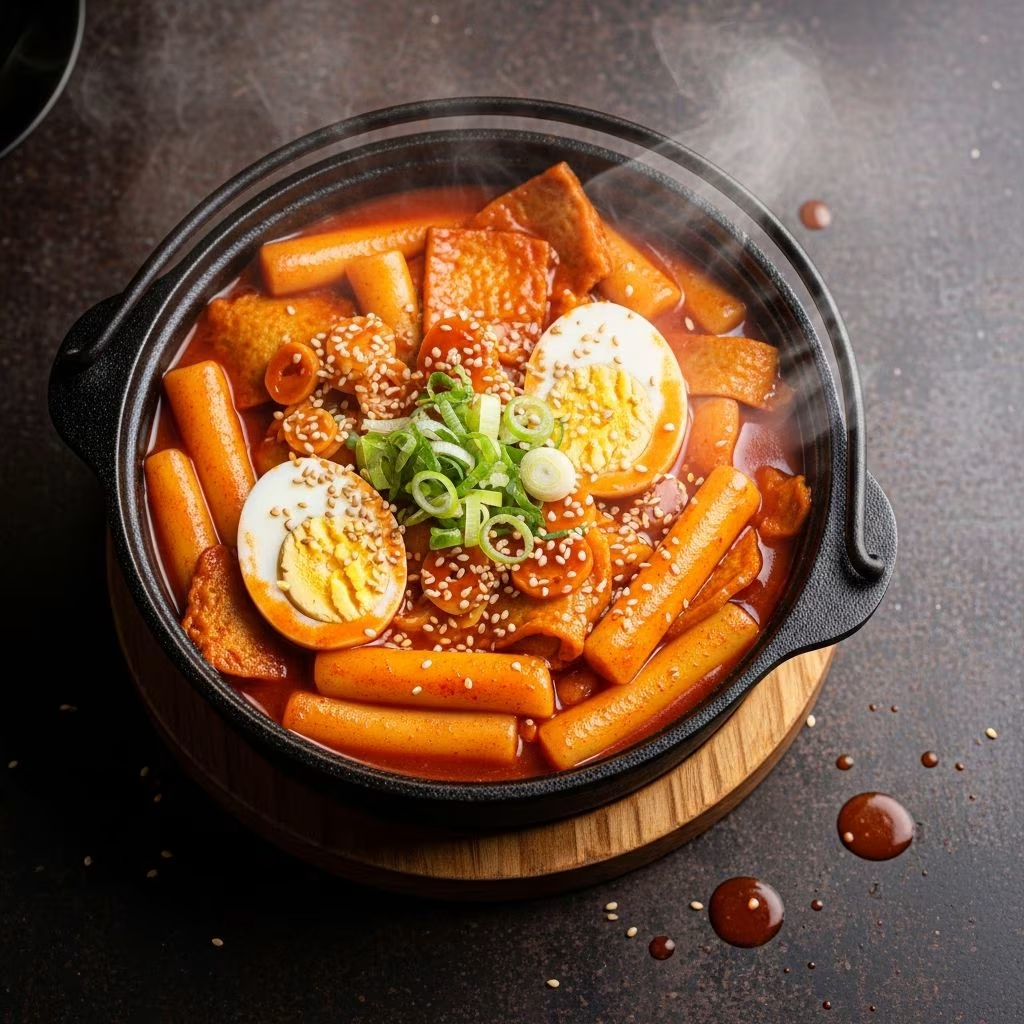
Known as one of Korea’s most iconic street foods, tteokbokki features cylindrical rice cakes simmered in a vibrant, spicy sauce made primarily from gochujang, a fermented red chili paste. This dish delivers a perfect balance of chewiness, heat, sweetness, and umami, making it a favorite for quick meals or snacks.
The Origins and Rise of Tteokbokki in Korean Culture
Tteokbokki traces its roots to the royal courts of the Joseon Dynasty, where it appeared as gungjung tteokbokki—a mild, soy-based version enjoyed by nobility. Over time, it evolved into the spicy street food we know today, especially post-Korean War when vendors began adding gochujang for bold flavor. Today, it’s a staple at pojangmacha tents and bustling markets in Seoul, symbolizing comfort and nostalgia for many Koreans.
Its popularity stems from accessibility: simple ingredients yield addictive results. Variations abound, from creamy rosé versions with cheese to ramen-infused twists, reflecting modern creativity while honoring tradition.
Essential Ingredients for Authentic Tteokbokki
Building a great tteokbokki starts with quality components. Here’s a breakdown:
- Rice Cakes (Tteok): Made from short-grain rice flour, these provide the signature chewy texture. Opt for fresh or refrigerated vacuum-packed ones over frozen for best results; thaw and soak frozen tteok in cold water first.
- Gochujang: The heart of the sauce—fermented chili paste delivering spice, sweetness, and depth. Adjust quantity for heat level; start with 2-3 tablespoons per serving.
- Gochugaru: Korean chili flakes for extra kick and color, optional but recommended.
- Broth Base: Anchovy stock, kelp (dashima), or simple water with soy sauce, sugar, and fish sauce for umami. Mushrooms or kombu enhance vegan versions.
- Add-Ins: Fish cakes (eomuk), green onions, sesame oil, and seeds for finish. Veggies like zucchini, cabbage, or mushrooms add bulk.
| Ingredient | Quantity (Serves 2-3) | Role |
|---|---|---|
| Cylindrical rice cakes | 500-600g | Main body, chewiness |
| Gochujang | 2-3 tbsp | Spice and base flavor |
| Soy sauce | 1 tbsp | Salty umami |
| Sugar | 1 tsp | Balances heat |
| Fish cakes | 100g, sliced | Protein and texture |
| Green onions | 1 bunch, chopped | Freshness and garnish |
Step-by-Step Guide to Classic Tteokbokki
Preparation takes about 25-30 minutes. Soak rice cakes in water for 20 minutes if not fresh to soften them.
Prepare the Broth: In a pan, combine 4 cups water, dried anchovies (heads removed), kelp, soy sauce, sugar, and black pepper. Bring to a boil, then simmer 10 minutes. Remove solids for clear stock. Stir in gochujang until dissolved.
Add Rice Cakes: Drop in soaked tteok. Simmer 8-10 minutes, stirring frequently as starch thickens the sauce. Rice cakes should be soft yet chewy—avoid overcooking to prevent sogginess.
Incorporate Proteins and Veggies: Add sliced fish cakes, zucchini quarters, or mushrooms. Cook 2-4 more minutes until tender.
Finish and Serve: Off heat, mix in sesame oil, chopped green onions, and sesame seeds. Sauce should be shiny and coating.
Pro Tip: Use a wide pan for even cooking and to prevent sticking.
Customizing Heat and Variations
Tteokbokki’s versatility shines in adaptations:
- Mild Version: Reduce gochujang to 1 tbsp, add more sugar.
- Vegan Tteokbokki: Skip fish sauce/anchovies; use mushroom stock and tamari.
- Ramen Tteokbokki: Add instant noodles in the last 3 minutes for heartiness.
- Cheese Tteokbokki: Top with mozzarella for creamy rosé pull.
- Vegetable-Packed: Include cabbage, carrots, or spinach for nutrition.
For extra spice, sprinkle gochugaru or serve with kimchi on the side.
Troubleshooting Common Issues
Perfect tteokbokki requires precision:
- Too Soggy? Cook briefly (1-2 minutes post-simmer) and let rest off-heat.
- Sauce Too Thin? Rice cake starch naturally thickens; extend simmer or add cornstarch slurry.
- Not Spicy Enough? Taste and stir in more gochujang midway.
- Rice Cakes Sticking? Stir constantly and use non-stick pan with oil.
Nutrition and Pairing Suggestions
A 300g serving offers about 500-600 calories, rich in carbs from rice cakes, with protein from fish cakes. It’s gluten-free if using tamari. Pair with cold Korean beer (soju chaser), boiled eggs, or mandu dumplings for a full meal.
Frequently Asked Questions (FAQs)
What if I can’t find fresh rice cakes?
Frozen works—thaw and soak in cold water 30 minutes before cooking.
Can I make tteokbokki less spicy?
Yes, halve gochujang and boost sugar/soy for balance.
How long does it keep?
Refrigerate up to 2 days; reheat with splash of water to loosen sauce.
Is fish cake necessary?
No—sub tofu, eggs, or extra veggies for variety.
What’s the best gochujang brand?
Any authentic Korean brand; test spiciness as they vary.
Advanced Techniques for Home Chefs
Elevate your game: Infuse broth with garlic or onion for depth. For glossy sauce, emulsify with extra sesame oil at end. Experiment with homemade gochujang for custom heat—ferment rice, chilies, and barley. Batch-cook sauce ahead for weeknight ease.
Street vendors stir constantly for thickening; mimic with wooden spoon. Fresh tteok softens in 5-7 minutes vs. 10+ for packaged.
References
- RECIPE: Tteokbokki (Korean Spicy Rice Cakes) — Yummy Sarcasm. 2014-02-04. https://yummysarcasm.wordpress.com/2014/02/04/recipe-tteokbokki-korean-spicy-rice-cakes/
- Korean Spicy Rice Cakes (Tteokbokki: 떡볶이) — My Not So Dutch Kitchen. 2019-02-25. https://www.mynotsodutchkitchen.com/2019/02/25/korean-spicy-rice-cakes-tteokbokki-%EB%96%A1%EB%B3%B6%EC%9D%B4/
- Tteokbokki (Dukbokki) – 떡볶이 — Pickled Plum. N/A. https://pickledplum.com/tteokbokki-spicy-korean-rice-cakes/
- Tteokbokki (떡볶이)- Korean Spicy Rice Cakes — Stellanspice. N/A. https://stellanspice.com/tteokbokki/
- Tteokbokki (Hot and spicy rice cakes) recipe by Maangchi — Maangchi. N/A. https://www.maangchi.com/recipe/tteokbokki