Creating a pie crust that boasts golden flakiness and melt-in-your-mouth tenderness is a cornerstone of baking excellence. This comprehensive guide demystifies the process, offering precise instructions, scientific insights into texture, and versatile applications to transform your pies from ordinary to extraordinary.
Essential Ingredients for Superior Dough
The foundation of any outstanding pie crust lies in selecting high-quality components balanced for structure and tenderness. Start with all-purpose flour, which provides the ideal protein content for gluten development without toughness. A modest amount of granulated sugar—typically one tablespoon—enhances subtle sweetness and aids browning, while salt sharpens flavors and strengthens the dough.
The star ingredient is cold, unsalted butter cut into precise 1/2-inch cubes. Butter’s water content creates steam for lift, and its fat coats flour proteins to inhibit excess gluten formation, ensuring flakiness. For innovation, incorporate ice-cold vodka: its alcohol evaporates during baking without contributing to toughness, yielding exceptionally tender results. Aim for 3-4 tablespoons, adjusting as needed.
| Ingredient | Quantity (for 2 crusts) | Role |
|---|---|---|
| All-purpose flour | 2 1/2 cups | Structure base |
| Granulated sugar | 1 tbsp | Flavor and browning |
| Salt | 1 tsp | Flavor enhancement |
| Unsalted butter (cold) | 1 cup (cubes) | Flakiness and richness |
| Ice-cold vodka or water | 3-4 tbsp | Moisture without toughness |
Step-by-Step Dough Preparation
Begin by chilling all tools and ingredients to maintain low temperatures, preventing butter from softening prematurely. Pulse flour, sugar, and salt in a food processor for even distribution.
- Add cold butter cubes and pulse 10-15 times until the mixture resembles coarse crumbs with pea-sized butter pieces. This coating technique minimizes gluten, promoting lightness.
- Sprinkle in vodka starting with 3 tablespoons, pulsing until the dough begins to clump without forming a ball. Overworking leads to toughness, so stop when it holds together when squeezed.
- Turn onto plastic wrap, gently form into two discs, and refrigerate for at least 2 hours—or overnight for optimal chilling.
Alternative hand method: Use a pastry blender for butter incorporation, ideal for those preferring tactile control.
Perfect Rolling and Shaping Techniques
Work on a lightly floured surface or between parchment sheets to prevent sticking. Roll from center outward, rotating the dough quarterly for even thickness—about 1/8-inch for bottoms, slightly thinner for tops. A chilled dough rolls effortlessly, maintaining layers.
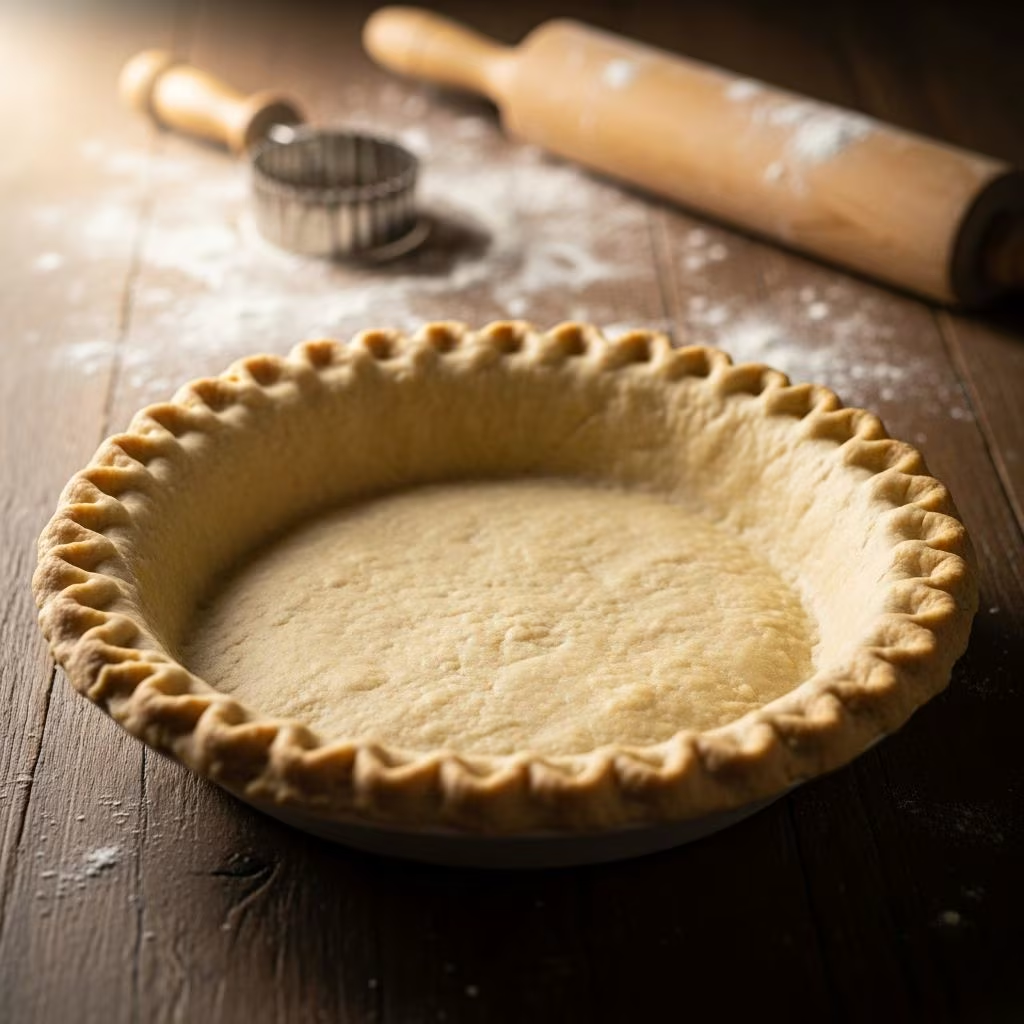
Fit into a 9-inch pie plate by gently draping, avoiding stretching which causes shrinkage. Trim overhang to 1/2-inch, fold under, and crimp using thumb-index-middle finger flute for decorative edges. For double-crust pies, reserve top dough refrigerated until filling is ready.
- Pro Tip: Brush edges with egg wash (1 egg + 1 tsp water) for golden shine and adhesion.
- Poke bottom with a fork (docking) to vent steam and prevent bubbles.
Blind Baking for Confident Results
Cream or custard pies demand a pre-baked crust to avoid sogginess. Line with parchment and fill with pie weights or dried beans, baking at 375°F for 20 minutes. Remove weights, bake 10-15 more until pale gold. This par-baking ensures crispness under moist fillings.
Troubleshooting Common Dough Dilemmas
Even seasoned bakers encounter issues. Dough too crumbly? Insufficient liquid—add iced water one teaspoon at a time. Tough crust? Overworked or warm butter; chill longer next time. Soggy bottom? Blind bake or use cornstarch in filling to absorb moisture.
| Problem | Cause | Solution |
|---|---|---|
| Shrinking crust | Stretched dough | Drape loosely, chill before baking |
| Tough texture | Excess gluten | Handle minimally, use vodka |
| Soggy bottom | Moist filling | Blind bake, thicken filling |
| Cracks during rolling | Too cold/dry | Let rest 5-10 min at room temp |
Creative Twists on Classic Pie Crust
Beyond traditional fruit pies, pie dough shines in innovative dishes. Transform scraps into cinnamon twists: twist strips, coat in butter-cinnamon-sugar, bake at 375°F for 10 minutes for addictive snacks.
For savory delights, craft hand pies like Reuben versions: fill with corned beef, sauerkraut, Swiss, and Thousand Island, seal, and bake. Muffin tin chicken pot pies offer portable comfort—cut circles, press into tins, fill with creamy chicken, top, and bake.
Experiment with pull-apart pies: layer dough strips with apple-cinnamon filling in a loaf pan for shareable, Instagram-worthy treats. These ideas maximize dough efficiency, turning leftovers into stars.
Storage and Make-Ahead Strategies
Prepared dough freezes beautifully: wrap tightly, use within 3 months. Thaw overnight in fridge before rolling. Baked crusts store at room temp 2 days or freeze up to a month. This flexibility suits holiday baking marathons.
Science Behind the Flake
Flakiness arises from steam pockets formed by butter’s water vaporizing in the oven, separating thin flour layers. Minimal gluten—achieved via cold fats and gentle handling—preserves tenderness. Vodka’s ethanol evaporates cleanly, avoiding water’s gluten activation.
Frequently Asked Questions
Can I substitute shortening for butter?
Shortening yields flakiness but lacks flavor. Use a 50/50 butter-shortening blend for balance.
Why use a food processor?
It quickly cuts fat into flour evenly, reducing warming from hand contact.
How do I avoid a leaky fruit pie?
Cook filling stovetop to thicken, or toss fruit with tapioca starch.
Gluten-free options?
Blend gluten-free flours with xanthan gum; add extra fat for tenderness.
Best pie for this crust?
Pairs perfectly with classics like apple, cherry, or pumpkin, and savories like quiche.
Scaling Recipes for Any Occasion
This yields two 9-inch crusts. Halve for single-bottom pies; double for galettes or tartlets. Precision scales ensure consistency—1 cup flour is 120-140g depending on packing.
Incorporate herbs like rosemary into savory doughs or cheese for umami boosts. The versatility extends to empanadas or galettes, where freeform shaping showcases rustic charm.
References
- How to Make the Best Pie Crust — Broma Bakery. 2023. https://bromabakery.com/how-to-make-the-best-pie-crust/
- How to Make the Perfect Homemade Pie Crust — Carla Hall. 2022-10-15. https://carlahall.com/how-to-make-the-perfect-homemade-pie-crust/
- Easy Flaky Butter Pie Crust Recipe — Inspired Taste (YouTube description). 2021. https://www.youtube.com/watch?v=pN6HV3aO5qA
- Recipes Using Pie Crust — Fab Everyday. 2024-03-01. https://fabeveryday.com/2024/03/recipes-using-pie-crust-savory-appetizer-dessert-pre-made-pie-crust-recipes.html