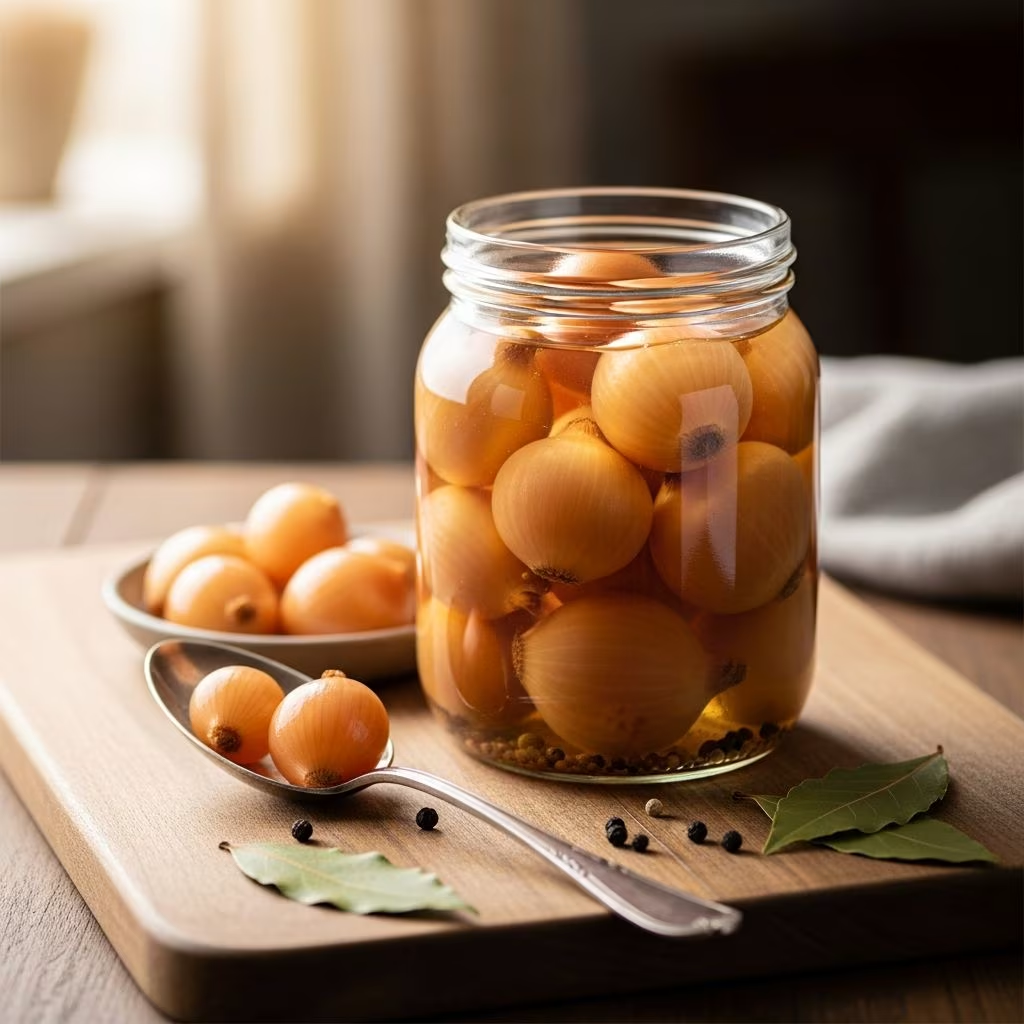
Pickled onions hold a cherished place in British culinary heritage, offering a sharp, tangy bite that complements everything from sharp cheddar to cold meats. These small, crisp gems, often enjoyed in pubs alongside pints, trace their roots to simple preservation techniques that kept harvests viable through winter months. Making them at home allows for customization while honoring time-tested methods passed down through generations.
The Allure of Traditional Pickled Onions
British pickled onions stand out for their balance of acidity, subtle sweetness, and spice-infused depth. Unlike quick pickles, these require a brining process that firms up the onions, ensuring they retain crunch even after months in storage. The hallmark flavor comes from malt vinegar, a dark, malty liquid derived from barley fermentation, which imparts a unique richness not found in white vinegar alternatives.
Historically, pickling surged in popularity during the 19th century as refrigeration was scarce. Families relied on vinegar brines to preserve pearl onions or shallots, turning modest vegetables into versatile pantry staples. Today, they evoke nostalgia, appearing at Christmas buffets, ploughman’s lunches, and cheese platters.
Selecting the Perfect Onions
Choose small, firm onions for optimal results. Pearl onions, pickling onions, or shallots—typically 1-1.5 inches in diameter—work best. Avoid larger varieties, as they may not absorb brine evenly or maintain texture. Look for unblemished skins and a solid feel, indicating freshness.
- Pearl onions: Tiny, uniform spheres ideal for whole pickling.
- Shallots: Slightly larger with a milder flavor, great for variety.
- Boiler onions: Small white onions that crisp up beautifully after brining.
Freshness is key; older onions soften during processing. Aim for about 1-2 pounds to fill 3-4 pint jars, scaling as needed.
Essential Ingredients Breakdown
The beauty of this recipe lies in its simplicity. Core components create the brine’s magic: salt for crisping, vinegar for preservation, sugar for balance, and spices for aroma.
| Ingredient | Quantity (for 2 lbs onions) | Purpose |
|---|---|---|
| Malt vinegar | 3-4 cups | Primary pickling agent; provides tang and color. |
| Pickling or kosher salt | 1/3 – 1/2 cup | Draws out moisture, enhances crunch. |
| Granulated sugar | 1/3 – 1/2 cup | Balances acidity; adjust for sweetness. |
| Mustard seeds | 1/2 – 1 tsp | Adds pungent warmth. |
| Coriander seeds | 1/2 – 1 tsp | Earthy, citrus notes. |
| Black peppercorns | 1/2 tsp | Subtle heat. |
| Bay leaf | 1-2 | Aromatic backbone. |
Variations include ground ginger, allspice, fennel seeds, or dried chili for heat. Use pickling salt to avoid cloudiness from iodized varieties.
Step-by-Step Preparation Process
Patience defines success here. The process spans 2-3 days, yielding jars ready in 4-6 weeks.
Day 1: Peeling and Brining
- Trim root ends from onions. Submerge in boiling water for 1-2 minutes, then plunge into ice water. Skins slip off easily—rub gently under running water.
- Layer peeled onions in a non-reactive bowl (glass or ceramic). Sprinkle with salt, tossing to coat evenly. Cover with cold water if needed, weighing down with a plate to submerge fully.
- Let brine 12-24 hours at room temperature. This step extracts water, preventing sogginess.
Day 2: Rinsing and Pickling Liquid
- Drain and rinse onions thoroughly under cold water to remove excess salt. Pat dry with a clean towel.
- In a saucepan, combine vinegar, sugar, and spices. Heat gently until sugar dissolves (8-10 minutes)—do not boil, to preserve onion crispness. Cool to room temperature or overnight for flavor infusion.
- Sterilize jars: Boil lids and wash jars in hot soapy water, then dry in a low oven (200°F/93°C for 10 minutes).
Day 3: Jarring and Maturing
- Pack dry onions tightly into jars, leaving 1/2-inch headspace.
- Pour cooled pickling liquid over, ensuring onions are submerged. Include spices for visual appeal.
- Seal with lids. Store in a cool, dark cupboard. Wait 4-8 weeks for flavors to meld—taste periodically after 4 weeks.
Safety and Storage Best Practices
Proper technique ensures long shelf life without canning equipment. Always use clean utensils to avoid contamination. Malt vinegar’s 5% acidity preserves safely at room temperature for 6-12 months.
- Check seals: Lids should not flex when pressed.
- Refrigerate after opening: Use within 2 months.
- Discard if: Bubbles, off odors, or mold appear.
For water bath canning, process pints for 10 minutes (adjust for altitude). This extends pantry life to 18 months.
Flavor Variations to Experiment With
While traditional recipes stick to basics, tweaks elevate the classic.
- Spicy Kick: Add sliced chilies or chili flakes to the brine.
- Sweet Profile: Increase sugar to 3/4 cup; substitute honey for nuanced malt notes.
- Herbal Twist: Incorporate fennel or caraway seeds for anise-like depth.
- Modern Fusion: Use cider vinegar for fruitier tang or add garlic cloves.
Scale spices proportionally; taste brine before cooling.
Creative Ways to Serve Pickled Onions
Beyond the pub ploughman’s—crusty bread, cheese, and pickles—these versatile onions shine in myriad dishes.
- Garnish fish and chips or bangers and mash.
- Top burgers, salads, or charcuterie boards.
- Chop into potato salad, coleslaw, or deviled eggs.
- Pair with blue cheese, pâté, or roast beef sandwiches.
Their acidity cuts richness, enhancing fatty meats and creamy cheeses.
Common Mistakes and Troubleshooting
Avoid pitfalls for pro-level results.
| Issue | Cause | Solution |
|---|---|---|
| Soft onions | Insufficient brining or hot brine | Brine 18-24 hours; cool vinegar fully. |
| Cloudy liquid | Iodized salt or metal bowls | Use pickling salt; non-reactive containers. |
| Weak flavor | Short maturation | Wait 6 weeks minimum. |
| Bitter taste | Onion skins left on | Peel meticulously; rinse peels away. |
Nutritional Insights and Health Benefits
Modest servings (about 1/4 cup) deliver low calories (around 50), fiber, and antioxidants from onions. Vinegar aids digestion; spices like mustard seeds offer anti-inflammatory properties. Low-sodium options use less salt post-brine rinse. Enjoy mindfully in balanced diets.
Frequently Asked Questions (FAQs)
Can I use regular vinegar instead of malt?
Yes, white or cider vinegar works but lacks malt’s robust flavor. Malt is traditional for authenticity.
How long do homemade pickled onions last?
Unopened: 6-12 months in a cool pantry. Opened: 2 months refrigerated.
Are they safe without canning?
Yes, due to vinegar’s acidity. Sterilize jars and submerge onions fully.
Can I halve larger onions?
Absolutely—pack tightly for even pickling. Brine time remains the same.
Why brine overnight?
It removes enzymes causing softness, ensuring crunch.
Scaling Recipes for Batches
For larger yields, multiply ingredients linearly. Example for 5 lbs onions:
- Salt: 3/4 cup
- Vinegar: 9 cups
- Sugar: 1 cup
- Spices: Triple amounts
Use a large stockpot for brine; process in batches.
References
- English Pickled Onions – Culinary Ginger — Culinary Ginger. 2015 (updated). https://culinaryginger.com/english-pickled-onions/
- English Style Pickled Onions — Old Fashioned Families. N/A. https://www.oldfashionedfamilies.com/english-style-pickled-onions/
- Homemade Traditional English Pickled Onions — Larder Love. N/A. https://larderlove.com/pickled-onions/
- Old English Style Pickled Onions — The Recipe Bandit. N/A. https://therecipebandit.com/old-english-pickled-onions/
- English Pickled Onions (Pub Style) — The Daring Gourmet. N/A. https://www.daringgourmet.com/english-pickled-onions-pub-style/
- English Pickled Onions — Healthy Canning. N/A. https://www.healthycanning.com/english-pickled-onions