The Tom Collins stands as one of the most enduring and approachable cocktails in mixology history. This timeless libation combines the botanical complexity of gin with the brightness of fresh citrus, creating a drink that appeals to both seasoned cocktail enthusiasts and those just beginning their journey into mixology. Understanding how to prepare this classic beverage opens doors to experimentation while maintaining respect for its traditional roots.
Deconstructing the Fundamentals
At its core, the Tom Collins represents a masterclass in cocktail balance. The drink brings together four essential components that work in harmony: a spirit base, citrus acidity, sweetness, and carbonation. This formula has remained virtually unchanged for over a century, testament to its architectural perfection. The beauty of this cocktail lies not in complexity but in the interplay between these fundamental elements.
The drink’s name itself carries historical significance. The Tom Collins emerged from the tradition of Collins cocktails, which encompasses variations using different spirits. The gin-based iteration became the most famous, though the Collins family extends to other spirits as well.
Building Your Ingredient Arsenal
Selecting the Right Gin
Gin selection dramatically influences your final drink’s character. The classic Tom Collins traditionally employed Old Tom gin, a sweeter and more herbal style distinct from modern London Dry varieties. This historical choice contributed significantly to the original recipe’s flavor profile. Contemporary bartenders often face a decision point: embrace tradition with Old Tom or explore the sharper botanical notes of London Dry gin.
When choosing your gin, consider the balance you want to achieve. Gin serves as the foundation, contributing roughly 40-50% of the drink’s volume. A quality gin with distinct botanical character will shine through in the final preparation. Whether you prefer juniper-forward expressions or more delicate floral notes, your gin choice establishes the drink’s personality.
Fresh Citrus: The Non-Negotiable Element
Fresh lemon juice represents perhaps the most critical ingredient in achieving authenticity. Bottled or powdered alternatives simply cannot replicate the vibrancy and complexity of freshly squeezed juice. The moment you cut into a fresh lemon and extract its juice, you gain access to flavors that commercial processing destroys.
The standard ratio calls for one ounce of fresh lemon juice per drink. This measurement provides the necessary acidity to balance the gin’s alcohol content and the simple syrup’s sweetness. Premium results demand using lemons at their peak ripeness—firm, unblemished specimens that have been stored properly. Some bartenders prefer rolling lemons on the counter before juicing, a technique that breaks down cell walls and increases juice yield.
Sweetness Component and Simple Syrup
Simple syrup provides the necessary sweetness without introducing additional liquid that might dilute the drink excessively. The standard ratio uses one-half ounce per cocktail, though this measurement remains flexible based on personal preference and the specific citrus used. Creating homemade simple syrup requires nothing more than equal parts sugar and water brought to a boil, then cooled completely.
Some modern interpretations employ honey syrup or other sweetening agents to add complexity. These variations expand the drink’s flavor dimensions while maintaining its essential character. The sweetness component exists not to mask the citrus but to integrate it with the spirit, creating a unified whole.
Carbonation: Sparkling Water vs. Club Soda
The final major ingredient—carbonation—transforms the drink from still cocktail to refreshing sparkling beverage. Club soda and sparkling water serve this function, though subtle differences exist between them. Club soda contains added minerals and sodium, contributing a slight saltiness and mouthfeel enhancement. Sparkling water provides pure carbonation without additions.
Your choice here is genuinely a matter of preference. The carbonation serves multiple purposes: it adds visual appeal through bubbles, contributes textural complexity, and aids in hydration by diluting the cocktail to a more manageable alcohol level. The typical proportion ranges from one to two ounces of carbonated liquid.
Garnish Considerations Beyond Aesthetics
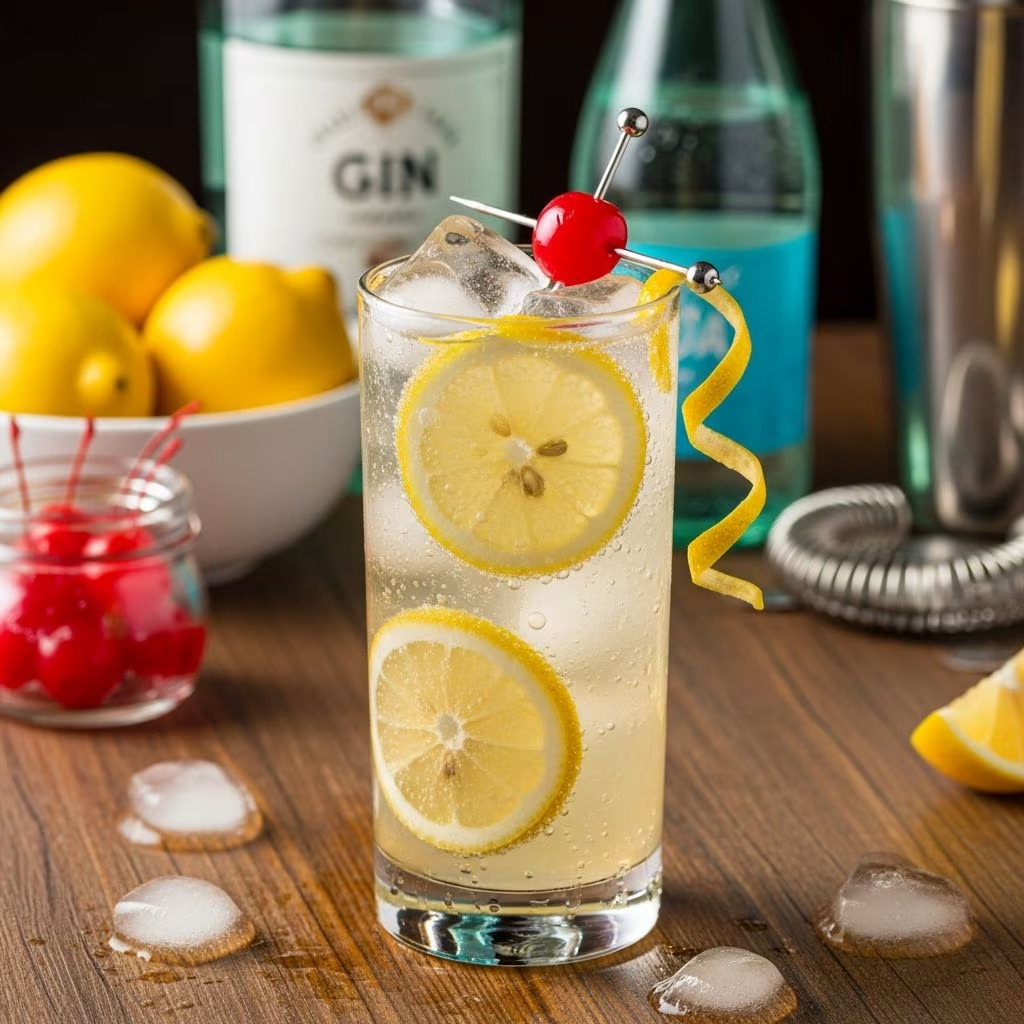
While garnishes often receive attention for purely visual reasons, they contribute meaningfully to the drinking experience. A traditional Tom Collins garnish includes both a lemon wheel and a maraschino cherry. These elements serve functional and sensory purposes.
The lemon wheel provides visual warmth and offers the option of additional citrus oil expression when squeezed into the drink. Premium maraschino cherries—particularly Luxardo varieties—contribute subtle almond and cherry notes that complement the gin’s botanical profile. The citrus and cherry garnish combination creates a cohesive flavor narrative that extends from first impression through the final sip.
Consider using fresh citrus wheels cut immediately before serving rather than pre-cut varieties. This ensures maximum aromatic release and visual appeal.
The Preparation Method: Technique Matters
Building vs. Shaking: Understanding the Difference
The Tom Collins can be prepared through two distinct methods, each yielding slightly different results. The simpler building method involves combining ingredients directly in a tall glass and stirring gently. This approach requires minimal equipment and delivers a drink with more dilution from the ice sitting in the mixture during preparation and consumption.
The shaking method—adding all ingredients except carbonation to a cocktail shaker with ice, shaking vigorously, then straining over fresh ice—creates a more thoroughly chilled and slightly more concentrated drink. The shaking action achieves faster temperature reduction and creates a desirable chill before the drink reaches the glass.
Step-by-Step Execution
Whichever method you select, execution precision matters. Begin by filling your chosen glass with quality ice—preferably large cubes that melt slowly and maintain drink temperature without rapid dilution. Add your measured gin, fresh lemon juice, and simple syrup. Stir these base ingredients thoroughly, allowing them to combine and the flavors to integrate.
Only after this initial combination should you add your carbonated component. The carbonation introduction must be handled gently; vigorous stirring at this stage will dissipate bubbles unnecessarily. A final gentle stir integrates the carbonation without destroying it. Taste at this point and adjust if desired—adding extra lemon juice for tang, additional syrup for sweetness, or more gin for strength.
Flavor Variations and Creative Interpretations
Contemporary Twists on a Classic
While respecting tradition remains important, creative bartenders have developed meaningful variations. Substituting Old Tom gin for London Dry creates a drier, more herbaceous profile. Some establishments prepare a “Brandy Collins” variant using brandy instead of gin, resulting in a richer, wine-forward interpretation.
Infusing simple syrup with herbs like basil, thyme, or rosemary adds aromatic complexity. Smoked simple syrup appeals to those seeking deeper, more sophisticated flavor notes. These variations maintain the fundamental Tom Collins structure while expanding its flavor vocabulary.
Seasonal and Ingredient-Driven Variations
The inherent flexibility of the Tom Collins formula accommodates seasonal evolution. Substitute lime juice during particular seasons for different citrus character. Add a small measure of elderflower liqueur for delicate floral notes. A touch of bitters creates enhanced depth and complexity.
| Variation | Primary Change | Flavor Impact |
|---|---|---|
| Herbal Tom Collins | Herb-infused syrup | Added aromatic complexity |
| Aged Tom Collins | Barrel-rested gin | Enhanced depth and richness |
| Tropical Tom Collins | Pineapple or passion fruit juice | Fruity sweetness and exoticism |
| Spiced Tom Collins | Spiced simple syrup | Warming spice undertones |
Serving and Presentation Techniques
Glassware Selection
The traditional Collins glass—a tall, straight-sided vessel holding 10-14 ounces—represents the optimal choice. This glassware accommodates the drink’s volume while providing sufficient height for proper ice integration and carbonation retention. Collins glasses feature adequate thickness to maintain temperature while offering excellent visibility of the drink’s appearance.
When proper Collins glasses prove unavailable, any tall highball or drinking glass suffices. The key consideration involves maintaining adequate volume capacity and surface area exposure.
Temperature and Dilution Management
Proper chilling before serving significantly impacts the final drinking experience. Pre-chilling your glass by filling it with ice for several minutes before preparation ensures the completed cocktail remains cold throughout consumption. The ice in a Tom Collins melts gradually during drinking, providing ongoing dilution that enhances flavor evolution and prevents excessive alcohol intensity.
Frequently Asked Questions
Can I prepare Tom Collins in advance for parties?
Preparing the base components (gin, lemon juice, and simple syrup) in advance works well, but carbonation must be added immediately before serving. The carbonation dissipates quickly once combined with other ingredients, so timing proves essential for optimal results.
What is the difference between Old Tom and London Dry gin?
Old Tom gin contains added sweetness and often features additional botanical elements beyond juniper, creating a rounder, more complex profile. London Dry gin emphasizes juniper with a drier character. Old Tom historically defines the authentic Tom Collins, though modern bartenders use both styles.
Should I use fresh or bottled lemon juice?
Fresh lemon juice invariably produces superior results, offering brightness and complexity that bottled juice cannot match. Freshly squeezed juice should always be your preference when possible.
Can I make a non-alcoholic version?
Absolutely. A non-alcoholic Collins Mix exists as a commercial product, though you can easily create a virgin version by replacing gin with additional simple syrup and increasing the lemon juice proportionally.
What is the proper alcohol content of a Tom Collins?
A standard Tom Collins typically contains approximately 15-17% ABV when prepared with the traditional 2-ounce gin measure and adequate carbonation for dilution.
Professional Bartending Insights
Experienced bartenders emphasize several principles for consistent excellence. Ingredient quality forms the foundation—pristine citrus, premium spirits, and proper carbonation create meaningful differences that casual drinkers immediately perceive. Technique consistency matters equally; establishing personal protocols for measurement, chilling, and carbonation integration ensures every drink meets your standards.
Understanding your audience proves valuable for customization. Some prefer more aggressive gin flavors; others seek lighter, more refreshing profiles. Offering subtle variations demonstrates bartending professionalism and customer attentiveness.
Historical Context and Evolution
The Tom Collins emerged from 19th-century cocktail culture, documented in Harry Johnson’s 1882 bartending guide with specific measurements and techniques. The drink’s historical recipe employed Old Tom gin, a style that defined the cocktail’s original character. Modern interpretations balance respect for tradition with contemporary ingredient availability and evolving taste preferences.
The Collins family of cocktails extends beyond gin, encompassing numerous spirits-based variations. This formula’s enduring popularity across 140+ years demonstrates its fundamental soundness and adaptability.
Conclusion: Mastering the Timeless Classic
The Tom Collins represents more than a simple cocktail; it embodies principles of balance, quality, and approachability that define excellent mixology. Mastering its preparation provides foundation knowledge applicable across numerous cocktail families. Whether prepared for personal enjoyment, entertaining guests, or professional service, understanding this classic drink’s nuances transforms you from casual drinker to informed enthusiast. The combination of botanical spirits, bright citrus, subtle sweetness, and refreshing carbonation continues captivating palates across generations, ensuring the Tom Collins’ place among cocktail immortals.
References
- Tom Collins Cocktail Recipe — Love and Lemons. Accessed 2026-04-09. https://www.loveandlemons.com/tom-collins-cocktail/
- Tom Collins Cocktail — Kitchen Swagger. Accessed 2026-04-09. https://kitchenswagger.com/tom-collins-cocktail-recipe/
- Best Tom Collins Recipe — Cookie and Kate. Accessed 2026-04-09. https://cookieandkate.com/tom-collins-recipe/
- Tom Collins — Wikipedia. Accessed 2026-04-09. https://en.wikipedia.org/wiki/Tom_Collins
- Tom Collins Gin Cocktail Recipe — YouTube. Accessed 2026-04-09. https://www.youtube.com/watch?v=Fs2eohpln2M