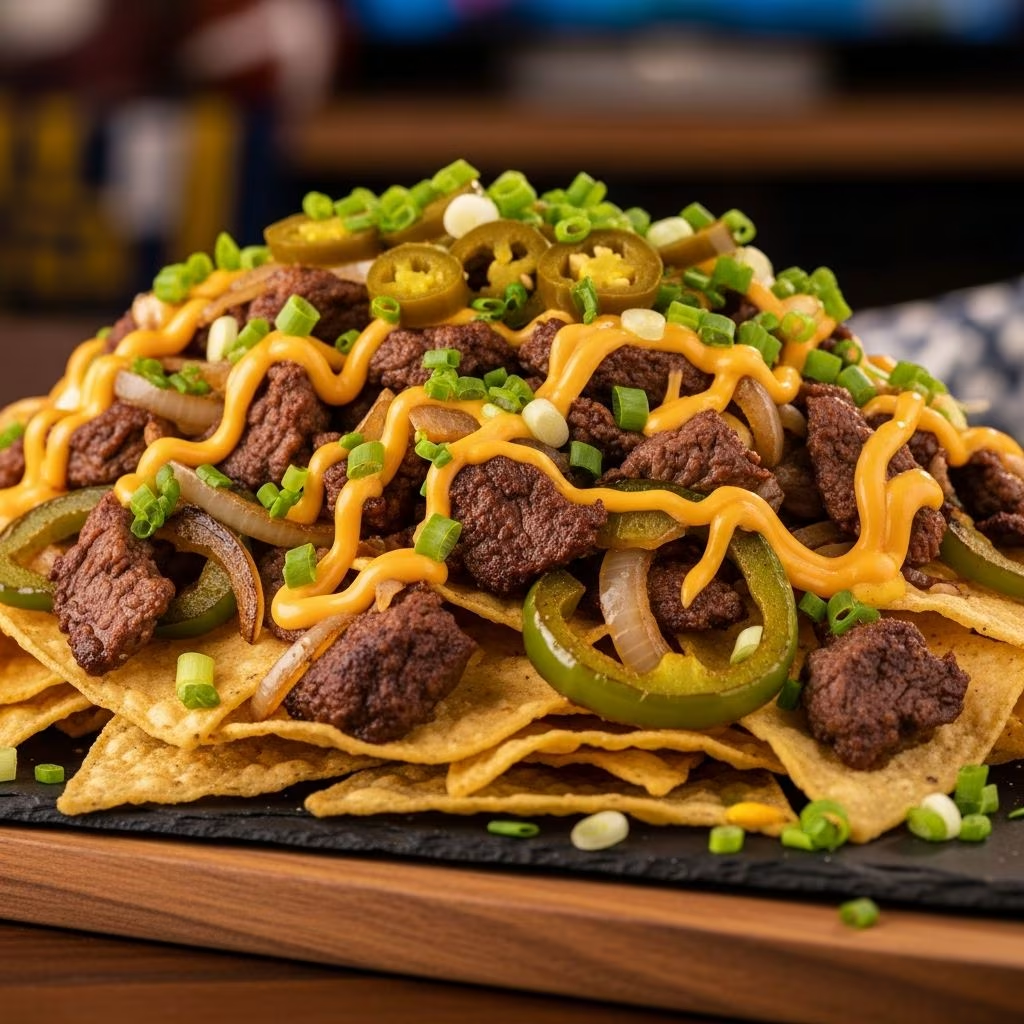
When two iconic American dishes collide, magic happens. Philly cheesesteak nachos represent the perfect marriage between Philadelphia’s legendary sandwich and the beloved nacho, creating a handheld appetizer that satisfies multiple cravings simultaneously. This fusion dish has become a staple at tailgates, sports viewing parties, and casual gatherings because it combines the savory, thinly-sliced beef and sautéed vegetables of a traditional cheesesteak with the crispy, shareable format of nachos.
The beauty of this recipe lies in its versatility and accessibility. Whether you’re cooking for a small family gathering or preparing food for a large group, Philly cheesesteak nachos scale effortlessly. The combination of crispy tortilla chips as the foundation, tender sliced beef as the protein, and melted cheese as the binding element creates a textural experience that keeps people coming back for more.
Understanding the Foundation: Why This Combination Works
The success of Philly cheesesteak nachos stems from thoughtful ingredient pairing and technique. The foundation begins with quality tortilla chips that provide structural integrity while remaining crispy throughout the cooking process. Unlike traditional nachos that can become soggy, the layering method used in this recipe allows moisture to distribute evenly while maintaining textural contrast.
The beef component requires attention to detail. Freezing the steak before slicing ensures you can cut it thinly and uniformly, which was originally a signature technique in authentic Philly cheesesteak preparation. This thin slicing increases the surface area for flavor absorption from seasonings and cooking fats, while also allowing the meat to cook through quickly without drying out.
Vegetables in this dish serve multiple purposes: they add nutritional value, provide moisture and flavor depth, and contribute to the authentic cheesesteak experience. Bell peppers and onions are traditional choices, though variations exist depending on personal preference and availability.
Essential Ingredients for Success
Creating exceptional Philly cheesesteak nachos begins with selecting appropriate components. Here’s what you’ll need to gather:
- Beef Selection: Choose ribeye steak, sirloin steak, or flank steak depending on preference and budget. Ribeye offers more marbling and tenderness, while sirloin provides a leaner option. Some cooks prefer using pre-packaged frozen sandwich steak meat for convenience.
- Cheese Options: Mozzarella and provolone are traditional choices that melt smoothly. American cheese, cheddar, and pepper jack also work well, offering different flavor profiles. A combination of cheeses creates more complex flavors than using a single variety.
- Vegetables: One medium onion and one green bell pepper constitute the basic vegetable foundation, though additional peppers like red or yellow varieties add sweetness and visual appeal. Some recipes include jalapeños for heat.
- Base Component: Standard tortilla chips work perfectly, though selecting thicker chips prevents excessive breakage during layering and serving.
- Cooking Fats: Olive oil is preferred for its flavor contribution and cooking properties at medium-high temperatures.
- Seasonings: Salt, pepper, and optional additions like chili powder or cumin enhance the beef’s savory qualities.
Preparation Techniques That Transform the Dish
Success in the kitchen often depends on understanding why techniques matter, not just following instructions mechanically. The preparation of Philly cheesesteak nachos involves several key steps that directly impact the final result.
Beef Preparation and Cooking
Begin by freezing your selected steak for 20 to 40 minutes. This freezing period partially solidifies the meat, making it significantly easier to slice thinly and uniformly against the grain. Uniform thickness ensures even cooking throughout, preventing some pieces from becoming tough while others remain undercooked.
Once sliced, season the beef with salt and pepper before cooking. Heat olive oil in a large skillet over medium-high heat. Add the steak in batches to avoid overcrowding, which would cause steaming rather than searing. Cook until the meat loses its pink color, typically requiring about one minute per batch when working with thin slices. Remove cooked beef to a warm plate, keeping it separate from the next batch to ensure consistent cooking.
Vegetable Preparation
After removing the beef, use the same skillet to cook the prepared vegetables. Slice onions and peppers into thin strips rather than mincing them to preserve their structure during cooking. Sauté these vegetables until softened, typically requiring 3 to 5 minutes. This cooking step develops the vegetables’ natural sugars, creating deeper flavors and a texture that complements the beef and cheese.
Assembly Method
The assembly process significantly affects the final result. Start with a parchment-lined baking sheet or cast iron skillet as your base. Arrange tortilla chips in a single layer, distributing them evenly across the cooking surface. This foundation layer prevents chips from sliding around during subsequent layering.
Sprinkle one cup of your chosen shredded cheese over the chips, followed by half of your beef and vegetable mixture. Create a second layer with additional chips, another cup of cheese, and the remaining beef and vegetables. Top with remaining cheese to create a cohesive, melted surface.
Cheese Sauce Option: An Alternative Approach
While direct cheese layering works excellently, some cooks prefer preparing a cheese sauce for more even distribution. This method involves creating a béchamel sauce foundation by melting butter and whisking in flour to create a roux. Gradually add milk while whisking to create a thin gravy consistency before incorporating grated cheese off heat.
This sauce method offers advantages for larger batches and provides more control over cheese distribution. However, it requires additional preparation time and attention to temperature management to prevent scorching.
Baking Process and Timing
Preheat your oven to 400°F for optimal melting without burning the chip edges. Some recipes call for temperatures between 350°F and 385°F, which cook more gently but may require additional time. The baking process typically takes 10 to 12 minutes, though timing varies based on your oven’s actual temperature and the thickness of your cheese layers.
Remove the nachos when cheese has fully melted and shows slight browning at the edges. Overcooking results in rubbery, oil-separated cheese, while undercooking leaves portions of cheese unmelted and chips insufficiently heated.
Customization and Variation Ideas
The fundamental structure of Philly cheesesteak nachos accommodates numerous creative variations without compromising the dish’s identity:
| Variation Category | Options | Impact on Flavor/Texture |
|---|---|---|
| Protein Substitutes | Ground beef, shredded chicken, turkey | Lighter alternatives with different textural qualities |
| Additional Vegetables | Mushrooms, jalapeños, red onions, tomatoes | Increased complexity and nutritional value |
| Cheese Combinations | Cheddar and provolone, pepper jack and mozzarella | Unique flavor profiles and melting characteristics |
| Specialty Toppings | Sour cream, green onions, fresh cilantro, hot sauce | Added richness, freshness, and heat levels |
| Base Alternatives | Waffle-cut fries replacing tortilla chips | Sturdier structure with different texture experience |
Serving Suggestions and Presentation
Timing is crucial when serving Philly cheesesteak nachos, as they’re best enjoyed immediately after removal from the oven while cheese remains molten and chips retain maximum crispness. Transfer the entire pan to a heat-safe serving area, or divide portions into smaller servings dishes to maintain temperature longer.
Accompany the nachos with traditional condiments including sour cream, hot sauce, and additional green onions scattered across the top for freshness. Some diners enjoy ketchup as an optional accompaniment, maintaining connection to the original cheesesteak experience.
Consider serving with lime wedges or a fresh salsa on the side for those preferring additional brightness. This approach allows guests to customize their portions according to personal preference.
Storage and Reheating Considerations
Philly cheesesteak nachos are optimally enjoyed fresh, but leftovers can be refrigerated in an airtight container for up to three days. Reheating requires careful attention to prevent cheese from becoming rubbery and chips from becoming excessively soft. Transfer portions to a baking sheet and reheat at 350°F for 8 to 10 minutes, monitoring closely to prevent overdrying.
The microwave works in a pinch but often produces uneven heating and compromised texture. When possible, use oven reheating for superior results.
Frequently Asked Questions
Can I prepare Philly cheesesteak nachos in advance?
You can prepare individual components ahead of time—cook the beef and vegetables earlier in the day, then assemble and bake shortly before serving. Avoid assembling more than 30 minutes before baking, as chips begin absorbing moisture from cheese and vegetables.
What’s the best cheese for this recipe?
Provolone and mozzarella are traditional choices that melt smoothly and contribute authentic flavor. American cheese provides excellent melting properties and mild flavor, while pepper jack adds heat. Blending two varieties creates superior results compared to single-cheese preparations.
How can I make this recipe healthier?
Consider using leaner cuts of beef like sirloin, increasing vegetable quantities, or reducing overall cheese quantity. Baking chips rather than fried versions also reduces fat content without significantly compromising the eating experience.
Is freezing the steak really necessary?
While not absolutely required, freezing for 20 to 40 minutes significantly improves slicing consistency and uniformity. This step takes minimal time but substantially impacts the final product’s quality.
Can I use a cast iron skillet instead of a baking sheet?
Yes, cast iron works excellently for this recipe and provides superior heat distribution. The cast iron’s properties help achieve even melting and prevent chips from burning on edges while centers remain undercooked.
Why Philly Cheesesteak Nachos Remain Popular
This fusion dish transcends typical appetizer status because it satisfies multiple dining preferences simultaneously. Meat lovers appreciate the beef component, cheese enthusiasts enjoy the melted dairy elements, and vegetable advocates benefit from incorporated peppers and onions. The handheld format makes sharing effortless, while the familiar flavor profile appeals to traditional palates even as creative variations cater to adventurous eaters.
Philly cheesesteak nachos represent the evolution of comfort food, honoring culinary traditions while embracing modern entertaining needs. Whether served at casual gatherings or elevated entertaining occasions, this dish delivers satisfaction and crowd-pleasing enjoyment that justifies its status as a game-day and party staple.
References
- Philly Cheesesteak Sheet-Pan Nachos — Dairy Farmers of Wisconsin. 2024. https://www.wisconsincheese.com/recipes/3698/philly-cheesesteak-sheet-pan-nachos
- The Best Philly Cheesesteak Nachos Recipe — Sizzling Eats. https://www.sizzlingeats.com/philly-cheesesteak-nachos/
- Philly Cheesesteak Nachos — Real Food by Dad. https://realfoodbydad.com/philly-cheesesteak-nachos/
- Loaded Philly Cheese Steak Nachos — Mostly Homemade Mom. https://www.mostlyhomemademom.com/loaded-philly-cheese-steak-nachos/
- Cheesesteak Nachos Recipe — Tablespoon.com. https://www.tablespoon.com/recipes/cheesesteak-nachos/ef44562b-64f1-4d1e-8faf-bcb4b721f493