Tiramisu, the beloved Italian dessert combining coffee, mascarpone, and cocoa, has inspired countless bakers to reimagine it as an elegant layer cake. This transformation takes the classic flavors of tiramisu and presents them in a visually stunning format that captivates both home bakers and professional pastry chefs. A tiramisu layer cake combines the structural elegance of a traditional cake with the sophisticated flavor profile of Italy’s most iconic dessert.
The appeal of a tiramisu layer cake lies in its ability to deliver restaurant-quality results in a home kitchen. Unlike traditional tiramisu, which requires assembly and chilling time, a layered version showcases the components in distinct, beautiful strata. Each bite reveals the interplay between tender cake, aromatic coffee, and luxurious cream—creating a memorable dessert experience that seems far more complex than it actually is to prepare.
Understanding the Foundation: Building Your Cake Layers
The foundation of any exceptional tiramisu layer cake begins with the sponge cake base. This component must be sturdy enough to support the weight of creamy fillings while remaining tender and moist. Several approaches work well for achieving this balance.
Sponge Cake Varieties for Your Layer Cake
The most traditional approach utilizes a genoise sponge, which relies on whipped eggs and sugar rather than butter for its structure. This method creates an exceptionally light, airy crumb that absorbs coffee syrups beautifully. The genoise technique involves beating eggs on medium speed for approximately one minute, then gradually incorporating sugar while continuing to beat for at least ten minutes until the mixture becomes pale yellow and doubles in volume. This extended beating incorporates vital air, which creates the cake’s signature delicate texture.
Alternatively, a butter-based sponge cake offers a richer mouthfeel and often proves more forgiving for novice bakers. This approach combines softened butter, sugar, and eggs using the creaming method—beating butter and sugar together until light and fluffy before adding eggs gradually. This method requires less precise timing than genoise while still producing excellent results.
A third option involves self-raising flour mixed with butter and brown sugar, creating a denser, more substantial layer cake. This variation works particularly well when you want a cake that maintains structural integrity through multiple layers and generous frosting applications.
Essential Ingredients for Cake Layers
| Ingredient | Purpose | Typical Amount (per cake) |
|---|---|---|
| Flour | Structure and crumb development | 130-400g depending on method |
| Eggs | Binding, leavening, and moisture | 6-7 large eggs |
| Sugar | Sweetness and browning | 200-400g |
| Butter or Oil | Richness and tenderness | 0-168g depending on recipe |
| Baking Powder | Leavening agent | ½-2½ teaspoons |
| Vanilla Extract | Flavor enhancement | 1-2 teaspoons |
Room temperature ingredients prove critical for success. Eggs at room temperature incorporate more effectively into batters, creating superior volume and crumb structure. Similarly, butter at room temperature blends more thoroughly with sugar, resulting in an emulsion that traps air bubbles essential for a light cake.
The Coffee-Soaked Layer: Creating Depth and Moisture
What transforms a standard layer cake into an authentic tiramisu experience is the coffee-soaking component. This element adds moisture, flavor intensity, and the unmistakable bittersweet notes that define tiramisu.
Preparing Your Espresso Soak
The most straightforward approach combines hot water with instant coffee, allowing flavors to dissolve fully. A typical mixture uses approximately 100 milliliters of water dissolved with 2 tablespoons of instant coffee. For enhanced complexity, many bakers add 75 milliliters of coffee liqueur such as Kahlúa or similar products. This addition contributes both coffee intensity and subtle sweetness that complements the mascarpone layers.
The soak benefits from cooling completely before application. This prevents the warm liquid from melting frosting or creating soggy bottom layers. Some bakers add a small amount of granulated or light brown sugar to their soak mixture, creating a light syrup that clings to cake layers more effectively than unsweetened liquid.
Application Techniques
Once your cake has cooled completely, carefully slice it into distinct layers. A serrated knife or cake leveler ensures even cuts. Place the first layer on your serving platform, then drizzle 4-5 tablespoons of espresso mixture across the surface. The amount matters—sufficient liquid ensures moistness without creating a soggy cake. A saturated but not dripping cake layer achieves the ideal texture.
Allow each soaked layer a few moments for the liquid to absorb before adding frosting. This brief pause prevents the frosting from sliding around on a wet surface, making assembly more manageable.
Mastering the Mascarpone Frosting and Cream Filling
The frosting and filling layers define the cake’s final texture and flavor. While some recipes combine these elements into one component, layering them separately creates more nuanced results.
Mascarpone-Based Fillings
Traditional tiramisu filling combines mascarpone cheese with whipped cream and sugar. Mascarpone, a soft Italian cheese with high fat content, provides richness and a delicate flavor that complements coffee without overwhelming it. Begin by beating together the sugar and eggs until the mixture becomes frothy and pale—this step is crucial, as it creates an emulsion that gives the filling body and stability.
Once the egg mixture reaches the correct consistency, gently fold in the mascarpone cheese, taking care not to overwork it. Overbeating mascarpone causes it to break down, releasing excess moisture and creating a grainy texture. Fold the cheese in using a rubber spatula with broad, sweeping motions.
Next, whip heavy cream to stiff peaks in a separate bowl. Whipping cream requires fat content of at least 30 percent for proper volume and stability. Gently fold the whipped cream into the mascarpone mixture in two additions, maintaining as much volume as possible. The result should be light, fluffy, and mousse-like in texture.
Alternative Frosting Approaches
For a different flavor profile, consider a cream cheese frosting combined with butter and powdered sugar. This approach provides tanginess that contrasts beautifully with the coffee elements. Beat softened butter until creamy, gradually add powdered sugar, then incorporate softened cream cheese and dissolved instant coffee. This frosting holds up particularly well in warm environments and creates beautiful piping possibilities.
Some bakers prefer a zabaglione frosting—an Italian custard made from egg yolks, sugar, and Marsala wine, lightened with whipped cream. This traditional approach delivers exceptional flavor but requires confidence with raw eggs or the ability to pasteurize them through gentle heating.
Assembly and Decoration: Bringing It All Together
Successfully assembling a layer cake requires patience, proper tools, and a clear methodology. Invest in a turntable to simplify rotation and frosting application.
Step-by-Step Assembly Process
- Place the first cake layer on a cardboard cake circle or serving platter
- Drizzle 4-5 tablespoons of espresso mixture evenly across the layer
- Pipe a dam of frosting around the outer edge using a piping bag
- Fill the center with approximately one-third of the tiramisu filling
- Smooth the filling toward the frosting dam using an offset spatula
- Repeat with remaining cake layers and filling
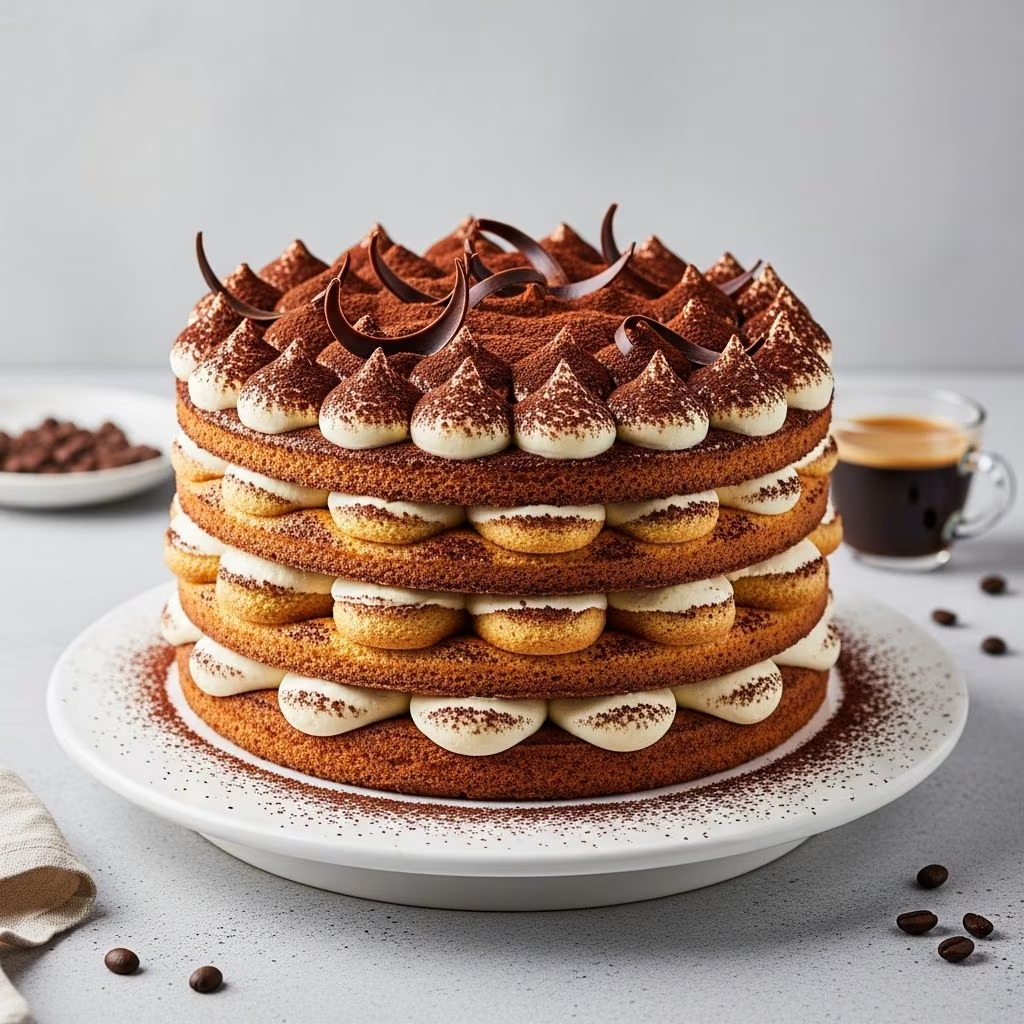
- Top with the final cake layer and apply a crumb coat—a thin frosting layer that seals in crumbs
- Refrigerate for 30 minutes to one hour until the crumb coat firms
- Apply the final frosting coat, smoothing with an offset spatula or bench scraper
Finishing Touches
The final presentation deserves attention. Dust the top generously with unsweetened Dutch-processed cocoa powder, creating a sophisticated appearance that echoes traditional tiramisu. For added elegance, grate dark chocolate shavings across the cocoa layer or create geometric patterns using cocoa and finely chopped chocolate.
Some bakers add chocolate crumbs made from crushed ladyfinger biscuits or chocolate cake, creating textural variety in each bite. A light dusting of powdered sugar offers understated elegance.
Storage, Chilling, and Serving Guidance
A finished tiramisu layer cake benefits from adequate chilling time. Refrigerate for at least 4-6 hours before serving, preferably overnight. This allows flavors to meld, the frosting to firm properly, and the entire cake to set into neat, sliceable portions.
Tiramisu layer cake stores excellently in the refrigerator for up to 4 days when properly covered with plastic wrap or stored in an airtight container. The cold temperature prevents frosting from softening while flavors continue developing. Remove from refrigeration approximately 15 minutes before serving to allow frosting to soften slightly and flavors to brighten.
For longer storage, freeze the cake for up to 2 months. Wrap thoroughly in plastic wrap and aluminum foil to prevent freezer burn. Thaw in the refrigerator for 8-12 hours before serving.
Common Questions About Tiramisu Layer Cake
Can I Make This Cake Without Raw Eggs?
Yes. Simply omit the eggs from the filling and beat together powdered sugar, mascarpone cheese, and whipped cream until thick and spreadable. The texture differs slightly but remains delicious.
What Type of Coffee Works Best?
Strong brewed espresso or instant coffee dissolved in hot water both work well. Instant coffee offers convenience and consistency. For the most intense flavor, use espresso powder specifically formulated for baking.
Can I Substitute the Coffee Liqueur?
Absolutely. Omit it entirely for a non-alcoholic version, or substitute with rum, brandy, or another liqueur. The soak will taste different but remain delicious.
How Many Servings Does This Cake Provide?
An 8-inch layer cake with 3-4 layers typically serves 12-15 people, depending on portion size.
Why Is My Frosting Too Soft?
Mascarpone or cream cheese may have been too warm when added. Chill both ingredients before use. Additionally, ensure your kitchen isn’t excessively warm, as this causes frosting to soften rapidly.
Conclusion: Creating Your Signature Dessert
A tiramisu layer cake represents the perfect bridge between traditional Italian desserts and modern cake-making techniques. By mastering the components—tender sponge cake, aromatic coffee soak, and luxurious mascarpone cream—you create a dessert that impresses guests while remaining achievable for home bakers at any skill level. The combination of familiar flavors presented in an elegant format transforms tiramisu from a dessert you buy at Italian restaurants into a signature creation you confidently serve at your own table.
References
- Tiramisu Layer Cake — An Italian in my Kitchen. Accessed April 2026. https://anitalianinmykitchen.com/tiramisu-layer-cake/
- Jane’s Patisserie’s Tiramisu Layer Cake Recipe — The Happy Foodie. Accessed April 2026. https://thehappyfoodie.co.uk/recipes/janes-patisseries-tiramisu-layer-cake/
- Tiramisu Layer Cake — Teak & Thyme. Accessed April 2026. https://teakandthyme.com/tiramisu-layer-cake/
- Tiramisu Layer Cake: Your Favorite Italian Dessert in Cake Form — Life, Love and Sugar. Accessed April 2026. https://www.lifeloveandsugar.com/tiramisu-layer-cake/
- The Ultimate Tiramisu Layer Cake — Milk Bar Recipes. Accessed April 2026. https://milkbarstore.com/blogs/recipes/tiramisu-cake