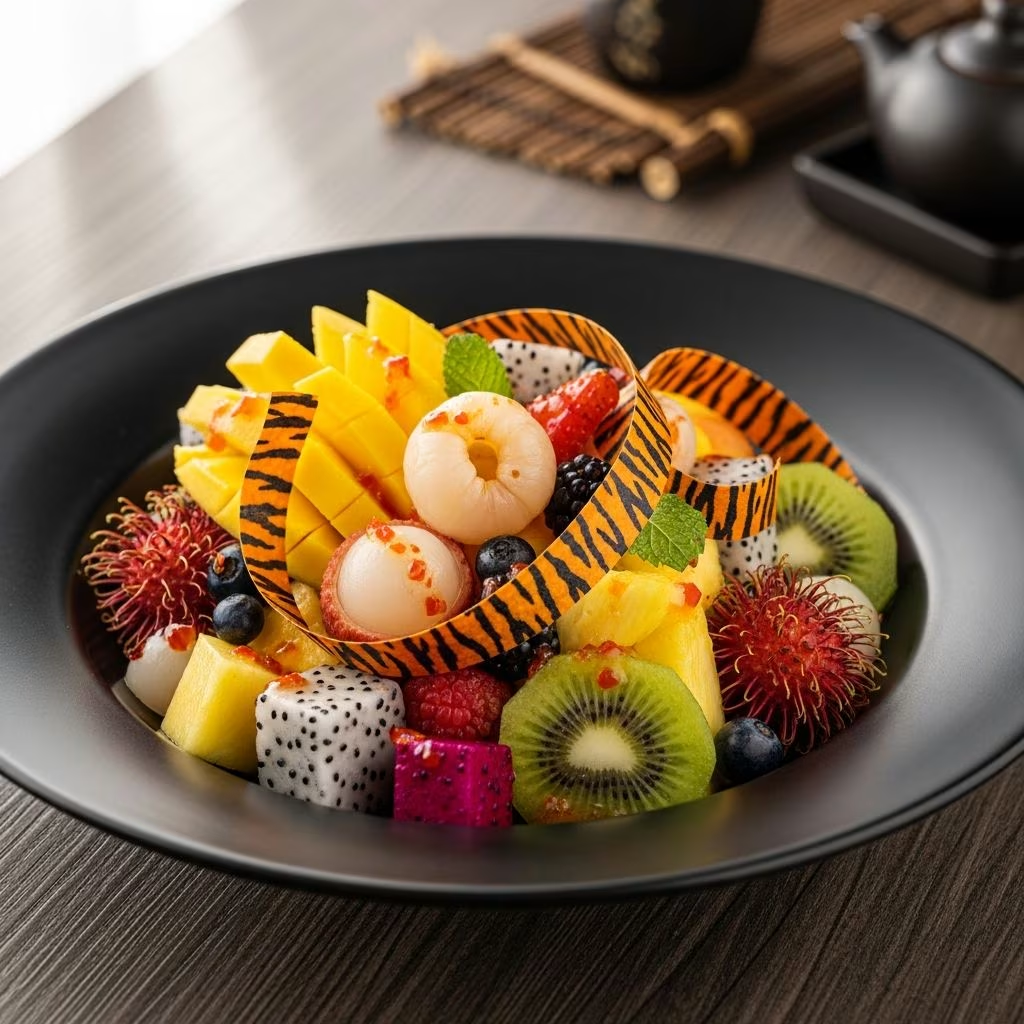
The tiger fruit salad represents a fascinating fusion of culinary traditions, bringing together the delicate sweetness of ripe stone fruits with the bold, commanding flavors characteristic of Southeast Asian cuisine. This sophisticated dish transcends the ordinary fruit salad experience by incorporating elements that challenge the palate—spicy heat, herbaceous freshness, nutty undertones, and a balance of sweet and savory notes that work in harmonious concert. Whether you’re preparing this for a summer gathering, seeking a light yet satisfying appetizer, or looking to impress guests with an unexpected flavor profile, understanding the nuances of this recipe transforms it from a simple preparation into a culinary statement.
Understanding the Core Components
At its foundation, the tiger fruit salad builds upon a carefully selected base of underripe stone fruits that maintain their structural integrity throughout preparation. The choice of fruit serves as the canvas upon which all other elements paint their flavors. Peaches, nectarines, and plums represent the traditional choices, though adventurous cooks might explore mangoes or pears for variation. The firmness of underripe fruit becomes essential—overripe specimens will dissolve into the dressing, losing the textural contrast that makes this dish memorable.
The aromatic profile derives from a trinity of fresh herbs and aromatics: cilantro provides an herbaceous counterpoint, while spring onions contribute a gentle allium sharpness, and celery adds both textural crispness and subtle vegetal notes. These elements work collectively to establish the foundation upon which the remaining flavors build.
The Science of Flavor Development
What distinguishes this salad from conventional fruit preparations is the marinating technique employed during the initial stages of preparation. Rather than simply combining all ingredients at once, the fruit undergoes a preliminary maceration process with vinegar, sugar, salt, and the sliced serrano chilli. This approximately ten-minute window allows several crucial transformations to occur at the molecular level.
The salt draws out the fruit’s natural juices through osmosis, concentrating the inherent sugars while simultaneously seasoning the flesh throughout. The vinegar acts as a flavor amplifier and preservative, creating a slightly acidic environment that brightens the fruit’s natural characteristics. The serrano chilli, deseeded according to preference for heat tolerance, begins releasing its capsaicinoid compounds—the alkaloid responsible for the sensation of spiciness—into the surrounding liquid.
The sugar serves dual purposes: it balances the vinegar’s acidity while drawing additional moisture from the fruit, creating a flavorful marinade that will later serve as the base for the final dressing. This careful orchestration of chemical reactions produces a depth of flavor impossible to achieve through simple tossing.
Assembling the Herbal Base
While the fruit undergoes its transformation, the preparation of the herb and vegetable components requires equal attention. The cilantro should be gathered into a bundle and cut into approximately two-inch segments—this length encourages the herb to distribute evenly throughout the salad while preventing it from becoming pulverized into fine particles that would muddy the presentation.
The spring onions and celery require diagonal slicing, a technique that accomplishes multiple objectives. Beyond creating an aesthetically pleasing presentation, the diagonal cut increases the surface area of these vegetables, allowing them to absorb and distribute flavors more effectively. The angled slices also create a more interesting textural experience when tasting, as they don’t collapse uniformly under the teeth but rather provide varied resistance.
These components—cilantro, spring onions, and celery—should be tossed together before adding any liquid element. This ensures even distribution and allows each piece to maintain its distinct character rather than clumping together when moistened.
Crafting the Sesame-Soy Dressing
The dressing represents the crucial bridge connecting all disparate elements into a cohesive whole. After the fruit has marinated and released its juices, carefully strain it through a fine-mesh sieve, preserving the flavorful liquid while removing the fruit solids. This reserved liquid becomes the foundation of an elegant dressing that ties everything together.
To this liquid, add toasted sesame oil—never use regular sesame oil, as the toasting process develops the nutty, complex flavors essential to the final product. The quantity might seem modest, but sesame oil possesses intense aromatic compounds that yield maximum flavor impact even in small amounts. Low-sodium soy sauce contributes umami depth, that savory fifth taste that adds complexity and makes the palate register the salad as sophisticated rather than simplistic.
Fresh lime zest bridges the acid and brightness elements, introducing citrus notes without the excessive liquid that whole lime juice would provide. When whisked together, these components create an emulsion-like mixture that clings to the vegetables while maintaining an elegant, light character.
The Final Assembly and Textural Balance
Pour the prepared dressing over the herb and vegetable mixture, ensuring that every piece receives adequate coating. The fresh components will absorb these flavors while releasing their own essences into the dressing. Only after this step should the marinated fruit be gently folded in—gentle handling prevents unnecessary bruising while ensuring the fruit remains visually distinct and structurally sound.
The toasted sesame seeds represent the final textural element, providing subtle crunch and reinforcing the nutty undertones established by the sesame oil. These seeds should be added immediately before serving to maintain their crispness rather than softening from prolonged contact with the dressing.
Serving Strategies and Occasions
This salad shines as a sophisticated starter course, where its bold flavors prepare the palate for subsequent dishes. The combination of spice, freshness, and complexity prevents it from fading into background mediocrity. Consider pairing it with grilled proteins—the herbaceous and acidic elements cut through richness while the spice complements smoky, charred flavors.
As a light lunch or dinner component, the salad stands admirably on its own, particularly during warm months when substantial hot meals feel excessive. The nutritional profile—predominantly fresh fruits and vegetables with minimal fat—aligns with contemporary wellness-focused eating patterns without sacrificing satisfaction or gustatory interest.
Ingredient Selection and Sourcing
Success hinges significantly upon ingredient quality and selection. Stone fruits benefit from farmer’s market sourcing when possible, as commercially distributed fruits often undergo cold storage that diminishes flavor complexity. The ideal specimen feels firm with gentle pressure, displaying color that suggests ripeness while maintaining structural integrity.
Serrano chilies can be sourced from most grocery stores’ produce sections, though specialty markets may offer superior specimens. The balance between vegetable components—cilantro, spring onions, and celery—should reflect personal preference, as some diners find certain elements more assertive than others. Chinese celery, if available, offers superior flavor compared to conventional varieties, though the latter remains entirely acceptable.
Customization and Dietary Considerations
The base recipe accommodates numerous modifications without sacrificing its essential character. Those preferring milder heat can remove serrano seeds entirely or substitute milder chilli varieties. Vegetarians and vegans find this naturally plant-based preparation perfectly suited to their dietary frameworks. The marinade’s sugar content can be reduced for those monitoring glucose intake, though this adjustment shifts the flavor balance toward greater savory and spicy prominence.
Substituting alternative stone fruits addresses both preference and availability concerns. Plums contribute earthier notes, while mangoes introduce greater tropical sweetness. Pears offer delicate complexity, though their softer nature requires careful handling to prevent mushiness.
Storage and Make-Ahead Considerations
The component elements can be prepared several hours in advance, with the fruit marinating in its liquid and the herb mixture held separately until assembly. This approach allows hosts to minimize last-minute kitchen demands while ensuring maximum freshness at service time. The completed salad, however, is best enjoyed within thirty minutes of assembly, as the dressing gradually softens the vegetable elements through osmosis, diminishing the textural contrast that defines the dish’s appeal.
Frequently Asked Questions
Q: Can I prepare this salad completely in advance?
A: While individual components remain stable when prepared ahead, the completed salad begins to soften within an hour. For optimal results, assemble no more than thirty minutes before serving.
Q: What if I cannot find serrano chilies?
A: Thai chilies, jalapeños, or other fresh pepper varieties work adequately, though flavor intensity may vary. Start with smaller quantities and adjust to taste.
Q: Is there a suitable replacement for sesame oil?
A: Toasted sesame oil’s flavor profile is difficult to replicate. A modest amount of peanut oil can substitute, though the finished dish will lack the nutty complexity.
Q: How should I approach the herb quantities if certain elements seem overwhelming?
A: Begin with the specified amounts, taste as you proceed, and adjust individual components to suit personal preferences. This recipe remains forgiving in its proportions.
Q: Can frozen stone fruits work if fresh ones are unavailable?
A: Previously frozen fruits contain excess moisture and lack the firm texture essential to this dish. Fresh ingredients yield substantially superior results.
Nutritional Perspective and Health Considerations
This salad delivers nutritional value aligned with contemporary health-conscious eating patterns. Stone fruits provide vitamin C, dietary fiber, and various antioxidants while maintaining relatively modest caloric density. Fresh herbs contribute micronutrients, phytocompounds, and aromatic qualities without adding calories. The limited fat content—primarily from sesame oil—contributes essential nutrients while respecting caloric restraint. The overall composition creates a nutritionally sound preparation that satisfies without excessive indulgence.
Conclusion: Elevating Fruit Preparation
The tiger fruit salad transcends ordinary fruit preparations through its sophisticated understanding of flavor balance, textural contrast, and the principle that produce needn’t be consumed in its raw, unadorned state to remain healthful and nutritious. By applying Asian culinary principles to Western ingredients, this dish illustrates how creative thinking in the kitchen produces results that nourish both body and spirit. Whether approaching this recipe as a seasoned cook seeking new inspiration or as an adventurous home chef ready to expand their repertoire, the tiger fruit salad rewards careful attention with results that justify the modest effort required.
References
- Diabetes-Friendly Tiger Fruit Salad Recipe — Patient.info. Retrieved April 2026. https://fr.patient.info/recipes/diabetes-friendly-recipes/tiger-fruit-salad
- Spicy Tiger Fruit Salad Recipe with Lime and Chilli — Patient.info. Retrieved April 2026. https://patient.info/recipes/vegan-recipes/tiger-fruit-salad
- Stone Fruits: Nutritional Profile and Culinary Applications — United States Department of Agriculture (USDA). Retrieved from official USDA nutrition database. https://fdc.nal.usda.gov/
- Capsaicinoids and Sensory Properties in Culinary Applications — Institute of Food Technologists. Technical documentation on pepper compounds and flavor development. https://www.ift.org/