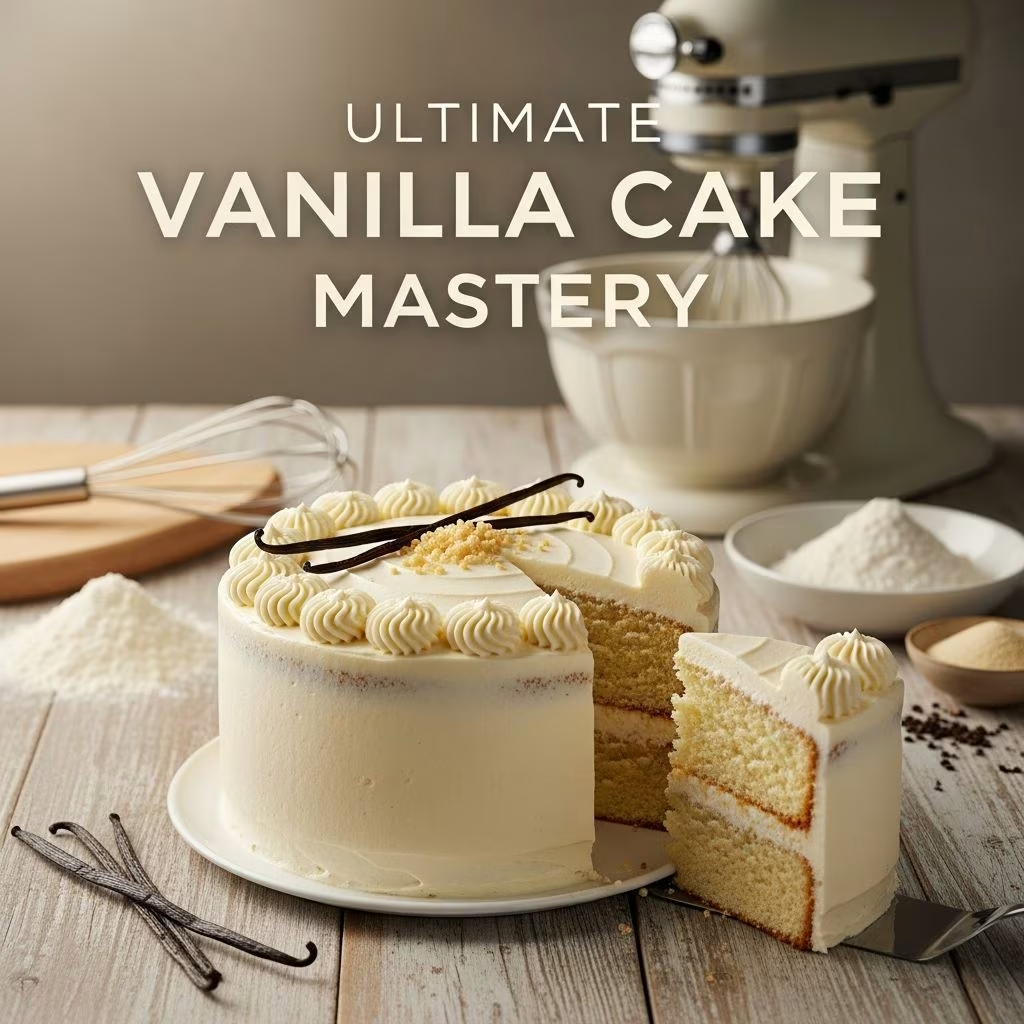
Vanilla cake stands as a timeless favorite in the world of baking, cherished for its versatility, subtle sweetness, and ability to serve as the perfect base for countless frostings and fillings. Whether you’re celebrating a birthday, wedding, or simply craving a slice of comfort, a well-made vanilla cake delivers reliable joy. This guide dives deep into crafting the ideal vanilla cake, drawing from proven techniques to ensure your layers are moist, fluffy, and structurally sound. We’ll explore ingredients, methods, variations, and pro tips to elevate your baking game.
Why Vanilla Cake Never Goes Out of Style
At its core, vanilla cake embodies simplicity and elegance. Its neutral flavor profile allows it to pair seamlessly with rich buttercreams, fresh fruits, or even bold chocolate ganache. Unlike more assertive flavors like chocolate or red velvet, vanilla provides a clean canvas that highlights quality ingredients and precise execution. Bakers love it because it’s forgiving for beginners yet endlessly customizable for experts. Achieving the right texture—tender crumb, even rise, and lasting moisture—requires understanding the science behind common methods like creaming or hot milk infusion.
Essential Ingredients for Success
The foundation of any great vanilla cake lies in high-quality, balanced ingredients. Here’s a breakdown of key components and their roles:
- Cake Flour or All-Purpose Flour: Cake flour, with its lower protein content (around 7-9%), yields a finer, softer crumb. All-purpose works too but sift it for best results.
- Fats (Butter and Oil): Butter provides flavor and structure; oil ensures moisture that lasts days. A 50/50 combo is ideal for tenderness.
- Sugar: Granulated or superfine sugar creams with fats to incorporate air, creating lift and fluffiness.
- Eggs: Room-temperature eggs emulsify smoothly, adding richness and stability. Large eggs are standard.
- Leaveners (Baking Powder/Soda): Baking powder provides primary lift; a touch of soda enhances tenderness if using acidic dairy.
- Dairy (Milk, Sour Cream): Full-fat milk or buttermilk adds moisture; sour cream boosts flavor and density.
- Vanilla Extract: Pure extract (not imitation) infuses authentic aroma—use 1-2 tablespoons per batch.
Pro tip: Always weigh ingredients for precision, as volume measures can vary wildly.
Mastering the Creaming Method
The creaming method is a cornerstone technique for fluffy vanilla cakes. It involves beating butter (and sometimes oil) with sugar to create air pockets that expand during baking.
- Preheat oven to 325-350°F (163-177°C). Grease and line 8-inch pans.
- Cream softened butter and sugar on medium-high for 3-5 minutes until pale and fluffy.
- Add eggs one at a time, beating well after each (about 30 seconds). Scrape bowl frequently.
- Mix in vanilla.
- Whisk dry ingredients (flour, leaveners, salt) separately.
- Alternate adding dry mix and liquids (milk/sour cream) on low speed, starting/ending with dry. Stop when just combined to avoid toughness.
This method traps air for lift while ensuring even distribution. Expect a batter that’s thick but pourable.
Hot Milk Method for Extra Moisture
For cakes that stay soft days later, try the hot milk technique, popular in bakery-style recipes. Heat milk with butter until steaming, then incorporate into the batter.
- Beat eggs and sugar to ribbon stage (pale, tripled volume).
- Fold in sifted dry ingredients.
- Pour in hot milk-butter-vanilla mix for a thin, silky batter that bakes into a pillowy texture.
Bake at lower temps (300-340°F) with fan off for even rising. Tap pans to release bubbles.
Perfect Baking and Cooling Techniques
Oven quirks can make or break a cake. Position racks centrally, use an oven thermometer, and check doneness at the minimum time with a toothpick—moist crumbs are ideal, not dry.
| Cake Size | Bake Temp | Time |
|---|---|---|
| Two 8-inch rounds | 325-350°F | 25-35 min |
| Three 6-inch rounds | 325°F | 18-25 min |
| 9×13 sheet | 350°F | 30-40 min |
Cool in pans 10-15 minutes, then unmold onto racks. Wrapping warm layers in plastic prevents drying.
Signature Vanilla Cake Recipe
Here’s our tested recipe for a 2-layer 8-inch cake serving 12. Yields moist, sturdy layers perfect for stacking.
Ingredients
- 2½ cups cake flour (or 2¼ cups AP flour + ¼ cup cornstarch)
- 2½ tsp baking powder
- 1 tsp salt
- ½ cup unsalted butter, room temp
- ½ cup vegetable oil
- 1½ cups granulated sugar
- 4 large eggs, room temp
- 2 tbsp pure vanilla extract
- 1 cup whole milk
- ½ cup sour cream
Instructions
- Preheat oven to 335°F. Prep two 8-inch pans.
- Whisk dry ingredients.
- Cream butter, oil, sugar 4 mins until light.
- Add eggs one by one, then vanilla; beat 2 mins.
- Alternate dry and milk/sour cream mixes. Fold gently.
- Divide batter (about 700g each pan). Bake 28-32 mins.
- Cool completely before frosting.
Nutrition per slice (unfrosted): ~350 cal, 12g fat, 50g carbs.
Flawless Vanilla Buttercream
Pair your cake with this silky frosting.
- 2 cups unsalted butter, softened
- 4-5 cups powdered sugar
- 2 tsp vanilla
- ¼ cup heavy cream
- Pinch salt
Beat butter fluffy, add sugar gradually, then vanilla/cream. Whip 3 mins for lightness. Yields enough for two 8-inch layers with crumb coat and border.
Troubleshooting Common Issues
Baking mishaps happen—here’s how to fix them:
- Dense Cake: Overmixed batter or cold eggs. Solution: Room-temp everything, mix minimally.
- Dry Texture: Overbaking or low-fat dairy. Check early, use oil blend.
- Cracks/Sink: Too hot oven or underbaked center. Lower temp, verify doneness.
- Gummy Crumb: Excess liquid or wrong flour. Measure accurately, use cake flour.
- Domed Tops: Uneven heat. Use flower nails or chill batter 30 mins.
Creative Variations and Flavor Boosts
Customize your vanilla base:
- Confetti Cake: Fold in sprinkles post-mixing.
- Lemon Vanilla: Add zest and lemon juice to batter/frosting.
- Chocolate Chip: Mix in mini chips dusted with flour.
- Ermine Frosting: Cook flour-milk roux, beat into butter for old-fashioned taste.
- Layered Delight: Fill with curd, jam, or mousse between layers.
Storage and Make-Ahead Tips
Baked layers freeze beautifully: Wrap tightly, freeze up to 3 months. Thaw overnight. Frosted cakes stay fresh 3-5 days at room temp in dome; refrigerate up to a week (bring to room temp before serving). For moisture lock, brush syrup (sugar-water-vanilla) on layers.
Pairing Ideas for Every Occasion
- Birthdays: Tall layers with buttercream rosettes and candies.
- Weddings: Naked cake with fresh flowers and fruit.
- Holidays: Sheet pan version with eggnog buttercream.
- Casual: Cupcakes with simple glaze.
Frequently Asked Questions (FAQs)
Can I make this dairy-free?
Yes—sub plant-based butter/oil, almond milk, and vegan sour cream alternative.
Why use room-temperature ingredients?
They emulsify better, preventing curdling and ensuring even texture.
How do I get flat tops for stacking?
Bake at 325°F, use pans with straight sides, or level post-bake.
What’s the difference between cake flour and all-purpose?
Cake flour has less gluten for tenderness; AP is sturdier but coarser.
Can I bake in advance?
Absolutely—freeze unfrosted layers up to 2 months.
Advanced Techniques for Pros
Reverse creaming (fat into dry first) yields velvet crumb. For ultra-moist, add pudding mix or yogurt. Experiment with bean pod scrapings for intensified flavor.
References
- How to Make the Best Vanilla Cake Ever — Broma Bakery. 2023-05-15. https://bromabakery.com/how-to-make-the-best-vanilla-cake/
- Soft Bakery-Style Vanilla Cake Recipe — The Scranline. 2024-02-10. https://thescranline.com/vanilla-cake/
- The Best Vanilla Cake Recipe (Reader Favorite!) — Liv for Cake. 2023-11-20. https://livforcake.com/vanilla-cake/
- The Only Vanilla Cake You’ll Ever Need — Grandbaby Cakes. 2024-01-05. https://grandbaby-cakes.com/vanilla-cake-recipe/
- My Very Best Vanilla Cake — RecipeTin Eats. 2023-08-12. https://www.recipetineats.com/my-very-best-vanilla-cake/