Understanding Vietnamese Spring Roll Traditions
Vietnamese cuisine offers a remarkable diversity of spring roll preparations, each with its own distinct characteristics and regional significance. The Vietnamese spring roll family encompasses two primary styles: fresh rolls that remain uncooked and showcase vibrant herbs, and their fried counterparts that develop a golden, crispy exterior through deep-frying. The fried variety, known by multiple regional names across Vietnam, represents one of the country’s most beloved appetizers and snacks. In Hanoi and Northern Vietnam, locals refer to these delicacies as nem rán, while Southern Vietnamese communities typically use the term chả giò. Regional variations also include chả nem in certain areas, reflecting the rich culinary diversity found throughout the country. These crispy parcels represent far more than simple food—they embody Vietnamese culinary traditions and the art of balancing textures and flavors that define Southeast Asian cooking.
The Essential Components: Understanding Your Ingredients
Creating authentic Vietnamese fried spring rolls requires understanding each ingredient’s role in developing the final product’s texture, flavor, and authenticity. The foundation of these rolls relies on specific components that cannot be easily substituted without compromising the traditional taste and structure.
The Rice Paper Wrapper Foundation
The wrapper serves as the critical structural component that holds all filling ingredients together and creates the distinctive crispy exterior once fried. Vietnamese cooks specifically use clear rice paper wrappers, known locally as bánh tráng, which are crafted from rice flour and water, then sun-dried before packaging. These translucent sheets differ significantly from Western spring roll pastry or egg roll wrappers. The rice paper’s delicate nature requires proper handling to prevent tears, yet it develops a remarkably crispy texture when subjected to high-heat frying, creating that signature crackle that defines quality fried spring rolls.
The Protein Components
Traditional fried spring rolls incorporate multiple protein sources that work together to create depth of flavor and textural complexity. Ground pork forms the primary protein base, typically selected at a 50-60% lean ratio to ensure adequate fat content that contributes essential flavor during cooking. The fat in pork serves as a crucial flavor carrier, preventing the filling from becoming dry during preparation and cooking. Complementing the pork, shrimp adds sweetness and additional textural dimension to the filling. Preparation of the shrimp matters significantly—rather than creating a smooth paste, traditional recipes recommend pounding shrimp in a mortar and pestle to maintain a chunky, interesting texture. Fresh crab meat serves as an optional enhancement when available, adding luxury and distinctive seafood flavor to the filling.
The Vegetable and Aromatics Selection
Vegetables contribute both nutritional value and textural contrast within the filling. Wood ear mushrooms, despite their subtle flavor contribution, become texturally irreplaceable in authentic preparations, providing a pleasant chewy quality. Carrots contribute natural sweetness and satisfying crunch, requiring julienning to ensure proper distribution and cooking throughout the filling. Jicama, when available, adds crisp texture and subtle sweetness that complements the savory meat components. Bean sprouts introduce another layer of textural variation, remaining slightly crunchy even after cooking. Red shallots, finely minced, provide aromatic depth, while garlic and ginger (when included) add complexity to the overall flavor profile.
Binding and Flavoring Elements
Dried mung bean noodles, also called glass noodles, cellophane noodles, or bean thread noodles, constitute the starchy component that absorbs and distributes flavors throughout the filling. These delicate noodles require proper rehydration before incorporating into the mixture. Eggs serve as a binder, holding all components together while contributing richness to the filling. Fish sauce, the cornerstone of Vietnamese seasoning, provides umami depth and authentic flavor that defines Vietnamese cuisine. White pepper, salt, and sugar round out the seasoning profile, balancing the savory and umami notes with subtle sweetness.
Step-by-Step Preparation Process
Ingredient Preparation Phase
Success in creating quality fried spring rolls begins long before cooking, during the preparation phase when each ingredient receives proper treatment. Dried wood-ear mushrooms require soaking in hot water for approximately five minutes until they become fully rehydrated and pliable, then julienning into thin, manageable pieces. Glass noodles need different treatment—soaking in room-temperature water for about 20 minutes allows them to soften sufficiently, after which they should be cut into 2-3 inch lengths using scissors for proper distribution within the filling. Carrots require peeling and julienning to create matchstick-sized pieces that cook evenly and distribute flavor throughout. Jicama, when used, should be peeled, julienned, then squeezed in paper towels to remove excess moisture, with additional air-drying improving the final texture. Red shallots need fine chopping to distribute their aromatic qualities evenly, while garlic should be minced to similar fineness.
Filling Assembly and Seasoning
The filling assembly process demands systematic combination of ingredients in proper sequence. Begin by combining prepared noodles, chopped mushrooms, julienned vegetables, and minced aromatics in a large mixing bowl. Add the ground pork and shrimp to this vegetable mixture, ensuring even distribution of the proteins. Incorporate eggs and all seasoning components—fish sauce, salt, white pepper, and sugar—distributing them evenly throughout the mixture. Mix thoroughly using a fork or hands, breaking up any remaining chunks and ensuring homogeneous distribution of all ingredients. A helpful technique involves cooking a small portion of the filling in a microwave for a few seconds to taste and make final seasoning adjustments before committing to the full batch. The completed filling can be stored in a sealed container in the refrigerator for up to one day, allowing flavors to meld if time permits.
Wrapping Technique
Wrapping requires practice and patience to achieve the perfect balance between structural integrity and ease of handling. Prepare a shallow bowl containing water mixed with a small amount of rice vinegar, which prevents the rice paper from sticking excessively while remaining workable. Briefly dip each rice paper wrapper into the water until pliable but not overly saturated—typically 1-2 seconds suffices. Place the damp wrapper on a clean surface, position approximately two tablespoons of filling in the center lower portion, creating a compact rectangle shape. Fold the bottom edge over the filling, then fold in the left and right sides, and finally roll tightly from bottom to top, sealing the final edge with additional water if needed to ensure it remains closed during frying.
Achieving Perfect Frying Results
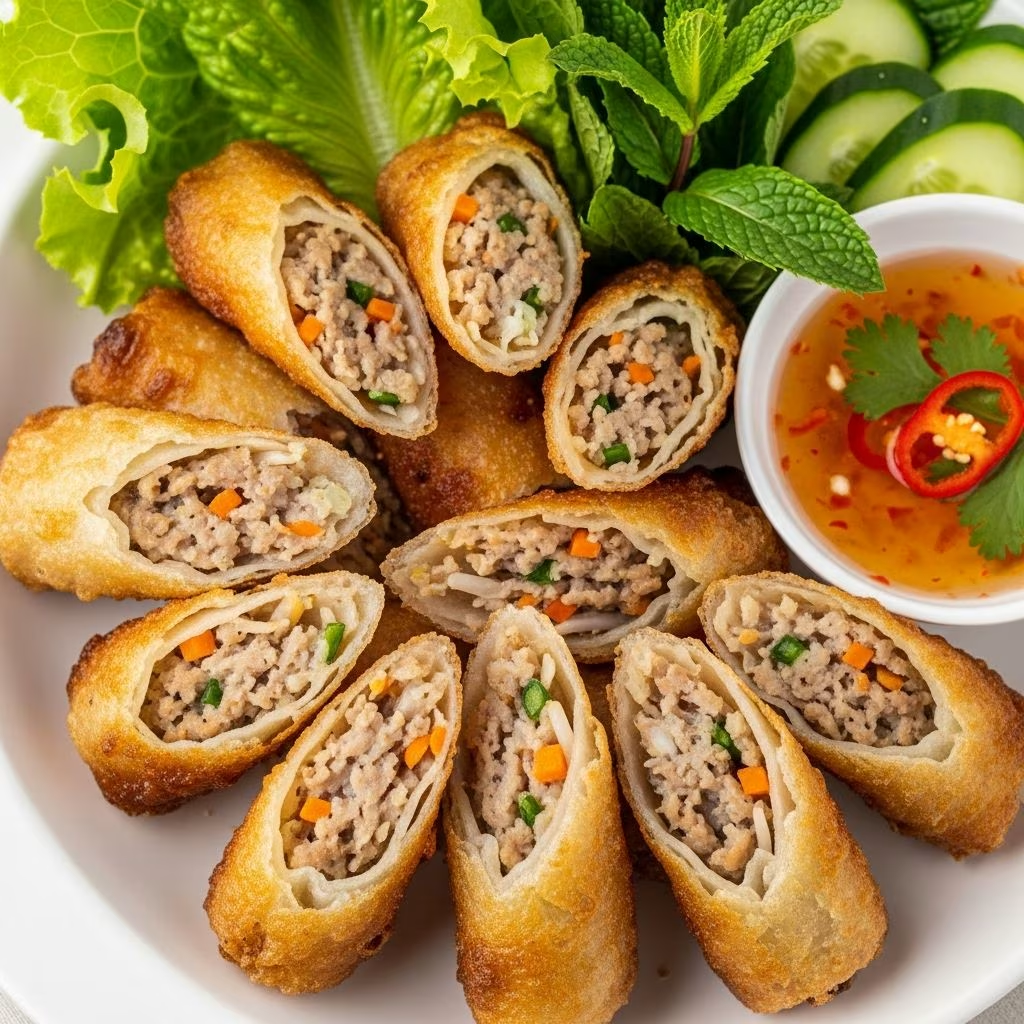
The frying stage transforms the prepared rolls from pale, dough-like parcels into golden, crispy delicacies with distinctive bubbly surfaces characteristic of quality fried spring rolls. Heat vegetable or soybean oil to approximately 350-375°F, with the exact temperature depending on your equipment and oil type. Carefully place wrapped rolls into the hot oil, working in batches to maintain consistent oil temperature—overcrowding causes temperature drops that result in greasy, soggy rolls rather than crispy ones. Rolls should fry for approximately 3-4 minutes until the rice paper develops an even golden-brown color with visible bubbling across the surface. Using a slotted spoon or wire spider strainer, remove cooked rolls from oil and transfer to a paper towel-lined plate to drain excess oil. Allow rolls to rest briefly before serving, as the exterior continues crisping during cooling.
Traditional Serving Methods and Accompaniments
Vietnamese fried spring rolls reach their full potential through traditional serving methods that emphasize contrast between the hot, crispy rolls and cool, fresh components. The most authentic presentation involves serving rolls alongside fresh butter or red lettuce leaves along with herbs including cilantro, Vietnamese mint, and perilla leaves. Diners assemble each bite by placing a fried roll inside a lettuce cup alongside chosen herbs, creating a package that combines warm, salty, crispy elements with cool, fragrant, textured contrast. This preparation method provides multiple sensory experiences with each bite—the satisfying crunch of the fried exterior, the savory filling, and the refreshing herbs creating remarkable balance.
The Essential Dipping Sauce
Nuoc cham, the traditional Vietnamese dipping sauce, proves absolutely essential for authentic enjoyment. This balanced condiment combines warm water, fish sauce, sugar, lime juice, minced garlic, and optional bird’s-eye chili. Preparation begins by mixing water, sugar, and fish sauce together, allowing the mixture to cool slightly before adding lime juice. After tasting and making adjustments to suit personal preferences regarding sweetness, heat level, or fish sauce intensity, minced garlic and chili pepper are incorporated. This sauce provides acidic brightness, spicy heat, umami depth, and aromatic complexity that elevates the spring rolls from delicious to memorable.
Common Questions About Vietnamese Fried Spring Rolls
What distinguishes Vietnamese fried spring rolls from Chinese egg rolls?
The most significant distinction involves the wrapper itself. Vietnamese preparations specifically use rice paper wrappers made from rice flour and water, while Chinese egg rolls typically employ wheat-based wrappers. This fundamental difference creates distinct textures—rice paper develops the signature crispy, bubbly exterior unique to Vietnamese preparations, while egg roll wrappers become crunchier but less delicate.
Can the filling be prepared in advance?
Yes, prepared filling keeps well when stored in a sealed container in the refrigerator for up to one day. This advance preparation option proves convenient for entertaining or meal preparation, though rolling and frying should occur closer to serving time for optimal texture.
Are there vegetarian variations available?
While traditional recipes rely on pork and shrimp as essential protein components defining the dish, vegetarian modifications exist. These might incorporate additional mushrooms, tofu, or legumes, though they would represent significant departures from authentic preparations.
How should leftover rolls be stored?
Cooked rolls maintain best quality when consumed immediately, as the rice paper wrapper gradually absorbs moisture and loses its crispy texture. Refrigerated storage in airtight containers extends shelf life to 1-2 days, though reheating in a 350°F oven for 5-10 minutes can partially restore crispiness.
What oil works best for frying?
Neutral-flavored oils with high smoke points work optimally. Soybean oil and canola oil both prove suitable choices, as they withstand the high temperatures required for proper frying without imparting unwanted flavors.
Regional Variations Across Vietnam
While the fundamental concept remains consistent throughout Vietnam, regional variations reflect local ingredient availability and cultural preferences. Northern Vietnamese versions, particularly those from Hanoi using the nem rán designation, traditionally incorporate specific vegetable combinations including kohlrabi and particular mushroom selections. Southern preparations sometimes include variations in protein ratios or additional ingredients like jicama. These regional differences, while noteworthy to culinary enthusiasts, maintain the core identity of crispy fried spring rolls with similar preparation techniques and flavor profiles.
Mastering the Technique Through Practice
Creating restaurant-quality Vietnamese fried spring rolls at home requires understanding the fundamental techniques and maintaining consistency across preparation stages. Temperature control during frying proves absolutely critical—rolls prepared identically but fried at different temperatures yield noticeably different results. Proper ingredient preparation, particularly ensuring vegetables are appropriately sized and moisture levels are controlled, impacts both texture and cooking consistency. The filling mixture requires thorough, even distribution of all components to ensure each roll offers balanced flavor throughout. Success comes through repeated practice, slight adjustments based on results, and attention to detail in each preparation stage.
References
- Vietnamese Fried Spring Rolls | Chả Giò | Nem Rán — The Spice Odyssey. Accessed April 2026. https://www.thespiceodyssey.com/eat/cha-gio
- Vietnamese Deep Fried Spring Rolls Recipe – Nem Ran Recipe — Grand Tourism Travels. Accessed April 2026. https://grantourismotravels.com/vietnamese-deep-fried-spring-rolls-recipe-nem-ran-recipe/
- Vietnamese Fried Spring Rolls – Nem Rán/Chả Giò — Delightful Plate. Accessed April 2026. https://delightfulplate.com/vietnamese-fried-spring-rolls/
- Vietnamese fried spring rolls (chả giò) – Caroline’s Cooking — Caroline’s Cooking. Accessed April 2026. https://www.carolinescooking.com/vietnamese-fried-spring-rolls-cha-gio/
- Cha Gio (Vietnamese Fried Spring Rolls) — The Woks of Life. Accessed April 2026. https://thewoksoflife.com/cha-gio-vietnamese-fried-spring-rolls/
- Nem rán / Chả giò • Vietnamese Fried Rolls — MM Bon Appétit. Accessed April 2026. https://mmbonappetit.com/nem-ran/
- Vietnamese Egg Rolls Recipe (Chả Giò) — Hungry Huy. Accessed April 2026. https://www.hungryhuy.com/vietnamese-spring-rolls-egg-rolls-recipe-cach-lam-cha-gio-nem-ran/