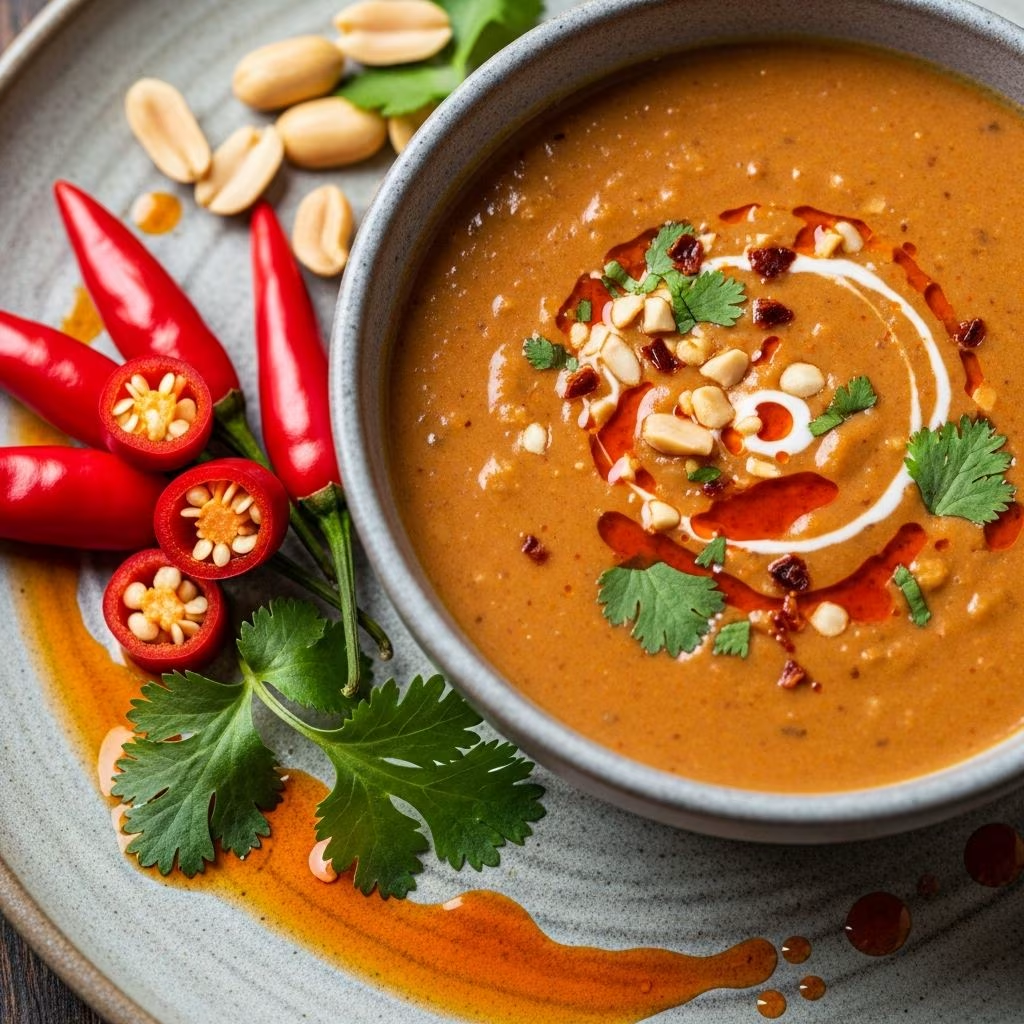
Thai peanut sauce stands as a cornerstone of Southeast Asian cuisine, renowned for its harmonious blend of creamy nuttiness, fiery heat, tangy acidity, and subtle sweetness. This versatile condiment transforms simple dishes into flavorful masterpieces, whether drizzled over grilled meats, tossed with noodles, or used as a dip for fresh vegetables. Originating from street food stalls and home kitchens in Thailand, it captures the essence of balance in Thai cooking—known as sam rab, where no single flavor dominates.
Understanding the Essence of Thai Peanut Sauce
At its core, Thai peanut sauce derives from ground roasted peanuts, a staple ingredient that provides richness and body. Traditional preparations often incorporate coconut milk for creaminess, while modern adaptations use water or broth for lighter results. The heat comes from chili elements like red curry paste or sriracha, balanced by sweeteners such as palm sugar or brown sugar. Acidic components, including lime juice or rice vinegar, cut through the richness, and umami boosters like fish sauce or soy sauce add depth.
This sauce isn’t just a sidekick; it’s a flavor powerhouse. Its adaptability makes it ideal for vegan diets by swapping fish sauce for soy, or for quick pantry meals using everyday items. Chefs prize it for its ability to cling to ingredients without overpowering them, creating glossy coatings on proteins and veggies alike.
Essential Ingredients for Authentic Flavor
Building a great Thai peanut sauce starts with quality components. Here’s a breakdown of key players:
- Peanut Butter or Ground Peanuts: Opt for natural, unsweetened varieties to control sweetness and avoid additives. Creamy works best for smooth sauces; chunky adds texture.
- Coconut Milk or Water: Full-fat coconut milk yields luxurious thickness; light versions or water keep it pourable.
- Chili Heat Sources: Red curry paste packs complex spice; sriracha or chili garlic sauce offers quick fire.
- Sweeteners: Brown sugar, palm sugar, or maple syrup mellow the heat.
- Acid: Lime juice, rice vinegar, or orange juice for brightness.
- Umami: Soy sauce, fish sauce, or tamari for savory punch.
- Aromatics: Fresh ginger, garlic, and optional curry paste for fragrance.
Garnishes like chopped peanuts or sesame seeds enhance crunch and visual appeal.
Classic Stovetop Thai Peanut Sauce Recipe
This foundational recipe yields about 1 cup, ready in 15 minutes. It’s robust enough for satay skewers or noodle bowls.
Ingredients
- 1 tablespoon peanut oil or coconut cream
- 1 tablespoon red curry paste
- ¼ cup creamy peanut butter
- ½ cup coconut milk
- 3 tablespoons fish sauce (or soy for vegan)
- 2 tablespoons lime juice
- 2 tablespoons brown sugar
- 1 tablespoon sriracha (adjust for heat)
- 2 tablespoons chopped roasted peanuts
Step-by-Step Instructions
- Heat oil in a small pan over medium heat. Sauté curry paste for 1 minute until fragrant, releasing its oils.
- Stir in peanut butter, coconut milk, fish sauce, lime juice, sugar, and sriracha. Whisk until smooth.
- Simmer for 2-3 minutes, stirring to thicken. If too thick, add a splash of water.
- Remove from heat, stir in peanuts. Cool slightly before serving.
Taste and tweak: more lime for tang, sugar for balance, or chili for kick. This method blooms the flavors for deeper taste.
Quick No-Cook Peanut Sauce Variation
For busy days, this 5-minute blender version skips the stove. Perfect for dressings or last-minute dips.
Ingredients (Makes 1 cup)
- ½ cup natural peanut butter
- 2 tablespoons soy sauce
- 1 tablespoon rice vinegar
- 2 tablespoons brown sugar
- 2 teaspoons chili garlic sauce
- 1 tablespoon lime juice
- 1 tablespoon grated ginger
- 3 garlic cloves, minced
- 2-4 tablespoons warm water
Instructions
- Combine all except water in a bowl or blender.
- Whisk or blend until creamy. Add water gradually for desired consistency—thicker for dips, thinner for dressings.
- Rest 5 minutes for flavors to meld. Garnish with peanuts.
This version shines in its simplicity, using pantry staples without compromising authenticity.
Customizing Heat and Flavor Profiles
Tailor the sauce to your palate with these adjustments:
| Profile | Key Tweaks | Best Uses |
|---|---|---|
| Mild | ½ tbsp chili sauce; extra sugar | Kids’ meals, salads |
| Medium | 1-2 tbsp curry paste; balanced lime | Satay, stir-fries |
| Fiery | 2+ tbsp sriracha; cayenne boost | Wings, spicy noodles |
| Sweet-Tangy | Orange juice swap; coconut sugar | Fruit salads, bowls |
| Vegan | Soy/tamari; maple syrup | Tofu, veggies |
Experimentation is key—start conservative with heat, as it intensifies over time.
Perfect Pairings: Dishes Elevated by Peanut Sauce
Thai peanut sauce’s versatility spans appetizers to mains:
- Satay Skewers: Grill chicken, beef, or tofu; brush with sauce during last minute.
- Noodle Bowls: Toss with rice noodles, veggies, and protein for pad Thai vibes.
- Salad Dressings: Thin with water; drizzle over greens, quinoa, or slaws.
- Vegetable Dips: Pair with cucumber, carrots, or bell peppers.
- Pizza or Flatbreads: Base for Thai-inspired toppings like chicken and cilantro.
- Grain Bowls: Over rice, quinoa, or cauliflower rice with avocado and herbs.
In Thai street food, it’s inseparable from moo ping (grilled pork) or fresh spring rolls, adding creamy contrast to charred edges.
Storage, Freezing, and Make-Ahead Tips
Peanut sauce keeps well, making it meal-prep friendly. Refrigerate in an airtight jar for up to 1 week; stir before use as oils separate. For longer storage, freeze in ice cube trays for portioned servings—thaw overnight or microwave gently.
Pro tip: Layer with plastic wrap touching the surface to prevent skinning. Reheat on low with a splash of coconut water to restore creaminess. Avoid boiling to preserve fresh flavors.
Common Mistakes and Pro Fixes
Avoid these pitfalls for sauce success:
- Too Thick? Gradually add warm liquid while whisking.
- Bitter? Over-toasted peanuts or too much curry—balance with sugar/acid.
- Grainy? Use smooth peanut butter; blend thoroughly.
- Overly Salty? Dilute with coconut milk; taste increments of fish sauce.
Fresh aromatics elevate results—grate ginger/garlic just before mixing.
Health Benefits and Nutritional Insights
Beyond taste, peanut sauce offers nutrients: peanuts provide protein, healthy fats, and vitamin E. Coconut milk adds medium-chain triglycerides for energy. Ginger and garlic boast anti-inflammatory properties. A 2-tablespoon serving clocks ~150 calories, with 10g fat, 5g protein—mind portions for balance.
Opt for natural peanut butter to skip added sugars; use low-sodium soy for heart health.
Advanced Twists for Culinary Pros
Elevate with infusions: steep lemongrass or kaffir lime leaves during simmering. For fusion, blend in tahini for nuttiness or miso for extra umami. Smoke the peanuts beforehand for a BBQ edge, or incorporate tamarind for sour depth.
Pair with global cuisines: Mexican tacos, Indian curries, or American burgers for unexpected thrills.
Frequently Asked Questions
What’s the difference between Thai and Indonesian peanut sauce?
Thai versions emphasize curry paste and fish sauce for spice and fishiness; Indonesian (satay sauce) leans sweeter with ketjap manis and ground peanuts.
Can I make it without peanut butter?
Yes—grind roasted peanuts or use almond/cashew butter, adjusting liquid for consistency.
How spicy is it really?
Customizable; base recipes are medium—scale chili to preference.
Is it gluten-free?
Use tamari instead of soy sauce and check curry paste labels.
How long does homemade sauce last?
1 week refrigerated; 3 months frozen.
Mastering Thai peanut sauce opens doors to endless creativity. With these recipes and insights, your kitchen will buzz with authentic Thai flair.
References
- Thai Spicy Peanut Sauce — Closet Cooking. 2023-05-15. https://www.closetcooking.com/peanut-sauce/
- Spicy Thai-Inspired Peanut Sauce — Not Not Nutritious. 2022-08-10. https://notnotnutritious.com/spicy-thai-inspired-peanut-sauce/
- Thai Peanut Sauce Recipe — Jessica in the Kitchen. 2024-01-20. https://jessicainthekitchen.com/thai-peanut-sauce-recipe/
- Super Simple Spicy Thai Peanut Sauce — Sumptuous Spoonfuls. 2021-11-05. https://www.sumptuousspoonfuls.com/super-simple-spicy-thai-peanut-sauce/
- The Best Thai Peanut Sauce Recipe — Fox and Briar. 2023-09-12. https://www.foxandbriar.com/the-best-thai-peanut-sauce-recipe/