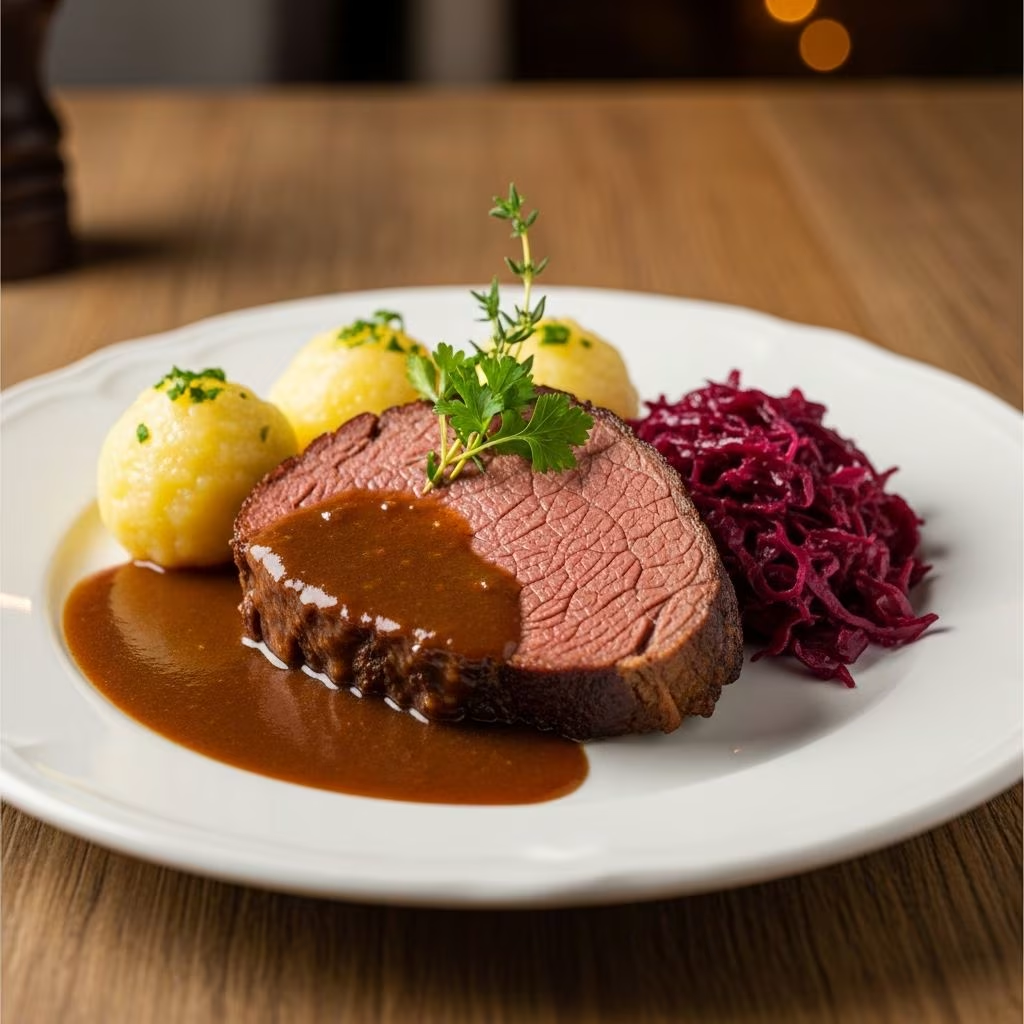
Classic Sauerbraten stands as one of Germany’s most cherished culinary treasures, a dish that transforms humble cuts of beef into a symphony of flavors through patient marination and slow cooking. This recipe invites home cooks to recreate the magic of Rhineland kitchens, where tough roasts become meltingly tender after days in a spiced vinegar bath, then braised in a gravy that’s both tangy and subtly sweet. Rooted in centuries-old traditions, Sauerbraten pairs perfectly with hearty sides, making it ideal for family gatherings or festive occasions.
The Heritage Behind Sauerbraten
Sauerbraten, meaning ‘sour roast’ in German, originated in the Rhineland region but has spread across Germany as a national favorite. Before refrigeration, the acidic marinade preserved meat while infusing deep flavors, a technique akin to pickling but elevated for the dinner table. Regional variations abound: the Rhenish style emphasizes gingerbread-thickened sauce for sweetness, while northern versions lean sharper with less sugar. Today, it remains a staple at Oktoberfest and holiday feasts, celebrated for its balance of acidity from red wine vinegar, warmth from spices, and richness from slow-braised beef.
Historians trace its popularity to medieval times, when butchers and hunters used the method to tenderize game or lower-grade beef. By the 19th century, it was documented in cookbooks as a sophisticated yet accessible dish. Modern adaptations preserve the core: a 3-5 day marinade, searing, and oven-braising until the meat yields to a fork at 190-200°F internally.
Choosing the Perfect Cut of Beef
For authentic results, select tougher, flavorful cuts that benefit from long cooking. Bottom round, rump roast, or chuck roast are traditional choices, weighing 3-4 pounds to serve 6-8 people. These leaner muscles from the hindquarter or shoulder develop exceptional tenderness as connective tissues break down during braising. Grass-fed beef adds a robust taste, though conventional works well too. Avoid tenderloin or ribeye, as they dry out.
| Cut | Best For | Texture After Cooking |
|---|---|---|
| Rump Roast | Slicing | Firm slices, holds shape |
| Chuck Roast | Shredding | Ultra-tender, pulls apart |
| Bottom Round | Traditional | Lean, fork-tender |
Preparing the Aromatic Marinade
The marinade is the heart of Sauerbraten, a potent blend that tenderizes and flavors the meat over 3-5 days (up to 10 for deeper taste). Combine 1 cup red wine vinegar, 1 cup dry red wine (Cabernet or Merlot), 1.5 cups water or beef broth, sliced onions, chopped carrots, celery or celeriac, and parsley. Add spices: 4 bay leaves, 1 tsp peppercorns, 4-6 juniper berries, 4 cloves, allspice berries, and a pinch of sugar for balance.
Bring to a boil, simmer 5-10 minutes to meld flavors, then cool completely. Submerge the beef in this mixture in a non-reactive container or ziplock bag, ensuring full coverage. Refrigerate, turning daily. The vinegar’s acidity (pH around 3) breaks down proteins, while wine and spices add complexity.
- Pro Tip: Strain solids after marinating to reuse in braising for intensified taste.
- Make-Ahead: Marinade can be prepared a day early.
Step-by-Step Cooking Instructions
After marinating, pat the roast dry and season generously with salt and pepper. Dredge lightly in flour for browning.
- Sear the Meat: Heat oil or lard in a Dutch oven over high heat. Brown the roast 2-3 minutes per side for a deep crust, which builds flavor via Maillard reaction. Remove and set aside.
- Sauté Vegetables: Add reserved marinade veggies (onions, carrots, celeriac) and optional diced bacon. Cook 5 minutes until softened, then stir in 2 tbsp tomato paste for 2 minutes to caramelize.
- Deglaze and Build Gravy Base: Pour in a splash of marinade to scrape fond, evaporate, repeat once. Add remaining strained marinade, beef broth to cover halfway, and crumbled ginger snaps or Lebkuchen (about 1/2 cup crushed) for thickening and ginger warmth.
- Braise: Return roast to pot, cover, and oven-braise at 300-340°F for 2.5-4 hours. Turn halfway; test doneness by forking easily (internal 190°F+).
Rest meat 15 minutes before slicing against the grain.
Mastering the Signature Sweet-Sour Gravy
The gravy elevates Sauerbraten from good to legendary. After braising, strain liquids, discarding solids or blending for smoothness. Thicken with more crushed gingerbread (northern style uses cornstarch), raisins (1/2 cup for chew and sweetness), and a drizzle of honey or sugar to taste. Simmer until glossy, adjusting tang with vinegar if needed. This creates the dish’s hallmark sweet-sour profile, where acidity cuts richness.
Yield: About 3 cups gravy. Store extras refrigerated for 3 days or freeze.
Essential Side Dishes and Pairings
Sauerbraten shines with contrasts: starchy Knödel (potato dumplings) or Spätzle to soak gravy, tangy red cabbage, and creamy potato salad. For authenticity, serve with Rotkohl (braised red cabbage with apples) and green beans.
- Knödel: Boil bread or potato dumplings; slice and pan-fry.
- Spätzle: Egg noodles scraped into boiling water, buttered.
- Vegetables: Red cabbage simmered with vinegar, apples, cloves.
Pair with Riesling or Pinot Noir; the wine’s fruitiness mirrors the gravy.
Helpful Tips for Sauerbraten Success
- Marination Time: Minimum 3 days for flavor penetration; 5 days ideal.
- Don’t Rush Browning: High heat ensures fond for gravy depth.
- Spice Substitutes: No juniper? Use extra peppercorns. Lebkuchen unavailable? Honey-graham crumbs work.
- Make It Leaner: Trim excess fat pre-marinade.
- Storage: Refrigerate 3-4 days; reheat gently in gravy.
- Freezer: Freeze sliced meat in gravy up to 3 months.
Common Mistakes to Avoid
Under-marinating leads to tough meat; always plan ahead. Skipping the sear results in bland gravy. Over-thickening? Thin with broth. Northern vs. southern: Omit cookies for sharper taste. If meat shreds instead of slices, it’s from chuck—still delicious!
Nutrition and Serving Facts
Per serving (1/6 recipe, with gravy): ~450 calories, 30g protein, 25g fat, 15g carbs. High in iron and B12 from beef; marinade veggies boost vitamins. Serves 6-8; prep 30 min + 3-5 days marinate; cook 3-4 hours.
Frequently Asked Questions
Can I use a slow cooker?
Yes, sear first, then low 8-10 hours. Add gingerbread last hour.
What if I don’t have red wine vinegar?
Substitute white wine vinegar + 1 tsp sugar, but red gives color.
Is it spicy?
No, warm spices like cloves and juniper provide aroma, not heat.
Vegetarian version?
Tofu or seitan marinated similarly, braise shorter (1.5 hours).
How do I know it’s done?
Internal 190-200°F, fork pierces without resistance.
Scaling and Variations
Double for crowds: Use larger Dutch oven. Bavarian twist: Add carrots to braise whole. Instant Pot: Sear sauté, pressure 90 min high. For holidays, stud with extra cloves.
Experiment with bison for gamier notes. This recipe yields consistent, crowd-pleasing results, honoring tradition while suiting modern kitchens.
References
- Authentic German Rheinischer Sauerbraten Recipe — My Dinner. 2023. https://mydinner.co.uk/sauerbraten/
- Authentic German Sauerbraten — The Daring Gourmet. 2023. https://www.daringgourmet.com/authentic-german-sauerbraten/
- Traditional German Sauerbraten Recipe With Grass Fed Beef — Beck & Bulow. 2023. https://www.beckandbulow.com/blogs/beef/german-sauerbraten-grass-fed-beef-recipe
- Sauerbraten — Sip and Feast. 2023. https://www.sipandfeast.com/sauerbraten/
- Traditional German Sauerbraten Recipe — YouTube (Quick German Recipes). 2023. https://www.youtube.com/watch?v=r_WmbD3pMHI