When it comes to outdoor grilling, achieving perfectly tender and flavorful chicken can be challenging. Many home cooks struggle with dry, bland results that disappoint dinner guests. The solution lies in an unconventional ingredient that transforms the entire grilling experience: carbonated lemon-lime soda. This cooking method combines the natural tenderizing properties of citric acid with complementary Asian seasonings to create restaurant-quality skewers at home.
Why Carbonated Beverages Work as Marinades
The citric acid found in lemon-lime soda acts as a natural meat tenderizer by breaking down the protein fibers in poultry. Unlike aggressive marinades that can make chicken mushy, the gentle acid in soda works gradually, penetrating the meat without compromising its texture. The carbonation itself helps distribute flavors evenly throughout the marinade, ensuring consistent seasoning from surface to center. Additionally, the slight sweetness balances savory and spicy elements, creating complexity in the final dish without requiring multiple additional ingredients.
The technique behind this marinade draws from traditional Southeast Asian cooking methods, where acidic components like lime juice and vinegar have been used for centuries to prepare grilled meats. By substituting modern ingredients while maintaining these principles, contemporary cooks can achieve similar results with pantry staples.
Essential Ingredients and Their Roles
| Ingredient | Amount | Function |
|---|---|---|
| Lemon-Lime Soda | 1.5 cups | Tenderizes meat and adds citrus flavor |
| Minced Garlic | 8 cloves | Provides aromatic depth and antimicrobial properties |
| Thai Chili Sauce | 1.5 cups (divided) | Adds heat, sweetness, and umami complexity |
| Fish Sauce | 0.5 cup plus 1 tablespoon | Enhances savory depth and flavor intensity |
| Kosher Salt | 2 teaspoons | Seasons the marinade and aids moisture retention |
| Chicken Breasts | 3 pounds | Primary protein component |
| Fresh Lime Juice | 3 medium limes | Brightens final sauce and adds acidity |
| Fresh Cilantro | 0.33 cup chopped | Provides herbaceous freshness and visual appeal |
Each ingredient serves a specific purpose in creating a balanced, multidimensional flavor profile. The combination of sweet, salty, spicy, and aromatic elements ensures the chicken remains interesting throughout the meal rather than becoming monotonous.
Preparing and Marinating Your Chicken
Success begins with proper preparation of the chicken itself. Start with boneless, skinless chicken breasts that are fresh and of uniform thickness. Cut the breasts into one-inch cubes, which provides optimal surface area for marinade absorption while ensuring even cooking throughout. Avoid cutting pieces too small, as they may dry out during grilling, or too large, which could result in undercooked centers.
Combine the soda, minced garlic, one cup of Thai chili sauce, half a cup of fish sauce, and salt in a large resealable plastic bag or baking dish. The choice between bag and dish depends on personal preference—bags save refrigerator space and allow for easier turning, while dishes provide better visibility and easier sauce distribution. Add the prepared chicken pieces and ensure every piece comes into contact with the marinade by turning the contents thoroughly.
Refrigeration time significantly impacts the final result. While two hours provides adequate marinating, extending the process to at least four hours allows the acidic components to work more effectively on the protein structure. Overnight marination—up to twelve hours—develops even deeper flavor integration, though diminishing returns occur beyond this timeframe. During marination, turn the chicken occasionally to ensure even exposure to the liquid.
Preparing Your Grilling Station
Successful grilled skewers require proper equipment preparation before heat application. If using wooden skewers, soak them in water for at least thirty minutes to prevent charring and splitting during cooking. Metal skewers require no preparation and offer the advantage of reusability and faster preheating when placed on hot grates.
Prepare your grill for medium-high heat, targeting temperatures around 400 degrees Fahrenheit. Oil the grate thoroughly using a folded paper towel dipped in vegetable oil held with long-handled tongs. This prevents sticking and promotes attractive grill marks. Proper grate oiling is often overlooked but remains essential for successful skewer preparation.
Threading and Grilling Technique
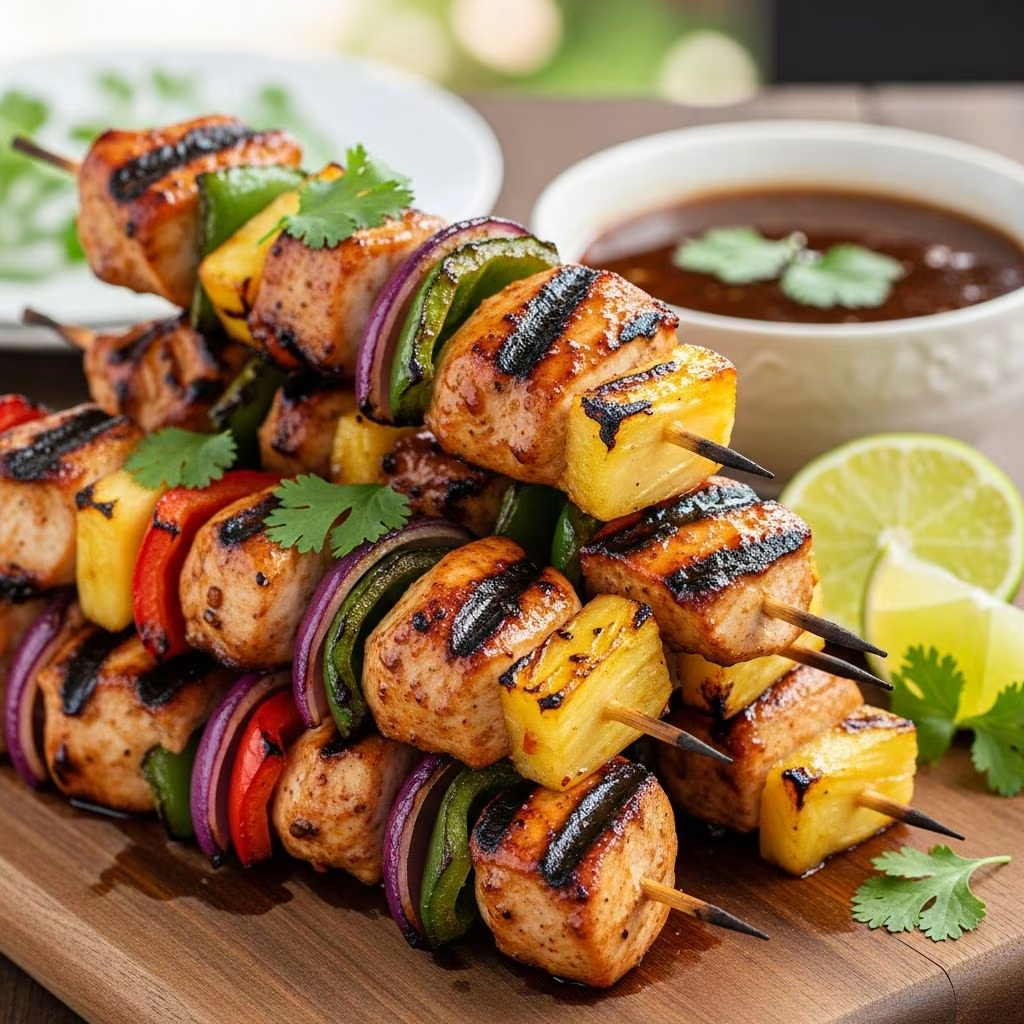
Remove chicken from the marinade, allowing excess liquid to drip back into the container before discarding the used marinade. This prevents foodborne illness concerns associated with reusing raw poultry marinades. Thread approximately eight chicken pieces onto each skewer, leaving minimal space between pieces to ensure even heat distribution while preventing excessive drying.
Place skewers directly over the heat source, positioning them perpendicular to grate lines. Initially resist the urge to move them—allow at least thirty seconds to pass before handling, as this permits proper searing and prevents sticking. Flip skewers approximately halfway through cooking, which typically requires ten to twelve minutes total time. Use an instant-read thermometer to verify doneness by inserting it into the largest piece; internal temperature should reach 160 degrees Fahrenheit for food safety.
Remove skewers from heat and transfer them to a serving platter. Allow five minutes of resting time, during which residual heat continues cooking the interior while allowing surface juices to redistribute, resulting in more tender, succulent meat.
Crafting the Finishing Sauce
While chicken rests, prepare a fresh sauce to drizzle over the finished skewers. Whisk together lime juice from three medium limes, the remaining half cup of Thai chili sauce, the remaining tablespoon of fish sauce, and freshly chopped cilantro in a small bowl. This bright, acidic sauce provides textural contrast and renewed flavor intensity to each bite. Taste the finished sauce and adjust seasonings with additional salt if needed, as individual palates vary and saltiness preferences differ.
Serving Suggestions and Accompaniments
These skewers pair excellently with complementary side dishes. Fragrant jasmine rice provides a neutral canvas that allows the chicken flavors to shine, while lime-infused versions add subtle brightness. Grilled vegetables such as bell peppers, zucchini, or onions can be interspersed between chicken pieces during skewering for added nutrition and visual appeal. Fresh vegetables like cucumber salad or cabbage slaw offer cooling, refreshing contrast to the warm, spiced protein.
Ingredient Substitutions and Variations
While the original recipe provides excellent results, home cooks can adapt ingredients based on availability or preference. Different lemon-lime sodas may produce slightly varied sweetness levels. Other citrus-based sodas create interesting flavor variations, though results may differ from the original. Soy sauce can partially replace fish sauce if umami intensity preferences differ, though the final flavor profile will shift. Fresh Thai chili peppers can supplement or replace bottled chili sauce for increased heat and fresher flavors. Different fresh herbs like mint or basil can substitute cilantro based on regional preferences or what grows in home gardens.
Storage and Make-Ahead Strategies
The versatility of this recipe extends to timing and preparation. Chicken can be marinated the night before grilling, with flavors actually improving through extended refrigeration. Prepared sauce can be made up to four hours in advance and stored in sealed containers, allowing more relaxed timing on grilling day. Fully cooked skewers can be stored in airtight containers for up to three days, though reheating should be gentle to prevent drying.
Frequently Asked Questions
Can diet or zero-sugar sodas be substituted for regular soda? Artificial sweeteners behave differently from sugar during cooking and may produce a less favorable flavor profile. While technically possible, results may vary significantly from the intended recipe.
Can boneless thighs be used instead of breasts? Yes. Thighs contain more fat and naturally resist drying during grilling. Cooking time may vary, so vigilant temperature monitoring remains essential.
What if fish sauce is unavailable or disliked? Soy sauce provides umami depth as an alternative, though flavor balance shifts noticeably. Anchovy paste offers similar functions for those seeking traditional umami enhancement.
How many servings does this recipe provide? This recipe yields approximately six servings, with each serving containing roughly four to five skewer pieces.
Can this recipe be adapted for vegetarian diets? Plant-based proteins like tofu or tempeh can be substituted, though marinating time may require adjustment due to different protein structures and porosity levels.
Troubleshooting Common Issues
If chicken appears dry after cooking, marinating time was likely insufficient or cooking temperatures were too high. Reduce heat and extend marinating periods for future attempts. If chicken sticks excessively to grates, ensure adequate oiling and resist moving skewers too frequently. If sauces taste overly salty, reduce fish sauce proportions in future batches or increase lime juice to enhance brightness while balancing salt intensity.
References
- A Guide to Grilling Techniques and Food Safety — United States Department of Agriculture Food Safety and Inspection Service. 2024. https://www.fsis.usda.gov/food-safety/safe-food-handling-and-preparation/poultry
- Protein Denaturation and Cooking: A Chemical Perspective — Journal of Culinary Science & Technology, 2023. https://www.tandfonline.com/doi/abs/10.1080/15428052.2022.2150231
- Southeast Asian Marinading Traditions and Modern Applications — Oxford Research Encyclopedia of Food Science. 2022. https://oxfordre.com/foodscience
- Umami Compounds in Fermented Fish Products — Institute of Food Technologists. 2023. https://www.ift.org
- Grill Safety and Temperature Guidelines for Poultry — Centers for Disease Control and Prevention. 2024. https://www.cdc.gov/foodsafety/communication/poultry-safety.html