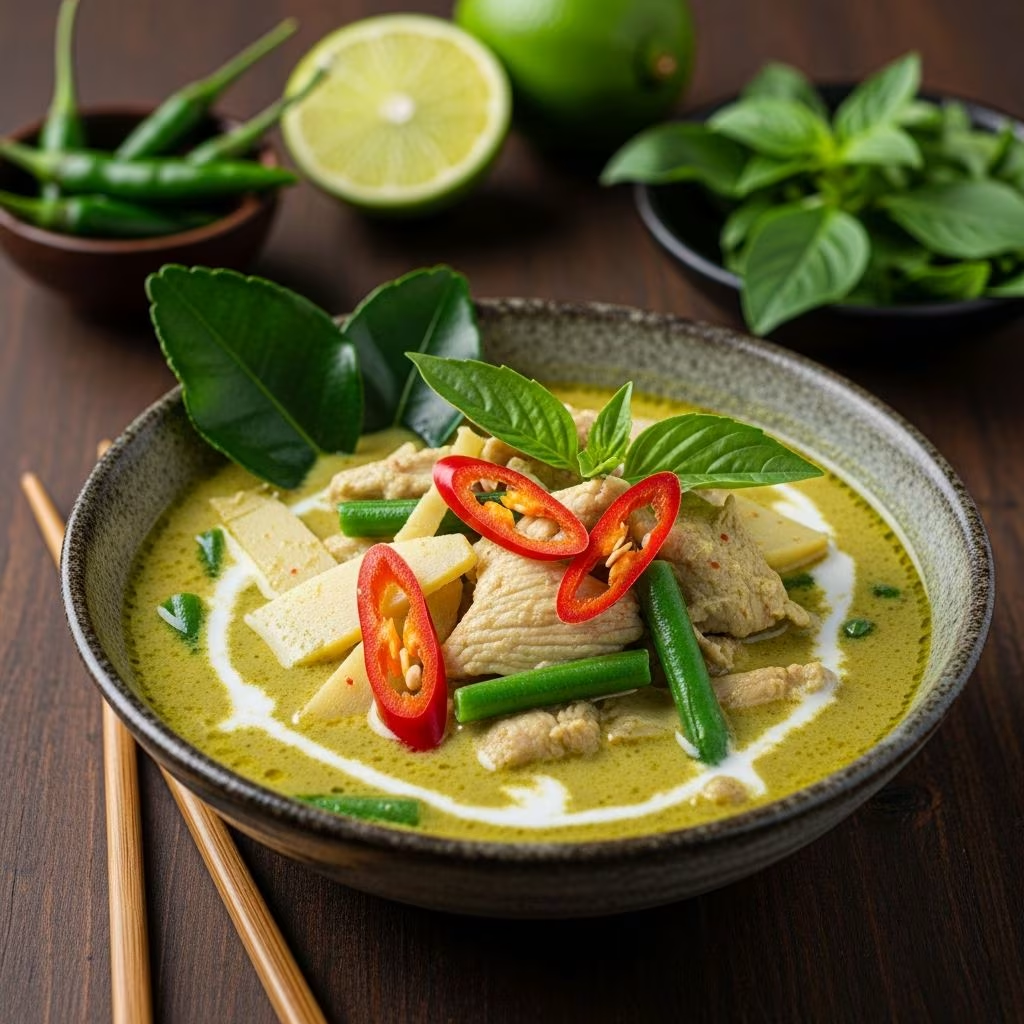
Thai green curry chicken stands as one of the most beloved dishes in Thai cuisine, celebrated for its harmonious blend of spicy, sweet, salty, and sour flavors enveloped in rich coconut milk. This vibrant curry originates from central Thailand and has captivated palates worldwide with its aromatic green chili paste and tender proteins. Home cooks can easily replicate this restaurant favorite using accessible ingredients and straightforward techniques, delivering a comforting meal ready in under an hour.
Understanding the Essence of Thai Green Curry
The hallmark of Thai green curry lies in its **green curry paste**, a potent mixture of fresh green chilies, lemongrass, galangal, garlic, shallots, cilantro roots, kaffir lime zest, and shrimp paste. These ingredients create a fiery base that distinguishes it from milder yellow or red curries. When simmered with coconut milk, the paste releases complex aromas, while additions like fish sauce and palm sugar balance the heat.
Chicken serves as the traditional protein, chosen for its ability to absorb flavors during braising. Vegetables such as Thai eggplants, bamboo shoots, and bell peppers add texture and freshness, preventing the dish from becoming one-note. Kaffir lime leaves and Thai basil provide citrusy and herbal notes, elevating the curry to authentic heights.
Essential Ingredients for Success
Gathering quality components ensures your curry bursts with flavor. Focus on full-fat coconut milk for creaminess and store-bought green curry paste from reputable brands, which can be enhanced with fresh aromatics.
- Coconut milk: 2 cans (14 oz each), unsweetened and full-fat for richness.
- Green curry paste: 3-4 tablespoons, adjust for spice preference.
- Chicken: 1-2 lbs boneless thighs, sliced thinly for quick cooking.
- Aromatics: Garlic, galangal or ginger, kaffir lime leaves (3-6).
- Vegetables: Thai eggplants, bamboo shoots, red peppers, or green beans (2-5 cups mixed).
- Seasonings: Fish sauce (1-2 tbsp), palm or coconut sugar (1-2 tbsp), salt.
- Oil: Coconut or neutral oil (2 tbsp) for frying the paste.
- Herbs: Thai basil leaves for garnish and stirring in at the end.
Pro tip: Bruise kaffir lime leaves by twisting them to release oils, intensifying their fragrance without overpowering the dish.
Step-by-Step Cooking Guide
Preparing Thai green curry follows a bloom-simmer-finish method, allowing flavors to develop layers. Use a wide skillet or wok for even heat distribution.
Bloom the paste: Heat 2 tbsp oil over medium. Add 3 tbsp green curry paste and stir for 1-2 minutes until fragrant. Avoid burning to prevent bitterness.
Sear the chicken: Add sliced chicken in a single layer. Cook undisturbed for 2 minutes, then stir in minced garlic and galangal for 30 seconds.
Build the sauce: Pour in half the coconut milk, stirring to combine. Add chicken broth (½ cup), sugar, fish sauce, and lime leaves. Simmer gently.
Add vegetables: Incorporate eggplants or tougher veggies first, simmering 5-8 minutes until tender. Follow with softer ones like peppers to retain crunch.
Finish and taste: Stir in remaining coconut milk, basil, and adjust seasoning. Simmer 2 more minutes off heat for infusion.
Total time: 30-40 minutes. Serves 4-6 generously.
Ingredient Substitutions and Variations
Adapt the recipe for dietary needs or availability without sacrificing authenticity.
| Original Ingredient | Substitution | Notes |
|---|---|---|
| Chicken thighs | Chicken breast or tofu | Breast needs cornstarch coating for tenderness; tofu absorbs flavors well. |
| Thai eggplant | Zucchini or broccoli | Cut similarly; cook times may vary slightly. |
| Green curry paste | Homemade or red curry paste | Reduce quantity for milder pastes; homemade intensifies freshness. |
| Fish sauce | Soy sauce + lime | For vegan version; adds umami but alters nuance. |
| Kaffir lime leaves | Lime zest + lemongrass | 2 tsp zest per 2 leaves; bruise lemongrass stalk. |
For a one-pan rice version, layer uncooked jasmine rice with curry sauce and bake, as in some modern twists. Spice levels: Mild (2 tbsp paste), medium (3 tbsp), hot (4+ tbsp).
Nutrition and Health Benefits
One serving (about 1.5 cups) provides approximately 450 calories, 35g fat (mostly healthy coconut), 25g protein, and 10g carbs. Rich in vitamins A and C from vegetables, anti-inflammatory spices like galangal, and medium-chain triglycerides from coconut milk supporting metabolism. Moderate sodium from fish sauce; balance with fresh herbs.
- Protein boost: Chicken delivers complete proteins for muscle repair.
- Antioxidants: Chilies and basil combat oxidative stress.
- Heart-healthy fats: Coconut milk’s lauric acid may aid cholesterol levels.
Customize for low-carb by skipping rice or using cauliflower rice.
Perfect Pairings and Serving Suggestions
Serve steaming hot over jasmine rice to soak up the luscious sauce. Complement with:
- Rice: Sticky or jasmine for authenticity.
- Pickles: Cucumber or mango for cooling contrast.
- Sides: Stir-fried morning glory or papaya salad.
- Drinks: Thai iced tea or sparkling water with lime.
Garnish with sliced chilies, basil, and a lime wedge for interactive flair.
Storage, Freezing, and Reheating Tips
Store leftovers in airtight containers for 3-4 days in the fridge. Freezes well up to 2 months; thaw overnight before reheating. Gently simmer on stovetop with a splash of water or coconut milk to revive creaminess. Avoid microwaving to preserve textures.
Frequently Asked Questions (FAQs)
Can I make Thai green curry less spicy?
Yes, use less curry paste (1-2 tbsp) and remove chili seeds. Add more coconut milk or sugar to mellow heat.
What’s the best curry paste brand?
Mae Ploy or Maesri for authentic taste; check Asian markets.
Is it gluten-free?
Naturally gluten-free; confirm paste and fish sauce labels.
How do I know when chicken is cooked?
Internal temp 165°F (74°C); slices should be opaque and firm.
Vegetarian version?
Swap chicken for tofu or mushrooms; use soy sauce instead of fish sauce.
Pro Tips for Restaurant-Quality Results
- Fry paste until oil separates for deeper flavor.
- Use chicken thighs over breast for juiciness.
- Add basil off-heat to keep it vibrant.
- Simmer gently to avoid curdling coconut milk.
- Enhance store-bought paste with fresh garlic/lemongrass.
Practice makes perfect; start with medium spice and adjust boldly next time.
Exploring Thai Curry Variations
Green curry shines solo but pairs in a Thai feast: Follow with massaman for nutty sweetness or panang for thicker consistency. Understanding balances—heat from chilies, acid from lime, sweetness from sugar—unlocks mastery of Thai cooking.
This dish not only satisfies hunger but transports you to Bangkok streets, where street vendors ladle curry over rice for hurried commuters. Recreate that vibrancy home, impressing guests with ease.
References
- Authentic Thai Green Curry Recipe with Chicken — An Edible Mosaic. 2023-05-15. https://www.anediblemosaic.com/authentic-thai-green-curry-with-chicken-kaeng-kiew-waan-kai/
- Thai Green Curry Chicken — The Woks of Life. 2024-02-10. https://thewoksoflife.com/green-curry-chicken/
- Thai Green Curry with Chicken — The Gourmet Gourmand. 2023-08-22. https://thegourmetgourmand.com/thai-green-curry-with-chicken/
- Green Thai Curry Recipe — Hot Thai Kitchen. 2024-11-05. https://hot-thai-kitchen.com/green-curry-new-2/
- Thai Green Curry Chicken and Rice — Olive & Mango. 2023-09-12. https://www.oliveandmango.com/thai-green-curry-chicken-and-rice/
- Thai Green Curry — RecipeTin Eats. 2024-03-18. https://www.recipetineats.com/thai-green-curry/