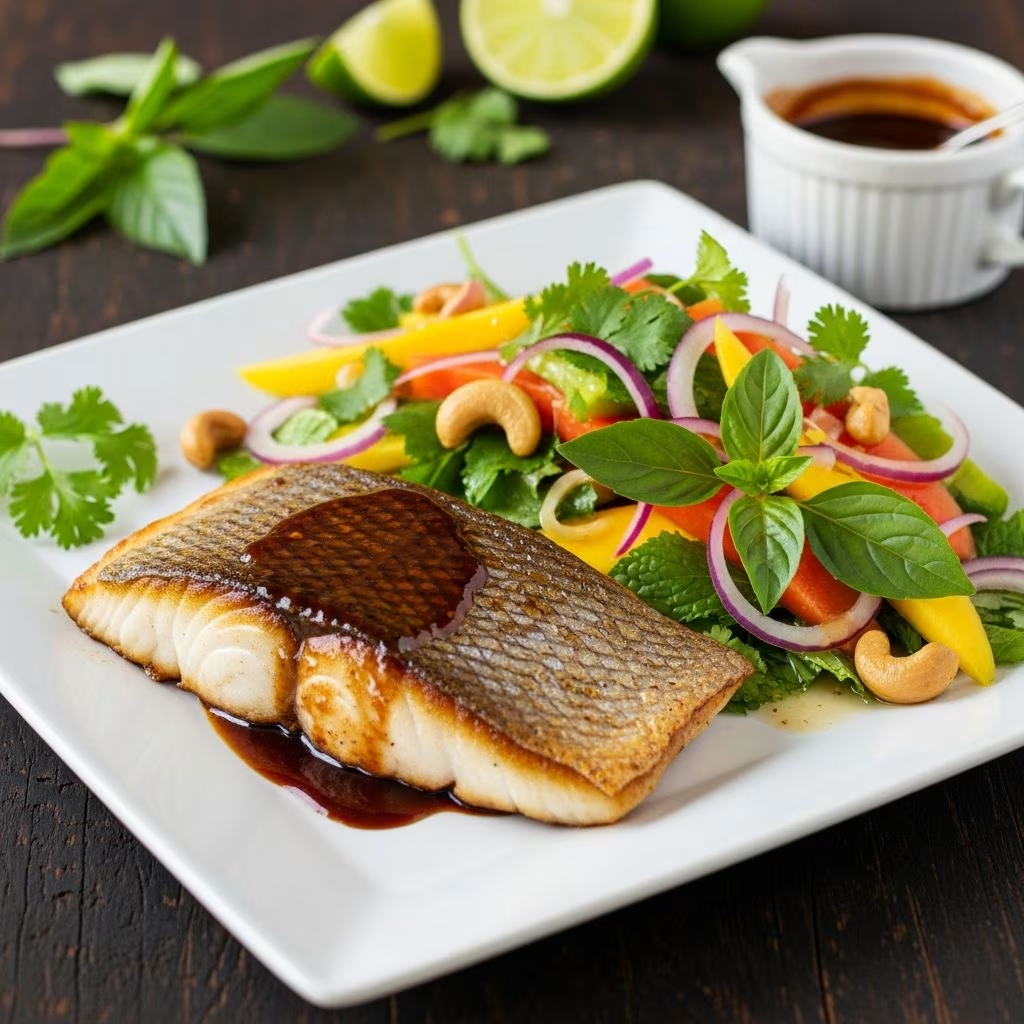
This stunning dish combines the sticky sweetness of tamarind glaze with tender roasted sea bass, finished with a vibrant coconut-herb salad that adds crunch and freshness. Perfect for special occasions or casual gatherings, it delivers bold Southeast Asian flavors without complexity.
Why This Recipe Captivates Home Cooks
The magic lies in the glaze: tamarind’s natural tartness mellowed by honey and deepened with ginger, garlic, and tomato paste. Roasting whole fish ensures moist flesh and crispy skin, while toppings like toasted coconut and fried shallots provide textural contrast. Dairy-free and naturally gluten-free (with tamari swap), it’s versatile for various diets.
Originating from culinary traditions where tamarind stars in sauces, this recipe adapts those elements for modern kitchens. Expect a symphony of sweet, sour, salty, and spicy notes that linger delightfully.
Essential Ingredients for Success
Gather these pantry staples and fresh picks for two whole fish (serves 4-6):
- 45g unsweetened shredded coconut – Toasts to nutty crunch.
- 3 tbsp virgin coconut oil (or neutral like grapeseed) – Infuses subtle tropical aroma.
- 2 medium shallots, thinly sliced – Fry into crispy rings.
- Kosher salt – Seasons every layer.
- 1 (2-inch) piece ginger, scrubbed and sliced – Adds warmth.
- 4 garlic cloves, crushed – Builds savory depth.
- 1 tbsp double-concentrated tomato paste – Thickens and colors the glaze.
- 60ml tamarind concentrate – The star for tangy brightness.
- 2 tbsp honey – Balances acidity with sweetness.
- 1 tbsp low-sodium soy sauce – Umami boost (use tamari for gluten-free).
- 2 (1.5-2 lb) head-on whole black sea bass or red snapper – Cleaned, for dramatic presentation.
- 3 Thai or 2 serrano chiles, thinly sliced – Heat to taste.
- 1 cup mint leaves, torn – Fresh, cooling finish.
- Lime wedges – For squeezing brightness.
Step-by-Step Cooking Guide
Preparation takes about 30 minutes, with 20 minutes roasting. Total time: under an hour.
Toast the coconut: In a dry medium saucepan over medium heat, stir unsweetened shredded coconut until golden, 5-7 minutes. Transfer to a bowl to cool – this prevents over-toasting and builds nutty base notes.
Fry the shallots: Wipe pan clean. Heat coconut oil over medium-high, add sliced shallots, and cook until golden and crisp, 8-10 minutes. Drain on paper towels, season with salt immediately for flavor lock-in.
Build the glaze: Lower heat to medium. Add ginger slices and crushed garlic; cook until spotted brown, about 4 minutes. Stir in tomato paste until it darkens and splits, 2 minutes. Pour in tamarind concentrate, honey, and soy sauce; stir until smooth and bubbling, 1 minute. Taste and salt. Set aside, discarding solids for smooth application.
Prep the fish: Preheat oven to 425°F (218°C) with rack in upper third. Pat fish dry inside and out. Score diagonal slashes every 2 inches through to bones on both sides – this allows even cooking and glaze penetration.
Glaze and roast: Place fish on parchment-lined baking sheets. Season with salt, brush both sides with half the glaze. Roast 16-20 minutes, brushing with remaining glaze at midpoint. Fish is done when flesh flakes easily and glaze is sticky-caramelized.
Assemble and serve: Transfer to platters. Scatter toasted coconut, crispy shallots, sliced chiles, and torn mint evenly. Serve with lime wedges for personal tang adjustment.
Ingredient Spotlights: Tamarind and Beyond
Tamarind is a pod fruit common in Indian, Thai, and Mexican cuisines, offering citrus-like acidity without bitterness. Concentrate is shelf-stable; dilute if too potent. It tenderizes proteins subtly during roasting.
Black sea bass shines here for its mild flavor and firm texture, but sustainable swaps like red snapper or branzino work. Head-on presentation maximizes flavor from cheeks and collar.
Coconut adds healthy fats and crunch; choose unsweetened to avoid cloying sweetness. Fresh mint cuts richness, while chiles provide adjustable heat.
Pro Tips for Restaurant-Quality Results
- Dry fish thoroughly: Moisture steams instead of roasts, preventing crisp skin.
- Score deeply: Ensures even heat distribution in thick fish bodies.
- Taste glaze early: Adjust honey or salt before cooking; tamarind varies by brand.
- Rest briefly: 2-3 minutes post-roast lets juices redistribute.
- Scale up: Double glaze for larger fish or meal-prep leftovers.
Customizations for Every Palate
| Variation | Swap | Why It Works |
|---|---|---|
| Milder Heat | Omit chiles or use bell peppers | Preserves tang without spice overload |
| Vegan Twist | Tofu or eggplant slabs | Glaze clings beautifully to hearty veggies |
| Gluten-Free | Tamari for soy sauce | Seamless umami match |
| Extra Crunch | Add crushed peanuts | Nutty layer complements coconut |
| Spicy Kick | Fresh bird’s eye chiles | Intensifies Thai-inspired fire |
Perfect Pairings and Serving Ideas
Balance richness with steamed jasmine rice or coconut rice. Add pickled cucumbers or papaya salad for acidity. Wines: off-dry Riesling or crisp Sauvignon Blanc cut through glaze. Non-alcoholic: ginger-lime spritzer.
For parties, serve family-style on a large board. Leftovers reheat in a 300°F oven, wrapped in foil, to revive crispness.
Nutrition at a Glance
Per serving (1/4 fish + toppings): ~450 calories, 25g protein, 30g fat (healthy from coconut), 20g carbs. Rich in omega-3s from fish, antioxidants from tamarind and herbs. Heart-healthy when paired mindfully.
Frequently Asked Questions
Can I use frozen tamarind?
Fresh pods work, but pulp or concentrate is easiest. Soak frozen block in hot water, strain seeds for 60ml liquid.
What if I can’t find whole fish?
Fillets roast faster (12-15 min), but lose drama. Brush skin-side down first.
How to store leftovers?
Refrigerate up to 2 days in airtight container. Reheat gently to avoid drying.
Is this kid-friendly?
Mild version without chiles appeals; involve kids in topping assembly for fun.
Substitutes for black sea bass?
Snapper, grouper, or sustainable farmed salmon hold glaze well.
Exploring Tamarind in Global Cuisines
Beyond this dish, tamarind flavors pad Thai, chermoula, and Worcestershire sauce. Its vitamin C and antioxidants support digestion. Experiment in glazes for ribs or curries.
This recipe transforms simple ingredients into a showstopper, blending technique with flavor science for memorable meals.
References
- Tamarind-Glazed Black Bass With Coconut-Herb Salad — Patient.info. 2023-01-15. https://patient.info/recipes/heart-healthy-recipes/tamarind-glazed-black-bass-with-coconut-herb-salad
- Tamarind-Glazed Black Bass With Coconut-Herb Salad Recipe — RecipeNotes.app. 2024-05-20. https://recipenotes.app/recipes/c7f82517-fbe8-4e9a-b374-f62529545ff9
- Fish with Tamarind Glaze and Herb Coconut Salad — Tenina.com. 2023-08-10. https://tenina.com/recipes/fish-with-tamarind-glaze-and-herb-coconut-salad