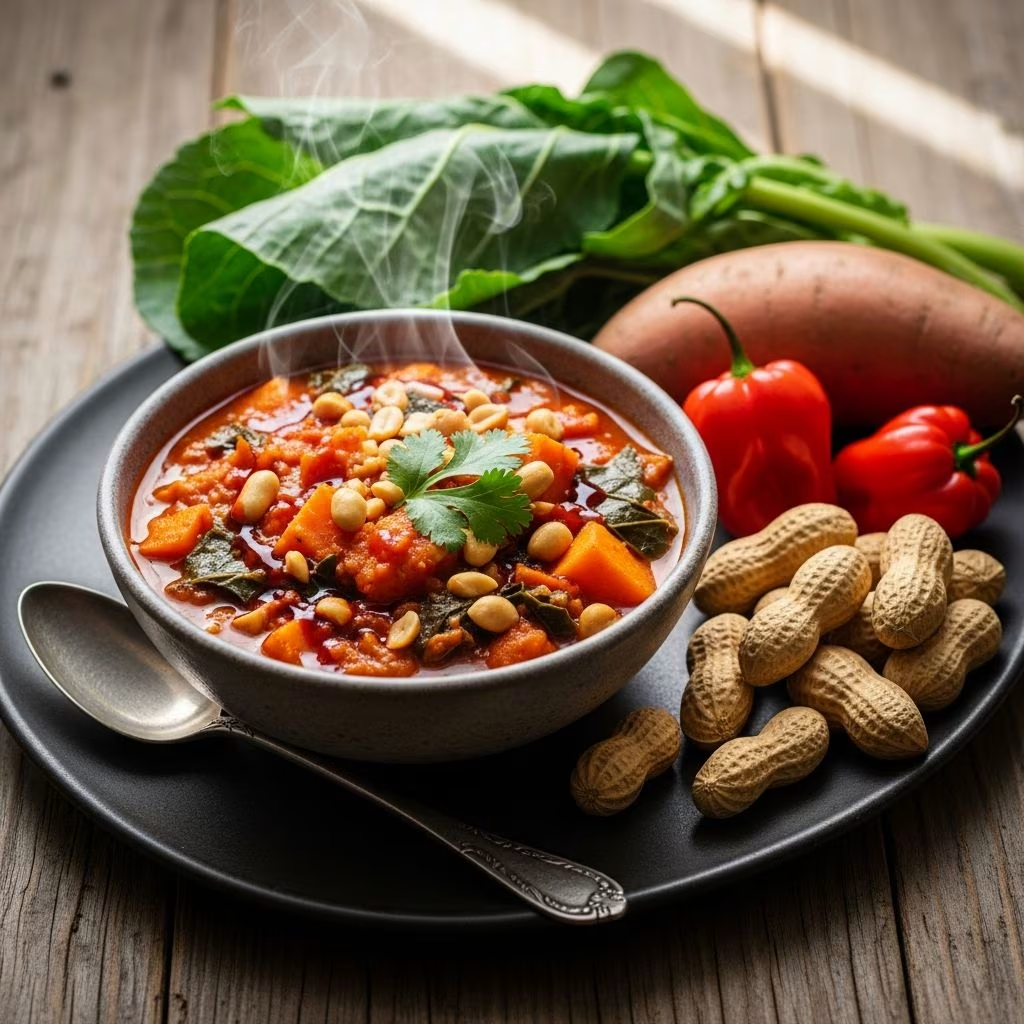
West African peanut stew, known in various regions as mafe, domoda, or groundnut stew, stands as a cornerstone of the continent’s culinary heritage. This dish combines creamy peanut butter with vibrant vegetables, aromatic spices, and sometimes protein like chicken or chickpeas, creating a hearty meal that warms the soul. Its versatility allows for stovetop, slow cooker, or pressure cooker preparation, making it ideal for busy home cooks seeking bold, global flavors without complexity.
The Origins and Cultural Significance
Rooted in West African traditions, peanut stew traces its history to countries like Senegal, Gambia, Ghana, and Nigeria, where peanuts—introduced via trade routes—became a staple. In Gambia, it’s called domoda, often featuring lamb or beef, while Senegalese versions emphasize fish or vegetables. The stew’s nutty richness comes from ground peanuts or peanut butter, balanced by tomatoes, onions, and fiery peppers. Families gather around communal pots, sharing stories as the stew simmers, embodying hospitality and sustenance.
Today, this dish has evolved globally, with adaptations in diaspora communities and plant-based kitchens. Its appeal lies in the interplay of sweet, spicy, and savory notes, drawing from local ingredients like scotch bonnet peppers for heat and collard greens for earthiness.
Essential Ingredients Breakdown
At its core, West African peanut stew relies on a few pantry heroes. Peanut butter provides creaminess and depth, while sweet potatoes add natural sweetness and bulk. Fresh aromatics like ginger, garlic, and onions form the flavor base.
- Peanut butter: Natural, unsweetened varieties yield the best nutty profile without added sugars.
- Sweet potatoes: Cubed for tenderness; their starch thickens the stew naturally.
- Tomatoes: Crushed or paste for acidity to cut through richness.
- Greens: Spinach, kale, or collards wilt in at the end for freshness.
- Spices: Cumin, coriander, cayenne, and smoked paprika evoke smoky, warming notes.
- Protein options: Chickpeas for vegan heft, chicken for traditional chew, or white beans for creaminess.
Broth—vegetable for plant-based or chicken for meaty versions—ties it together. Garnishes like chopped peanuts, cilantro, lime, and chilies elevate texture and brightness.
Classic Vegan Peanut Stew Recipe
This one-pot wonder serves 4-6 and takes about 45 minutes. It’s gluten-free, dairy-free, and packed with plant power.
Ingredients
| Ingredient | Quantity |
|---|---|
| Red onion, diced | 1 large |
| Garlic, minced | 4 cloves |
| Fresh ginger, minced | 1 tbsp |
| Neutral oil (avocado or peanut) | 2 tbsp |
| Sweet potatoes, cubed | 2 medium (about 1 lb) |
| Crushed tomatoes | 14 oz can |
| Peanut butter (natural) | ½ cup |
| Vegetable broth | 4 cups |
| Chickpeas, drained | 15 oz can |
| Spinach or kale | 4 cups |
| Spices: cumin, coriander, cayenne | 1 tsp each |
| Lime juice | Juice of 1 |
Step-by-Step Instructions
- Heat oil in a large pot over medium. Sauté onion, garlic, and ginger until softened, about 5 minutes.
- Stir in spices for 1 minute until fragrant.
- Add sweet potatoes, chickpeas, tomatoes, peanut butter, and broth. Bring to a boil, then simmer covered for 25-30 minutes until potatoes are fork-tender.
- Stir in greens and lime juice; cook 2-3 minutes until wilted.
- Serve over rice with peanuts and cilantro.
Pro tip: For extra heat, add minced scotch bonnet or jalapeño during sautéing.
Chicken Peanut Stew Variation
For a meatier take, inspired by traditional recipes, incorporate bone-in chicken pieces. This yields tender, fall-off-the-bone results in about 50 minutes.
- Brown 2 lbs chicken pieces (thighs or drumsticks) in oil with onions, garlic, and ginger.
- Add 1 tbsp tomato paste, 14 oz tomato sauce, ½ cup peanut butter, and 4 cups water or broth.
- Simmer 20 minutes, then add cubed sweet potatoes and collards. Cook until potatoes pierce easily, 25 more minutes.
- Season with salt, pepper, and a whole scotch bonnet for infusion (remove before serving).
This version boosts protein and infuses a deeper broth flavor from the bones.
Slow Cooker and Instant Pot Methods
Busy days call for hands-off cooking.
Slow Cooker (Low 4-5 hours)
- Sauté onions, garlic, ginger (optional browning of meat).
- Combine all ingredients except greens in the crock pot.
- Cook low 4.5-5 hours or high 3 hours. Stir in greens at end.
Instant Pot (20 minutes high pressure)
- Sauté aromatics using pot’s function.
- Add remaining ingredients minus toppings. Pressure cook 20 minutes, natural release.
- Quick-release if needed, stir in spinach.
Both methods tenderize sweet potatoes perfectly while melding flavors.
Nutrition and Health Benefits
A 1.5-cup serving of vegan peanut stew offers roughly 400 calories, 15g protein, 50g carbs, 18g fat (mostly healthy from peanuts), and 10g fiber. Peanuts provide heart-healthy monounsaturated fats and vitamin E. Sweet potatoes deliver beta-carotene for immunity, while greens add iron and vitamins A and K. Spices like ginger aid digestion, and the stew’s low glycemic load supports steady energy.
Customizations: Swap sweet potatoes for carrots or peppers; use almond butter for nut-free. It’s naturally vegan-adaptable and freezer-friendly for up to 3 months.
Perfect Pairings and Serving Suggestions
Serve atop fluffy rice, quinoa, or cauliflower rice for grain bowls. Top with crunchy peanuts, fresh herbs, lime wedges, and sliced chilies. Pair with flatbreads like injera or naan to scoop up every bite. For drinks, try ginger beer or hibiscus tea to complement the spice.
- Make-ahead: Prep sauce (peanut butter, tomatoes, spices) in advance.
- Storage: Refrigerate 4 days; reheat with splash of broth.
- Freezing: Portion without rice; thaw overnight.
Frequently Asked Questions (FAQs)
Can I make peanut stew nut-free?
Yes, substitute sunflower seed butter; it mimics creaminess well.
Is it spicy?
Adjustable—omit cayenne for mild, add habanero for fire.
How do I thicken the stew?
Mash some sweet potatoes or simmer uncovered; peanut butter naturally thickens.
Vegetarian or fully vegan?
Both versions work; skip chicken and use veggie broth.
Best peanut butter type?
Natural with just peanuts and salt—no sugar or oils.
Tips for Authentic Flavor and Common Mistakes to Avoid
To capture West African essence, bloom spices in oil first. Don’t rush simmering—low heat develops depth. Avoid overcooking greens to prevent mushiness. Taste and season incrementally; peanut butter’s salt varies.
Experiment regionally: Ghanaian styles lean tomato-heavy, while Sierra Leonean add okra. This stew’s adaptability keeps it fresh across kitchens.
References
- African Peanut Stew – Cotter Crunch — Cotter Crunch. 2023. https://www.cottercrunch.com/crock-pot-west-african-peanut-stew/
- Kardea Brown’s West African Peanut Stew — YouTube (Food Network). 2020. https://www.youtube.com/watch?v=f_w5kRI_5vY
- Vegan Gambian Peanut Stew (Domoda) — Rainbow Plant Life. 2022. https://rainbowplantlife.com/vegan-west-african-peanut-stew/
- West African Peanut Stew — Lahb Co. Eats. 2023. https://www.lahbco.com/dinner/west-african-peanut-stew
- West African Peanut Stew (Vegan) — The Simple Veganista. 2021. https://simple-veganista.com/west-african-peanut-stew/