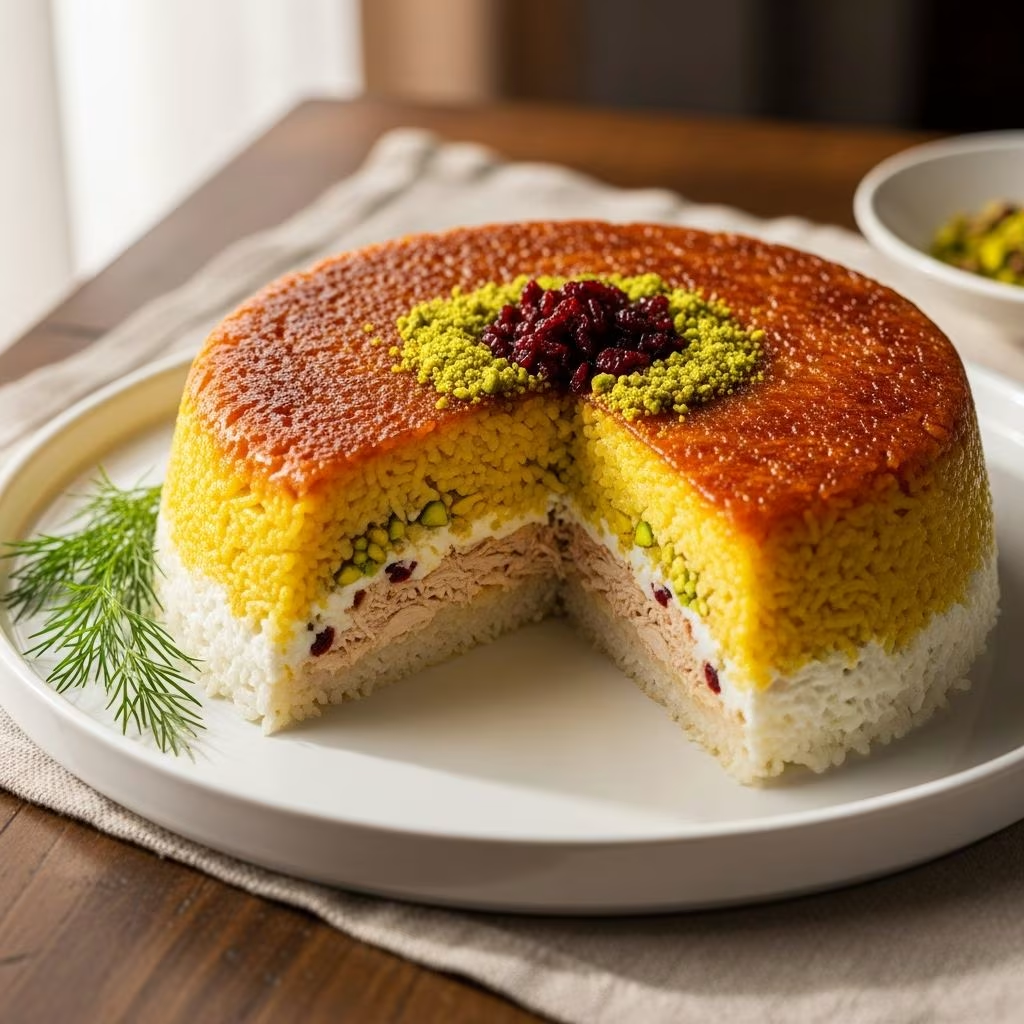
Tachin Ba Morgh stands as one of the most visually striking and flavorful dishes in Persian culinary tradition. This magnificent rice cake combines the earthiness of saffron-infused rice with tender, aromatic chicken, all encased in a beautifully crispy golden crust. The dish’s name originates from the Persian phrase meaning \”arranged on the bottom,\” a reference to the technique of layering ingredients that creates its signature texture contrast.
Understanding the Essence of This Iconic Persian Dish
What makes Tachin Ba Morgh so captivating is its dual nature: it presents itself as an elegant centerpiece at the table, yet delivers profound, multi-layered flavors with each bite. The exterior boasts a crispy, caramelized rice crust that crackles beneath your fork, while the interior reveals tender chicken pieces enveloped in creamy saffron-kissed rice grains. This textural complexity, combined with the aromatic warmth of traditional Persian spices, transforms a simple combination of ingredients into an unforgettable dining experience.
The beauty of this dish extends beyond its taste. When properly executed, Tachin Ba Morgh becomes a presentation masterpiece. The golden exterior gleams under light, while the steaming interior releases fragrant vapors that announce the careful preparation involved in its creation. This makes it ideal for special occasions, family gatherings, or whenever you wish to impress guests with your culinary prowess.
Essential Ingredients for Authentic Preparation
The Foundation: Rice Selection and Preparation
The choice of rice fundamentally impacts the final result. Long-grain basmati rice serves as the traditional foundation, prized for its delicate fragrance and ability to remain separate when cooked. The preparation process begins well before cooking commences. Thoroughly washing the rice removes excess starch, preventing the grains from becoming sticky or clumped together. Following the wash, soaking the rice for at least two hours hydrates each grain evenly, ensuring uniform cooking and optimal texture.
When parboiling the rice, the goal involves achieving an al dente consistency—grains should be partially cooked yet retain their structural integrity. This partial cooking prevents mushiness when combined with the yogurt marinade and during the baking process. The rice should be tender enough to absorb flavors yet firm enough to maintain individual grain definition throughout the assembly and cooking stages.
The Saffron-Yogurt Foundation
The saffron-yogurt mixture represents the soul of this dish, infusing every rice grain and chicken piece with its distinctive golden hue and sophisticated flavor profile. The typical mixture combines strained yogurt (often called labneh), egg yolks, and bloomed saffron threads. The use of egg yolks specifically serves a culinary purpose: they act as a binder while adding richness and helping create the creamy texture that contrasts beautifully with the crispy exterior.
Saffron threads require proper blooming to release their full flavor potential. Grinding the threads slightly and dissolving them in approximately 40 milliliters of boiling water allows their essence to infuse completely. A ten-minute steeping period, covered with a small saucer or lid, ensures maximum extraction of the saffron’s golden color and complex, slightly sweet flavor notes.
The Protein: Preparing Chicken for Success
Chicken preparation significantly influences the final dish’s quality and flavor. Traditional methods involve simmering chicken pieces with aromatic vegetables and spices rather than frying them. A quartered onion, bay leaves, and Persian spice blends (known as Advieh) infuse the cooking liquid with depth and complexity. This gentle simmering produces exceptionally tender meat that shreds easily while retaining its juices and absorbing surrounding flavors.
Some preparations utilize uncooked chicken marinated directly in the yogurt mixture for two to three hours before assembly, while others prefer the pre-cooked method. The pre-cooked approach offers more control over the chicken’s doneness and moisture content, while the marinated uncooked method allows flavors to penetrate the meat directly during the rice cake’s cooking process. Both methods produce excellent results; choose based on your time availability and preferred cooking approach.
The Critical Role of Flavor-Building Ingredients
Beyond the main components, several supplementary ingredients elevate this dish from simple to sophisticated. Premium oil or butter creates the essential golden crust and adds richness throughout. The fat content—typically between half and full cup—seems generous but proves necessary for achieving the crispy exterior and ensuring proper browning.
Optional additions like ground cinnamon, toasted cumin seeds, and dried rose petals (gol-e-sorkh) add layers of aromatic complexity. These spices echo traditional Persian flavor principles, creating warmth and depth that complement the saffron’s subtle sweetness. Some cooks incorporate caramelized barberries for a sweet-tart contrast that brightens each mouthful.
Step-by-Step Preparation Guide
Beginning Your Preparation: The Advance Work
Successful Tachin Ba Morgh preparation requires planning ahead. Ideally, begin your chicken preparation the day before serving. This advance timing allows flavors to develop fully and ensures the chicken reaches the perfect tenderness. Simmer chicken pieces with quartered onion, bay leaves, and seasonings until completely tender—approximately 45 minutes to one hour depending on piece size. Once cooled, shred the meat carefully, removing any remaining bones or skin.
With pre-cooked chicken ready, prepare the saffron-yogurt marinade. Bloom your saffron threads as described, then whisk together the egg yolks, strained yogurt, and the golden saffron liquid. The mixture should be smooth and uniformly colored. Combine your shredded chicken with this marinade, covering it well and refrigerating overnight. This extended marinating period allows the saffron’s flavors to penetrate every piece of chicken while the yogurt’s tangy notes develop and deepen.
Rice Preparation and Parboiling
While chicken marinates, prepare your rice. Wash it thoroughly under cool running water, stirring gently until the water runs relatively clear. This removes surface starch that would otherwise create sticky, clumped rice. After washing, soak the rice in fresh cool water for at least two hours—four to six hours provides even better hydration.
Parboil the drained rice in salted boiling water for approximately ten to twelve minutes. The goal involves achieving grains that are tender on the exterior yet maintain a firm, slightly hard center. When properly parboiled, the rice should be about seventy percent cooked. Drain it immediately and set aside. If using spices, combine them at this stage so they distribute evenly when mixing with the saffron-yogurt marinade.
The Critical Layering Process
Successful layering determines both texture and presentation. Remove your marinated chicken from refrigeration and gently pat each piece with paper towels to remove excess moisture. Season once more with salt, pepper, and Advieh spices, as flavoring builds throughout the cooking process.
Divide your parboiled rice into portions: reserve one-third as plain white rice, which will create a clean top layer. Combine the remaining two-thirds with your saffron-yogurt marinade, stirring carefully to coat each grain while avoiding breaking them. Generously coat your cooking vessel—either a heavy non-stick pot or rice cooker—with oil or butter. This fat layer proves essential for creating the crispy crust and preventing sticking.
Begin layering by spreading a generous layer of saffron-rice mixture on the pot’s bottom. Arrange your prepared chicken pieces on top, leaving a two-centimeter border around all edges. This border prevents the chicken from sticking to the pot while ensuring heat circulation. Ladle some reserved chicken broth over the chicken layer, then press gently but firmly to compact slightly. Add another layer of saffron rice, more broth, and another gentle pressing. Finally, top with the reserved plain white rice and remaining broth.
Cooking Methods and Techniques
Stovetop Approach
For stovetop preparation, place your layered pot, covered with a tight-fitting lid, over high heat for six to eight minutes. You’ll hear the rice beginning to crackle and sizzle—this indicates the formation of the desired crust. After this initial high-heat phase, reduce heat to medium-low or low, maintaining the tight cover. Continue cooking for sixty to ninety minutes, depending on the quantity and your specific heat source. The total cooking time should produce a beautiful golden crust without burning.
Listen carefully throughout cooking: subtle crackling sounds indicate proper crust formation, while aggressive popping or burning smells suggest temperature reduction is necessary. After cooking completes, remove from heat and allow the pot to rest undisturbed for four to five minutes. This resting period allows the crust to firm up, making unmolding easier.
Oven-Based Cooking
Alternatively, prepare your Tachin Ba Morgh in a pyrex baking dish or similar oven-safe vessel. Preheat your oven to 175°C (350°F) before beginning the layering process. Once assembled, place the uncovered baking dish directly into the preheated oven. Bake for ninety minutes to two hours, until the rice has turned golden brown on the bottom and exterior. Check periodically through the sides of the pyrex to monitor crust formation without disturbing the dish.
The oven method offers more consistent, controlled cooking compared to stovetop methods, making it particularly suitable for larger quantities or when your oven temperature is reliable. Upon completion, remove the dish and allow it to cool slightly on a damp towel for ten minutes. This moisture helps release the crust from the dish’s sides.
The Grand Finale: Unmolding and Presentation
The moment of truth arrives when unmolding your creation. Using a thin knife, carefully loosen the rice from the sides of your cooking vessel, working around the entire perimeter. This gentle separation ensures the beautiful crust comes free without shattering. Place a large serving platter over the pot or baking dish, then—with confidence and a steady hand—invert the entire dish onto the platter. When executed properly, your Tachin Ba Morgh will emerge as a golden, cake-like dome, with the crispy exterior gleaming and the aromatic saffron rice interior visible at the edges.
Serving Suggestions and Complementary Accompaniments
Tachin Ba Morgh shines as a complete meal, requiring minimal additional components. Serve it alongside cooling yogurt, which provides textural contrast and helps balance the dish’s richness. Fresh herbs such as parsley and dill add brightness and freshen the palate. Sliced cucumbers, tomatoes, and fresh lime wedges round out the plate, introducing acidity and crispness.
For special occasions, garnish the finished Tachin Ba Morgh with toasted nuts, dried rose petals, or caramelized barberries. These additions enhance the visual presentation while introducing additional textural and flavor dimensions.
Troubleshooting Common Challenges
Addressing Texture Issues
Sticky or clumped rice typically results from inadequate rinsing or improper parboiling. Always rinse rice thoroughly until water runs clear, and parboil to the al dente stage—not fully cooked. If crust formation proves difficult, ensure adequate oil or butter coats your cooking vessel, and verify your heat source reaches proper temperatures.
Overly crispy or burned crust usually indicates excessive heat during cooking. Reduce your stovetop heat earlier, or use a lower oven temperature for longer cooking. Conversely, insufficient crust development suggests insufficient heat or inadequate fat. Ensure generous oil coating and maintain consistent medium-high heat during initial cooking stages.
Flavor and Moisture Considerations
Bland-tasting results typically point to insufficient saffron blooming or inadequate seasoning of chicken components. Always bloom saffron properly, and don’t hesitate to season the chicken generously multiple times throughout preparation. If the finished dish seems dry, verify you’ve included adequate broth and haven’t overcooked the overall preparation.
Frequently Asked Questions
Can Tachin Ba Morgh be made with alternative proteins?
Absolutely. Lamb, beef, or even vegetables work beautifully with this preparation method. Adjust cooking times based on your protein choice, ensuring it reaches proper doneness before final layering. Vegetarian versions omit meat entirely but maintain the same layering technique, resulting in equally delicious results.
How far in advance can Tachin Ba Morgh be prepared?
The chicken can be cooked and marinated up to two days ahead. Rice should be parboiled no more than eight hours before final assembly to maintain optimal texture and prevent oxidation. Complete assembly and cooking should occur on the day of serving for best results.
What makes the characteristic crispy crust form?
The crust develops through the combination of proper fat content, adequate heat, and time. The fat creates a barrier between rice and cooking vessel, while sustained heat encourages browning and crisping. The initial high-heat phase proves crucial for initiating crust formation before transitioning to gentler heat for the remainder of cooking.
Can Tachin Ba Morgh be reheated?
Yes, though reheating requires care to preserve the crispy crust. Gently reheat covered at low temperatures, or enjoy leftovers at room temperature. The dish actually develops deeper flavors as it rests, making room-temperature portions quite delicious.
References
- Tahchin-e Morgh – Persian Saffron Rice Cake with a Golden Tahdig Crust — Labs Alliebe. 2024. https://labsalliebe.com/en/tahchin-e-morgh-persian-saffron-rice-cake-with-a-golden-tahdig-crust/
- Tah Chin-e Morgh: Baked Saffron Yogurt Rice with Chicken — Cooking Minette. 2020. https://www.cookingminette.com/recent/2020/04/tah-chin-e-morgh-baked-saffron-yogurt-rice-with-chicken.html
- Tahchin – Aromatic Saffron Rice Cake With Caramelised Barberries — Hamish Arafi. 2024. https://www.hamisharafi.com/free-recipes/tahchin