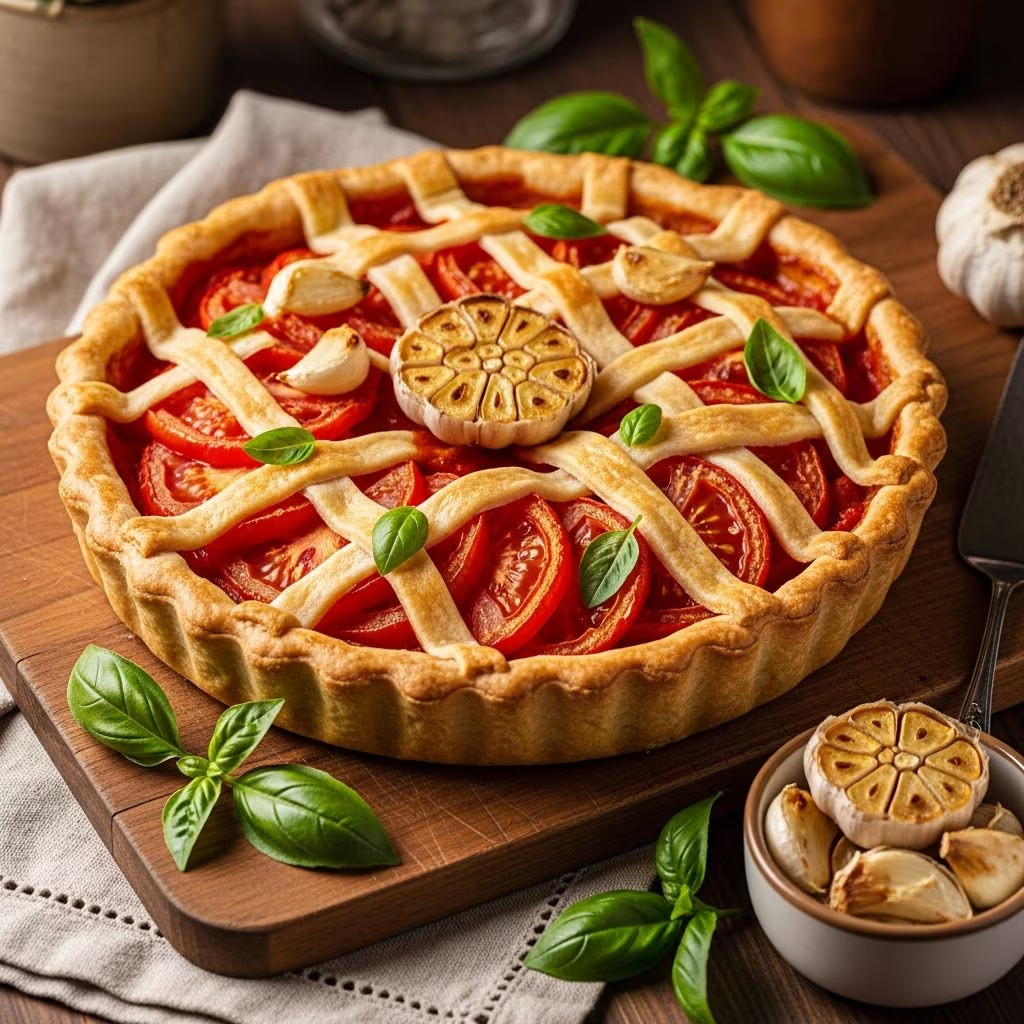
When summer arrives and farmers’ markets overflow with vibrant, ripe tomatoes, home cooks face the delightful challenge of transforming this abundance into memorable meals. Among the most elegant and impressive ways to celebrate fresh tomatoes is through the creation of a sophisticated savory pie that combines the natural sweetness of roasted tomatoes with the deep, complex flavors of caramelized garlic. This culinary creation represents the perfect marriage of technique and simplicity, offering both visual appeal and extraordinary taste.
Understanding the Foundation: Why This Pie Works
The success of this dish rests on a fundamental principle of flavor development: the transformation of raw ingredients through heat. When tomatoes roast at high temperature, their water content reduces significantly, concentrating their natural sugars and acids into an intensely flavorful component. Simultaneously, garlic undergoes its own remarkable transformation, shifting from sharp and pungent to buttery and mellow through slow cooking in butter. These two preparations form the foundation upon which all other elements build.
What distinguishes this pie from conventional vegetable tarts is its unconventional crust. Rather than traditional pastry dough, this recipe employs a foundation of crushed whole grain crackers bound together with butter and eggs. This approach yields a uniquely textured base that provides structural support while contributing its own subtle, nutty flavor dimension. The resulting crust maintains a satisfying crunch even as it supports the weight of the layered filling, creating an engaging textural contrast that elevates the entire dish.
The Ingredient Selection Process
Creating this pie begins with understanding the role each ingredient plays in the final composition. The selection of tomato varieties significantly impacts the outcome. Heirloom tomatoes, with their varied sizes, shapes, and flavor profiles, offer superior taste compared to conventional varieties. Their higher water and sugar content, combined with more pronounced acidity, creates a more complex flavor profile when concentrated through roasting.
The cheese component deserves particular attention. Taleggio, an Italian semi-soft cheese known for its creamy texture and earthy undertones, serves as the primary cheese. When combined with Parmesan’s sharpness, the two create a sophisticated flavor dialogue. The mayonnaise, while seemingly unconventional, acts as an emulsifier and adds richness that helps the filling remain moist and cohesive throughout baking.
Fresh thyme provides the herbal dimension, its subtle pine notes complementing both the sweetness of tomatoes and the earthiness of garlic. A single shallot, thinly sliced, adds aromatic complexity and a gentle onion sweetness that ties the various components together harmoniously.
Building the Cracker-Based Crust: Foundation for Success
The construction of the crust represents a critical juncture in the preparation process. Whole grain crackers, when pulverized into fine crumbs, provide the structural foundation. The typical volume of crackers yields approximately two cups of crumbs once processed. This quantity proves sufficient to create a crust with adequate integrity while remaining delicate enough to maintain a pleasant eating experience.
The binding process involves combining the cracker crumbs with eggs and garlic-infused butter. The eggs contribute both moisture and binding properties, allowing the mixture to cohere into a cohesive mass with a texture resembling damp sand. The garlic butter, prepared separately by cooking butter with garlic cloves over gentle heat until the milk solids turn golden brown, imparts the first layer of the dish’s savory, nutty character.
The initial baking of the crust at 375°F for approximately 8 to 10 minutes serves an essential purpose: it sets the structure without allowing the crust to become hard or overly browned. The slight color development indicates proper moisture evaporation and the beginning of the Maillard reaction, which develops deeper flavors. Allowing the crust to cool before adding the filling prevents premature softening and ensures optimal texture retention.
The Roasting Process: Concentrating Tomato Flavor
Preparing the tomatoes requires careful attention to both timing and temperature. The initial roasting at 475°F represents a higher temperature than typical pie baking, designed to drive off moisture rapidly. The tomato slices, arranged closely together on a rimmed baking sheet, create a surface area that maximizes exposure to heat. Drizzling with olive oil and seasoning with salt and pepper initiates the flavor concentration process.
The 25 to 30-minute roasting window achieves the desired result: the tomato surfaces become slightly desiccated and begin to caramelize, while the interiors remain sufficiently moist to provide juiciness to the final pie. The visual cue—tomatoes beginning to look dry on top—provides a reliable indicator of completion, as internal doneness correlates with external appearance.
Allowing the roasted tomatoes to cool before assembly offers practical advantages. The cooling period permits any residual steam to dissipate, reducing the likelihood of excessive moisture in the finished pie. Additionally, cooled tomatoes slice and layer more easily without falling apart during the filling assembly process.
Assembling the Layered Filling: Creating Textural Harmony
The assembly phase demonstrates the importance of technique in creating a balanced, well-integrated filling. The cheese mixture—comprising the grated Taleggio, crumbled Parmesan, mayonnaise, and finely chopped thyme—forms the flavor platform. This component should be gently dolloped rather than roughly spread, as aggressive mixing can break apart the delicate crust.
Using an offset spatula to spread the cheese mixture ensures even distribution while minimizing pressure applied to the crust foundation. The technique requires a light hand and controlled movements, allowing the spatula to glide across the surface rather than press downward. This methodology preserves the structural integrity of the crust while achieving uniform coverage.
The layering strategy alternates between cheese mixture and tomato slices, creating a stable structure through strategic distribution of weight and moisture. Beginning with half the cheese mixture provides a flavorful foundation, while the subsequent layer of tomato slices offers textural contrast and contributes acidity that brightens the overall composition. Repeating this sequence with the remaining cheese and tomatoes creates a balanced proportion of all elements.
Final Touches: Garnishing and Baking Completion
The finishing elements elevate the dish from merely delicious to visually stunning. The remaining garlic butter, brushed over the tomato surface, imparts additional richness and creates an attractive sheen. The thinly sliced shallot scattered across the top adds visual interest through varied heights and textures, while additional thyme leaves provide an aromatic garnish that hints at the flavors within.
The final baking occurs at 375°F, a moderate temperature that allows thorough heating of all components without risking the crust becoming too dark or the filling separating. While specific timing varies based on pie depth and individual oven characteristics, the pie typically requires 25 to 35 minutes to reach completion. The cheese will melt and distribute throughout the filling, creating a cohesive layer that binds the tomatoes together while contributing creaminess and umami depth.
Understanding Ingredient Variations and Substitutions
While the classic recipe provides an excellent foundation, creative cooks may explore variations based on ingredient availability and personal preferences. Puff pastry presents a viable alternative to the cracker crust for those seeking a more conventional pastry experience, though this substitution fundamentally alters the textural profile. The paleo variation employing almond flour, coconut flour, and tapioca flour accommodates dietary restrictions while delivering a crust with comparable structural integrity and more pronounced nutty notes.
Cheese selections can be adjusted based on personal taste and regional availability. While Taleggio provides authentic Italian character, other semi-soft cheeses like fontina or even a high-quality mozzarella can serve as substitutes. The important consideration involves ensuring the cheese melts effectively and contributes complementary flavor notes rather than clashing with the tomato and garlic elements.
Herb selections extend beyond thyme, accommodating seasonal availability and personal preference. Fresh basil offers a lighter, more aromatic alternative, particularly effective during peak summer months. Fresh oregano contributes Mediterranean notes, while dill introduces unexpected complexity that some palates find appealing.
Practical Considerations for Preparation and Service
The temporal flexibility of this pie enhances its value for entertaining. Most components can be prepared in advance: tomatoes can be roasted a day ahead and stored in the refrigerator, the crust can be pre-baked and cooled, and the cheese mixture can be combined several hours before assembly. This advance preparation allows the cook to focus on final assembly and baking during the hours immediately preceding service, reducing stress and allowing attention to other menu components.
The pie serves effectively as a centerpiece for lunch gatherings, though it accommodates versatile serving contexts. When cut into wedges and served while still warm, the cheese remains creamy and the tomatoes contribute bright acidity. The pie also accepts room-temperature service, making it suitable for picnics or outdoor gatherings. Leftovers, while the texture softens slightly, remain delicious when reheated gently or consumed cold.
Portion sizing should account for the pie’s richness. A standard springform pie pan yields 8 substantial slices appropriate for serving as a main course accompanied by a simple green salad, or 12 smaller slices suitable for appetizer or lunch portions. The dish pairs thoughtfully with crisp white wines or light rosés that complement both the tomato brightness and cheese richness.
Troubleshooting Common Challenges
Understanding potential complications allows for preventive measures. Excessive moisture in the finished pie typically results from insufficient tomato roasting or over-eager cheese mixture spreading. Addressing the former requires vigilance regarding roasting time and visual cues, while the latter improves with practice and the light-handed technique previously described. Should moisture become problematic during assembly, patting the tomato slices with paper towels before layering provides remediation.
Crust breakage during spreading can be minimized through proper pre-baking, allowing adequate cooling time, and employing appropriate techniques. Should minor cracks develop, they rarely significantly impact the final product’s taste or structural integrity, though appearance may suffer slightly. Crust that browns too quickly during the final bake may benefit from tenting with foil partway through baking to moderate browning while allowing interior heating to continue.
Why This Dish Deserves a Place in Your Cooking Repertoire
This tomato and roasted garlic pie represents far more than a mere recipe; it embodies a philosophy of cooking that celebrates seasonal abundance, respects ingredient quality, and applies skillful technique to create something greater than the sum of its parts. The dish demonstrates that vegetarian cooking need not be sacrificial or bland, instead showcasing how thoughtful preparation can elevate humble vegetables into a celebration-worthy creation.
The combination of flavors—the concentrated sweetness and acidity of roasted tomatoes, the mellow complexity of caramelized garlic, the creamy richness of quality cheeses, and the subtle herbaceous notes of fresh thyme—creates a sophisticated taste profile that appeals to both adventurous eaters and those preferring familiar flavors. The textural variety provided by the crispy crust, creamy filling, and slightly concentrated tomatoes maintains interest throughout the eating experience.
Whether prepared for a special occasion, a casual gathering, or simply as an expression of gratitude for seasonal produce, this pie invites cooks to engage with their ingredients intentionally and to apply fundamental cooking techniques to achieve remarkable results. The combination of advance preparability and impressive presentation makes it an ideal choice for those seeking to expand their repertoire of show-stopping dishes.
References
- Tomato and Roasted Garlic Pie — Bon Appétit Magazine. August 2020. https://www.compelledtocook.com/tomato-and-roasted-garlic-pie/
- Heirloom Tomato Characteristics and Culinary Applications — University of California Agriculture and Natural Resources. 2024. https://ucanr.edu/
- Taleggio Cheese: Production, Characteristics, and Uses — Consorzio per la Tutela del Formaggio Taleggio DOP. 2023. https://www.taleggiodop.it/
- The Maillard Reaction in Food Science — Institute of Food Science and Technology (IFST). 2023. https://www.ifst.org/
- Garlic Chemistry and Flavor Development Through Cooking — Journal of Agricultural and Food Chemistry. American Chemical Society. 2022. https://pubs.acs.org/journal/jafcau