Sweet potato casserole represents one of the most beloved comfort food dishes across North American tables, particularly during festive celebrations. This classic preparation combines the natural earthiness of roasted tubers with the warmth of warm spices and textural contrast from a crispy topping layer. Whether you’re preparing this dish for the first time or refining your technique through years of experience, understanding the fundamentals of each component ensures consistently impressive results.
Understanding the Foundation: What Makes Sweet Potato Casserole Special
The appeal of sweet potato casserole lies in its multi-layered construction and balance of complementary flavors. The base layer provides a smooth, custard-like foundation that showcases the natural sweetness of the primary ingredient. Rather than being a simple side dish, this casserole functions as a complete culinary experience that bridges the gap between savory meal components and dessert-like indulgences. The complexity of textures—creamy filling against crunchy topping—creates an experience that engages multiple sensory pathways simultaneously.
Selecting Quality Sweet Potatoes
The quality of your finished dish depends significantly on the potatoes you choose. Sweet potatoes come in various sizes and varieties, with some producing drier flesh while others yield creamier results. When selecting potatoes for casserole preparation, choose medium-sized specimens that feel firm and show no soft spots or blemishes. The skin should appear unblemished and relatively uniform in color. Medium potatoes cook more evenly than their larger counterparts and require less time to reach the proper tenderness.
Fresh sweet potatoes from your local farmer’s market often produce superior results compared to those stored in warehouses for extended periods. The fresher the ingredient, the more pronounced the natural flavor will shine through in your finished casserole. If you prefer convenience, canned sweet potatoes provide an acceptable shortcut, though fresh potatoes generally deliver more nuanced flavor profiles.
The Preparation Process: Step-by-Step Approach
Cooking the Sweet Potatoes
Begin by scrubbing your potatoes under cool running water to remove any surface dirt or debris. Place them in a large pot and cover completely with water, adding an extra inch for safety. Bring the water to a rolling boil over high heat, then reduce the temperature to maintain a gentle simmer. The cooking process typically requires fifteen to twenty minutes, though this varies based on potato size. Test for doneness by piercing the flesh with a fork—it should slide through without resistance.
Once the potatoes reach proper tenderness, drain the water carefully and allow them to cool until manageable. The cooling period serves multiple purposes: it halts the cooking process, allows the interior to set slightly, and makes handling safer. When cool enough to touch, remove and discard the skin by running your thumb along the surface—the skin should separate easily from the flesh beneath.
Creating the Custard-Like Base
Place your peeled potatoes directly into a large mixing bowl. Using a potato masher, begin breaking down the cooked tubers into smaller pieces. This initial mashing creates the foundation for a smooth, consistent texture throughout the filling. For those seeking an exceptionally smooth final product, an electric mixer on low speed for approximately forty-five seconds after hand-mashing produces excellent results without overworking the mixture.
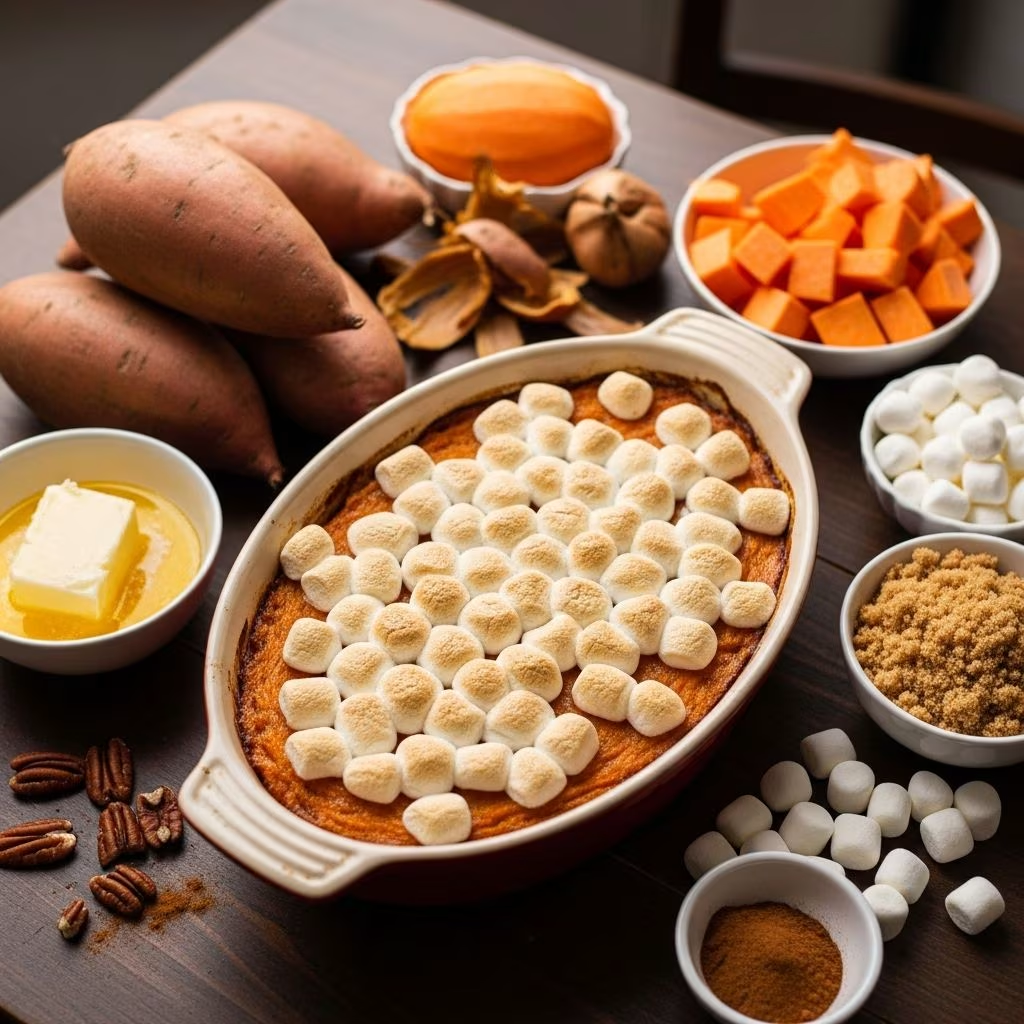
To this mashed base, add your binding and flavoring ingredients. The traditional formula includes butter for richness, milk or evaporated milk for creaminess, eggs for structure and binding, sugar for sweetness, vanilla extract for depth, and salt to enhance all flavor components. Mix these additions gently but thoroughly until all ingredients incorporate completely and no streaks of unmixed elements remain visible.
Building the Textural Contrast: Topping Options
Traditional Brown Sugar Pecan Topping
The most conventional approach combines brown sugar, chopped pecans, flour, and melted butter. In a separate bowl, mix these dry and wet ingredients until the mixture resembles coarse breadcrumbs or small pebbles. The texture should be slightly chunky rather than fully combined, as this creates pockets that toast into crispy, golden clusters during baking. The brown sugar caramelizes as heat penetrates the topping, creating complex flavor notes that complement the sweet potato base beneath.
Modern Variations and Alternatives
Contemporary preparations offer numerous topping possibilities beyond the traditional version. A maple-rosemary-walnut combination provides herbaceous complexity alongside the sweetness of maple syrup. Others incorporate oats into their streusel for added texture and nutrition. Some cooks reserve marshmallows for the topping, adding them during the final minutes of baking so they puff and brown but maintain their pillowy texture. Each variation maintains the core principle of providing contrasting texture to the smooth filling.
Assembly and Baking Guidelines
Prepare your baking vessel by lightly greasing a nine-by-thirteen-inch casserole dish with cooking spray or butter. Pour your prepared sweet potato mixture into the dish, using a spatula to spread it into an even layer that reaches all corners. The uniform thickness ensures consistent cooking throughout the dish.
Sprinkle your chosen topping over the surface of the filling, distributing it evenly so no areas remain uncovered. The topping should form a cohesive layer that bakes into a single crispy covering rather than individual scattered pieces.
Bake at three hundred seventy-five degrees Fahrenheit for twenty-five to thirty minutes. The casserole is finished when the topping achieves a golden-brown color and the filling demonstrates slight puffing around the edges. If your topping begins darkening too quickly while the interior remains underdone, cover the dish loosely with aluminum foil and reduce oven temperature by twenty-five degrees, then continue baking until the interior reaches the proper temperature.
Make-Ahead Strategies for Convenient Preparation
One advantage of casserole dishes is their compatibility with advance preparation. Assemble the complete casserole the evening before serving, cover it with plastic wrap or aluminum foil, and refrigerate overnight. The chilled casserole requires approximately five to ten additional minutes of baking time compared to room-temperature dishes. Alternatively, prepare the filling and topping separately, storing each in airtight containers for up to three days. Combine them on the day of serving for maximum convenience.
This flexibility makes sweet potato casserole an ideal choice for gatherings where oven space is limited. You can prepare it days in advance, reheat gently if necessary, and serve without requiring additional oven time during the final meal preparation rush.
Troubleshooting Common Issues
Dense, Heavy Filling
If your filling turns out overly dense rather than light and custardy, you likely overmixed the ingredients. The egg proteins develop too much gluten structure when overworked, creating a rubbery texture. Next time, mix only until ingredients just combine, stopping as soon as no dry spots remain visible. An alternative cause is using potatoes with naturally lower moisture content; adding an extra quarter cup of milk can help achieve the desired consistency.
Watery Casserole
Excessive moisture in your finished dish usually results from using canned sweet potatoes without proper draining or selecting naturally watery fresh potatoes. When using canned varieties, drain them thoroughly and press gently with paper towels to remove surface moisture. If using fresh potatoes, select medium-sized specimens and ensure thorough cooking so excess water evaporates during the cooking process.
Burnt Topping
Overly dark or burnt topping indicates either excessive oven temperature or prolonged baking time. Lower your oven temperature by twenty-five degrees and check the casserole five minutes earlier than the recipe suggests. Covering the dish loosely with foil during the initial baking period also protects the topping while the filling finishes cooking.
Flavor Enhancement Techniques
Beyond basic ingredients, several additions elevate your casserole’s complexity. A quarter teaspoon of ground ginger adds subtle warmth and brightness. Nutmeg, cinnamon, and cloves create deeper spice profiles reminiscent of traditional fall flavors. For those preferring more assertive tastes, orange zest or a tablespoon of bourbon add distinctive character. Experimentation within these parameters allows personalization while maintaining the dish’s essential character.
Nutritional Considerations
Sweet potatoes provide significant nutritional benefits, containing substantial amounts of vitamins and dietary fiber. The preparation method does add butter, sugar, and eggs, increasing caloric content compared to plain roasted potatoes. However, portion control and moderation allow enjoyment of this dish as part of a balanced meal. The naturally occurring nutrients in sweet potatoes remain largely intact after cooking and mixing with other ingredients.
Frequently Asked Questions
Can I use canned sweet potatoes instead of fresh? Yes, canned sweet potatoes offer convenience and produce acceptable results. Drain them thoroughly and press out excess moisture before mixing with other ingredients. Some flavor nuance will be reduced compared to fresh potatoes.
How far in advance can I prepare this dish? The complete assembled casserole keeps refrigerated for up to three days. You can also prepare components separately and store them for three days before assembling.
What is the ideal serving size? One casserole prepared in a nine-by-thirteen-inch dish provides eight to ten appropriate servings as a side dish.
Can I freeze sweet potato casserole? Yes, both assembled and baked casseroles freeze well for up to three months. Thaw in the refrigerator overnight before reheating at three hundred fifty degrees until warmed through.
What side dishes pair well with sweet potato casserole? This dish complements savory proteins and vegetable sides particularly well, making it an excellent addition to traditional holiday tables.
Conclusion
Sweet potato casserole represents accessible elegance that serves as a centerpiece on any celebratory table. By understanding the purpose of each ingredient and mastering fundamental techniques, you create a dish that impresses both longtime enthusiasts and first-time tasters. The combination of smooth, custardy filling with contrasting textural elements from the topping creates a complete sensory experience that explains this dish’s enduring popularity across generations and celebrations.
References
- USDA FoodData Central: Sweet Potatoes, raw — U.S. Department of Agriculture. 2024. https://fdc.nal.usda.gov/fdc-app.html
- The Food Safety Authority of Ireland: Cooking Methods and Food Safety — Food Safety Authority of Ireland. 2023. https://www.fsai.ie/
- Egg Safety: Storage and Handling Guidelines — U.S. Department of Agriculture Food Safety and Inspection Service. 2024. https://www.fsis.usda.gov/food-safety/safe-food-handling-and-preparation/eggs