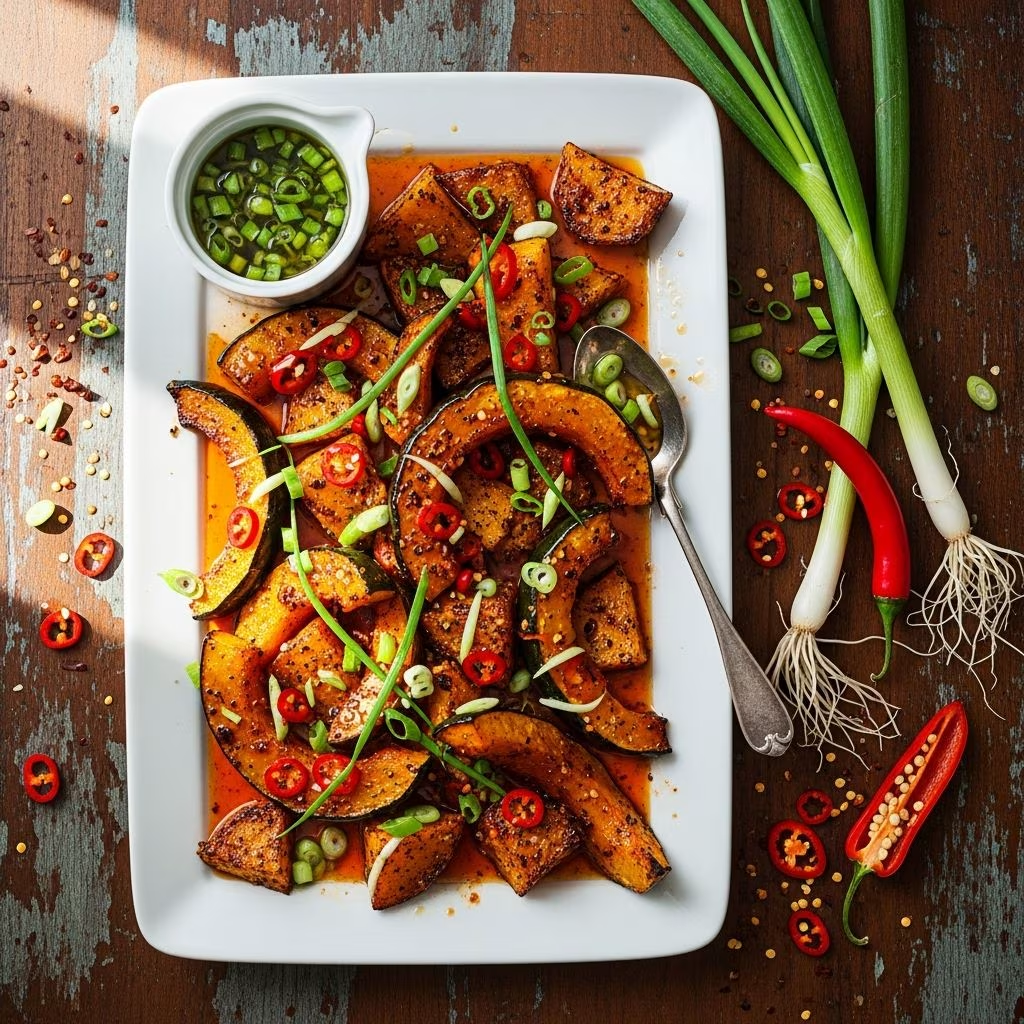
This dish turns everyday winter squash into a symphony of tastes: caramelized sweetness from honey, a punch of heat from fresh chiles, and a bright, garlicky lift from scallion oil. It’s versatile enough for cozy dinners or festive spreads, balancing richness with freshness in every bite.
Why This Squash Recipe Captivates Home Cooks
Winter squash varieties like butternut and acorn bring natural earthiness and density, making them ideal for high-heat roasting that yields crispy exteriors and fluffy centers. The magic lies in a simple glaze of honey, vinegar, and sliced Fresno chiles, which bakes into a sticky, spicy coating. Topped with a quick-infused scallion oil, it adds herbaceous zing without overpowering the vegetable’s core flavor.
Perfect for seasonal eating, this preparation maximizes squash’s peak qualities from late fall through winter. It’s naturally gluten-free, vegan-friendly, and packs nutritional punch with vitamins A and C, fiber, and antioxidants. Whether you’re hosting Thanksgiving or seeking a vibrant side for roasted meats, this recipe delivers restaurant-worthy results with minimal fuss.
Gathering Your Ingredients
Selecting quality produce is key. Opt for firm squash without soft spots. Fresno chiles provide manageable heat; substitute jalapeños for milder spice or Thai bird’s eye for fire. Fresh scallions ensure the oil’s vibrancy—wilted ones dull the flavor.
- Main vegetables: ½ medium butternut squash (about 1½–2 lb), peeled and seeded; 1 medium acorn squash (about 1½ lb), well-scrubbed.
- Glaze components: Honey, rice vinegar, thinly sliced Fresno chile (with seeds for heat), kosher salt, black pepper.
- Scallion oil: Neutral oil (like grapeseed), sliced scallions, grated garlic, rice vinegar, kosher salt.
- Optional enhancements: Toasted sesame seeds, flaky sea salt for finishing.
These elements create harmony: sweetness tempers spice, acidity cuts richness, and oil provides silkiness.
Step-by-Step Roasting Mastery
Preparation takes about 20 minutes, with 45–60 minutes of roasting. Preheat oven to 400°F for even cooking.
- Prep the squash: Halve acorn squash, scoop seeds, cut into 2-inch wedges. For butternut, slice crosswise into 2-inch rounds, then halve into half-moons. No need to peel acorn—its skin softens beautifully.
- Season base: Toss pieces on a parchment-lined baking sheet with oil, salt, and pepper. Arrange skin-side down for maximum caramelization.
- Apply glaze: Whisk honey, rice vinegar, sliced chile, salt, and pepper. Spoon over squash midway through roasting to prevent burning while allowing infusion.
- Roast to perfection: 40 minutes initially, then glaze and continue 15–20 minutes until fork-tender and edges are charred.
Rest briefly post-oven to redistribute juices.
Crafting the Signature Scallion Oil
This no-cook condiment takes 5 minutes and transforms the dish. Heat neutral oil until shimmering, pour over chopped scallions, garlic, vinegar, and salt. The residual heat wilts scallions gently, melding flavors without cooking out freshness. Let steep 10 minutes for best integration. Drizzle generously—it pools enticingly in squash crevices.
Pro Tip: Make extra scallion oil; it refrigerates up to a week, elevating soups, grains, or grilled proteins.
Flavor Profile Breakdown
| Component | Flavor Notes | Role in Dish |
|---|---|---|
| Squash Roast | Nutty, caramelized sugars | Foundation sweetness and texture |
| Honey-Chile Glaze | Sweet-heat fusion | Bold contrast, sticky appeal |
| Rice Vinegar | Bright tang | Balances richness |
| Scallion Oil | Garlicky, oniony pop | Fresh finish, moisture |
Customizing for Your Table
Adapt based on preferences or pantry staples:
- Milder version: Remove chile seeds or swap for bell peppers.
- Sweeter twist: Add maple syrup or brown sugar to glaze.
- Nutty upgrade: Sprinkle pepitas or chopped pecans post-roast.
- Protein pairing: Serve with grilled pork tenderloin, tofu steaks, or alongside wild rice pilaf.
- Make-ahead: Roast squash a day ahead; reheat at 350°F and refresh oil just before serving.
Nutritional Spotlight
One serving (about 1 cup) offers roughly 200 calories, 5g fiber, 3g protein, and beta-carotene for eye health. Low in sodium if you control salt, it’s diabetic-friendly with a low glycemic load. Pair with lean proteins for balanced plates.
Perfect Pairings and Menu Ideas
Thanksgiving star: Swap traditional candied yams for this—its spice wakes up heavy classics like turkey and gravy.
Weeknight hero: With rotisserie chicken and greens.
Wine matches: Off-dry Riesling cuts spice; oaky Chardonnay complements caramel notes.
Global flair: Echoes Korean gochujang glazes or Mexican calabacitas.
Troubleshooting Common Pitfalls
- Soggy squash? Ensure even sizing and hot oven; overcrowding steams instead of roasts.
- Bitter glaze? Taste before applying—too much vinegar? Balance with honey.
- Dull oil? Use fresh aromatics; infuse warm for potency.
Seasonal Squash Primer
Butternut: Smooth, sweet flesh ideal for purees or chunks.
Acorn: Compact, slightly fibrous with edible green skin.
Harvest peaks October–December; store cool and dry up to 2 months.
FAQs
Can I use other squash types?
Yes! Delicata or kabocha work well; adjust roast time for density.
Is the skin edible?
Acorn yes; butternut optional—peel if texture bothers.
How spicy is it?
Medium; one Fresno chile adds warmth without overwhelming.
Vegan confirmed?
Fully plant-based as written.
Freezes well?
Roasted squash yes (up to 3 months); oil fresh is best.
Scaling for Crowds
Double recipe for 8–10; use two sheets, rotate midway. Glaze in batches to avoid dilution.
References
- USDA FoodData Central: Squash, winter, butternut, raw — United States Department of Agriculture. 2023-10-01. https://fdc.nal.usda.gov/fdc-app.html#/food-details/169295/nutrients
- USDA FoodData Central: Squash, winter, acorn, raw — United States Department of Agriculture. 2023-10-01. https://fdc.nal.usda.gov/fdc-app.html#/food-details/169294/nutrients
- Bon Appétit Magazine, November 2025: The Thanksgiving Issue — Bon Appétit. 2025-11-01. https://www.epicurious.com/recipes/food/views/ba-syn-sweet-and-spicy-squash-with-scallion-oil
- Harvard T.H. Chan School of Public Health: The Nutrition Source – Vegetables and Fruits — Harvard University. 2024-05-15. https://www.hsph.harvard.edu/nutritionsource/what-should-you-eat/vegetables-and-fruits/
- Journal of Food Science: Effects of Roasting on Bioactive Compounds in Winter Squash — Institute of Food Technologists. 2022-08-20. https://doi.org/10.1111/1750-3841.16245