Sugar is a kitchen cornerstone, influencing texture, flavor, and structure in countless recipes. This guide demystifies sugar types, empowering you to select, store, and apply them effectively for superior results in baking and cooking.
Understanding Sugar Fundamentals
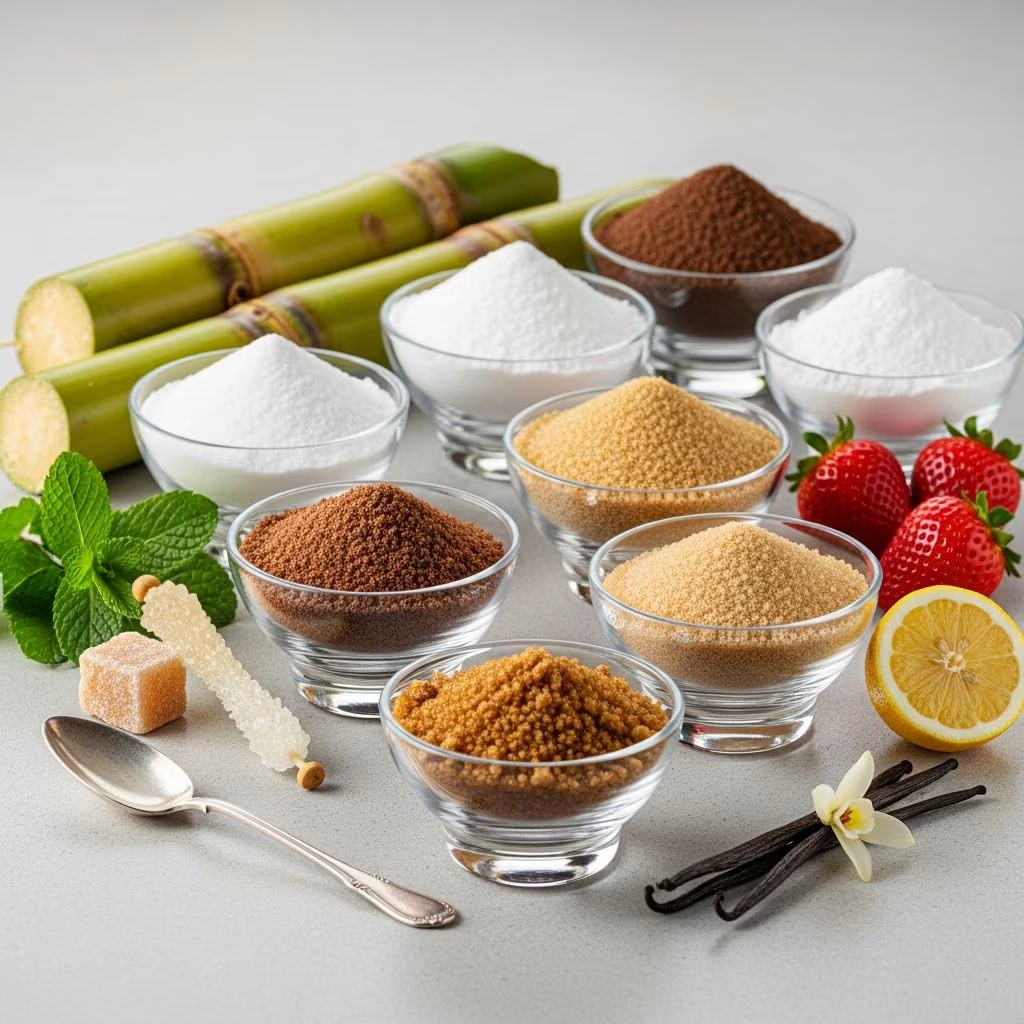
Sugar, primarily sucrose, derives from sugarcane or beets. Refining levels determine its form, color, and moisture, affecting culinary roles from tenderizing cakes to caramelizing roasts. Granulated white sugar suits most needs due to purity and neutrality, while alternatives add unique flavors and properties.
Granulated Sugars: The Everyday Essentials
Refined granulated sugar is the most versatile pantry staple. Fine crystals dissolve quickly, ideal for meringues and syrups.
- Fine granulated: Standard for cookies and cakes; measures 1:1 in recipes.
- Superfine/caster: Smaller crystals for faster dissolving in beverages and whipped creams.
- Sparkling/décor: Coarse for garnishes, non-melting crunch.
Table sugar from beets or cane is chemically identical post-refining, though cane often carries faint flavors.
Brown Sugars: Moisture and Molasses Magic
Brown sugar retains molasses, yielding humidity and rich taste for chewy textures.
| Type | Color/Flavor | Best Uses |
|---|---|---|
| Light Brown | Golden, mild molasses | Cookies, glazes, sauces |
| Dark Brown | Deep, robust molasses | Gingerbread, BBQ rubs |
| Muscovado | Unrefined, smoky | Tropical desserts, rum cakes |
Pack brown sugar tightly to retain moisture; it hardens otherwise.
Raw and Less-Refined Sugars: Flavorful Alternatives
Minimally processed sugars preserve natural minerals and complexities.
- Turbinado/Demerara: Large, golden crystals from first pressing; crunch for toppings, mild caramel in baking.
- Sucanat: Whole-cane dehydration; dense, earthy for granolas.
- Coconut sugar: Sap-derived, low glycemic; butterscotch notes in vegan treats.
These add depth but may alter textures due to larger grains or acidity.
Specialty and Liquid Sugars for Precision
Beyond crystals, specialty forms excel in niches.
- Powdered/confectioners’: Pulverized with cornstarch; for icings, dustings. Sift to avoid lumps.
- Invert sugar (e.g., glucose, trimoline): Pre-broken sucrose prevents crystallization in candies, ice creams.
- Honey, maple syrup: Floral complexities; reduce liquids in recipes.
- Lyle’s Golden Syrup: Invert cane; chewy flapjacks.
Strategic Buying: Quality Over Quantity
Opt for reputable brands to avoid impurities. Check for uniform crystals and fresh aroma. Organic or fair-trade supports sustainability. Bulk buys save for heavy bakers, but verify turnover to prevent staleness. Avoid caked or off-smelling packages.
References
- Added Sugar in the Diet — Harvard T.H. Chan School of Public Health. 2022-01-19. https://nutritionsource.hsph.harvard.edu/carbohydrates/added-sugar-in-the-diet/
- Essential Sugars for Your Prepper Pantry — Mary’s Nest. 2023-05-12. https://marysnest.com/essential-sugars-for-your-prepper-pantry/
- The Best Sugar to Use (and what sugar to avoid) — Souly Rested. 2024-02-15. https://soulyrested.com/the-best-sugar-to-use-and-what-sugar-to-avoid-with-david-stelzer-of-azure/
Storage Mastery: Longevity and Freshness
Seal sugars airtight. Granulated lasts indefinitely in pantries; browns need moisture-proof containers or freezing. Refrigerate powders in humid climates. Revive hardened browns with a damp paper towel in a sealed bag overnight.
Baking Science: Sugar’s Transformative Roles
Sugar aerates batters via creaming, tenderizes via gluten interference, caramelizes for browning, and retains moisture for softness.
- Creaming: Incorporates air for lift in cookies.
- Caramelization: 320°F Maillard magic for crusts.
- Hygroscopic pull: Draws moisture, preventing dryness.
Overbeating risks gumminess; undercreaming yields flat results.
Cooking Applications: Beyond Sweets
Sugar balances acids in sauces, brines meats, preserves jams.
- Savory: Balsamic reductions, glazes.
- Pickling: Balances vinegars.
- Drinks: Simple syrups for clarity.
Substitution Chart: Swaps Made Simple
| Replace | With | Ratio/Notes |
|---|---|---|
| Granulated | Brown | 1:1; moister results |
| Brown | Granulated + molasses | 1 cup + 1 Tbsp |
| Powdered | Granulated + cornstarch | 1:1 blended fine |
| White | Coconut sugar | 1:1; reduce liquid 10% |
Test small batches; flavors vary.
Health Perspectives: Moderation and Awareness
Americans average 17 tsp added sugar daily, per Harvard data. Guidelines cap at 10% calories: 12 tsp for 2000kcal diets. AHA stricter: 6-9 tsp adults. Prioritize whole sources; label-scan for hidden sugars in sodas (10 tsp/can), yogurts.
FAQs
Can I use turbinado instead of white sugar?
Yes, 1:1 in most baking; expect subtle crunch and flavor.
How to make powdered sugar?
Blend granulated with 1 Tbsp cornstarch per cup.
Does sugar type affect rise?
Brown sugars weigh more, may flatten; adjust flour slightly.
Best sugar for royal icing?
Superfine or powdered for smoothness.
Is cane sugar healthier than beet?
Nutritionally equal post-refining.
(Word count: 1678)