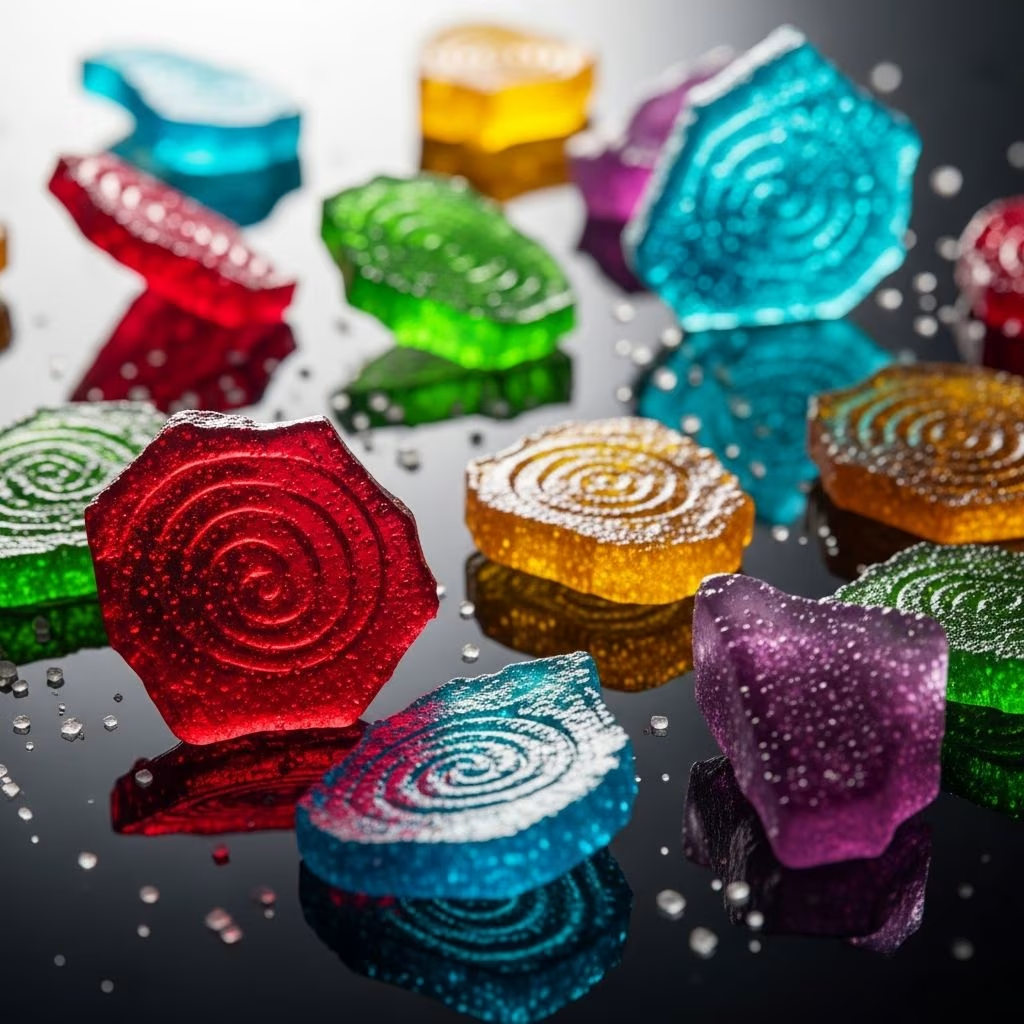
Stained glass candy, often called sugar glass or rock candy, captivates with its jewel-like shards that crunch delightfully under your teeth. This timeless confection transforms basic pantry staples into festive treats ideal for holidays, parties, or gifts. By boiling sugar syrup to the hard-crack stage and shattering it into pieces, you achieve a stunning visual and textural treat.
Why This Candy Captures Hearts and Palates
Its appeal lies in versatility: customize colors and flavors for any occasion, from peppermint red for Christmas to minty green for St. Patrick’s Day. Unlike chewy candies, this hard variety offers a clean snap and lasts weeks when stored properly. Families cherish it as a tradition, evoking nostalgia with its simple yet mesmerizing process.
Essential Ingredients for Success
Gathering the right components ensures your batch sets perfectly without sticking or crystallizing. Here’s a reliable recipe scaled for a standard sheet pan yield:
- 3 to 4 cups granulated white sugar – provides the base structure.
- 1 cup light corn syrup – prevents crystallization for a smooth texture.
- 1 cup water – dissolves the sugar initially.
- 1 tablespoon flavoring oil or extract (e.g., cinnamon, peppermint, spearmint).
- Food coloring (gel or liquid, about 1 tablespoon or 9-10 drops).
- 1-2 cups powdered sugar – for dusting and non-stick coating.
Variations exist; some recipes use 3.5 cups sugar or adjust syrup ratios, but consistency yields crunchy results.
Tools You’ll Need Before Starting
Precision matters in candy-making. Equip your kitchen with:
- Candy thermometer (essential for hitting 300°F hard-crack stage).
- Large heavy-bottomed saucepan (non-stick preferred).
- 15×11-inch or jelly roll sheet pan lined with foil or parchment.
- Meat mallet or rolling pin for breaking.
- Oven mitts, wooden spoon, and airtight storage containers.
Without a thermometer, testing syrup in ice water risks inaccuracy.
Step-by-Step Guide to Crafting Your Candy
Follow these instructions meticulously for safety and success. Total time: about 40-60 minutes, plus cooling.
- Prepare the pan: Line a sheet pan with aluminum foil. Generously dust with powdered sugar to prevent sticking. Shake off excess for even coverage.
- Mix the base: In a saucepan, combine sugar, corn syrup, and water. Stir over medium heat until sugar fully dissolves and mixture boils. Avoid stirring afterward to prevent graininess.
- Monitor temperature: Clip on the thermometer (not touching the bottom). Boil undisturbed to 300°F (hard-crack stage). This takes 20-30 minutes; bubbles will thicken.
- Add flair: At 260°F, stir in flavoring. At 300°F, remove from heat, add food coloring, and stir quickly. Pour immediately onto prepared pan. Tilt gently with mitts to spread.
- Cool completely: Let sit 1 hour undisturbed until hard. It will form a solid sheet.
- Shatter and coat: Cover with parchment, then hammer into shards. Toss pieces in powdered sugar to coat, shaking off excess. Store in airtight containers.
| Stage | Temperature | Action |
|---|---|---|
| Dissolving | Boiling point | Stir constantly |
| Flavor add | 260°F | Drop in extract |
| Color & pour | 300°F | Stir & dump fast |
| Break | Room temp | Hammer shards |
Flavor and Color Pairing Ideas
Elevate your candy with thoughtful combinations:
- Winter classics: Cinnamon oil with red gel for fiery red shards.
- Fresh vibes: Spearmint extract and green coloring for cool bites.
- Tropical twist: Lemon oil with yellow for sunny pieces.
- Multicolor batch: Divide syrup into portions post-boil for rainbow mixes.
Use oil-based flavorings for intensity; extracts work but may dilute slightly. Gel colors yield vibrant hues without thinning syrup.
Common Pitfalls and Fixes
Candy-making intimidates, but issues are fixable:
- Sticky candy: Insufficient powdered sugar or humidity. Dust more liberally.
- Grainy texture: Stirred during boil. Start over, or salvage by reheating gently.
- Color streaks: Add at too-high temp. Stir with toothpick at 260°F.
- Undercooked (chewy): Below 300°F. Use reliable thermometer.
- Overcooked (bitter): Past 310°F. Watch closely past 290°F.
Humidity affects setting; make on dry days or use dehumidifier.
Storage and Shelf Life Tips
Properly stored, stained glass candy lasts 4-6 weeks. Keep in airtight containers with powdered sugar packets to absorb moisture. Avoid refrigerators, as humidity softens it. Layer pieces with parchment to prevent fusing. For gifts, use tins with dividers.
Scaling Up for Gifts and Parties
Double the recipe for crowds, using multiple pans. Yield: one batch makes 2-3 pounds. Package in cellophane bags tied with ribbon for easy gifting. Personalize labels with flavor notes. It’s cost-effective: under $5 per pound.
Health and Safety Considerations
This treat is pure sugar, so enjoy in moderation. Supervise children during breaking. Hot syrup causes severe burns—keep faces away and use long tools. Those with corn syrup sensitivities can substitute glucose, but test small batches.
Creative Variations to Try
Experiment beyond basics:
- Sea glass effect: Pastel colors with sea salt flecks for beach theme.
- Layered shards: Pour thin multicolored layers, cool between.
- Infused flavors: Add herbal extracts like lavender for gourmet twists.
- Cookie fusion: Embed shards in dough for stained glass effect (separate method).
For chocolate lovers, try fruit-nut clusters mimicking stained glass, but that’s a no-cook alternative.
Perfect for Every Celebration
Adapt for seasons: orange-clove for fall, berry for summer. Its shelf stability makes it ideal for cookie swaps or teacher gifts. Share the joy of hands-on creating with kids (post-boiling).
Frequently Asked Questions (FAQs)
Can I make this without a candy thermometer?
Not recommended. Cold-water tests are unreliable for hard-crack precision. Invest in a $10 digital model.
Why does my candy turn white or cloudy?
Crystallization from stirring or impurities. Use clean utensils and corn syrup.
How do I clean the sticky saucepan?
Fill with hot water, boil, then scrub. Avoid soap until cooled.
Is this candy gluten-free?
Yes, if using pure extracts. Check labels for cross-contamination.
Can I reuse broken pieces that stick together?
Reheat gently to 300°F, but flavor may fade. Best fresh.
What if I want smaller batches?
Halve ingredients, use smaller pan. Time remains similar.
Mastering stained glass candy rewards with dazzling results. Its simplicity belies the wow factor, making it a staple for confection enthusiasts. Experiment confidently for your signature spin.
References
- Stained Glass Candy – Coco and Ash — Coco and Ash. 2023. https://www.cocoandash.com/stained-glass-candy/
- Old Fashioned, Stained Glass Candy Recipe – 3 Boys and a Dog — 3 Boys and a Dog. 2023. https://3boysandadog.com/stained-glass-candy-recipe/
- Stained Glass Candy Recipe – Eat Move Make — Eat Move Make. 2023. https://eatmovemake.com/stained-glass-candy/
- Stained Glass Candy – Two Southern Sweeties — Two Southern Sweeties. 2023. https://www.twosouthernsweeties.com/stained-glass-candy/