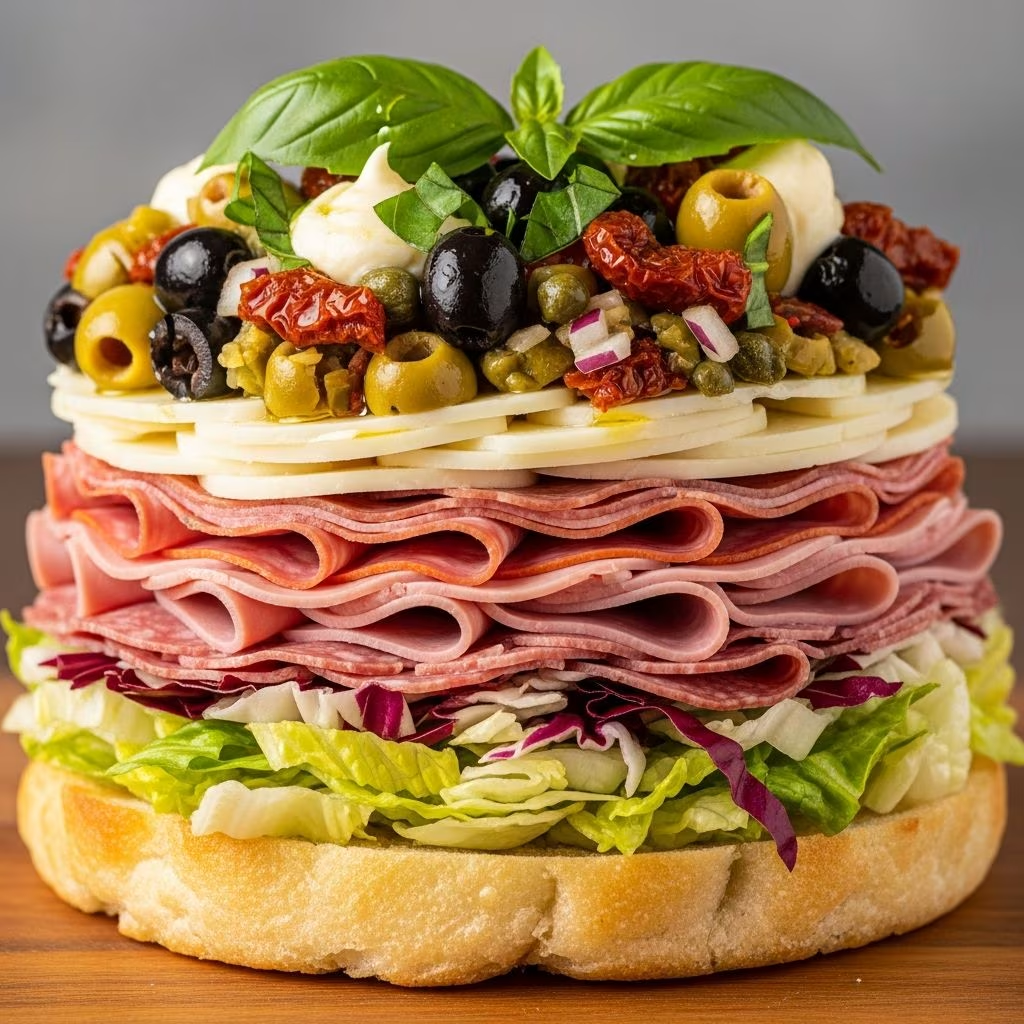
The muffuletta stands as one of New Orleans’ most celebrated culinary contributions, a sandwich that has graced menus and home tables for generations. This iconic creation brings together Italian-influenced ingredients with American ingenuity, resulting in a flavor profile that remains instantly recognizable and deeply satisfying. However, the traditional sandwich format isn’t the only way to enjoy these exceptional flavors. By reimagining the muffuletta as a stacked salad, home cooks and professional chefs can offer a visually striking presentation that maintains all the savory complexity of the original while providing a lighter, more contemporary dining experience.
The transition from sandwich to salad represents more than a simple format change; it’s an opportunity to celebrate each ingredient individually while creating a cohesive whole. The layered approach allows diners to experience the interplay of textures and tastes with each forkful, making the dish particularly appealing for special occasions, dinner parties, or meal preparation throughout the week.
Understanding the Foundation: Core Components of the Dish
Creating a successful stacked muffuletta salad begins with understanding which elements deserve a place in your composition. Unlike a traditional composed salad, this dish relies on building distinct layers that can be consumed together or experienced individually, depending on preference.
The Greens Layer
The base of any respectable salad starts with quality greens. Spring mix, with its delicate balance of flavors and tender texture, serves as an ideal foundation. The mild earthiness of younger lettuces won’t overpower the robust components layered above. Baby spinach offers an alternative for those seeking additional nutritional density, though some may prefer the milder profile of butter lettuce or a combination of tender leaves. The greens should be thoroughly washed, properly dried, and chilled before assembly to maintain their crisp texture throughout serving.
Cured Meats Selection
The protein backbone of this dish comprises traditional Italian and Italian-American cured meats. Salami, with its marbled fat and seasoned complexity, provides depth and richness. Ham, whether traditional or specialty varieties, adds a complementary salty sweetness. Some preparations include mortadella, the buttery, finely-textured Italian specialty meat that brings an additional layer of sophistication. These meats should be cut into small cubes to ensure even distribution and to maintain the salad’s elegant presentation. The size of the cubes matters—pieces too large create unwieldy bites, while those too small may become lost among other components.
Cheese Contributions
Provolone cheese, with its slightly sharp flavor and firm texture, represents the traditional cheese choice for muffuletta-inspired dishes. Its ability to maintain structure when cubed makes it particularly suitable for salad applications. Parmesan cheese, used both as a component ingredient and as a finishing element, adds a sharper umami note that elevates the overall flavor profile. The combination of these cheeses creates a complex dairy experience that complements rather than overwhelms the other components.
The Olive Salad Element
Perhaps the most distinctive component, the olive salad or olive medley, provides the signature tangy, briny character that defines muffuletta cuisine. This element typically combines both green and black olives, often including pimentos for visual interest and subtle sweetness. The inclusion of marinated ingredients introduces additional dimensions of flavor—the pickling liquids, herbs, and seasonings that cling to the olives and vegetables contribute to the overall taste experience. Many cooks opt for store-bought olive salad for convenience, though homemade versions offer greater control over ingredient quality and flavor intensity.
Building Your Composition: The Art of Layering
The visual presentation of a stacked salad transforms it from ordinary to extraordinary. Strategic layering ensures both aesthetic appeal and practical eating experience.
Creating Visual Drama
Begin with a foundation of fresh greens spread across the bottom of your serving vessel. A clear glass bowl or trifle dish becomes an asset rather than a liability, allowing the distinct layers to create visual intrigue from every angle. Position the cured meats as the first substantial layer, their rich colors providing contrast against the verdant greens below. Follow with the cheese cubes, which catch light differently and create pockets of visual interest. The olive medley, with its varied hues of green and black, creates another striking band of color. Each layer should be distinct enough to remain visible while maintaining enough height to prevent the salad from appearing chaotic or unbalanced.
Texture Considerations
A successful composed salad balances varying textures to maintain interest throughout the eating experience. The tender vegetables and greens provide a soft foundation, while cubed meats and cheeses offer firmness and definition. Crunchy elements, whether traditional croutons or alternative garnishes, add another textural dimension. The contrast between soft and crispy, between smooth cheese and the slight resistance of properly cured meats, creates a more engaging eating experience than any single texture could provide alone.
Crafting the Perfect Dressing: Bridging All Elements
The dressing serves as the glue binding the stacked components, a crucial element that shouldn’t be overlooked or treated as an afterthought.
Vinegar-Based Foundations
A quality vinegar provides the essential acidity that brightens the rich meats and cheeses. Red wine vinegar offers a slightly softer acidity and pleasant fruity notes, while white wine vinegar provides cleaner, more straightforward tartness. The proportion of vinegar to oil determines the intensity of the dressing; a ratio of roughly one part vinegar to three parts oil creates balance without overwhelming other flavors.
Oil Selection
Extra-virgin olive oil represents the appropriate choice for this application. Its fruity, sometimes peppery character complements the Mediterranean influences present in muffuletta cuisine. The quality of the oil directly impacts the final result, so selecting a reputable producer ensures a dressing that enhances rather than masks the other components.
Flavor Enhancement
Minced garlic provides aromatic depth and traditional Italian seasoning. Dried oregano and basil, those Mediterranean herbs synonymous with Italian cooking, reinforce the cultural authenticity of the dish. Fresh parsley, finely chopped, adds brightness and a visual hint of herbaceous flavor. The emulsification of these ingredients—achieved through vigorous whisking or brief processing—creates a cohesive dressing rather than separated components.
Assembly and Service: Timing Considerations
The timing of assembly affects both the practical and sensory aspects of serving this salad.
Advance Preparation Benefits
Assembling the salad several hours or even a day in advance offers distinct advantages. The flavors meld and intensify as they sit together, creating a more cohesive taste experience. The dressing gradually penetrates the greens and other components, ensuring that every bite carries balanced flavor rather than only being seasoned where dressing was applied. This advance preparation makes the dish ideal for entertaining, as much of the work can be completed before guests arrive.
Last-Minute Considerations
Some cooks prefer to assemble only the dressing-resistant components in advance, adding delicate elements like greens and croutons shortly before serving. This approach preserves maximum crispness and prevents the greens from becoming overly wilted or soggy. The choice between these approaches depends on personal preference and the specific context of service.
Ingredient Substitutions and Variations
The beauty of a composed salad lies in its flexibility and adaptability to personal preferences and dietary requirements.
Meat Alternatives
Those avoiding pork might substitute beef-based cured meats, such as bresaola or high-quality beef salami. Vegetarian versions could emphasize the cheese and olive components while adding roasted vegetables like artichoke hearts or sun-dried tomatoes. The core principle remains—selecting ingredients that bring complementary flavors and textures to the composition.
Cheese Variations
While provolone remains traditional, aged Asiago, Pecorino Romano, or even fresh mozzarella could work in different contexts. The choice should reflect personal taste preferences and the overall tone of the meal.
Greens Exploration
Arugula, with its peppery notes, creates interesting contrast with the rich meats and cheese. Radicchio adds bitterness that can balance very savory preparations. Mixed lettuces, when thoughtfully selected, can create surprising flavor combinations that still honor the muffuletta heritage.
Frequently Asked Questions About Stacked Muffuletta Salad
- Can this salad be made ahead of time?
- Yes, the salad can be assembled up to 24 hours in advance. Keeping the dressing separate until just before serving helps maintain the crispness of the greens. The flavors will actually improve as they meld over several hours.
- What’s the best way to store leftovers?
- Store assembled salad in an airtight container in the refrigerator for up to 2 days. If dressing has been added, the salad is best consumed within 12 hours. Alternatively, store components separately and assemble as needed.
- Can store-bought olive salad be used instead of homemade components?
- Absolutely. Pre-made olive salad (also called olive tapenade) saves preparation time and delivers authentic flavor. Quality varies by brand, so sampling different options helps identify your preference.
- What makes this salad different from a regular muffuletta sandwich?
- The salad format eliminates bread and emphasizes fresh greens, creating a lighter presentation. The layering technique allows each ingredient to shine individually while the flavors still combine beautifully when eaten together.
- Is this suitable for meal prep?
- Partially. Keeping components separate and assembling closer to eating time works best for meal prep. Store greens, meats, cheeses, and dressing in separate containers, then assemble individual portions as desired.
Serving Suggestions and Presentation Tips
The visual presentation of this salad deserves consideration equal to its flavors. Serving the salad in a clear glass vessel—whether a traditional salad bowl, a trifle dish, or a tall cylinder—showcases the layering and creates dining theater. Garnishing with fresh herbs such as parsley or basil adds color and aroma. A generous crack of black pepper across the top provides both flavor and visual interest.
Consider offering the dressing on the side initially, allowing diners to add as much or as little as preferred. This approach prevents over-dressing while accommodating individual tastes. Extra croutons served alongside provide additional textural options and allow diners to customize their experience.
Conclusion: Honoring Tradition Through Innovation
The stacked muffuletta salad represents more than a simple recipe adaptation; it’s a respectful reimagining of a beloved classic. By maintaining the essential flavor profile—the interplay of cured meats, bold cheeses, briny olives, and Mediterranean herbs—while presenting these elements in a contemporary salad format, home cooks can offer an elegant alternative to the traditional sandwich. Whether serving at a dinner party, packing for lunch, or creating a centerpiece for a special meal, this composed salad delivers the authentic taste of New Orleans in a form that feels fresh and modern. The flexibility inherent in the recipe encourages experimentation while the fundamental approach ensures delicious results every time.
References
- Layered Muffaletta Salad — Southern Discourse. 2024. https://southerndiscourse.com/layered-muffaletta-salad/
- Stacked Muffuletta Salad Recipe Delight — easyChef Pro. 2024. https://easychefpro.com/blogs/recipes-and-blogs/stacked-muffuletta-salad-recipe-delight