When spring arrives, the kitchen calls for dishes that celebrate fresh herbs, delicate flavors, and the lighter approach to cooking that the season demands. Among the most satisfying and versatile preparations is a pot of carefully crafted brothy beans—a dish that transforms humble legumes into something genuinely remarkable through technique, ingredient selection, and patience. This guide explores how to create brothy beans that capture the essence of spring while maintaining the depth and richness that makes this preparation so beloved.
Understanding the Foundation: Why Beans Matter
The quality of your finished dish begins with selecting the right beans. White beans, including cannellini varieties and butter beans, provide the ideal canvas for this preparation. Their delicate flavor absorbs the surrounding broth without overpowering it, and their natural creaminess contributes to the luxurious texture that characterizes exceptional brothy beans. The beans themselves require minimal intervention—what matters most is treating them with respect through proper soaking and cooking.
Soaking beans overnight transforms their cooking characteristics and promotes even texture development. Using salted water during this process, as culinary experts recommend, helps the beans absorb seasoning from within rather than merely on the surface. When you drain and rinse the soaked beans the following day, you’re beginning the actual cooking process with ingredients already primed for success.
Building Layers of Flavor Through Aromatics
The magic of brothy beans emerges from how aromatics are introduced and developed. Rather than simply adding ingredients simultaneously, thoughtful cooks brown their foundational vegetables before introducing liquids. This technique develops complex flavors through the Maillard reaction, creating a flavor foundation far deeper than raw ingredients could provide.
Begin by heating a substantial pot over medium heat with quality olive oil. Add quartered onions and shallots—keeping their roots intact helps them maintain shape during browning—along with chunky celery pieces. Allow these vegetables to develop golden edges on multiple sides over approximately ten minutes. This initial browning step cannot be rushed; it represents the difference between adequate beans and extraordinary ones.
Once the vegetables achieve proper color, introduce your aromatics: minced fresh garlic, thyme leaves, oregano leaves, and warming spices. Crushed coriander seeds add an unexpected brightness, while smoked paprika brings subtle depth. A pinch of ground chiles or chili flakes introduces gentle heat that complements rather than dominates. Toast these ingredients together for one to two minutes until the aroma becomes pronounced—this brief time allows flavors to meld while preventing burning.
The Cooking Process: Patience and Temperature Control
After incorporating your browned aromatics and spices, add the drained beans followed by your chosen broth. The amount of liquid you use determines your final dish’s character—six cups creates a denser preparation, while ten cups produces a brothier result. The choice depends entirely on your preference and intended use.
Season thoughtfully, remembering that you’ll introduce additional salt-containing ingredients later. Cover the pot partially, allowing gentle evaporation, and bring the contents to a boil before immediately reducing heat to the lowest possible simmer. This low, steady simmer—described by experienced cooks as “the slowest simmer you can imagine”—is non-negotiable. Higher temperatures risk bursting bean skins and creating a cloudy, unappetizing broth.
Maintain this gentle simmer for sixty to ninety minutes, depending on bean age and how long they soaked. Periodically stir and assess doneness by tasting a bean; it should be completely tender with no chalky center, yet still hold its shape. Add additional broth as needed to maintain the brothiness you desire.
Fresh Herbs: The Spring Element
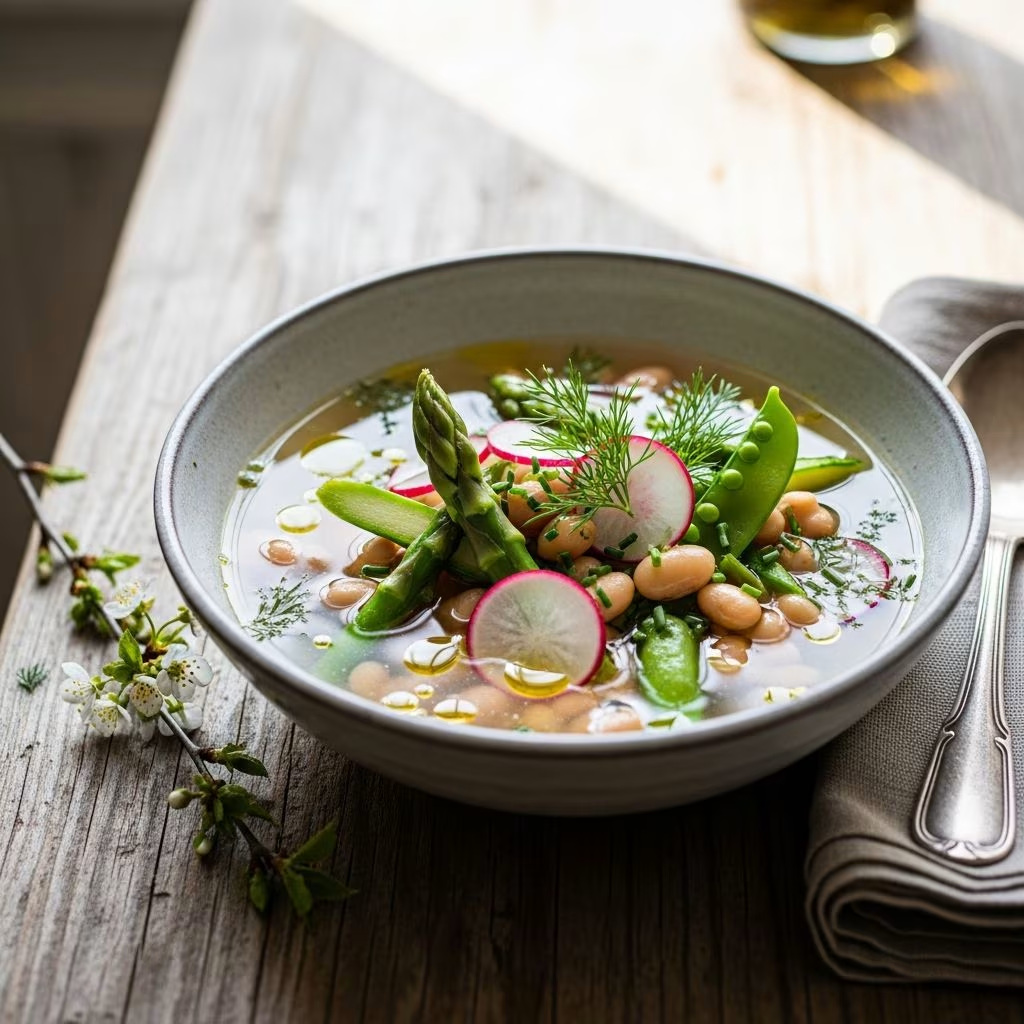
What truly distinguishes spring brothy beans is the generous use of fresh herbs, both during cooking and as finishing touches. Rather than incorporating dried herbs alone, create an herb bundle by tying together fresh thyme sprigs, oregano branches, and mint stems. This bundle infuses the entire pot with aromatic properties while remaining easy to remove before serving.
Beyond the cooking herbs, reserve additional fresh dill or parsley specifically for garnish. Mint sprigs can also be scattered over finished bowls, their bright, cool character creating an unexpected contrast with the warm, savory beans beneath. This layering of herb flavors—some cooked into the dish, others added fresh—creates complexity that makes spring brothy beans feel surprisingly sophisticated.
The Finishing Techniques That Elevate
As your beans near perfect tenderness, prepare to layer in final flavor elements. Dissolve light miso paste in a few ladlefuls of the hot cooking liquid, whisking to fully incorporate, then stir this mixture back into the pot. Miso adds umami depth and subtle saltiness without announcing itself as a distinct flavor. This technique requires restraint—the goal is enhancement, not a noticeable miso taste.
Finish with fresh lemon juice, starting conservatively with one tablespoon and adjusting to taste. The acidity brightens all the flavors you’ve developed, cutting through richness and making each spoonful feel lighter and more vital. A splash of vinegar—sherry or red wine varieties both work beautifully—can substitute or complement the lemon, adding another dimension of complexity.
A final drizzle of quality olive oil across the surface adds luxurious mouthfeel and provides visual appeal. The oil carries fat-soluble flavor compounds, making the entire dish taste more complete.
Serving Suggestions and Variations
| Serving Style | Best Accompaniments | Occasion |
|---|---|---|
| As a Soup Course | Crusty bread, aged Parmesan, fresh herbs | Dinner parties, formal meals |
| Over Grains | Farro, polenta, or rice | Weeknight dinners, meal prep |
| With Eggs | Fried or poached eggs on top | Brunch, light lunch |
| Standalone Dish | Bread and green salad | Simple weeknight meals |
| With Vegetables | Sautéed spring greens or roasted asparagus | Spring entertaining |
The versatility of brothy beans accommodates numerous variations based on what spring ingredients are available. Some preparations include a Parmesan rind, which imparts subtle cheese notes throughout the cooking process. Others incorporate charred lemon halves, which add bitter, caramelized complexity. Still others layer in optional toppings of fried shallots and garlic with red pepper flakes for textural contrast.
Ingredient Quality and Selection
The beauty of brothy beans lies partly in their simplicity—you’re not masking inferior ingredients with heavy sauces or complicated techniques. Each component matters. Select beans that are recently harvested rather than several years old; older beans take considerably longer to cook and may never achieve proper tenderness. Store-bought beans in the bulk section often have known harvest dates, giving you valuable information.
For broth, homemade vegetable stock provides superior flavor depth compared to commercial products, though quality store-bought versions work perfectly well. The distinction between vegetable broth and vegetable stock matters less than the absence of excessive sodium; you control seasoning throughout cooking rather than compensating for overly salty liquid.
Herbs deserve investment as well. Fresh herbs from farmers’ markets or well-maintained supermarket sections provide superior flavor compared to older, packaged varieties. Spring is peak season for fresh oregano, thyme, and mint, making this the ideal time to work with these ingredients at their brightest.
Common Questions About Brothy Beans
How far in advance can brothy beans be prepared?
Brothy beans actually improve after a day or two as flavors continue melding and deepening. Prepare them up to three days ahead, storing in an airtight container in the refrigerator. Gently reheat over low heat before serving, adding additional broth if the mixture has thickened beyond your preferred consistency.
Can dried beans be substituted with canned?
While canned beans offer convenience, they lack the subtle textural control that careful cooking provides. If using canned beans, reduce cooking time significantly, adding them only during the final fifteen minutes of simmering. Drain and rinse them first, and adjust salt levels accordingly since canned beans often arrive pre-salted.
What if my beans remain tough after extended cooking?
Tough beans typically result from very old bean stock or insufficient soaking. Another possibility is cooking them in hard water with high mineral content. If beans refuse to soften, save the flavorful broth for soup and consider this a learning experience. Purchase beans from reliable sources with good turnover in the future.
Can this recipe be made vegan?
This preparation is naturally vegan-friendly. Ensure your vegetable broth contains no animal products, skip any Parmesan rinds if included, and verify that your other ingredients meet dietary requirements. The finished dish requires no modification to be completely plant-based.
How should leftover brothy beans be stored?
Store in glass containers in the refrigerator for up to four days. The mixture will continue thickening as it cools; thin with additional broth as needed when reheating. Brothy beans freeze adequately for up to two months, though the texture becomes slightly less ideal after thawing.
The Technique That Changes Everything
Perhaps the most important takeaway about brothy beans is understanding that they represent technique as much as ingredients. Two cooks using identical components will produce vastly different results based on how carefully they monitor heat level, when they introduce elements, and how they finish the dish. This isn’t a recipe requiring precise measurement adherence so much as a framework for developing your own intuition.
The lowest possible simmer, maintained throughout cooking, creates tender beans with intact skins and clear, beautiful broth. Higher heat rushes the process but sacrifices quality. Fresh herbs added both during cooking and as garnish create a freshness that dried herbs alone cannot replicate. Proper browning of aromatics develops a foundation that transforms simple beans into something memorable.
Spring brothy beans celebrate seasonal abundance while remaining substantial enough to satisfy completely. Whether served as a first course at dinner parties, a simple weeknight meal with bread and salad, or spooned over grains for a vegetarian main course, this preparation deserves a permanent place in any cook’s rotation. Begin with quality ingredients, respect the technique, and let patience transform everyday beans into something genuinely special.
References
- One-Pot Brothy Beans with Herbs & Lemon — The First Mess. 2023-01-04. https://thefirstmess.com/2023/01/04/vegan-brothy-beans-recipe/
- Easy One-Pot Brothy Beans — Food with Feeling. https://foodwithfeeling.com/easy-one-pot-brothy-beans/
- Brothy Beans from BA’s Test Kitchen — My Culinary Fix. https://www.myculinaryfix.com/recipes/brothy-beans-from-ba-test-kitchen
- Brothy Beans and Garlic Bread: Get These New Year’s Recipes — TODAY Food. https://www.youtube.com/watch?v=FoqddUTSVxI