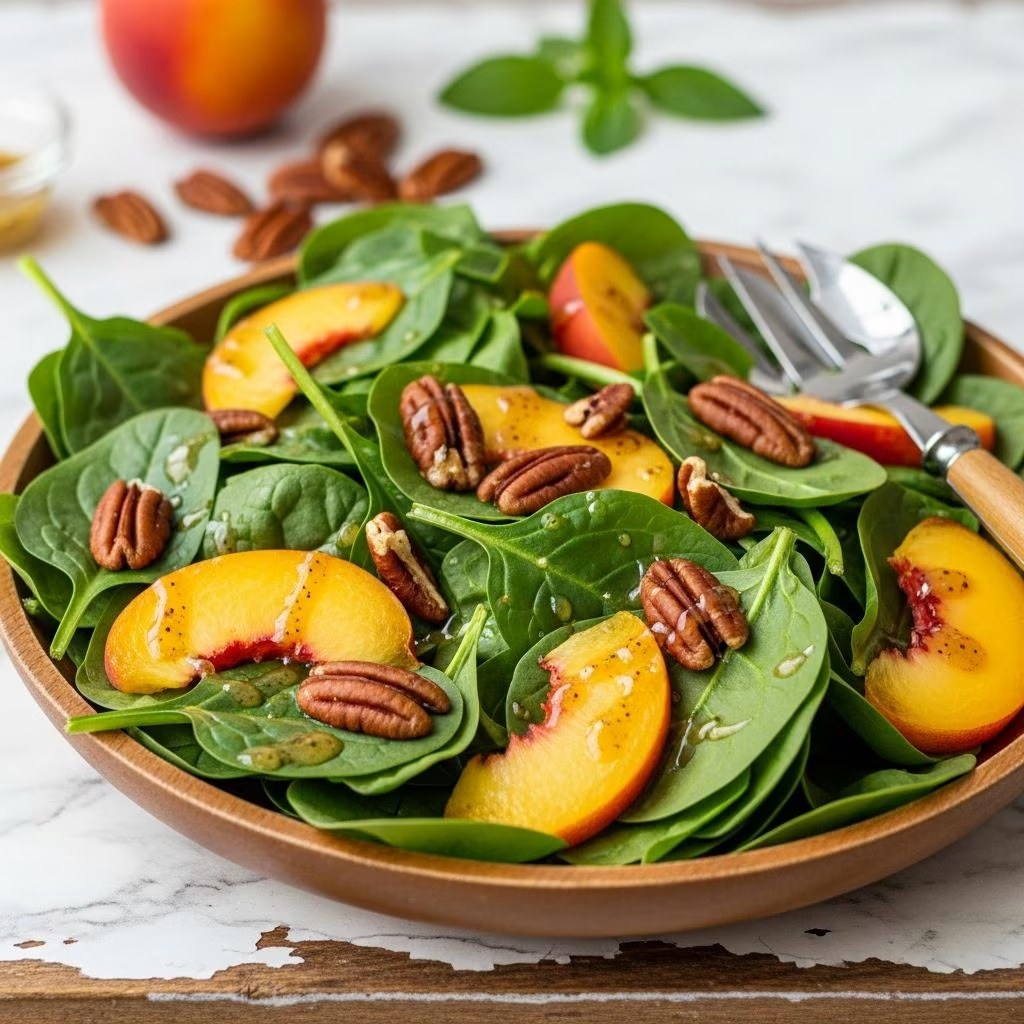
When summer arrives and fresh peaches flood the farmers’ markets, there’s no better way to celebrate the season than by incorporating them into a vibrant salad. A well-crafted spinach salad featuring ripe peaches and toasted pecans strikes the perfect balance between nutrition and indulgence, offering a meal that feels both light and satisfying. This combination of ingredients creates layers of flavor and texture that transform simple components into something memorable.
Understanding the Core Components
The beauty of this salad lies in how each ingredient plays a specific role in the overall composition. Baby spinach serves as the foundation, providing earthiness, nutritional density, and a delicate texture that contrasts beautifully with other elements. The peaches contribute natural sweetness, juiciness, and visual appeal, while pecans add crunch and richness through their subtle buttery flavor. When combined thoughtfully, these elements create a harmonious dish that appeals to multiple senses.
The Importance of Ingredient Selection
Choosing quality ingredients makes a substantial difference in the final result. For the spinach, opt for tender baby varieties rather than mature leaves, as they provide a milder flavor and more pleasant eating experience. Look for peaches that yield slightly to gentle pressure but maintain their firmness—overripe fruit becomes mushy, while underripe specimens lack the sweetness that makes this salad shine. Pecans should be fresh and preferably toasted to enhance their natural oils and bring out their complex flavor profile.
Building Your Salad: Step-by-Step Assembly
Preparing Individual Components
Before combining ingredients, take time to prepare each element properly. Rinse the spinach thoroughly and dry it completely using a salad spinner or paper towels—excess moisture dilutes the dressing and creates a soggy texture. Slice peaches just before assembly to prevent oxidation and maintain their vibrant color. If pecans aren’t already toasted, spread them on a baking sheet and warm them at 350 degrees Fahrenheit for approximately five minutes, stirring occasionally to ensure even toasting.
Salad Assembly Techniques
There are two effective approaches to bringing this salad together. The first method involves layering ingredients in individual serving bowls, starting with spinach as the base, then arranging peach slices, pecans, and any additional components on top. This presentation-focused approach works beautifully for formal dinners or when visual appeal is important. Alternatively, combine all ingredients in a large mixing bowl before tossing gently and dividing into portions. This method proves more efficient when preparing salad for multiple people and ensures more even distribution of dressing.
Dressing Options and Flavor Profiles
Classic Vinaigrette Approach
A simple vinaigrette provides an excellent foundation for this salad. Combine three tablespoons of extra virgin olive oil with three tablespoons of balsamic vinegar, adding a minced garlic clove and half a teaspoon of Dijon mustard. Whisk these ingredients together until they form an emulsion, then taste and adjust seasoning with salt and pepper. For those preferring a slightly sweeter profile, add one to two teaspoons of honey or maple syrup. This dressing complements the fruit without overwhelming the delicate spinach leaves.
Balsamic Glaze Method
For a more concentrated flavor, consider creating a balsamic glaze. Combine one cup of balsamic vinegar with one quarter cup of honey in a small saucepan over medium heat. Allow the mixture to reach a gentle boil, then reduce heat and simmer for approximately five minutes, stirring occasionally until the volume reduces by about half. The finished glaze should coat the back of a spoon but not be so thick that it becomes difficult to drizzle. This preparation can be made up to two days in advance and stored in an airtight container, making it convenient for advance meal planning.
Creative Flavor Variations
The basic framework of this salad welcomes creative modifications. A honey balsamic dressing combines aged balsamic vinegar with honey and extra virgin olive oil for a more complex sweetness. Lemon juice offers brightness without the intensity of vinegar, working particularly well when combined with olive oil and fresh herbs. Some preparations incorporate Dijon mustard for depth, while others add a touch of maple syrup to enhance the natural sweetness of the peaches.
Ingredient Substitutions and Adaptations
Fruit Alternatives
While peaches are ideal during their peak season, this salad adapts beautifully to other fruits. Apricots provide similar sweetness with a slightly different texture and tartness level. Strawberries introduce a different flavor dimension while maintaining the fresh fruit concept. Blackberries add visual interest and a subtle tartness that plays well with the creamy cheese components often included in variations.
Cheese Additions
Different cheeses create distinct flavor profiles. Feta cheese crumbles provide tanginess and a slightly salty counterpoint to the fruit’s sweetness. Goat cheese offers creaminess and mild tang, while Parmesan contributes nutty undertones. Each cheese option transforms the salad’s overall character while remaining compatible with the core ingredients.
Textural Enhancements
Beyond pecans, various nuts and seeds can provide crunch. Toasted almonds offer a different flavor profile with similar textural benefits. Sunflower seeds introduce a lighter crunch and different nutritional profile. Some preparations include red onion slices for peppery bite, or avocado for creamy richness that doesn’t come from dairy.
Nutritional Benefits and Health Considerations
This salad combines nutrient-dense ingredients that contribute to overall wellness. Baby spinach provides iron, calcium, vitamins A, C, and K, along with important phytonutrients. Peaches contribute vitamin C, potassium, and dietary fiber, particularly when eaten with the skin intact. Pecans offer healthy monounsaturated fats, plant-based protein, and various minerals including manganese and copper. The combination creates a nutritionally complete meal that satisfies both hunger and nutritional requirements.
Practical Preparation and Storage Tips
Make-Ahead Strategies
To streamline preparation, rinse and dry spinach several hours in advance, storing it in an airtight container lined with paper towels. Toast pecans and let them cool completely before storing in an airtight container. Prepare dressing the day before and refrigerate, allowing flavors to meld. Slice peaches just before serving to prevent discoloration and maintain texture.
Storage and Leftovers
Assembled salad should be consumed immediately for optimal texture, as the dressing will gradually soften the spinach leaves. Individual components remain fresh when stored separately. Refrigerated spinach keeps for three to five days, peaches for four to five days, and toasted pecans for up to two weeks in sealed containers. Store dressing in the refrigerator for up to one week.
Serving Suggestions and Occasions
This salad functions beautifully as a light lunch, serving four people as a substantial main course or eight as an elegant side dish. It complements grilled chicken, fish, or vegetarian proteins well during summer entertaining. The dish works equally well for casual weeknight dinners or more formal outdoor gatherings. Serving it chilled on warm days provides refreshment and lightness, while the fruit and nuts satisfy hunger without heaviness.
Frequently Asked Questions
Can this salad be prepared in advance?
Prepare components separately and assemble just before serving for optimal texture. Pre-dressed salad becomes soggy as the dressing softens the spinach leaves. Dressing can be made a full day in advance and refrigerated until needed.
What’s the best way to select ripe peaches?
Choose peaches with a golden background color and slight give when gently squeezed. Avoid very firm peaches, as they lack flavor and sweetness, while extremely soft specimens become mushy. If peaches are slightly underripe, leave them at room temperature for one to two days to allow them to ripen naturally.
Can pecans be replaced with other nuts?
Absolutely. Almonds, walnuts, or even candied pecans work well. Ensure nuts are toasted to bring out their flavor and provide optimal crunch. Adjust quantities based on personal preference for nuttiness intensity.
Is this salad suitable for vegetarians and vegans?
The basic spinach, peach, and pecan combination is naturally vegetarian. Many cheese additions make it vegetarian but not vegan. To create a vegan version, omit cheese or substitute with plant-based alternatives, and ensure the dressing uses only olive oil and vinegar without any animal-derived ingredients.
How long does homemade balsamic glaze keep?
Properly stored in an airtight container in the refrigerator, homemade balsamic glaze maintains quality for up to two weeks. The reduced consistency prevents fermentation, extending shelf life beyond fresh balsamic vinegar.
Conclusion: Celebrating Seasonal Flavors
Creating a memorable spinach salad with fresh peaches and pecans doesn’t require complicated techniques or obscure ingredients. By understanding how each component contributes to the whole and paying attention to quality and preparation, home cooks can consistently produce a dish that feels restaurant-quality while remaining accessible for everyday cooking. Whether serving it for a casual lunch or elegant dinner, this salad celebrates the bounty of peach season while providing nutrition and satisfaction in every bite.
References
- Nutritional Content of Spinach — USDA FoodData Central. 2024. https://fdc.nal.usda.gov/
- Peach Nutrition and Culinary Uses — Cornell University College of Agriculture and Life Sciences. 2024. https://www.gardening.cals.cornell.edu/
- Health Benefits of Tree Nuts — International Tree Nut Council. 2023. https://www.itnc.org/
- Food Safety Guidelines for Produce Preparation — FDA Center for Food Safety and Applied Nutrition. 2024. https://www.fda.gov/food