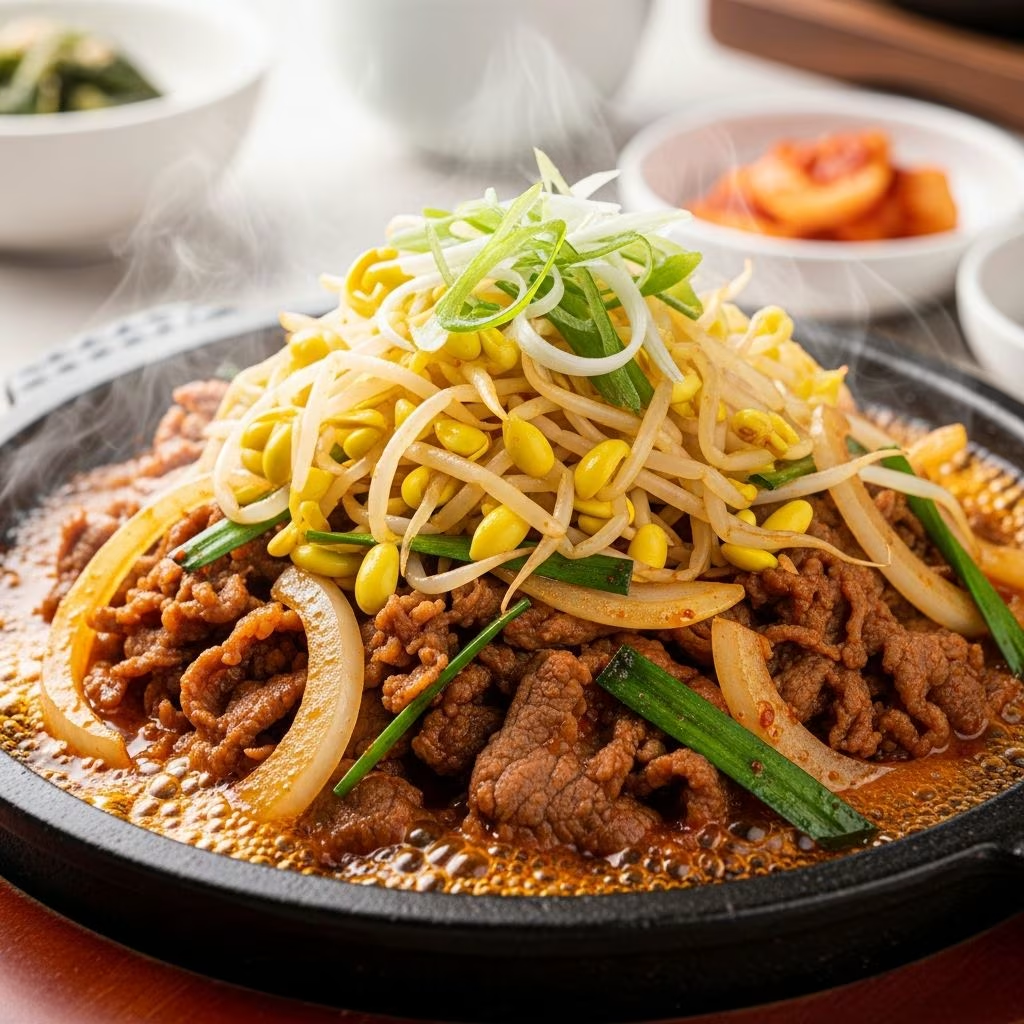
Kong Bul, short for Kongnamul Bulgogi, is a beloved Korean one-pot dish that combines crisp soybean sprouts with thinly sliced beef and an array of vegetables, all steamed together for a harmonious blend of flavors and textures. This recipe stands out for its simplicity—requiring minimal prep and just one vessel—making it ideal for home cooks seeking nutritious, satisfying meals without fuss.
Why Kong Bul Captivates Home Cooks
The magic of Kong Bul lies in its layered cooking method, where vegetables release their natural moisture, steaming the beef to tenderness atop them. Originating from Korean home cooking traditions, it’s often featured in casual family meals or as a quick banchan side. Its appeal spans spicy and mild versions, accommodating various palates while packing protein from beef and fiber from sprouts.
Fresh soybean sprouts (kongnamul) provide a crunchy base, contrasting the melt-in-your-mouth beef. Common additions like cabbage, carrots, onions, and mushrooms enhance nutrition and visual appeal. The dish cooks in under 30 minutes, perfect for weeknights.
Essential Ingredients for Authentic Kong Bul
Gathering the right components ensures success. Focus on fresh, thinly sliced proteins and vibrant produce.
- Soybean Sprouts: 12-14 oz (about 3-4 cups), washed thoroughly to remove grit. Their mild, nutty flavor forms the foundation.
- Thinly Sliced Beef or Pork: 8-16 oz (shaved brisket, ribeye, or pork belly works best). Paper-thin cuts like shabu-shabu style cook quickly via steam.
- Vegetables: ½ cabbage (thin strips), ½ carrot (julienned), ½ onion (sliced), handful enoki or other mushrooms, green onions, perilla leaves (optional for wrapping).
- Sauce Essentials: Soy sauce, sesame oil, garlic, gochugaru (pepper flakes), mirin or sweet vinegar, plum extract (optional), sesame seeds.
Quantities scale easily for 2-4 servings. Opt for high-quality, fresh ingredients to elevate taste.
Step-by-Step Guide to Perfect Kong Bul
Preparation takes about 10 minutes, cooking 10-15 more. Use a deep pot, wok, or skillet with a lid.
- Prep Vegetables: Rinse soybean sprouts under cold water; drain. Thinly slice cabbage, carrots, and onions. Trim enoki mushroom roots and separate. Chop green onions into 2-inch pieces.
- Layer the Pot: Start with soybean sprouts at the bottom. Add layers of cabbage, carrots, onions, mushrooms, and perilla leaves if using. Ensure even distribution for uniform cooking.
- Add Protein: Arrange thin beef or pork slices over the top, covering vegetables completely. This allows steam from below to cook the meat gently.
- Prepare Dipping Sauce: Mix 3 tbsp soy sauce, 1 tbsp each sesame oil, mirin/sweet vinegar, plum extract (if available), gochugaru, chopped garlic, sesame seeds, and scallions. Adjust spice to taste.
- Cook: Pour ½ cup water around edges. Cover and heat on medium-high (thick pot) or medium (thin pot) for 10-15 minutes. Vegetables soften and release juices; beef cooks through. No stirring needed—lift lid sparingly to check.
- Serve: Transfer to a platter with sauce. Wrap beef, veggies, and rice in perilla leaves for ssam-style eating.
Pro Tip: If steam escapes too quickly, add a splash more water. The pot’s own juices prevent dryness.
Customizing Your Kong Bul: Variations and Twists
Kong Bul’s flexibility shines in adaptations. Tailor to dietary needs or available ingredients.
| Variation | Key Changes | Flavor Profile |
|---|---|---|
| Spicy Kong Bul | Add gochujang (1 tbsp) to sauce; include hot peppers | Fiery, bold heat |
| Vegetarian | Omit meat; use tofu slices or extra mushrooms | Light, earthy |
| Pork Belly Focus | Swap beef for shaved pork belly (1 lb) | Rich, fatty indulgence |
| Mild Family Version | Reduce gochugaru; add more sesame oil | Gentle, savory |
For fried rice leftovers: Mix cooked rice with remaining sauce, kimchi, seaweed, sesame oil, and butter. Stir-fry until crispy.
Nutrition and Health Benefits
Kong Bul is nutrient-dense. Soybean sprouts offer vitamin C, K, folate, and antioxidants supporting immunity and digestion. Thin beef provides lean protein (20-30g per serving), iron, and B12. Vegetables add fiber for gut health.
A 4-serving pot yields roughly: 350 calories per serving, 25g protein, 15g fat, 20g carbs (estimates vary by ingredients). Low-carb friendly; sprouts’ low calories balance richer proteins.
Pairing Suggestions and Serving Ideas
Elevate with Korean staples:
- Rice: Steamy short-grain for wrapping.
- Banchan: Kimchi, pickled radish.
- Drinks: Soju, makgeolli, or iced barley tea.
- Wraps: Perilla or lettuce leaves for interactive eating.
Serves 3-4 as a main; double for crowds.
Frequently Asked Questions (FAQs)
What if I can’t find soybean sprouts?
Substitute mung bean sprouts or a mix of cabbage and spinach, but soybean’s texture is unique.
Can I make it ahead?
Best fresh, but prep veggies and sauce earlier. Reheat gently to avoid sogginess.
Is Kong Bul gluten-free?
Use tamari instead of soy sauce; check labels.
How spicy is the standard version?
Mild to medium; gochugaru adds adjustable heat.
Freezer-friendly?
Freeze cooked portions up to 1 month; thaw and reheat with extra sauce.
Mastering Common Pitfalls
Avoid overcooking veggies by using thin slices and checking at 10 minutes. If beef toughens, ensure slices are ultra-thin and pot is covered tightly. Rinse sprouts well to prevent bitterness.
For best results, use stainless steel or non-stick deep pans 8-10 inches wide.
Kong Bul in Korean Cuisine Context
This dish echoes bulgogi’s grilled essence but simplifies it into a steamed format, popularized by TV shows like Jibap Baeksun-saeng. It’s economical, using affordable sprouts as the star.
Experiment seasonally: summer with zucchini, winter with hardy greens.
References
- One-Pot Soybean Sprout Bulgogi (Kong Bul) — Chef Chris Cho. 2023-approx. https://chefchrischo.com/soybean-sprout-bulgogi/
- Korean Soy Bean Sprouts Bulgogi (Kong Bul) — Seonkyoung Longest. 2023-approx. https://seonkyounglongest.com/korean-soy-bean-sprouts-bulgogi/
- Spicy Soybean Sprout BulGoGi — Aeri’s Kitchen. 2020-09-01. https://www.aeriskitchen.com/2020/09/spicy-soybean-sprout-bulgogi/