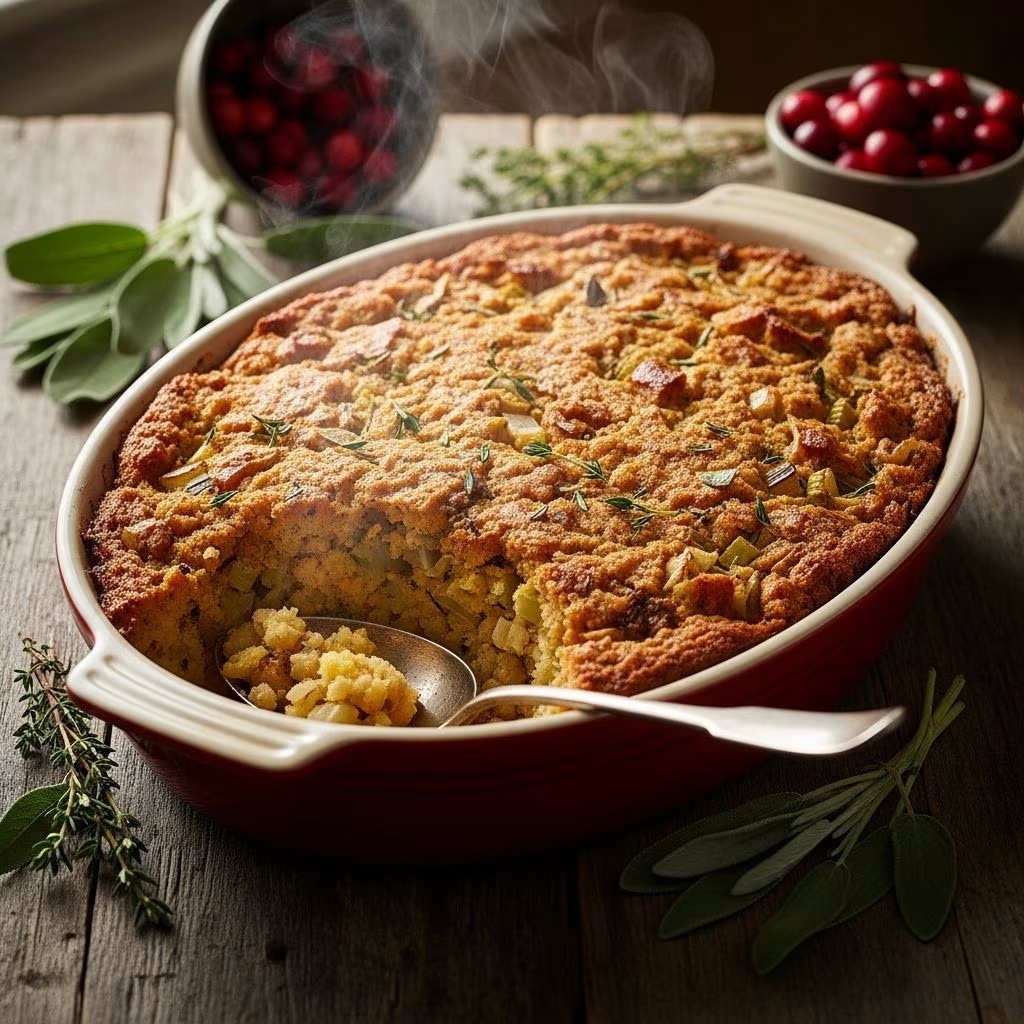
Experience the heartwarming flavors of the South with this timeless cornbread dressing recipe. A beloved staple at Thanksgiving dinners, family reunions, and holiday feasts, this dish combines crumbly homemade cornbread with aromatic vegetables, fragrant herbs, and savory broth to create a moist, flavorful side that complements roasted turkey, ham, or chicken perfectly. Unlike Northern stuffing, Southern dressing stands out for its cornbread base, which delivers a slightly sweet, textured foundation soaked in rich seasonings.
The Roots and Appeal of Southern Cornbread Dressing
Southern cornbread dressing traces its origins to the resourceful kitchens of the American South, where cornbread—a pantry essential made from cornmeal—was transformed into a versatile side dish. Historical accounts note that early versions emerged in the 19th century, evolving from simple cornbread scraps mixed with onions and herbs to the elaborate recipes enjoyed today. Its appeal lies in the balance of textures: a crispy golden top giving way to a tender, custardy interior, infused with the earthy notes of sage and the sweetness of caramelized onions and celery.
This dish isn’t just food; it’s a vessel for family traditions. Many Southern cooks swear by recipes passed down generations, often baked in cast-iron skillets for even heat distribution and authentic flavor. The key to perfection is moisture—achieved through eggs, broth, and sometimes milk or cream—ensuring it never dries out during baking.
Essential Ingredients for Authentic Flavor
Building a standout cornbread dressing starts with quality ingredients. The foundation is always cornbread, preferably made from scratch using self-rising cornmeal for lightness. Here’s a breakdown of core components:
- Cornbread Base: 6-8 cups crumbled, day-old cornbread (self-rising cornmeal, flour, buttermilk, eggs, oil).
- Aromatics: 2-3 chopped onions, 3-4 stalks celery, sometimes bell peppers or garlic for depth.
- Herbs and Seasonings: Dried or fresh sage (1-2 tsp), poultry seasoning (1 tsp), salt, black pepper.
- Binders and Moisture: 2-3 eggs, 1/2 cup milk or cream, 2-3 cups chicken or turkey broth.
- Add-Ins: Crumbled toast or bread crumbs for extra structure, butter pats for richness.
Variations abound: some incorporate cream of chicken or celery soup for creaminess, while purists stick to stock and eggs. Opt for low-sodium broth to control seasoning, and use fresh herbs when possible for brighter flavor.
Step-by-Step Guide to Homemade Cornbread
Don’t skip making your own cornbread—store-bought lacks the fresh crumb structure ideal for dressing. Preheat your oven to 400°F (or 450°F for crispier edges). Grease a 9-inch cast-iron skillet or baking pan.
- In a bowl, mix 1 cup self-rising cornmeal, 1/2 cup self-rising flour, 3/4 cup buttermilk, 2 eggs, and 2 tbsp vegetable oil until just combined.
- Pour into the hot skillet and bake 20-25 minutes until golden.
- Cool completely, then crumble into small pieces. Day-old cornbread absorbs flavors best.
For a sweeter profile, add a touch of sugar; for savory, incorporate finely chopped jalapeños.
Preparing the Dressing Mixture
Once cornbread is ready, assemble the dressing. This process builds layers of flavor through sautéing and careful mixing.
- Sauté Vegetables: Melt 1/2 cup butter in a large skillet over medium heat. Add chopped onions and celery; cook until softened and translucent, about 8-10 minutes. Stir in sage, poultry seasoning, salt, and pepper.
- Combine Dry Ingredients: In a massive bowl, toss crumbled cornbread with 2 cups bread crumbs or torn toast.
- Add Liquids: Whisk 3 eggs with 1/2 cup milk, then pour over crumbs. Gradually add 2-2.5 cups warm chicken broth, stirring until soupy—dressing should hold shape but glisten with moisture.
- Incorporate Sautéed Veggies: Fold in the onion-celery mixture. Taste and adjust seasoning; add more broth if needed for that signature wet consistency.
Pro Tip: Use a wooden spoon or your hands for even distribution, ensuring no dry pockets remain.
Baking to Golden Perfection
Preheat oven to 350°F. Grease a 9×13-inch baking dish. Spread mixture evenly, dot top with 2 tbsp cold butter slices for extra crispiness. Bake uncovered 30-45 minutes until edges bubble and top is lightly browned. For a crunchier crust, broil 2-3 minutes at the end.
Internal temperature should reach 165°F for safety. Rest 10 minutes before serving to set. Yields 10-12 servings, perfect for crowds.
Creative Variations and Twists
While traditional is unbeatable, experiment to suit your table:
| Variation | Key Additions/Substitutions | Best For |
|---|---|---|
| Oyster Dressing | 1 cup shucked oysters, extra sage | Coastal Southern feasts |
| Sausage Dressing | 1 lb cooked breakfast sausage, less sage | Hearty meat lovers |
| Vegetarian Version | Vegetable broth, mushrooms instead of meat | Plant-based holidays |
| Creamy Style | 1 can each cream of chicken/celery soup | Quick, comforting weeknights |
| Spicy Kick | Diced jalapeños, cayenne pepper | Texas-inspired heat |
These tweaks maintain the dish’s essence while adding personality.
Storage, Freezing, and Reheating Tips
Leftover dressing is a bonus—flavors deepen overnight. Cool completely, then store in airtight containers in the fridge up to 4 days. For freezing, portion into freezer bags; lasts 2-3 months.
- Reheat: Oven at 350°F covered with foil for 20-30 minutes; uncover last 5 for crisp top. Microwave in portions for singles.
- From Frozen: Thaw overnight, bake at 375°F 40-50 minutes.
- Make-Ahead: Assemble unbaked up to 2 days ahead; refrigerate and bake fresh.
Avoid sogginess by not overcrowding during reheating.
Pairing Suggestions for Holiday Meals
Cornbread dressing shines with roast turkey, giblet gravy, cranberry sauce, and green beans. For non-holiday meals, serve alongside fried chicken or baked ham. Wine pairing: Chardonnay or Viognier cuts the richness.
Frequently Asked Questions (FAQs)
What makes Southern dressing different from stuffing?
Dressing uses cornbread and bakes in a dish; stuffing often has white bread and cooks inside the bird.
Can I use boxed cornbread mix?
Yes, but homemade yields better texture. Stale it overnight for optimal absorption.
How do I fix dry dressing?
Add more broth before baking or drizzle warm stock post-bake.
Is it gluten-free?
Use gluten-free cornmeal and flour; skip bread crumbs or use GF alternative.
Can I add meat?
Absolutely—shredded chicken, sausage, or giblets integrate seamlessly.
Nutrition and Serving Insights
Per serving (1/12th): ~250-300 calories, high in carbs from cornmeal, moderate protein from eggs/broth. Customize with low-fat milk or veggie stock for lighter versions. Serves as a comforting, communal dish fostering holiday memories.
This recipe captures the soul of Southern hospitality—simple ingredients yielding profound satisfaction. Gather your loved ones, preheat the oven, and let the aromas fill your home.
References
- Southern Cornbread Dressing — Spicy Southern Kitchen. 2015-10-28. https://spicysouthernkitchen.com/southern-cornbread-dressing/
- Southern Cornbread Dressing Recipe — Grandbaby Cakes. 2023-11-15. https://grandbaby-cakes.com/cornbread-dressing-recipe/
- Southern Cornbread Dressing — Don’t Sweat The Recipe. 2022-11-10. https://www.dontsweattherecipe.com/southern-cornbread-dressing/
- How to Make Southern Cornbread Dressing — Whisk It Real Gud. 2021-11-20. https://whiskitrealgud.com/southern-cornbread-dressing/
- Easy Southern Cornbread Dressing — Southern Bite. 2020-11-18. https://southernbite.com/southern-cornbread-dressing-family-favorite/