Collard greens represent one of the most enduring culinary traditions in Southern cuisine, offering both nutritional value and cultural significance across generations. This leafy green vegetable, recognized for its mild flavor and hearty texture, has become a staple at family tables and special occasions throughout the American South and beyond. Understanding how to prepare collard greens properly transforms simple ingredients into a dish that embodies comfort, tradition, and culinary skill.
Understanding Collard Greens: Origin and Versatility
Collard greens belong to the Brassica family, the same plant group that includes cabbage, kale, and broccoli. These hardy vegetables have a long history extending far beyond Southern borders. Collard greens are a popular vegetable in southern cuisine but can also be found in meals elsewhere around the world, such as Brazil, Kashmir, Kenya, Portugal, and Tanzania. This global presence underscores their versatility and nutritional importance across diverse culinary traditions.
The leaves of collard greens are broad, dark green, and slightly crinkled, with a mild flavor that becomes sweeter and more complex when cooked properly. They are often cooked with other leafy green vegetables such as turnip greens, kale, or mustard greens. This compatibility with other greens opens numerous possibilities for both traditional and innovative preparations.
Essential Ingredients for Traditional Preparation
Creating authentic Southern collard greens requires understanding the role each ingredient plays in building layers of flavor. While recipes vary by family and region, certain core components appear consistently across traditional preparations.
Meat Components and Flavor Builders
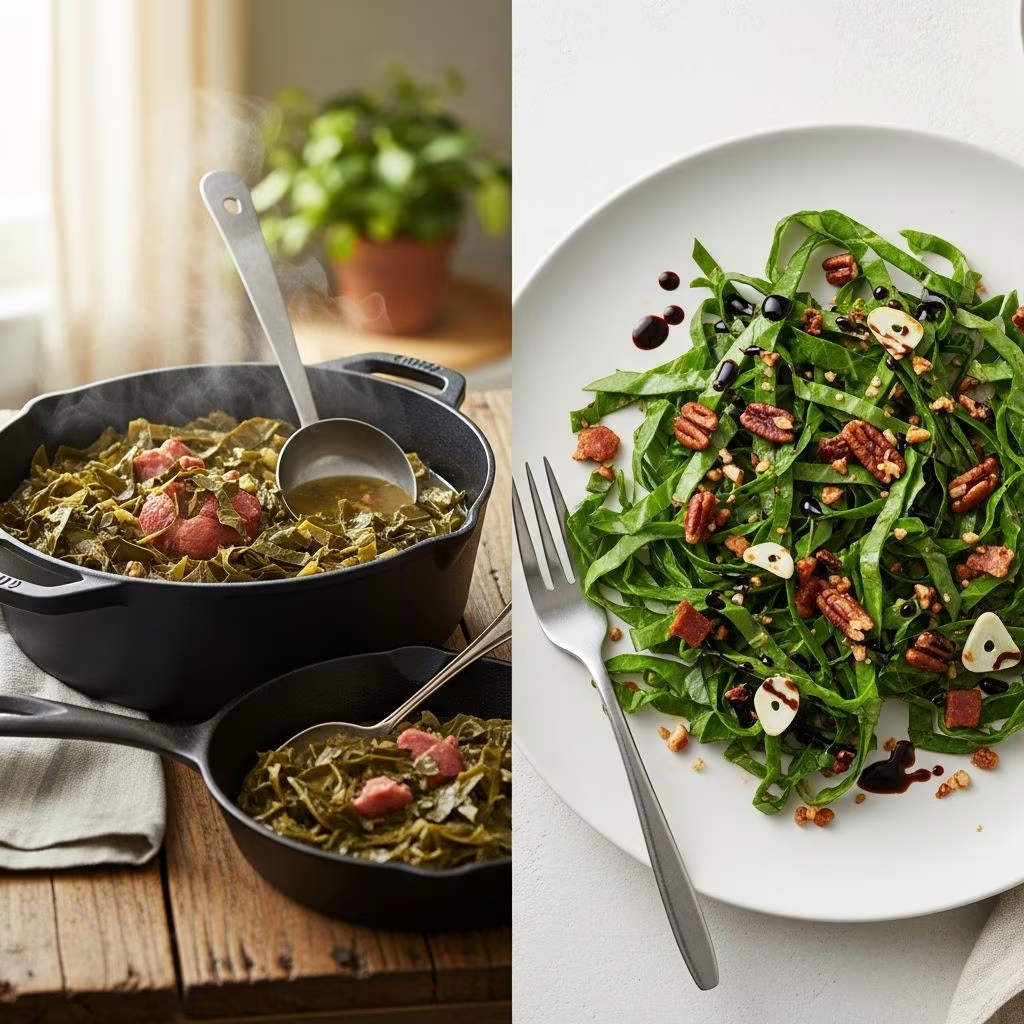
Pork products traditionally form the backbone of Southern collard green recipes, providing richness and depth. Options include bacon, smoked turkey legs, or turkey necks. Some families prefer using smoked turkey legs, necks, or tails as their primary meat component, offering a lighter alternative while maintaining authentic smoky flavor. The rendered fat from these proteins seasons the entire dish, while the meat itself becomes tender and flavorful through extended cooking.
Aromatic Foundation
Onions and garlic create the aromatic foundation for collard greens, adding complexity that transforms the simple vegetable into a multidimensional dish. Yellow onions provide natural sweetness, while garlic contributes pungent, savory notes that deepen during cooking. Most recipes call for one large diced onion or approximately half a cup of fresh, diced onions as the baseline aromatic component.
Liquid and Seasoning Elements
The cooking liquid dramatically influences the final texture and flavor of collard greens. Options include chicken broth, vegetable broth, or water, with quantities typically ranging from four to six cups depending on desired tenderness. Apple cider vinegar provides acidity and brightness, typically using between one-quarter and one-half cup per pot. Additional seasonings might include brown sugar, liquid smoke, crushed red pepper flakes, and seasoning salts that round out and balance the overall flavor profile.
Step-by-Step Cooking Methodology
Preparation Phase
Beginning with properly prepared greens sets the foundation for success. Fresh collard greens should be thoroughly rinsed under cold running water to remove any soil or debris trapped between the leaves. After rinsing, trim the stems and remove the tough central rib from each leaf for a more tender final texture. Chop the prepared leaves into bite-sized pieces, typically resulting in approximately two quarts of chopped greens per large bunch.
Building the Flavor Base
The initial cooking phase establishes the flavor foundation. Begin by heating a large stockpot over medium heat and adding your chopped meat component. For bacon, cook it until lightly browned, approximately three to four minutes, stirring frequently to ensure even cooking. This step renders the fat and begins developing the savory foundation. Once the meat reaches the desired browning, increase heat to medium-high and add your diced onions. Sauté the onions until they become soft and translucent, usually requiring five to seven minutes of continuous stirring.
Incorporating the Greens
With the aromatic base established, carefully add the prepared collard greens to the pot. Initially, the volume appears overwhelming, but the greens rapidly wilt during the first minute or two of sautéing. Stir continuously during this stage to encourage even wilting and prevent sticking. This brief sauté phase infuses the greens with the rendered meat fat and aromatic flavors developed in previous steps.
Adding Liquids and Seasonings
After the greens have begun wilting, introduce your chosen liquid along with all seasonings simultaneously. This approach ensures even distribution of flavors throughout the pot. Typical seasoning additions include apple cider vinegar, brown sugar or a modest amount of sweetener, crushed red pepper flakes for heat, and salt and ground black pepper to taste. A pinch of salt or specialized seasoning blends like Tony Chachere’s Creole No-Salt Seasoning can enhance the overall flavor profile. Stir thoroughly to combine all elements.
Extended Cooking Process
Cover the pot and bring the mixture to a boil over high heat. Once boiling, reduce heat to medium or medium-low and allow the greens to simmer gently for thirty to forty minutes for slightly firmer texture, or up to one hour and thirty minutes for exceptionally tender greens that fall apart with minimal pressure. The extended cooking time softens the leaves completely while allowing the seasonings to fully penetrate and develop. Stir occasionally during this phase to ensure even cooking and prevent sticking on the bottom of the pot.
Texture Considerations and Doneness Assessment
Determining the ideal doneness for collard greens depends on personal preference and family tradition. The greens should be soft but not mushy, retaining enough structure to maintain their identity on the plate while offering no resistance when bitten. Test doneness by removing a single leaf with a fork and attempting to cut through it easily. If slight resistance remains, continue simmering and check again after five minutes. The cooking liquid should reduce gradually during the simmering process, concentrating flavors while creating a savory broth that complements the tender greens.
Flavor Profile and Taste Characteristics
Properly prepared Southern collard greens deliver a complex taste experience combining multiple flavor dimensions. The base provides savory depth from the rendered meat and cooking process. These greens cook low and slow in a seasoned broth loaded with bacon, onions, garlic, and a kick of jalapeño, resulting in bold, tender greens packed with that classic flavor profile. Sweet notes emerge from the onions and added sugar, while acidity from apple cider vinegar provides balance and brightness. Heat from crushed red pepper flakes creates a subtle warming sensation without overwhelming the palate. The tender texture of properly cooked greens creates a pleasant mouthfeel that feels both comforting and refined.
Ingredient Variations and Modern Adaptations
Protein Alternatives
While traditional recipes emphasize pork products, contemporary variations accommodate different dietary preferences. Turkey bacon or smoked turkey components offer leaner options while maintaining authentic smoky flavor. Some modern cooks experiment with vegetable-based broths and omit meat entirely, creating versions that respect traditional cooking methods while serving plant-based diets. The key remains building depth through slow cooking and layering complementary seasonings.
Heat and Spice Considerations
Heat levels in collard greens range from mild to intensely spicy depending on personal tolerance and family tradition. Fresh jalapeño peppers can be added alongside or instead of crushed red pepper flakes for a fresh, vegetal heat component. Some regions incorporate hot sauce or additional cayenne pepper for more pronounced spice. Others keep the heat minimal, allowing the natural sweetness of the vegetables and sugar to dominate.
Sweetness Balance
The amount of sweetener varies significantly across recipes and regions. Some preparations use only half a teaspoon of sugar, allowing savory and acidic components to dominate, while others incorporate two teaspoons or slightly more for pronounced sweetness. Brown sugar versus white sugar creates subtle flavor differences, with brown sugar contributing mild molasses notes. Experimentation helps identify the sweetness level that aligns with personal preferences and family traditions.
Nutritional Benefits and Considerations
Collard greens offer substantial nutritional benefits, delivering vitamins, minerals, and dietary fiber in each serving. The extended cooking process with added fats aids the absorption of fat-soluble vitamins including vitamins A, D, and K. The braising liquid that remains after cooking contains concentrated nutrients leached from the greens and represents an important component of the finished dish.
Serving Suggestions and Complementary Dishes
Collard greens serve well alongside numerous main courses, particularly grilled or baked proteins and carbohydrate-based sides. The cooking liquid that remains serves as a flavorful sauce enhancing the plate. Cornbread pairs exceptionally well with collard greens, allowing bread to absorb excess liquid from the vegetables. Black-eyed peas, rice, or sweet potatoes complement collard greens across traditional Southern menus. The mild vegetable flavor works well with both subtle and bold main courses without competing for dominance on the plate.
Storage and Make-Ahead Preparation
Prepared collard greens store well in airtight containers within the refrigerator for up to five days, with flavors often improving slightly as the ingredients continue marinating together. The dish also freezes successfully for up to three months, allowing for convenient reheating during busy periods. Thaw frozen collard greens overnight in the refrigerator and reheat gently over low heat, adding additional broth if the mixture appears dry after thawing. Make-ahead preparation works particularly well for large gatherings, as collard greens can be prepared one to two days before serving, reducing last-minute cooking demands.
Common Mistakes and Solutions
Overcooking represents a primary concern, resulting in mushy, disintegrating leaves lacking structural integrity. Prevent this by establishing target cooking times based on desired texture and checking doneness regularly during the final cooking phases. Insufficient seasoning produces bland, uninspiring dishes that disappoint diners expecting complex flavors. Taste the cooking liquid frequently and adjust seasonings before the greens become completely tender, as seasoning adjustments become more difficult once cooking finishes.
Using insufficiently tender greens at the start creates tough, chewy final dishes. Select greens that appear fresh and vibrant without wilting or yellowing. Store fresh greens in the refrigerator in a plastic bag until ready to use, as greens deteriorate quickly at room temperature. Some cooks encounter greens that taste too bitter or acidic, which usually results from oversalting or excessive vinegar. Balance these strong flavors by adding small amounts of sugar or by diluting the cooking liquid with additional broth.
Frequently Asked Questions
How can I reduce the cooking time for collard greens?
Reducing collard greens into smaller pieces and increasing heat slightly shortens cooking time while potentially sacrificing some tenderness. Most traditional recipes favor extended cooking for optimal texture and flavor development, but practical considerations sometimes necessitate faster preparation. Using a pressure cooker or Instant Pot reduces cooking time to approximately ten to fifteen minutes while maintaining acceptable texture.
Should collard greens be rinsed before cooking?
Yes, thorough rinsing removes soil and debris trapped between the layers of leaves. Rinse multiple times under cold running water if necessary, separating the leaves to ensure complete cleansing. Pat the rinsed greens dry with paper towels to remove excess water that might dilute the cooking liquid.
Can collard greens be made vegetarian or vegan?
Absolutely. Replace meat products with vegetable-based proteins like beans or lentils, and use vegetable broth instead of chicken broth. Apply the same layered seasoning approach to develop complexity. Smoked paprika, liquid smoke, or nutritional yeast can approximate the savory depth traditionally provided by meat components.
What is the purpose of vinegar in collard greens?
Vinegar provides acidity that brightens the overall flavor profile and prevents the dish from becoming overly rich or heavy. The acidity also helps preserve the greens’ bright green color during the cooking process and enhances the absorption of certain nutrients.
How much water should I use for cooking collard greens?
Most recipes call for four to six cups of liquid depending on desired doneness. More liquid results in greens with a wetter consistency and more abundant cooking liquid to serve alongside. Less liquid produces a drier preparation with concentrated flavors. Start with four cups and add additional broth as needed during cooking.
References
- The Best Southern Collard Greens: A Family Recipe — Cord and The Kitchen. 2024. https://www.youtube.com/watch?v=ipiM7PsxsRY
- Collard Greens USDA Recipe for Family Child Care Homes — The Institute of Child Nutrition. https://theicn.org/cnrb/recipes-for-homes/recipes-for-homes-vegetables/collard-greens-for-home/
- Southern Collard Greens — Family Fresh Meals. https://www.familyfreshmeals.com/southern-collard-greens/
- Soul Food Collard Greens — I Heart Recipes. https://iheartrecipes.com/soul-food-collard-greens-southern/