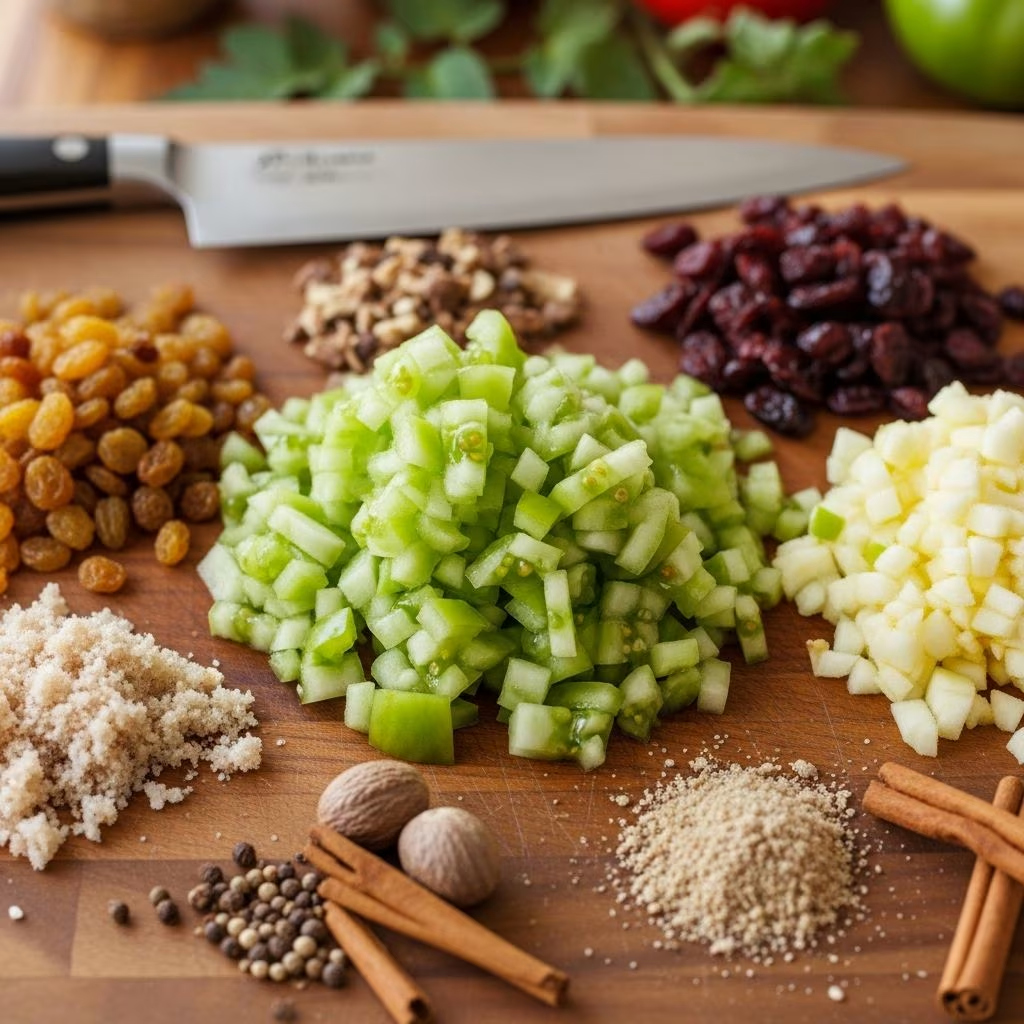
As the gardening season winds down and frost approaches, many home gardeners face a familiar challenge: abundant green, unripe tomatoes still clinging to their vines. Rather than composting these surplus fruits, resourceful cooks have developed an elegant solution through the creation of green tomato mincemeat—a tangy, complex preserve that captures the essence of autumn and transforms what might otherwise be waste into a treasured pantry staple. This distinctive condiment bridges the gap between traditional fruit preserves and savory condiments, offering a unique flavor profile that enhances both sweet and savory dishes throughout the year.
Understanding Green Tomato Mincemeat: Origins and Modern Application
Green tomato mincemeat represents a culinary solution born from practical necessity. Historically, when frost threatened to destroy end-of-season gardens, home cooks developed preservation techniques to salvage unripe tomatoes before they rotted on the vine. The result is a complex condiment that combines the tartness of immature fruit with warming spices, dried fruits, and vinegar to create a multi-dimensional flavor experience. Unlike traditional mincemeat made exclusively from dried fruits and suet, the green tomato variation incorporates fresh produce as its foundation, creating a lighter yet more sophisticated preserve.
Modern cooks appreciate green tomato mincemeat for its versatility. The preserve works equally well as a pie filling for holiday gatherings, a topping for roasted meats, a complement to aged cheeses, or a standalone preserve served alongside sharp cheddar and crackers. The cooking process concentrates flavors while the natural pectin in apples and tomatoes creates a thick, spreadable consistency without requiring commercial gelling agents.
Selecting and Preparing Your Produce
Choosing the Right Tomatoes
Not all green tomatoes work equally well in mincemeat preparation. The ideal candidates are firm, fully mature tomatoes that have failed to ripen before frost threatens. Plum or Roma varieties offer particular advantages because they contain fewer gelatinous seed cavities and produce more usable fruit flesh compared to their liquid content. However, regional availability and personal gardening circumstances mean most cooks work with whatever green tomatoes they’ve cultivated. Early Girl tomatoes, mid-sized varieties commonly grown in home gardens, perform admirably in this application.
The preparation process requires attention to detail. After washing the tomatoes thoroughly, remove the core and seeds along with the gelatinous material that surrounds them. This step proves crucial because these elements contain excess moisture and undesirable flavors that would compromise the final product’s texture and taste. Dice the prepared tomatoes into small, uniform pieces to ensure consistent cooking.
Apple Selection and Complementary Ingredients
Apples provide essential structure, natural pectin, and subtle sweetness to balance the tomato’s acidity. Tart, firm-fleshed varieties such as Granny Smith deliver superior results compared to softer, sweeter options. The ratio of apples to tomatoes significantly impacts the finished preserve’s texture and flavor profile. Peel, core, and dice apples into pieces matching the tomato size for uniform cooking.
Beyond tomatoes and apples, traditional mincemeat formulas incorporate a symphony of complementary ingredients. Dried fruits—including raisins, currants, and candied peel or citron—contribute concentrated sweetness and complexity. These components require no additional preparation before joining the pot. Spices such as cinnamon, cloves, nutmeg, and allspice evoke the warm flavors associated with holiday preparations. Apple juice serves as the primary liquid component, contributing natural flavor and ensuring the mixture reaches the proper consistency.
Foundational Cooking Techniques
Assembling and Initial Cooking
Begin by measuring out all dry ingredients—raisins, candied fruit, currants, sugars, and spices—before combining them with the prepared tomatoes, apples, and pear into a large stockpot. This advance preparation, known as mise en place, prevents scrambling for ingredients once cooking commences and ensures nothing gets overlooked. Stir the mixture thoroughly to distribute spices evenly and prevent clumping of dried fruits.
Next, introduce the liquid components: apple juice, apple cider vinegar, molasses, and lemon juice. The vinegar and lemon juice provide acidity that preserves the mixture while enhancing flavors, while molasses contributes depth and subtle sweetness. Stir this combination well before applying heat to the pot.
Achieving the Perfect Consistency
Bring the mixture to a boil over medium-high heat, then immediately reduce the temperature to maintain a gentle, rolling boil. This careful temperature management prevents scorching while allowing moisture to evaporate at a controlled rate. The cooking process typically requires 2 to 2.5 hours, though exact timing depends on the specific moisture content of your tomatoes and the intensity of your heat source.
Throughout cooking, stir regularly—roughly every 10 to 15 minutes—to ensure even heating and prevent the mixture from adhering to the pot’s bottom. Adjust heat as necessary to maintain the gentle boil; too vigorous boiling will cause excessive evaporation and may scorch delicate fruit particles against the heat source. The mincemeat achieves the proper consistency when it appears thick yet moist rather than thin and runny. When finished, the mixture should hold its shape when spooned onto a plate while still possessing a spreadable quality.
Water Bath Canning for Long-Term Storage
Preparation and Jar Selection
Successful canning begins with proper equipment and preparation. Select appropriate canning jars—typically pint-sized containers for standard recipes, though 8-ounce jars work for smaller batches. Wash jars and lids thoroughly before use. Place clean jars on a rack in your canning pot, cover them with water, and heat to a simmer (approximately 180°F) before filling. This warming process prevents thermal shock when hot mincemeat contacts cool glass.
Filling and Processing
Using a funnel, carefully ladle the hot mincemeat into prepared jars, maintaining a quarter-inch headspace between the mixture’s surface and the jar’s rim. This headspace allows for expansion during processing and helps create the vacuum seal necessary for safe preservation. Wipe jar rims clean with a damp cloth before applying lids, ensuring a proper seal.
Submerge filled jars in boiling water, ensuring they remain completely covered. For pint-sized jars, process for 15 minutes, adjusting processing time upward for higher altitudes. For 8-ounce jars, reduce processing time to 20 minutes. Begin timing only after a full rolling boil is achieved. After processing completes, turn off heat and remove the canner lid. Allow jars to rest in the hot water for 5 minutes before removing them with jar lifter tongs.
Cooling and Storage
Transfer processed jars to a heat-proof surface covered with a clean towel, positioning them upright with some space between containers for air circulation. Listen for the characteristic “ping” sound as each jar cools—this indicates the lid has sealed properly and created a vacuum. Once jars have cooled completely, typically after 12 to 24 hours, check seals by pressing the center of each lid. If it remains depressed and doesn’t pop back up, the seal is secure. Store sealed jars in a cool, dark location such as a pantry or basement for up to one year.
Yield Considerations and Scaling
Standard recipes typically produce 10 to 12 cups of finished mincemeat, suggesting preparation of six pint-sized jars for processing. However, exact yield varies considerably based on several factors: the water content of your specific tomatoes, their maturity level, the cooking temperature you maintain, and how thoroughly the mixture reduces during the heating process. Some batches may yield slightly less if you prefer a thicker final consistency, while others might produce additional volume if you stop cooking earlier when the mixture retains more moisture.
When scaling recipes up or down, maintain the relative proportions of key ingredients. If doubling the recipe, remember to measure out the doubled amount of tomatoes when calculating apple juice additions, as this variable component depends on the actual liquid the tomatoes release. Many experienced cooks freeze extra prepared tomato and apple juice mixture when they lack time to complete the full cooking process, then finish the mincemeat later when convenient.
Flavor Customization and Variations
While traditional formulas call for specific dried fruits, personal preferences and ingredient availability inspire countless variations. Some cooks substitute dried plums or prunes for conventional raisins, creating deeper flavors and different textural elements. When using dates instead of dried plums, reduce sugar by half during the initial cooking stage, then add additional sugar to taste as the mixture simmers, allowing you to control final sweetness.
Spice adjustments offer another avenue for customization. Increase warming spices like cinnamon and nutmeg for pronounced autumnal notes, or experiment with cardamom, cloves, or a touch of ginger for distinctive character. Some regional variations incorporate brandy or rum, adding complexity and acting as a preservative. Apple cider vinegar can be partially replaced with other vinegars such as white wine or champagne vinegar for subtle flavor shifts.
Culinary Applications and Serving Suggestions
Green tomato mincemeat transcends its historical role as pie filling. Spread it over roasted pork or duck, where its tartness cuts through rich fats and provides palate-cleansing acidity. Serve alongside sharp cheddar cheese and crackers for an elegant appetizer course. Incorporate into thumbprint cookies for whimsical desserts with complex flavor profiles. Stir into yogurt as a sophisticated breakfast topping, or serve as an accompaniment to game meats and venison preparations.
For the traditional pie application, layer mincemeat into a flaky pastry crust and bake until the filling bubbles at the edges. The mixture requires no additional cooking once enclosed in pastry, making it ideal for quick holiday dessert preparation. A simple two-crust design or decorative lattice top completes the presentation.
Troubleshooting Common Challenges
If your finished mincemeat appears too thin or runny, extend the cooking time, maintaining gentle heat to allow additional moisture evaporation without scorching. Conversely, overly thick mincemeat can be softened slightly by stirring in additional apple juice or vinegar. A grainy or crystallized texture suggests excessive sugar concentration; stir in liquid and continue gentle heating until the sugar dissolves completely.
Processing jars that fail to seal should be refrigerated and consumed within several weeks rather than stored at room temperature. If you notice mold, off-odors, or unusual discoloration in opened jars, discard the contents rather than risking foodborne illness.
Frequently Asked Questions
Can I use ripe tomatoes instead of green ones?
While technically possible, ripe tomatoes create a different product with higher liquid content and less tartness. Green tomatoes’ firm structure and natural acidity produce superior results and are specifically recommended for authentic mincemeat preparation.
How long does canned mincemeat keep?
Properly sealed and stored green tomato mincemeat remains safe and maintains quality for up to one year. After opening, refrigerate and consume within three to four weeks.
What if I don’t have a water bath canner?
A large pot with a rack inside works perfectly as a makeshift canner. Ensure jars remain covered by at least one inch of boiling water throughout processing.
Can I freeze mincemeat instead of canning?
Yes. Prepare the mincemeat through the cooking stage, cool completely, then portion into freezer-safe containers, leaving headspace for expansion. Frozen mincemeat keeps well for 6 to 8 months.
References
- Green Tomato Mincemeat Recipe — My Island Bistro Kitchen. 2021-09-07. https://myislandbistrokitchen.com/2021/09/07/green-tomato-mincemeat-recipe/
- Green Tomato Mincemeat Recipe: The {Surprisingly} Best Way to Make Mincemeat — Nourishing Joy. https://nourishingjoy.com/green-tomato-mincemeat/
- Green Tomato Mincemeat Pie Recipe — The Spice House. https://www.thespicehouse.com/blogs/recipes/green-tomato-mincemeat-pie
- Canadian Food Experience Project Challenge Six: Green Tomato Mincemeat — A Canadian Foodie. 2013-11-09. https://www.acanadianfoodie.com/2013/11/09/the-canadian-food-experience-project-challenge-six-green-tomato-mincemeat/