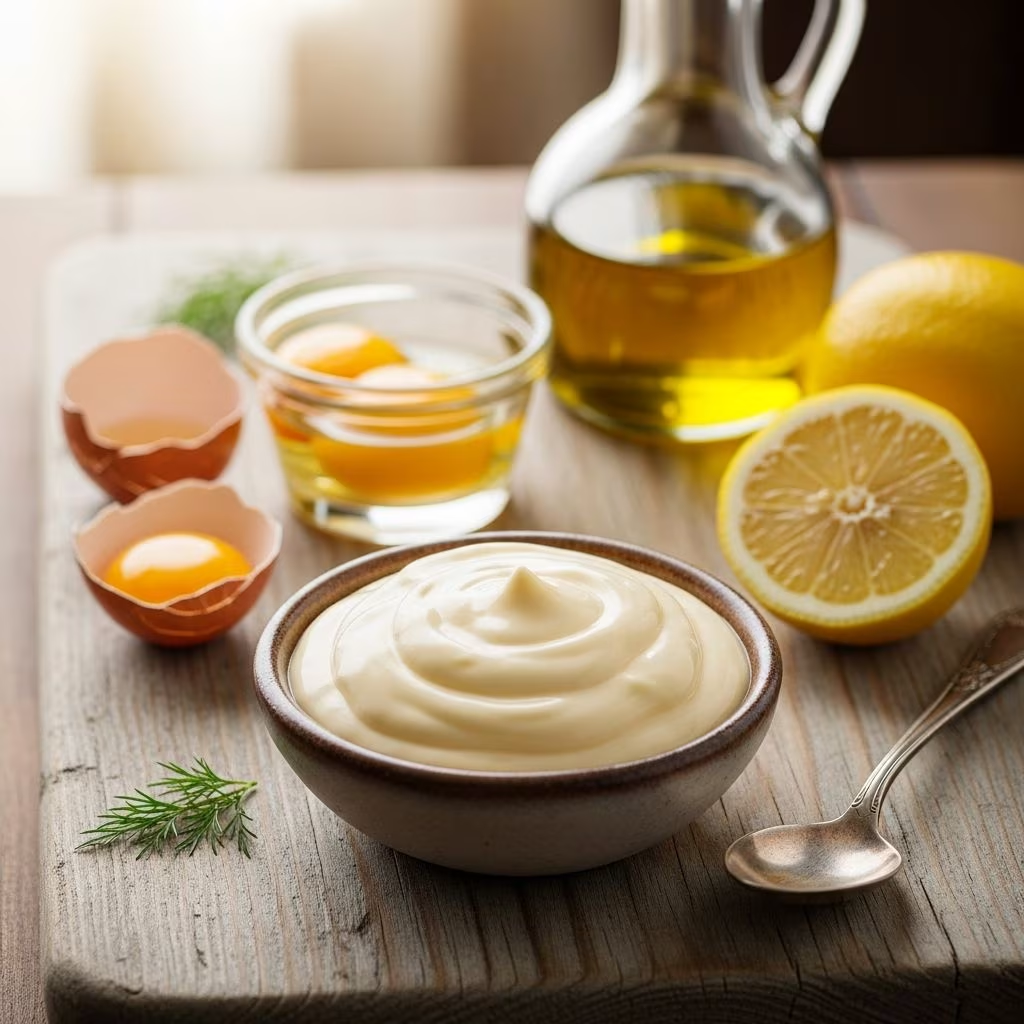
Crafting your own **whole egg mayonnaise** at home transforms a basic pantry staple into a luxurious, customizable condiment. Unlike commercial versions loaded with preservatives, this fresh preparation uses a complete egg for richer texture and bolder taste, ready in minutes with everyday tools like a blender or immersion stick.
Why Choose Whole Egg Over Traditional Mayo
Standard mayonnaise recipes often rely solely on egg yolks, but incorporating the entire egg simplifies the process and minimizes waste. The white contributes to a lighter emulsion while maintaining creaminess. Home cooks appreciate this method for its speed—often under 3 minutes—and superior flavor profile, free from artificial additives.
Health-conscious makers note that fresh, high-quality eggs yield a product with natural nutrients, though proper handling is key for safety. This approach suits beginners, as it reduces the precision needed for yolk-only versions.
Essential Ingredients for Success
Gather these core components for a batch yielding about 1 to 1.5 cups:
- 1 large egg: Room temperature preferred for stable emulsification. Opt for pasteurized if concerned about bacteria.
- 1 cup neutral oil: Canola, vegetable, avocado, or grapeseed work best; avoid strong flavors like extra virgin olive oil alone to prevent bitterness.
- 1-1.5 teaspoons acid: Lemon juice or white vinegar for tang and stability.
- ½-1 teaspoon mustard: Dijon or powder adds sharpness and acts as an emulsifier.
- ¼-½ teaspoon salt: Fine sea salt enhances savoriness; pepper optional for subtle heat.
Variations might include garlic powder for savoriness or a splash of warm water for smoother blending.
Step-by-Step Blender Method
This classic technique ensures foolproof results.
- Combine egg, mustard, acid, salt, and seasonings in a blender jar.
- Blend briefly to mix (pulse 2-3 times).
- With motor running on low, drizzle oil slowly through the lid opening—start drop by drop, then steady stream. Mixture thickens in 1-2 minutes.
- Stop once desired thickness is reached; over-blending can thin it.
- Transfer to a jar; refrigerate to firm up.
Pro tip: Use cold or room-temp ingredients consistently to avoid separation.
Immersion Blender Technique for Speed
For the quickest results, this method shines with a tall, narrow jar matching your blender head.
- Add all ingredients to the jar, oil last—let it float on top.
- Position blender at the bottom, against the base.
- Blend without moving for 20-30 seconds; it pulls oil down, creating emulsion upward.
- Lift and blend sides if needed for evenness.
- Done in under a minute—creamy perfection.
This no-fuss approach is ideal for small batches and cleanup.
Food Safety: Handling Raw Eggs Properly
Raw eggs pose salmonella risk, but mitigation is straightforward. Use pasteurized eggs, available in most stores, which are heated to kill bacteria without cooking. Alternatively, pasteurize at home: Submerge eggs in 140°F (60°C) water for 3 minutes, monitored with a thermometer, then chill. Farm-fresh eggs from trusted sources reduce risks further, as they’re less processed.
Always store finished mayo in the fridge at 40°F or below. Consume within 1-2 weeks for peak freshness and safety. Discard if it smells off, darkens, or separates irreversibly.
| Method | Risk Level | Best For |
|---|---|---|
| Pasteurized Eggs | Low | Everyday use |
| Home Pasteurization | Low | Farm eggs |
| Standard Raw Eggs | Moderate | Healthy adults |
Customizing Your Mayo: Flavor Boosters
Plain mayo is versatile, but infusions elevate it.
- Garlic Aioli: Add 1 tsp garlic powder or 1 minced clove.
- Herb Delight: Stir in chopped dill, chives, or basil post-emulsion.
- Spicy Kick: Blend in sriracha, cayenne, or horseradish (1-2 tsp).
- Lightened Version: Mix 1:1 with Greek yogurt for lower fat, great as dip.
- Olive Oil Blend: Half neutral oil, half EVOO for Mediterranean flair.
Experiment post-making to avoid breaking the emulsion.
Troubleshooting Common Issues
Emulsions can fail, but fixes are simple.
- Broken/Separated: Start fresh egg + mustard in a bowl; slowly whisk in broken mayo.
- Too Thin: Add oil gradually while blending; chill to thicken.
- Too Thick: Drizzle in lemon juice or water ½ tsp at a time.
- Oily Taste: Use fresh, neutral oil; balance with more acid.
- Not Emulsifying: Ensure room-temp ingredients; blend slower.
Practice builds confidence—most errors are recoverable.
Storage and Shelf Life Tips
Glass jars are best for airtight storage. It lasts 7-14 days refrigerated, thickening further when cold. Freeze in ice cube trays for portions up to 3 months, though texture may soften upon thaw. Label with date; avoid metal containers to prevent reactions.
Quality eggs extend usability—farm-fresh can match commercial shelf life.
Creative Uses in Everyday Cooking
This mayo shines beyond sandwiches.
- Base for dressings: Thin with vinegar, herbs for salads.
- Burger/ wrap upgrade: Mix with spices for sauces.
- Potato/ pasta salads: Creamy binder.
- Dips: Blend with yogurt, garlic for veggies.
- Baking: Adds moisture to cakes or cookies.
Its clean ingredients make it a healthier swap for processed options.
Nutrition Snapshot
Per 1 tbsp (approximate, varies by oil):
| Nutrient | Amount | % Daily Value |
|---|---|---|
| Calories | 100 | 5% |
| Fat | 11g | 14% |
| Protein | 0.2g | 0% |
| Sodium | 60mg | 3% |
Rich in healthy fats from quality oils; low carb.
Frequently Asked Questions
Can I use olive oil?
Yes, blend with neutral oil to mellow flavor; full EVOO can taste bitter.
Is it safe for pregnant women?
Use pasteurized eggs to minimize risks.
How do I make it vegan?
Substitute egg with aquafaba (chickpea liquid) using similar ratios.
Why did my mayo turn liquid?
Oil added too fast; restart with new base and reincorporate.
Can I double the recipe?
Yes, but process in smaller batches for best emulsion.
References
- Whole Egg Mayonnaise — Priscilla Martel. Accessed 2026. https://priscillamartel.com/whole-egg-mayonnaise/
- Whole-Egg Mayonnaise — The Scranline. Accessed 2026. https://thescranline.com/whole-egg-mayonnaise/
- Immersion Blender Whole Egg Mayonnaise — Where Is My Spoon. Accessed 2026. https://whereismyspoon.co/whole-egg-mayonnaise/
- Homemade Mayonnaise from Homegrown Eggs — Gail Damerow. Accessed 2026. https://gaildamerow.com/homemade-mayonnaise-from-homegrown-eggs/
- Traditional Whole Egg Mayonnaise in a Blender — YouTube (Luvele). Accessed 2026. https://www.youtube.com/watch?v=F5He1cwsDHY
- Homemade Mayo Recipe — Sweet River Farm. Accessed 2026. https://www.sweetriverfarm.net/post/homemade-mayo-recipe