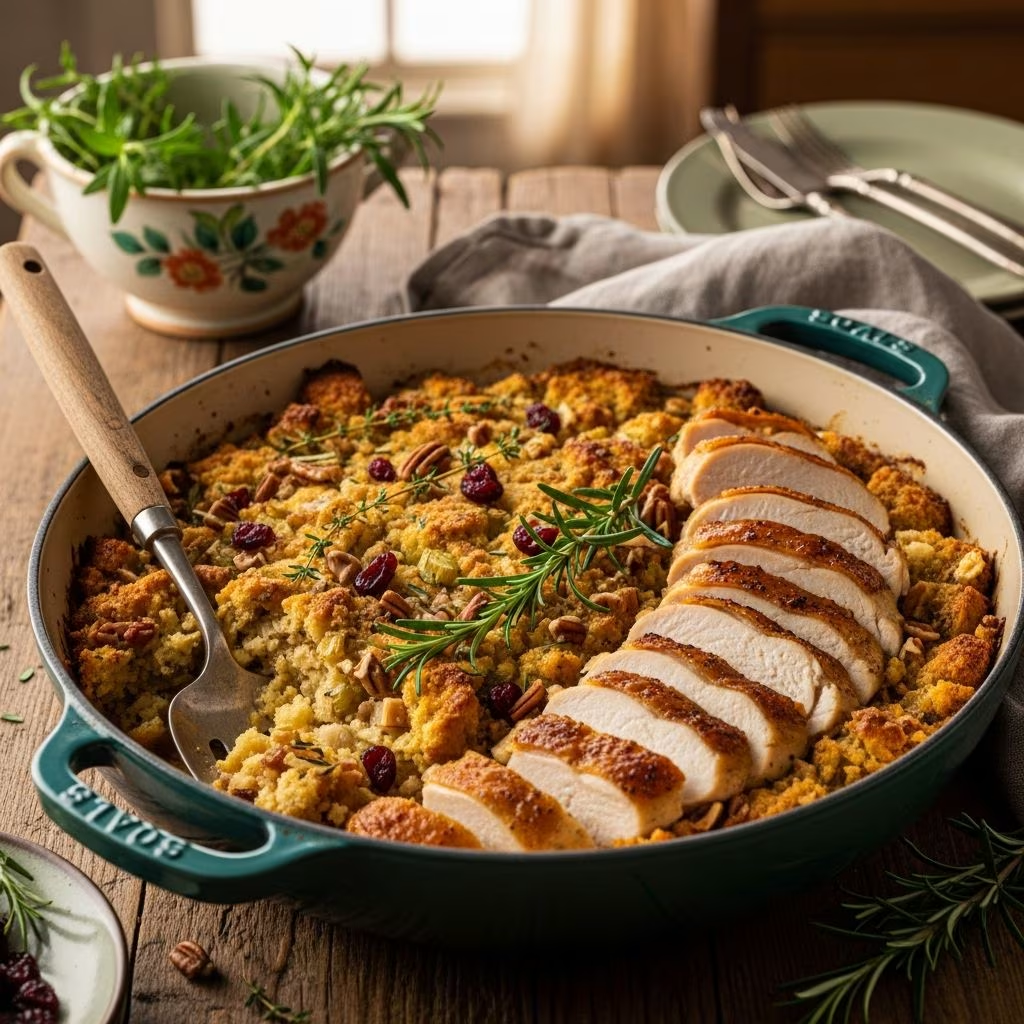
Southern chicken and dressing represents one of the most treasured dishes in American comfort cuisine, particularly during festive gatherings and holiday celebrations. This hearty casserole brings together the rustic charm of cornbread, tender poultry, and aromatic seasonings into a single warming dish that has been passed down through generations. Understanding the fundamentals of this classic preparation allows home cooks to create restaurant-quality versions in their own kitchens.
Understanding the Foundation of Chicken and Dressing
At its core, chicken and dressing is a casserole-style dish that combines several key components working in harmony. The foundation begins with a flavorful broth created by simmering chicken with vegetables and seasonings. This broth becomes the binding agent that transforms dry ingredients into a moist, cohesive dish. The dressing component—a mixture of crumbled cornbread, bread cubes, vegetables, eggs, and seasonings—absorbs this liquid to create the characteristic texture home cooks seek.
The dish’s evolution reflects Southern culinary traditions where resourcefulness and making the most of available ingredients defined home cooking. Originally, cooks would use leftover cornbread and bread, combining them with chicken stock and seasoning to create an economical yet satisfying meal. Today, while the cooking methods remain largely unchanged, the ingredients have become more standardized, making the dish more accessible to contemporary cooks.
Essential Ingredients and Their Roles
The Poultry Component
Chicken selection significantly impacts the final dish’s flavor profile. Rotisserie chicken offers convenience and consistent results, requiring no advance cooking. Fresh chicken—whether thighs, breasts, or a whole bird—provides opportunities for developing deeper flavors through the cooking process. Chicken thighs deliver richer taste and tend to remain moist through cooking, while breasts provide leaner protein. Many traditional recipes call for a young fryer chicken, which balances tenderness with adequate meat for the mixture.
Bread and Cornbread Foundation
Cornbread forms the distinctive element that separates this dish from other stuffing preparations. Homemade cornbread creates superior flavor compared to commercial mixes, though quality store-bought options work acceptably. Stale or day-old cornbread crumbles more easily and absorbs liquid more effectively than fresh cornbread. Additionally, incorporating standard white bread—preferably stale loaf bread with some end pieces included—adds structural integrity to the mixture, creating a more cohesive baked result.
Aromatic Vegetables
The vegetable base consists of onions and celery, which provide savory depth. Many recipes include green bell peppers for subtle sweetness and complexity. Garlic cloves, when minced or chopped finely, contribute pungent undertones that enhance overall savoriness. These vegetables are typically sautéed in butter until softened, releasing their flavors and creating an aromatic foundation for the entire dish.
Binding and Seasoning Elements
Eggs serve as the primary binder, creating structure as the casserole bakes. Heavy cream or cream of chicken soup adds richness and moisture, preventing the dish from becoming dry. Chicken broth—whether reserved from cooking fresh chicken or from commercial sources—provides the essential moisture that transforms dry ingredients into the desired consistency. Ground sage, poultry seasoning, salt, and pepper create the characteristic flavor profile that defines this dish. Fresh rosemary can complement these seasonings, adding herbaceous notes to the finished product.
Step-by-Step Preparation Process
Preparing the Chicken
If using fresh chicken, begin by browning chicken pieces in olive oil with kosher salt and pepper. This browning step develops complex flavors through the Maillard reaction. Add water, celery pieces, and garlic cloves to the pan, then bring the mixture to a boil before reducing heat to maintain a simmer. Cook for approximately 20 minutes until the chicken reaches complete doneness. Remove the chicken pieces and allow them to cool slightly before dicing. Reserve the resulting broth for later use in the dressing mixture.
Creating the Cornbread
Prepare cornbread according to your preferred recipe or package instructions. For traditional Southern flavor, some recipes add diced celery and onions directly to the batter before baking. Allow the baked cornbread to cool completely before proceeding. Once cooled, crumble the cornbread into bite-sized pieces, being careful not to reduce it to flour-like consistency. The goal is achieving pieces that maintain some structural integrity while incorporating easily into the mixture.
Assembling the Mixture
In a large mixing bowl, combine the crumbled cornbread with cubed stale bread, shredded or diced chicken, and sautéed vegetables. Add your chosen seasonings—ground sage, poultry seasoning, salt, and pepper—mixing thoroughly to ensure even distribution. In a separate container, beat eggs together with reserved chicken broth and cream of chicken soup or heavy cream. Pour this liquid mixture over the dry ingredients, stirring gently until everything combines evenly. Add additional broth gradually, approximately one-half cup at a time, until the mixture reaches the desired consistency. The ideal texture resembles thick oatmeal—moist enough to hold together but not so wet that it appears soupy.
Baking and Finishing
Transfer the mixture to a well-greased 9×13-inch baking dish or similarly sized casserole vessel, spreading it evenly. Cover the dish with aluminum foil to prevent excessive browning during the initial baking period. Bake at 350 degrees Fahrenheit for one hour. Remove the foil and continue baking for an additional 30 minutes, or until the top and edges develop golden-brown coloring and slight cracks appear across the surface, indicating the interior has set properly.
Ingredient Variations and Substitutions
| Component | Traditional Option | Alternative Choices |
|---|---|---|
| Bread Type | White sandwich bread | Wheat bread, sourdough, or herb bread |
| Poultry | Chicken thighs or whole bird | Turkey, game hen, or combination poultry |
| Cream Component | Cream of chicken soup | Heavy cream, sour cream, or cream of celery soup |
| Seasonings | Sage and poultry seasoning | Thyme, tarragon, or Italian seasoning blend |
| Vegetables | Onion, celery, bell pepper | Leeks, mushrooms, or fennel |
Professional Tips for Superior Results
Moisture Management: The most common issue home cooks encounter involves achieving proper moisture balance. Adding liquid too quickly results in an overly soupy dish that fails to set properly during baking. Add broth incrementally, stirring after each addition, and assess texture before proceeding. The mixture should hold together when squeezed but still appear moist.
Bread Quality: Using truly stale bread makes a substantial difference. Fresh bread tends to disintegrate into mush rather than maintaining texture. Plan ahead by leaving bread out overnight or drying it in a low oven for 15-20 minutes before cubing.
Temperature Control: Maintaining consistent oven temperature prevents burning. If edges brown too quickly before the center sets, reduce oven temperature by 25 degrees and extend baking time slightly. Conversely, if the top remains pale after the allotted time, increase temperature or switch to a higher oven rack temporarily.
Seasoning Strategy: Taste the mixture before baking and adjust seasonings accordingly. Salt levels particularly benefit from this final assessment, as flavors concentrate during baking. Ground sage is potent—begin with the recipe amount and add more only after tasting.
Serving Suggestions and Complementary Dishes
Chicken and dressing pairs beautifully with traditional accompaniments. Gravy—whether turkey gravy, chicken gravy, or a rich vegetable-based option—drizzled over individual portions elevates the dish. Cranberry sauce, whether traditional or with contemporary twists, provides acidic contrast. Roasted vegetables like Brussels sprouts, carrots, or green bean casserole complete the plate with additional textures and flavors. Dinner rolls or biscuits allow guests to incorporate the dish into composed bites.
This versatile casserole works equally well as a main course during casual weeknight dinners or as a centerpiece for holiday celebrations. Smaller portions can serve as a side dish alongside other mains, while generous servings stand alone as a complete meal with minimal accompaniment.
Storage and Make-Ahead Strategies
Chicken and dressing benefits from make-ahead preparation. The assembled but unbaked mixture can be refrigerated for up to 24 hours before baking, allowing flavors to meld and mellow. Add 10-15 minutes to the baking time when baking directly from refrigeration. Baked portions keep refrigerated for 3-4 days in an airtight container and freeze well for up to three months. To reheat, cover with foil and warm in a 325-degree oven for 20-30 minutes, until heated through, adding a splash of broth if the surface appears dry.
Frequently Asked Questions
Can I prepare this dish entirely in advance?
Yes, you can assemble the unbaked mixture up to one day ahead and refrigerate it. You can also fully bake the dish, cool it completely, and freeze it for up to three months. Thaw overnight in the refrigerator before reheating.
What’s the difference between dressing and stuffing?
Traditionally, “dressing” refers to the mixture baked outside the bird in a casserole dish, while “stuffing” cooks inside the bird’s cavity. This dish is distinctly dressing since it bakes separately.
How can I make this dish lighter?
Substitute heavy cream with half-and-half or whole milk, use low-sodium broth, reduce butter quantities, or incorporate more vegetables into the mixture. Using chicken breast instead of thighs reduces fat content while maintaining adequate moisture through broth.
Can I use different types of bread?
Absolutely. While white bread and cornbread form the traditional base, you can experiment with wheat bread, sourdough, or even herb-seasoned prepared stuffing mixes. Adjust liquid quantities based on bread absorption rates.
Why is my dressing dry after baking?
Insufficient broth or overly aggressive baking causes dryness. Ensure you added adequate liquid before baking, and consider adding broth to individual portions after baking if needed.
References
- Miss in the Kitchen – Southern Chicken and Dressing — Miss in the Kitchen. Accessed April 2026. https://www.missinthekitchen.com/chicken-and-dressing/
- Southern Discourse – Southern Chicken and Dressing — Southern Discourse. Accessed April 2026. https://southerndiscourse.com/southern-chicken-and-dressing/
- Pink Owl Kitchen – Southern Chicken and Dressing — Pink Owl Kitchen. Accessed April 2026. https://pinkowlkitchen.com/southern-cornbread-dressing/
- Stay Snatched – Cornbread Dressing With Chicken — Stay Snatched. Accessed April 2026. https://www.staysnatched.com/cornbread-dressing/
- Collard Valley Cooks – Mama’s Chicken and Dressing — Collard Valley Cooks. Accessed April 2026. https://www.collardvalleycooks.com/chicken-and-dressing-recipe.html