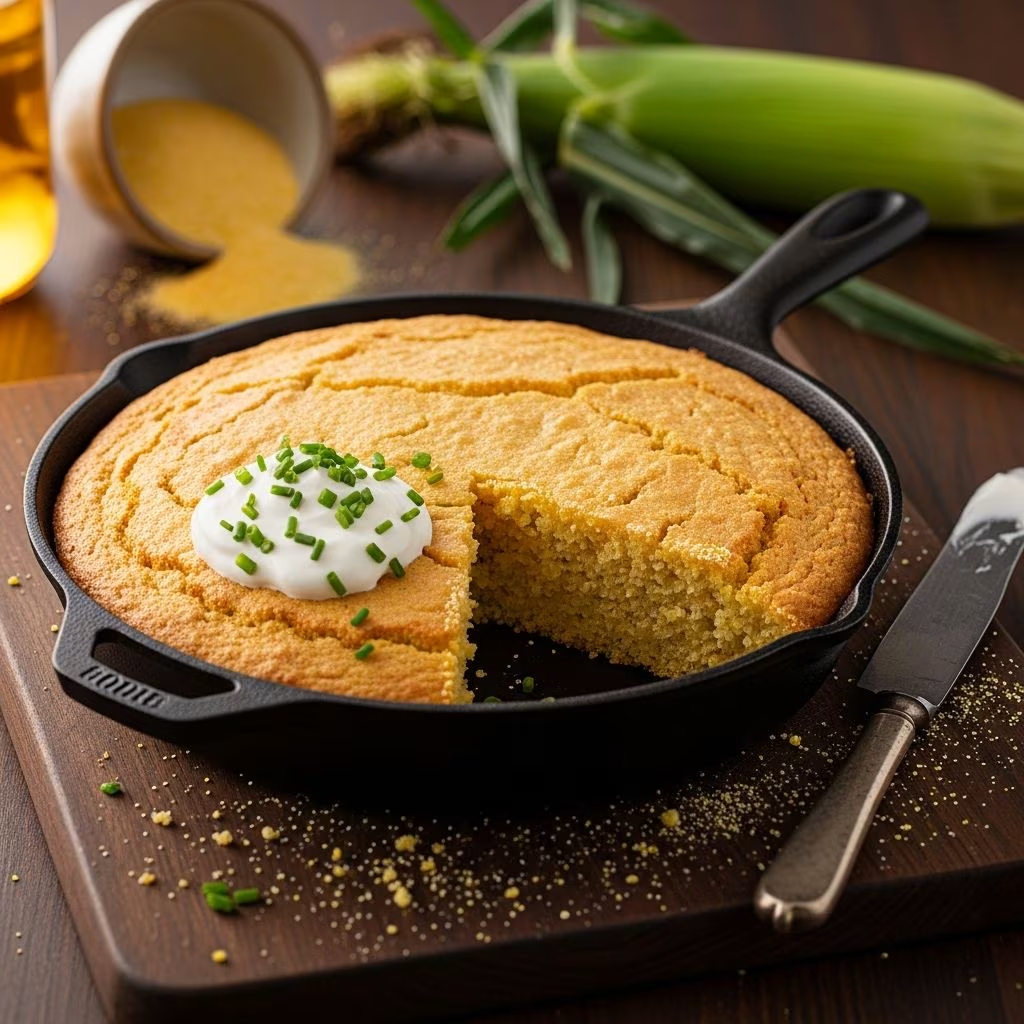
Cornbread holds a special place in American comfort food traditions, and when enriched with sour cream, it transforms into something truly exceptional. This beloved side dish combines the subtle sweetness of cornmeal with the tanginess and moisture that sour cream brings to every bite. Whether you’re preparing a meal for family dinner or bringing a dish to a gathering, understanding the fundamentals of sour cream cornbread will help you create a consistently delicious result that keeps people coming back for more.
Understanding the Role of Sour Cream in Cornbread
Sour cream serves multiple purposes in cornbread baking that go far beyond simply adding flavor. The acidic nature of sour cream reacts with baking soda, creating a chemical reaction that produces carbon dioxide bubbles, which help the bread rise and develop a tender crumb structure. Additionally, the fat content in sour cream enriches the batter, resulting in a moist interior that stays fresh longer than traditional cornbread recipes.
The tanginess of sour cream also balances the sweetness inherent in most cornbread recipes, creating a more complex and sophisticated flavor profile. This ingredient essentially acts as a triple-threat: leavening agent, moisture provider, and flavor enhancer all at once.
Essential Ingredients and Their Functions
Creating quality cornbread requires understanding what each ingredient contributes to the final product:
- Cornmeal – Forms the foundation of the bread, providing texture and the distinctive corn flavor. Yellow cornmeal is most common, though white cornmeal works equally well.
- All-purpose flour – Provides structure and helps bind ingredients together, ensuring the bread holds together properly.
- Sour cream – Contributes moisture, tanginess, and helps activate the leavening agents for optimal rise.
- Eggs – Act as a binder and provide additional structure, with room temperature eggs incorporating more smoothly.
- Baking powder – The primary leavening agent that creates lift throughout the batter.
- Sugar – Balances flavors and contributes to browning, though the amount can be adjusted based on preference.
- Butter or oil – Adds richness and ensures the finished cornbread doesn’t stick to the pan.
- Salt – Enhances all flavors and prevents the bread from tasting flat.
Ingredient Substitution Guide
| Original Ingredient | Suitable Substitute | Notes on Substitution |
|---|---|---|
| Sour cream | Greek yogurt or plain yogurt | Use equal amounts; texture will be slightly different but results remain good |
| All-purpose flour | Self-rising flour | Reduce baking powder and omit salt to avoid over-leavening |
| Butter | Canola or vegetable oil | Use equal amounts; flavor will be slightly less rich |
| Eggs | Applesauce or mashed banana | Use 1/4 cup per egg; texture will be denser |
| Milk | Buttermilk or plant-based milk | Buttermilk enhances tanginess; adjust baking soda accordingly |
Step-by-Step Preparation Method
The process of making sour cream cornbread is straightforward, but precision matters. Begin by preheating your oven to between 375 and 425 degrees Fahrenheit, depending on your recipe preference and oven characteristics. Prepare your baking pan by greasing it thoroughly with butter or cooking spray, ensuring no spots are missed to prevent sticking.
In a large mixing bowl, combine all dry ingredients: cornmeal, flour, baking powder, sugar, salt, and any baking soda if your recipe calls for it. Whisk these together thoroughly to distribute the leavening agents evenly, preventing streaks of unrisen dough in your finished bread.
In a separate bowl, combine all wet ingredients: sour cream, eggs, melted butter or oil, and any milk required by your recipe. Stir these together until they’re well incorporated and relatively smooth. Pour the wet mixture into the dry ingredients and fold them together gently, stirring just until the dry ingredients are moistened. This is crucial—overmixing develops gluten, which creates a tough, dense cornbread rather than a tender one.
Transfer the batter to your prepared pan and smooth the top with a spatula. Bake until the top is golden brown and a toothpick inserted into the center comes out clean, typically requiring 20 to 40 minutes depending on pan size and oven temperature.
Temperature Guidance and Oven Considerations
Oven temperature significantly impacts the outcome of your cornbread. Most recipes call for temperatures between 375 and 450 degrees Fahrenheit. Higher temperatures (425-450°F) create a crispier exterior and produce results faster, typically in 20-25 minutes. Lower temperatures (375-400°F) allow for more even baking and reduce the risk of a burnt top with an underbaked center, usually requiring 30-40 minutes.
The type of baking pan you use also matters. Glass pans conduct heat differently than metal ones, potentially requiring a temperature reduction of 25 degrees to prevent over-browning. Dark pans absorb more heat than light ones, so adjust accordingly. An 8×8-inch square pan is standard, though 9×13-inch rectangular pans or round cake pans work as well—just adjust baking time accordingly.
Achieving the Perfect Texture
The texture of cornbread ranges from dense and cake-like to light and crumbly, depending on ingredient proportions and mixing technique. For a denser, more substantial cornbread, use slightly less liquid and avoid overmixing. For a lighter, more tender crumb, ensure proper incorporation of leavening agents and stop mixing as soon as dry ingredients disappear.
Room temperature ingredients blend together more smoothly and incorporate more evenly. Eggs and sour cream should ideally sit at room temperature for at least 30 minutes before mixing. Cold ingredients may not combine properly, resulting in pockets of unmixed dry ingredients or uneven rising.
Flavor Enhancement Techniques
Beyond the basic recipe, numerous additions elevate sour cream cornbread to new levels:
- Fresh or frozen corn kernels add texture and intensify corn flavor
- Diced jalapeños or other peppers provide a savory kick
- Shredded cheddar cheese adds richness and pairs beautifully with the tanginess
- Crispy bacon pieces contribute smoky flavor and texture
- Fresh herbs like cilantro or chives offer brightness
- A touch of honey or maple syrup deepens sweetness without making it cloying
- Garlic powder or onion powder add savory complexity
Storage and Make-Ahead Options
Properly stored sour cream cornbread remains fresh for several days. Wrap cooled cornbread tightly in plastic wrap or store it in an airtight container at room temperature for up to three days. For longer storage, wrap individual portions in foil and freeze for up to three months. Thaw at room temperature or warm in a 300-degree oven until heated through.
You can prepare cornbread batter ahead of time and refrigerate it for up to 24 hours before baking, though the texture may be slightly affected. Some recipes can be frozen as batter in prepared pans for convenient baking later.
Serving Suggestions and Pairings
Sour cream cornbread complements numerous dishes perfectly. It pairs wonderfully with chili, providing a soft contrast to spiced beans and meat. Alongside soup—particularly tomato-based or vegetable varieties—it offers a satisfying textural element. Barbecued meats benefit from cornbread’s slightly sweet, tangy accompaniment. For a lighter meal, cornbread with butter and jam makes an excellent breakfast bread or snack.
Troubleshooting Common Issues
Dry or Crumbly Cornbread: This typically results from overbaking or too much cornmeal relative to flour. Ensure you’re not leaving the bread in the oven beyond when a toothpick comes out clean. Consider adding more liquid or sour cream next time.
Dense or Sunken Center: Overmixing is usually the culprit, as this develops gluten and reduces lift. Mix only until dry ingredients are barely moistened. Additionally, ensure baking powder hasn’t expired, as old leavening agents don’t rise properly.
Uneven Browning: Oven hot spots cause this issue. Try rotating the pan halfway through baking or using an oven thermometer to verify your oven temperature matches what’s displayed on the control panel.
Raw Center: Lower your oven temperature by 25 degrees and bake longer, allowing more even heat penetration. Using lighter-colored baking pans also helps distribute heat more evenly.
Frequently Asked Questions
Can I make cornbread without eggs?
Yes, though results differ slightly. Replace each egg with 1/4 cup applesauce, mashed banana, or a commercial egg replacer. The texture will be denser, as eggs provide structural support and moisture.
What’s the difference between cornbread and corn muffins?
Cornbread is baked in a single pan and cut into squares, while corn muffins are individual portions baked in muffin tins. The batter is typically identical; only the baking vessel and time differ slightly.
Why does my cornbread have a greasy layer on top?
This indicates excess oil or butter in the batter or pan. Reduce the fat slightly or ensure you’re not over-greasing the baking vessel. Also verify that your sour cream isn’t expired, as older sour cream can affect the texture.
Is self-rising cornmeal different from regular cornmeal?
Self-rising cornmeal contains leavening agents and salt already mixed in. If using it, reduce or omit additional baking powder and salt to prevent over-leavening. Some recipes are specifically designed around self-rising cornmeal for convenience.
How do I know when cornbread is fully baked?
A toothpick inserted into the center should come out clean or with just a few moist crumbs. The top should be golden brown, and the cornbread should spring back when lightly touched.
Professional Tips for Superior Results
Professional bakers emphasize several practices that consistently produce excellent cornbread. Always allow batter to rest for 5-10 minutes before baking; this allows dry ingredients to fully hydrate. Room temperature ingredients blend more smoothly and create a more uniform texture. Don’t open the oven door during baking, as temperature fluctuations interfere with rising. Use an oven thermometer to verify your oven is actually at the desired temperature, as many home ovens run hot or cold.
Finally, remember that the best cornbread is the one you enjoy eating. Feel free to experiment with ingredient ratios, add-ins, and baking temperatures to find your perfect version. The beauty of cornbread lies in its versatility and forgiving nature—minor adjustments rarely ruin the final product.
References
- Cornmeal: Varieties and Uses in Baking — U.S. Department of Agriculture, Agricultural Research Service. https://www.ars.usda.gov
- Sour Cream in Baking: Chemical Reactions and Functionality — University of Minnesota Extension. https://extension.umn.edu
- Quick Breads and Their Science — King Arthur Baking Company Educational Resources. https://www.kingarthurbaking.com
- Food Storage Guidelines for Home Bakers — U.S. Food and Drug Administration. https://www.fda.gov
- Baking Powder and Baking Soda: Understanding Leavening Agents — National Center for Home Food Preservation. https://nchfp.uga.edu