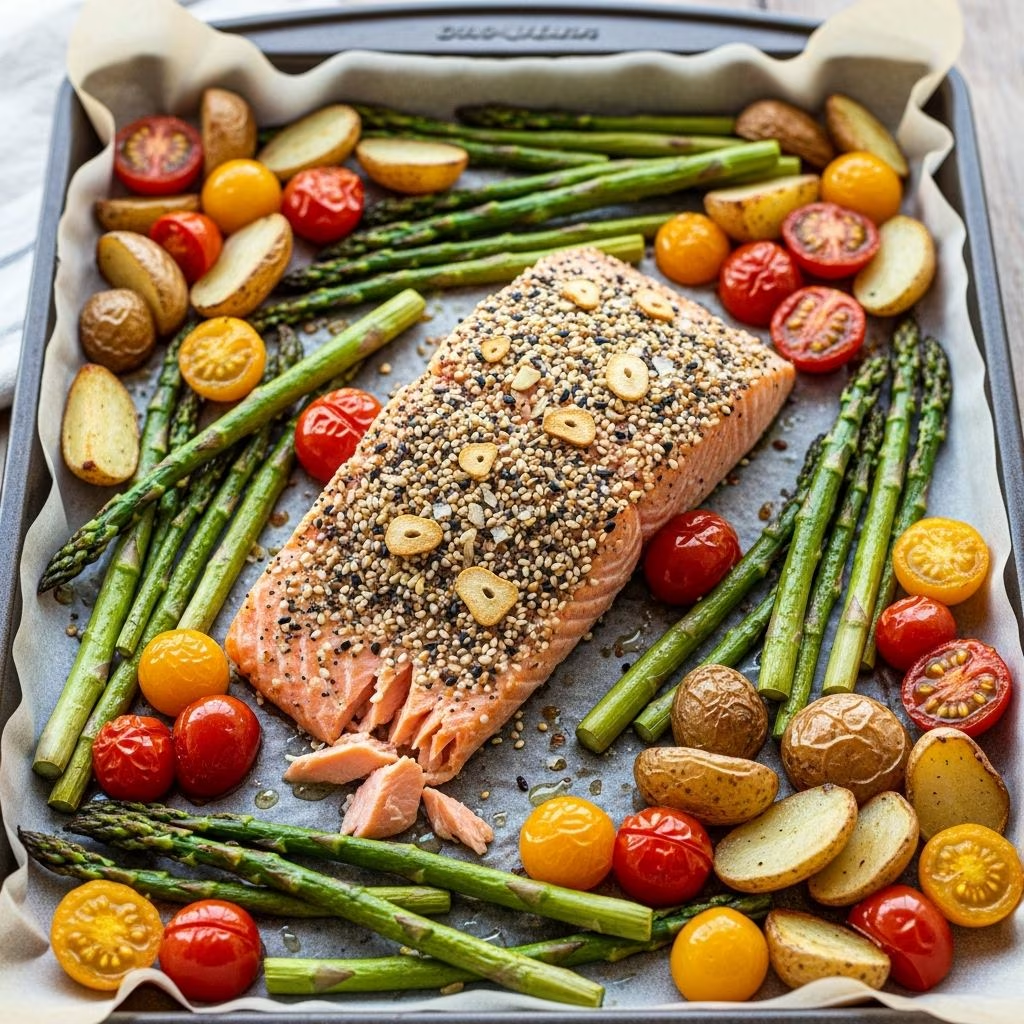
Sheet pan dinners have revolutionized how home cooks approach weeknight meals, combining protein, vegetables, and minimal dishwashing into one efficient cooking method. Among the most popular variations of this cooking technique is the everything bagel salmon preparation, which brings together the savory, umami-rich flavors of bagel seasoning with tender, flaky salmon fillets. This cooking method transforms simple ingredients into an elegant dish that appears far more complicated than its straightforward execution suggests.
The appeal of this dish extends beyond mere convenience. The everything bagel seasoning—a blend typically containing sesame seeds, poppy seeds, dried onion, dried garlic, and sea salt—creates a complex flavor profile that complements salmon’s natural richness without overwhelming it. When combined with roasted vegetables and a single baking sheet, home cooks can deliver a restaurant-quality dinner to their tables in under thirty minutes.
Understanding the Fundamentals of Sheet Pan Cooking
Sheet pan cooking represents a departure from traditional multi-pan dinner preparation. Rather than juggling multiple cooking vessels, this method consolidates ingredients on a single baking sheet, allowing proteins and vegetables to cook simultaneously through shared oven heat. This approach offers several advantages for modern cooking: reduced preparation time, simplified cleanup, and consistent results that depend more on ingredient quality than technical expertise.
The success of sheet pan meals depends on several key principles. First, ingredient selection matters significantly—choosing components with similar cooking times ensures everything finishes simultaneously. Second, proper spacing on the pan prevents overcrowding, which can lead to steaming rather than roasting. Third, understanding your oven’s temperature and hot spots helps achieve even cooking across all ingredients.
Essential Ingredients for Your Sheet Pan Preparation
Building a successful everything bagel salmon sheet pan dinner begins with understanding each ingredient’s role:
- Salmon fillets: The foundation of this dish, typically ranging from one to two pounds depending on serving size. Wild-caught salmon offers more complex flavor than farm-raised varieties, though both work effectively in this preparation.
- Everything bagel seasoning: This specialized spice blend delivers the dish’s signature flavor. Available at most grocery retailers, particularly in specialty spice sections, it can also be replicated at home by combining sesame seeds, poppy seeds, dried minced garlic, dried minced onion, and sea salt in equal proportions.
- Complementary vegetables: Green beans, asparagus, broccoli florets, and baby potatoes all pair well with salmon. These vegetables benefit from roasting’s caramelizing effects, developing deeper flavors when exposed to the oven’s dry heat.
- Binding agents: Olive oil, avocado oil, or melted butter help distribute seasonings and promote even cooking. Some preparations incorporate cream cheese or Dijon mustard to create an additional flavor layer and aid seasoning adherence.
- Acid components: Lemon juice brightens the overall flavor profile, cutting through the richness of salmon and oil-based preparations while preventing the palate from becoming overwhelmed.
- Finishing touches: Fresh herbs, additional sea salt, or creamy dressings can elevate the final presentation and taste experience.
Temperature and Timing Considerations
Proper oven temperature determines the success of your sheet pan salmon dinner. Most recipes call for preheating your oven to either 350°F for longer, gentler cooking or 425°F for faster preparation with more pronounced vegetable caramelization. The choice between these temperatures depends on your preferred salmon texture and vegetable doneness levels.
At 425°F, salmon fillets typically cook through in 12 to 15 minutes, while vegetables develop light golden edges. This higher temperature suits situations where you prefer slightly firmer salmon with more deeply roasted vegetables. At 350°F, preparation requires approximately 25 to 30 minutes, producing more delicate salmon with vegetables that remain tender without significant browning. Many home cooks find a middle ground effective—starting vegetables at 425°F for ten minutes before adding salmon and reducing heat slightly for the final cooking stage.
Step-by-Step Preparation Process
Executing a sheet pan salmon dinner follows a logical progression that emphasizes preparation over cooking time:
- Prepare your workspace: Line a large baking sheet with parchment paper or a silicone baking mat to facilitate cleanup and prevent sticking. Spray lightly with non-stick cooking spray if desired.
- Arrange protein components: Position salmon fillets skin-side down in the sheet’s center, leaving adequate space around edges for vegetables. Pat the salmon’s surface dry with paper towels if incorporating a cream cheese or mustard-based topping, as moisture prevents proper adhesion.
- Apply seasoning layers: Brush or spread your chosen binding agent across salmon fillets, then generously apply everything bagel seasoning, pressing lightly to encourage adherence. This ensures maximum flavor distribution across each bite.
- Position vegetables strategically: Arrange selected vegetables around the salmon, clustering similar items together for consistency. Drizzle with oil and apply additional seasonings as desired.
- Monitor cooking progress: Place the sheet in your preheated oven and check periodically. Salmon achieves doneness when its flesh becomes opaque and flakes easily with a fork. Vegetables should achieve your preferred tenderness level—some prefer them firmer with caramelized edges, while others prefer softer preparations.
- Rest and serve: Remove the sheet from the oven and allow components to rest for several minutes before plating and serving.
Vegetable Selection and Combinations
Your vegetable choices significantly impact the final dish’s flavor profile and nutritional value. Several vegetables work particularly well alongside everything bagel salmon:
| Vegetable | Cooking Time | Flavor Profile | Preparation Notes |
|---|---|---|---|
| Green beans | 12-15 minutes | Mild, slightly grassy | Trim stem ends; toss with oil and salt |
| Asparagus | 12-15 minutes | Delicate, nutty when roasted | Snap off woody bases; arrange in single layer |
| Broccoli florets | 15-20 minutes | Earthy, slightly sweet | Cut into uniform pieces for even cooking |
| Baby potatoes | 20-25 minutes | Starchy, buttery | Halve or quarter; pre-roast if shorter timeline desired |
| Cherry tomatoes | 10-12 minutes | Sweet, acidic | Leave whole; add near end of cooking to prevent excessive splitting |
Flavor Enhancement Through Sauce Accompaniments
While everything bagel seasoning provides substantial flavor, complementary sauces elevate the dining experience. A simple lemon tahini dressing combines tahini, lemon juice, garlic, and water to create a creamy, tangy condiment that balances salmon’s richness. Alternatively, a horseradish cream sauce adds peppery heat, while herb-infused vinaigrettes provide bright, acidic contrast. These sauces require minimal preparation and can be assembled while salmon roasts, further streamlining your cooking timeline.
Addressing Common Preparation Challenges
Even experienced cooks encounter occasional difficulties when preparing sheet pan meals. If vegetables finish cooking before salmon reaches desired doneness, carefully remove the vegetable portions while continuing salmon’s cooking process. Conversely, if vegetables require additional time after salmon completes cooking, transfer salmon to a serving plate and return vegetables to the oven for several additional minutes. Should seasoning fail to adhere properly to salmon, ensure the fish’s surface is thoroughly dried before applying your binding agent and seasoning combination.
Nutritional Considerations and Benefits
This sheet pan preparation offers significant nutritional advantages. Salmon provides omega-3 fatty acids, high-quality protein, and essential vitamins including vitamin D and selenium. Roasted vegetables retain most of their nutritional content through the dry-heat cooking method, contributing dietary fiber, vitamins, and minerals. The overall meal provides balanced macronutrients and micronutrients with minimal added calories, making it suitable for various dietary approaches and health goals.
Frequently Asked Questions
Can I prepare this dish in advance?
Yes, you can assemble components on your sheet pan up to two hours before cooking. Cover with plastic wrap and refrigerate until ready to bake. Add approximately five minutes to your cooking time if starting from a cold state.
What substitutions work for everything bagel seasoning?
You can replicate the seasoning at home or substitute with similar spice blends featuring sesame seeds, garlic, and onion elements. Some cooks use store-bought bagel dips, which combine seasoning with cream cheese for added richness.
How do I know when salmon is properly cooked?
Properly cooked salmon reaches an internal temperature of 145°F (63°C) and flakes easily when tested with a fork. The flesh should appear opaque throughout rather than translucent.
Can I use frozen salmon fillets?
Yes, but thaw them completely in your refrigerator before cooking. Frozen salmon requires longer cooking times and may cook unevenly if started from frozen.
What beverages pair well with this meal?
White wines like Sauvignon Blanc or Pinot Grigio complement the flavors beautifully. Non-alcoholic options include sparkling water with lemon or herbal tea.
How should I store leftovers?
Place cooled components in an airtight container and refrigerate for up to three days. Reheat gently in a 300°F oven to avoid overcooking the salmon.
Advanced Variations and Customizations
Once comfortable with the basic technique, explore variations that maintain the dish’s simplicity while introducing new flavor dimensions. Replace cream cheese with a honey mustard glaze for sweeter undertones. Incorporate roasted garlic into your oil mixture for deeper, more mellow garlic flavors. Add fresh herbs like dill, tarragon, or parsley either before cooking or as a finishing garnish. These modifications preserve the one-pan approach while offering fresh dining experiences.
Making Sheet Pan Salmon a Weeknight Staple
The everything bagel salmon sheet pan dinner’s greatest strength lies in its reliability and speed. Once you’ve executed the basic recipe once or twice, preparation becomes nearly automatic, allowing you to dedicate mental energy to other aspects of your meal or day. The dish accommodates ingredient variations based on market availability and personal preferences, making it adaptable to changing seasons and dietary needs. By mastering this fundamental technique, you establish a versatile foundation for countless future meals.
References
- United States Department of Agriculture (USDA) — USDA FoodData Central. Accessed 2026. https://fdc.nal.usda.gov/
- FDA Seafood Cooking Guidance — U.S. Food and Drug Administration. https://www.fda.gov/food/foodborneillnesscontaminants/peopleatrisk/ucm312339.htm
- Omega-3 Fatty Acids and Cardiovascular Health — American Heart Association. https://www.heart.org/