Understanding the Heritage and Meaning
The term “meunière” carries an interesting linguistic history rooted in French culinary tradition. The word translates to “miller’s wife” in French, a reference that speaks to the humble yet elegant preparation method at the heart of this dish. Rather than being an elaborate creation reserved for aristocratic tables, sole meunière emerged from the practical kitchens of working-class families who understood how to transform simple ingredients into something memorable. The name itself reflects the fundamental technique: the liberal use of flour to coat the delicate fish before pan-frying. This culinary approach represents the philosophy that exceptional food need not require exotic ingredients or complicated procedures, but rather skillful handling of fundamentals.
What makes this dish particularly remarkable is its enduring presence on menus from Parisian bistros to fine dining establishments worldwide. The simplicity of sole meunière belies its sophistication, making it a perfect introduction to French cooking for home cooks while remaining a benchmark for evaluating a chef’s technical proficiency. The preparation demands precision in timing, temperature control, and ingredient quality, each element playing a crucial role in the final result.
Selecting Quality Sole and Other Essential Ingredients
The foundation of an exceptional sole meunière begins with understanding the types of sole available and their characteristics. Dover sole, considered the gold standard for this preparation, possesses a delicate flavor and firm texture that withstands the cooking process beautifully. Petrale sole offers an excellent alternative, particularly for those seeking a more sustainable option or facing availability constraints. When purchasing sole, look for fillets that appear translucent and moist rather than opaque or dried out. The flesh should smell fresh and oceanic, not fishy or off-putting.
Beyond the fish itself, the ingredient list remains intentionally minimal, allowing each component to shine. All-purpose flour serves as the coating agent, with some preparations incorporating herbs like Herbes de Provence to add subtle aromatic notes. Butter—unsalted and of high quality—forms the foundation of both the cooking medium and the finishing sauce. Fresh lemon juice provides acidity and brightness, cutting through the richness of the butter while enhancing the delicate fish flavor. Capers add briny complexity, their small pops of flavor creating textural interest. Fresh parsley contributes color and a clean herbal note without overpowering other components. Salt and freshly ground black pepper round out the seasoning profile.
Pre-Preparation and Mise en Place
Professional cooks understand that the quality of a final dish often depends more on preparation than on cooking itself. For sole meunière, thorough mise en place—having all ingredients prepared and measured before cooking begins—becomes essential because the actual cooking process moves remarkably quickly. Begin by gently rinsing the sole fillets under cool water and patting them completely dry with paper towels. Any residual moisture will prevent proper browning and create a steamed rather than sautéed result.
Next, prepare your flour mixture by combining all-purpose flour with salt, pepper, and any additional herbs you’ve chosen. Place this mixture in a shallow dish or on a large plate for easy dredging. Measure your butter in advance, dividing it according to your recipe’s requirements. Fresh lemon juice should be squeezed just before cooking to preserve its brightness. Finely chop your parsley, removing any tough stems. Have all ingredients and equipment within arm’s reach of your cooking station, as this dish truly cooks à la minute—meaning it must be prepared precisely when you’re ready to eat, not before.
Mastering the Cooking Technique
The cooking process for sole meunière involves several distinct phases, each requiring attention and proper technique. Begin by dredging your prepared sole fillets in the flour mixture, pressing them gently to ensure even coating on both sides. Tap away any excess flour, as too much will create a thick, pasty crust rather than the thin, crispy coating desired.
Heat your cooking vessel—a large non-stick skillet works well—over medium heat. Add your initial butter (or a combination of butter and oil, depending on your recipe) and allow it to reach proper temperature. The butter should be foaming gently when you add the fish; if it’s smoking, the temperature has climbed too high and your fish will cook unevenly. Place the flour-coated sole fillets carefully into the hot butter, working in batches if necessary to avoid overcrowding the pan.
Cook the first side for approximately two to three minutes, until the bottom achieves a golden-brown color. Flip the fillets carefully using a spatula, working deliberately to avoid breaking the delicate fish. Add a small amount of additional butter at this point, allowing it to coat the fish as it finishes cooking. Continue cooking for another minute or so until the second side develops color and the flesh appears opaque throughout. The entire cooking process should take no more than five minutes total.
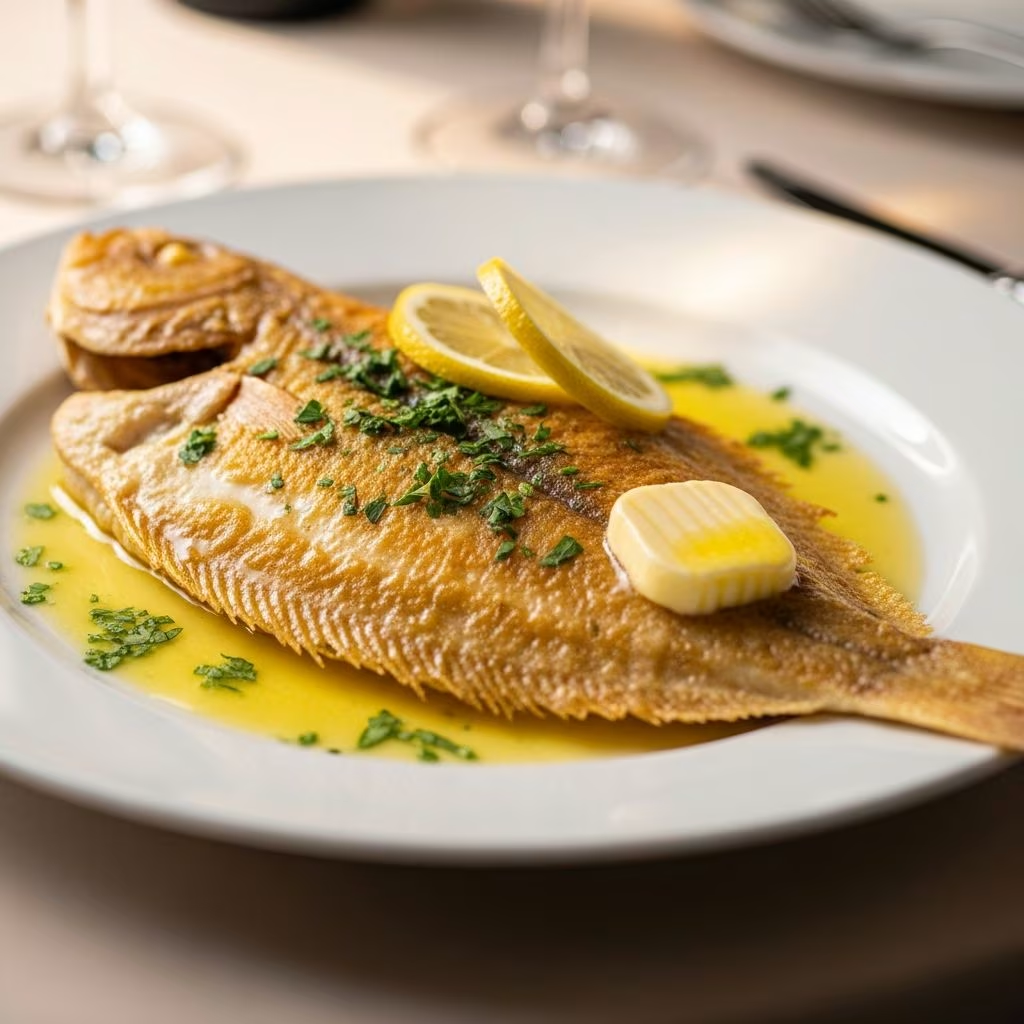
Transfer the finished fillets to a serving platter and keep them warm while preparing the sauce. This brown butter and lemon sauce distinguishes sole meunière from simpler preparations and elevates the dish considerably. In the same skillet, melt additional butter over medium-low heat, watching carefully as it transitions from pale yellow to a deeper nutty brown color. This browning process must be monitored closely—within seconds of reaching the perfect golden-brown stage, burnt butter emerges, ruining the sauce. Once properly browned and fragrant, remove from heat immediately and add fresh lemon juice and capers. The bubbling action will stop once the acidic lemon juice hits the hot butter. Stir in your chopped parsley and season to taste with salt and pepper.
Serving and Presentation
Pour the finished brown butter and caper sauce generously over the warm sole fillets. The sauce should pool around the fish, its nutty aroma mingling with the delicate fish flavor. Sole meunière traditionally serves as a refined main course, typically presented simply on a warmed plate with minimal additional garnish beyond the parsley already incorporated into the dish. A light vegetable side such as steamed asparagus, sautéed spinach, or roasted root vegetables complements the richness of the preparation without competing for attention.
Wine pairing considerations suggest a crisp white wine with good acidity—a Sauvignon Blanc, Albariño, or dry Riesling pairs beautifully with the bright lemon and briny capers. The wine’s acidity mirrors the sauce’s composition while cleansing the palate between bites of rich butter-sautéed fish.
Common Challenges and Solutions
| Challenge | Cause | Solution |
|---|---|---|
| Fish falls apart during cooking | Fillets not dried sufficiently or pan temperature too high | Pat fish completely dry; maintain medium heat; use gentle spatula technique |
| Flour coating becomes soggy | Excess moisture on fish or inadequate heat during cooking | Ensure thorough drying; verify proper butter temperature before adding fish |
| Brown butter appears burnt rather than nutty | Heat too high or butter left unattended during browning | Use medium-low heat for sauce; watch constantly during browning phase |
| Fish tastes bland | Insufficient seasoning in flour mixture or inadequate salt in sauce | Taste flour mixture before dredging; taste finished sauce and adjust seasoning |
| Dish tastes greasy | Too much butter or insufficient seasoning | Measure butter carefully; ensure proper salt and lemon juice balance |
Ingredient Variations and Adaptations
While traditional sole meunière adheres to established parameters, thoughtful variations exist that honor the dish’s essence while accommodating different preferences or ingredient availability. Some preparations incorporate a small amount of olive oil mixed with butter, which raises the smoke point and provides slightly different flavor dimensions. The herb component offers flexibility—Herbes de Provence, as mentioned earlier, provides a subtle Provençal character, while some preparations omit herbs entirely to allow the fish’s delicate flavor to dominate.
The sauce can feature alternative finishes: some cooks add anchovy paste or additional capers for deeper complexity, while others prefer the simplicity of butter, lemon, and parsley without capers. Fresh tarragon or chervil may replace parsley for different herbal notes. For those seeking dairy-free preparations, high-quality olive oil can substitute for butter in both cooking and sauce stages, though this transforms the dish into a different preparation entirely.
Nutritional Information and Dietary Considerations
Sole provides excellent nutritional value, offering high-quality protein with relatively low caloric density. A typical serving (around 4-6 ounces of fish) contains approximately 20-25 grams of protein while contributing only 80-100 calories from the fish itself. The nutrient profile includes beneficial omega-3 fatty acids, selenium, and B vitamins. Butter and olive oil additions contribute additional calories and fat content, with a typical portion containing approximately 300-400 total calories depending on sauce quantity.
For those following specific dietary approaches, sole meunière adapts reasonably well. The gluten-free community can substitute appropriate flour alternatives for the coating, though traditional preparation relies on wheat flour’s specific baking properties. Those limiting saturated fat might reduce butter quantities, though this compromises authenticity. The dish inherently accommodates pescatarian and flexitarian diets while remaining unsuitable for strict vegan approaches due to butter incorporation.
Frequently Asked Questions
Can I prepare sole meunière in advance?
Unlike most dishes, sole meunière benefits from last-minute preparation. However, you can prepare ingredients completely in advance—measure flour and seasonings, squeeze lemon juice, chop parsley, and measure butter. The actual cooking should occur just before serving to ensure optimal texture and temperature.
What if I cannot find Dover or Petrale sole?
While these varieties represent ideal choices, flounder, lemon sole, or other delicate white fish work adequately. The cooking time may vary slightly depending on thickness. Look for thin fillets rather than thicker white fish varieties.
How can I tell when the sole is perfectly cooked?
Properly cooked sole appears opaque throughout and flakes gently when prodded with a fork. The fillets should be tender but not falling apart. The internal temperature should reach 145°F (63°C) if using a thermometer.
Can I substitute the butter sauce with something else?
The brown butter and lemon sauce defines sole meunière specifically. Alternative sauces would create a different preparation. However, you may reduce butter quantity if desired, though this changes the dish’s character.
How many servings does a typical recipe produce?
Most recipes yield two to four servings depending on fillet size and appetite. Fillets typically weigh 2-4 ounces each, so plan for two to three fillets per person.
References
- Sole in Lemon Butter Sauce (Sole Meuniere) — Vikalinka. Accessed April 2026. https://vikalinka.com/sole-lemon-butter-sauce-sole-meuniere/
- Julia Child’s Sole Meuniere — The Little Ferraro Kitchen. Accessed April 2026. https://littleferrarokitchen.com/julia-childs-fillets-of-sole-meuniere/
- Easy Sole Meunière — Vanilla Bean Cuisine. Accessed April 2026. https://www.vanillabeancuisine.com/easy-sole-meuniere/
- Sole Meunière — Kitchen Confidante. Accessed April 2026. https://kitchenconfidante.com/sole-meuniere