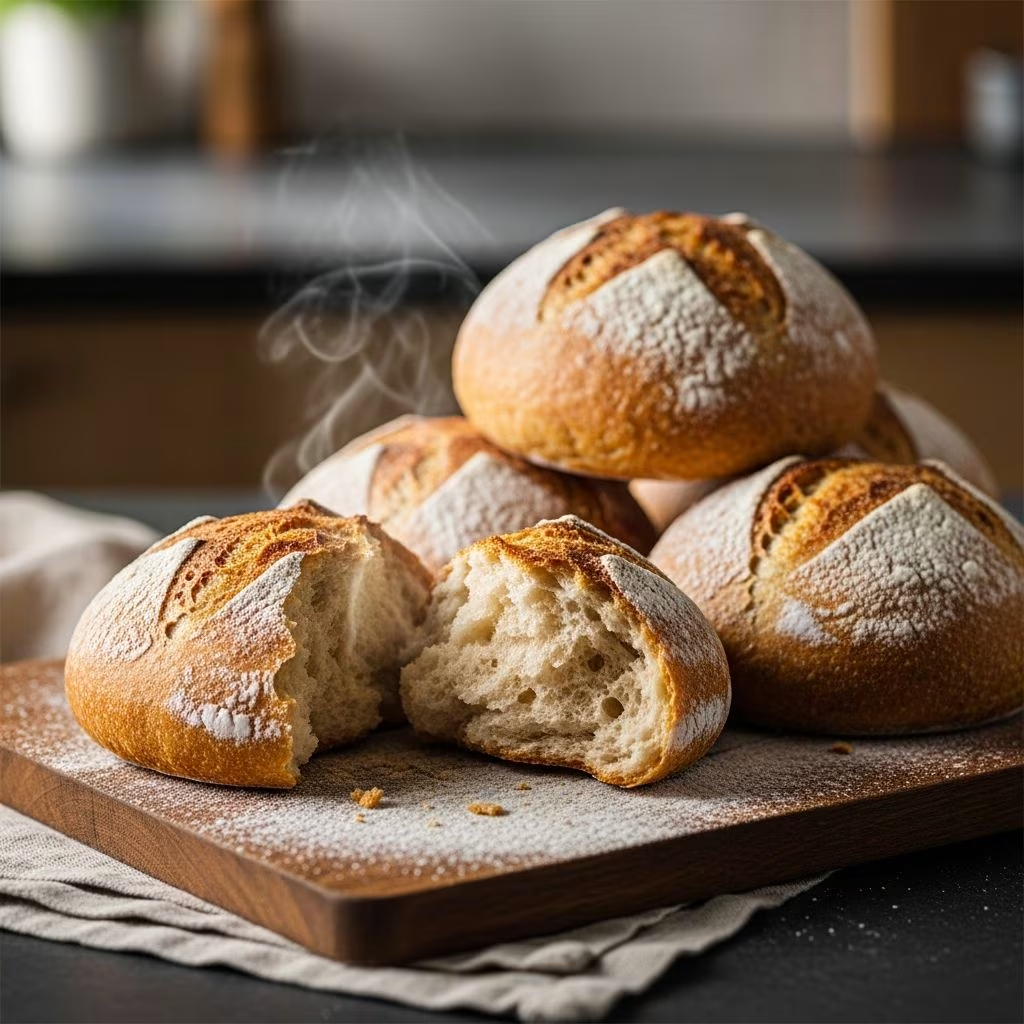
Sourdough rolls offer a delightful combination of tangy flavor and tender crumb, elevating any meal from everyday dinners to holiday feasts. These small, versatile breads rely on natural fermentation for their distinctive taste and texture, distinguishing them from yeast-based counterparts. Home bakers can achieve consistent success by focusing on key elements like starter vitality, precise dough development, and controlled proofing. This guide provides a complete roadmap, drawing from proven methods to help you produce rolls that are soft inside with a golden exterior.
Building a Robust Sourdough Starter
The foundation of exceptional sourdough rolls begins with a lively starter. This living culture of wild yeast and bacteria drives fermentation, imparting flavor and lift without commercial yeast. An active starter appears bubbly, doubles in volume within 4-8 hours after feeding, and emits a pleasant, fruity aroma rather than a harsh vinegar scent.
To prepare, maintain your starter at 100% hydration—equal parts flour and water by weight. Feed it daily or as needed: discard all but 50 grams, then add 50 grams flour and 50 grams water. Use whole grain flour initially for feeding to boost microbial activity, switching to all-purpose for maintenance. In cooler environments, keep it near a warm spot like an oven light; in warmer climates, refrigerate between uses and refresh before baking.
- Peak activity timing: Use starter at its height, 4-6 hours post-feeding, for optimal rise.
- Float test: A spoonful floats in water if ready; if it sinks, feed again.
- Storage tweaks: Weekly feeds suffice in the fridge, but room-temperature starters yield faster results for rolls.
A sluggish starter leads to dense rolls, so monitor its performance. If inconsistent, consecutive feeds over 2-3 days revive it.
Selecting Ingredients for Optimal Dough
Quality ingredients ensure a workable dough and superior roll quality. Bread flour, with 12-14% protein, builds strong gluten networks for airy interiors. All-purpose flour works but may yield slightly denser results. Whole milk replaces water for richness, promoting a tender crumb and better browning via milk sugars. Unsalted butter or oil adds fat for softness; honey or sugar feeds the starter and balances tang.
| Ingredient | Purpose | Best Choice |
|---|---|---|
| Flour | Structure | Bread flour (King Arthur or similar) |
| Liquid | Hydration & tenderness | Whole milk, warmed to 100°F |
| Fat | Softness & flavor | Butter or avocado oil |
| Sweetener | Fermentation boost | Honey (2 Tbsp per batch) |
| Salt | Flavor & gluten control | Fine sea salt (1-2% of flour weight) |
Warm liquids to 95-110°F to activate without killing cultures; hotter than 120°F harms yeast. Scale ingredients precisely—a kitchen scale ensures accuracy over volume measures.
Mixing and Developing the Dough
Dough preparation involves autolyse, mixing, and strengthening via folds. Begin by combining starter, warm milk, butter, sugar, and salt. Let rest 30-60 minutes (autolyse) for easier gluten formation and better hydration. Add flour gradually until the dough pulls from bowl sides but remains tacky—not sticky.
Perform stretch-and-folds: every 30 minutes for 2-4 sets, stretch one side up and fold over the center, rotating the bowl. This builds strength gently, avoiding kneading’s toughness. A stand mixer with dough hook kneads 8-12 minutes on low until smooth and passing the windowpane test—stretch a piece thin without tearing.
- Mix wet ingredients and starter.
- Autolyse with partial flour 1 hour.
- Incorporate remaining flour; rest 30 minutes.
- Fold or knead to smooth dough.
Aim for 65-70% hydration: soft, manageable, not soupy. Cover during rests to prevent drying.
Bulk Fermentation: Patience Pays Off
Bulk fermentation develops flavor through slow acid buildup. After mixing, let dough rise at room temperature (68-75°F) 4-8 hours until 50-100% larger, puffy with bubbles. Colder rooms extend to 12 hours for deeper tang; warmer spots risk overproofing.
Monitor by poke test: dough springs back slowly. Cold retard overnight in the fridge (8-12 hours) enhances flavor and fits schedules. Mark bowl height pre-ferment for visual tracking.
Shaping Perfect Rolls
Gently deflate dough on a lightly floured surface. Divide into 12-15 equal portions (60-80g each) using a bench scraper. Shape by tucking edges under, rolling into tight balls with cupped hand against the counter. Tension on the surface prevents spreading.
Place in greased 9×13 pan or skillet, sides touching for pull-apart texture. Cover loosely; proof 1-3 hours until puffy, doubled, and jiggly. In cool kitchens, use oven with light on for warmth.
- Tight shaping: Seal seams bottom-side down.
- Pan choice: Metal for even browning; cast iron for rustic appeal.
- Spacing: Close for soft sides, apart for crustier exteriors.
Baking to Golden Perfection
Preheat oven to 350-425°F depending on crust preference—lower for soft, higher for crusty. Brush with egg wash (1 egg + milk) for shine, or melted butter post-bake for richness. Bake 25-35 minutes until internal temp hits 190°F and tops are deep golden.
Steam option: place pan of water in oven first 10 minutes for oven spring. Cool on rack 10 minutes before serving; brush with butter then.
Troubleshooting Common Issues
Dense rolls? Check starter activity and full proofing. Flat? Overproofed or weak dough—shorten fermentation next time. Gummy crumb signals underbaking; use thermometer. Pale tops? More egg wash or higher heat.
| Problem | Cause | Solution |
|---|---|---|
| Dense texture | Inactive starter | Feed 2x before use |
| Flat rolls | Overproofing | Proof until 50% rise |
| Gummy inside | Underbaked | Bake to 190°F internal |
| Dry crumb | Too much flour | Weigh ingredients |
Recipe: Classic Soft Sourdough Rolls
Yield: 12 rolls | Prep: 30 min | Ferment: 8-12 hrs | Proof: 2-3 hrs | Bake: 30 min
Ingredients
- 100g active sourdough starter
- 240g whole milk, warmed
- 60g unsalted butter, melted
- 30g honey
- 500g bread flour
- 10g salt
- 1 egg + 1 Tbsp milk (egg wash)
Instructions
- Combine starter, milk, butter, honey. Autolyse with 400g flour 1 hour.
- Add salt and remaining flour; mix to shaggy dough.
- Fold 4 sets, 30 min apart. Bulk ferment 6-8 hours until doubled.
- Divide into 12, shape balls, place in greased pan. Proof 2 hours.
- Preheat 375°F. Egg wash tops. Bake 28-32 min until 190°F.
- Brush with butter; cool slightly.
Store airtight 2 days or freeze baked rolls.
Variations and Serving Ideas
Herb rolls: Add rosemary or garlic to dough. Sweet: Increase honey, add cinnamon. Vegan: Use plant milk and oil.
Pair with soups, turkey, or as sliders. Reheat wrapped in foil for softness.
FAQs
Can I use discard?
For quicker rolls, add 50g discard + instant yeast, but flavor is milder.
How long do rolls keep?
2-3 days room temp; freeze up to 3 months.
Why milk not water?
Milk tenderizes and browns better.
Cold proof overnight?
Yes, shape then fridge 8-12 hours; bake straight from cold.
Scaling for more rolls?
Double ingredients; use two pans.
References
- Soft and Fluffy Sourdough Dinner Rolls Recipe — Simplicity and a Starter. 2023. https://simplicityandastarter.com/sourdough-dinner-rolls/
- Sourdough Rolls — Sugar Geek Show. 2023. https://sugargeekshow.com/sourdough-rolls/
- Sourdough Dinner Rolls — Sugar Spun Run. 2023. https://sugarspunrun.com/sourdough-dinner-rolls/
- Sourdough Dinner Rolls (VIDEO) — Natasha’s Kitchen. 2023. https://natashaskitchen.com/sourdough-dinner-rolls/
- Soft Sourdough Dinner Rolls Recipe — Little Spoon Farm. 2023. https://littlespoonfarm.com/soft-sourdough-dinner-rolls-recipe/
- Crusty Sourdough Dinner Rolls Recipe — Holy Cow Vegan. 2023. https://holycowvegan.net/crusty-sourdough-dinner-rolls-no-knead-and-no-added-yeast/