Introduction to This Nourishing One-Pot Creation
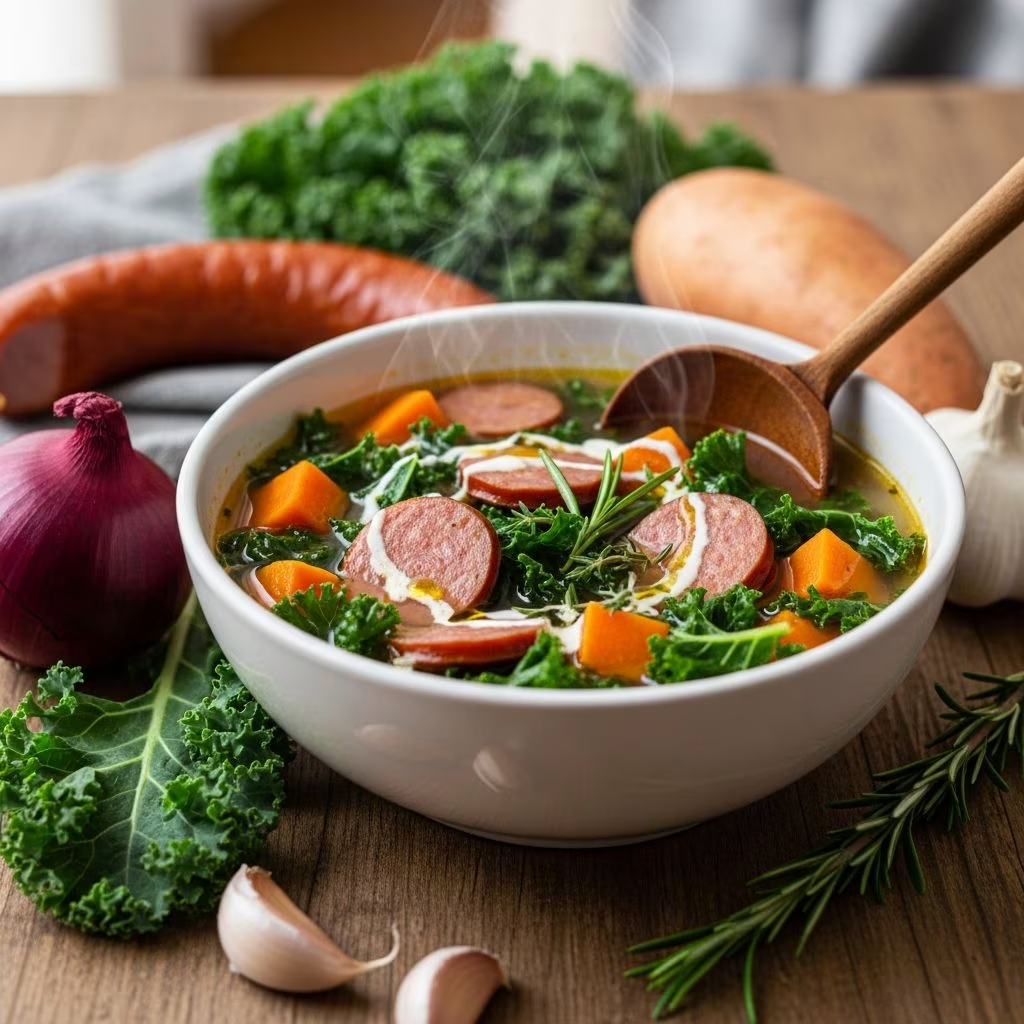
When the temperatures drop and comfort becomes a priority, few dishes rival the warming embrace of a well-crafted soup. A smoky sausage and kale soup with sweet potatoes stands as a modern kitchen staple that combines convenience with nutritional value. This one-pot wonder merges humble ingredients into a cohesive dish that satisfies both the palate and the nutritional requirements of contemporary eating. The combination of protein-rich sausage, antioxidant-packed kale, and naturally sweet root vegetables creates a meal that transcends the ordinary, offering complexity in flavor alongside simplicity in preparation.
Understanding the Core Components
The foundation of this soup rests upon three primary ingredients that work in harmonious balance. The smoked sausage provides both protein and the distinctive smoky undertone that defines the dish’s character. Sweet potatoes contribute natural sweetness, earthiness, and creamy texture as they soften during cooking. Kale introduces nutritional density, slight bitterness that balances other flavors, and textural contrast. Each element serves a specific purpose beyond mere sustenance, creating a multi-dimensional eating experience.
Selecting Quality Sausage
The choice of sausage significantly impacts the final result. Smoked varieties offer pre-cooked convenience and concentrated flavor, though fresh sausage can be used with slight adjustments to cooking time. Quality matters substantially here; nitrate-free options support cleaner eating philosophies, while traditional varieties deliver robust, familiar flavors. The sausage should be sliced or diced according to preference, with approximately 1.5 to 2 pounds serving as an appropriate quantity for a standard batch that yields multiple servings.
Sweet Potatoes: Beyond Simple Sweetness
Sweet potatoes transcend their reputation as a side dish when incorporated into soups. Their natural starches create a subtle thickening effect as they break down during prolonged simmering, contributing body to the broth without requiring cream or flour. Peeled and diced into uniform pieces, four large sweet potatoes create substantial heft in the final dish. The natural beta-carotene content provides both nutritional benefit and appealing orange coloration that enhances visual presentation.
Kale: Nutritional Powerhouse and Flavor Anchor
Fresh kale, roughly chopped into bite-sized pieces, introduces leafy green nutrition while maintaining structural integrity during cooking. The robust leaves resist becoming mushy, even when simmered for extended periods. Approximately four to five cups of loosely packed kale provides sufficient volume without overwhelming other ingredients. The slight bitterness of kale creates complexity that prevents the dish from becoming one-dimensional or overly sweet.
Essential Building Blocks for Flavor Development
Beyond the primary ingredients, aromatic vegetables and seasonings construct the flavor foundation. Diced yellow onions and minced garlic provide the traditional aromatic base present in countless cuisines. Smoked paprika emerges as the secret ingredient that amplifies the smoky character throughout the dish, requiring genuine smoked paprika rather than its sweet counterpart to achieve authentic flavor profiles.
The Seasoning Spectrum
Cumin adds earthy warmth, while red pepper flakes contribute gentle heat that builds subtly rather than overwhelming the palate. Sea salt and freshly ground black pepper require careful addition, with tasting and adjusting remaining preferable to over-seasoning initially. For those seeking additional complexity, a single cinnamon stick introduces warming spice notes that complement both savory and sweet elements without announcing itself as the dominant flavor.
Broth Selection and Impact
The choice between chicken, vegetable, or bone broth affects the soup’s body and nutritional profile. Bone broth offers enhanced collagen content and deeper flavor complexity, while chicken broth provides lighter clarity. Vegetable broth accommodates dietary restrictions while maintaining robust flavor when combined with the other ingredients. The typical quantity ranges from 4 to 6 cups, with adjustment possible based on desired consistency and serving preferences.
Step-by-Step Preparation Method
Initial Sausage Preparation and Browning
Begin by heating a large Dutch oven or heavy-bottomed stockpot over medium-high heat. Add olive oil or avocado oil, creating a shimmering surface that signals adequate temperature. Introduce the sliced or diced sausage, allowing it to brown for 3 to 5 minutes while stirring occasionally. This browning step develops fond—those caramelized bits adhering to the pot bottom—that contribute concentrated flavor when the deglazing process occurs later.
Building Aromatic Foundation
Once the sausage achieves a golden-brown exterior, introduce diced yellow onion, stirring to combine and prevent sticking. Continue cooking for an additional 2 to 3 minutes, allowing the onion to soften slightly. Add minced garlic in the final minute, stirring constantly to prevent burning while encouraging its fragrant oils to release into the fat surrounding other ingredients.
Spice Blooming and Development
Add the smoked paprika, cumin, and any additional seasonings directly to the sausage-onion-garlic mixture, stirring for 1 to 2 minutes. This brief cooking period allows the spices to toast slightly and release their essential oils, intensifying their contribution to the final flavor profile. This technique, known as blooming, transforms dried spices from dormant to vibrant.
Introducing Vegetables and Building the Body
Stir in the diced sweet potatoes, coating them thoroughly with the oil and spice mixture. Pour in the chosen broth, bringing the liquid to a gentle boil before reducing heat to maintain a moderate simmer. Cover the pot partially, allowing steam to escape while retaining moisture. Simmer for approximately 15 to 20 minutes, until the sweet potato pieces become fork-tender. This timeframe permits the vegetables to soften adequately while maintaining distinct ingredient identity rather than creating an over-cooked mush.
Finishing With Greens and Final Seasoning
In the final minutes, introduce the roughly chopped kale, stirring until the leaves wilt into the simmering broth. This typically requires only 3 to 5 minutes, as gentle cooking preserves the kale’s nutritional content and bright color. Taste the soup at this point, adjusting salt and pepper as needed. Some preparations benefit from a squeeze of fresh lemon juice, adding brightness that cuts through the richness of the sausage.
Customization and Variation Possibilities
While the foundational recipe remains consistent, numerous adaptations accommodate different preferences and dietary considerations. Those following plant-based eating patterns can substitute the sausage with hearty mushroom varieties or plant-based sausage alternatives, adjusting liquid quantities if needed. Adding canned garbanzo beans or cannellini beans introduces additional protein and creates a more substantial meal requiring smaller portions.
Textural Modifications
For those preferring creamier consistency, removing approximately half the cooked sweet potatoes and pureeing them with an immersion blender before returning to the pot creates a naturally thickened broth. Adding coconut milk, bone broth-based cream, or even a small quantity of full-fat yogurt stirred in post-cooking introduces richness without compromising the dish’s essential character.
Vegetable Variations
Spinach, collard greens, or any hardy green can substitute for kale based on availability or preference. Adding diced carrots, celery, or bell peppers introduces additional vegetables and nutritional components. Some preparations benefit from fire-roasted diced tomatoes, which add acidity and complexity while complementing the smoky profile.
Serving Suggestions and Accompaniments
This soup pairs beautifully with crusty bread, providing a vehicle for soaking up the flavorful broth. Serving bowls benefit from garnishes such as fresh herbs, a drizzle of quality olive oil, or crumbled cheese such as Manchego or sharp cheddar. A simple green salad alongside offers textural contrast and additional vegetables, creating a balanced, satisfying meal.
Storage, Reheating, and Make-Ahead Considerations
This soup improves with time as flavors meld and deepen, making it ideal for batch cooking and storing. Refrigerated in airtight containers, the soup maintains quality for 3 to 4 days. Freezing in portions provides convenient grab-and-heat options for weeks, though the texture of the sweet potatoes may become slightly softer upon thawing. Reheating on the stovetop over medium heat, with gentle stirring, prevents scorching and preserves the broth’s integrity better than microwave methods.
Nutritional Considerations and Health Benefits
This one-pot meal delivers substantial nutritional value. The sausage provides protein necessary for muscle maintenance and satiety. Sweet potatoes contribute complex carbohydrates, fiber, and beta-carotene. Kale offers calcium, iron, and vitamins K and C, supporting bone health and immune function. The combination of ingredients creates a nutritionally complete meal requiring minimal supplementation for those seeking to maximize nutritional density within single dishes.
Frequently Asked Questions
Can this soup be made in a slow cooker?
Yes. Brown the sausage and aromatics in a skillet first, then transfer to a slow cooker along with the remaining ingredients. Cook on low for 6 to 8 hours or on high for 3 to 4 hours. The extended cooking time allows flavors to develop more deeply, though attention must be paid to prevent over-softening the vegetables.
What if I cannot find fresh kale?
Frozen kale works adequately, though fresh retains superior texture. Spinach, collard greens, or even Swiss chard serve as suitable replacements. Adjust cooking time accordingly, as frozen greens require less time to soften.
Is this recipe suitable for meal preparation?
Absolutely. This soup’s flavor improves after a day or two as components meld. Portion into containers and refrigerate for weekday lunches or quick dinners. Freezing portions extends storage life for weeks.
Can I make this dairy-free or paleo-friendly?
The base recipe is naturally compliant with both approaches. Simply ensure the sausage contains no added sugars, use bone broth instead of commercial broths, and avoid dairy-based garnishes. This versatility makes the recipe adaptable to numerous dietary frameworks.
How can I adjust the spice level?
Increase or decrease red pepper flakes according to heat tolerance. Adding cayenne pepper amplifies heat, while omitting it entirely or using milder paprika reduces intensity. Always taste and adjust rather than doubling seasonings initially.
References
- Smoked Sausage Processing and Nitrate Content in Meat Products — U.S. Department of Agriculture (USDA). 2024. https://www.fsis.usda.gov/inspection/inspection-and-compliance-enforcement/imported-products-evaluation
- Beta-Carotene and Nutritional Value in Sweet Potatoes — National Institutes of Health, Office of Dietary Supplements. 2024. https://ods.od.nih.gov/factsheets/VitaminA-HealthProfessional/