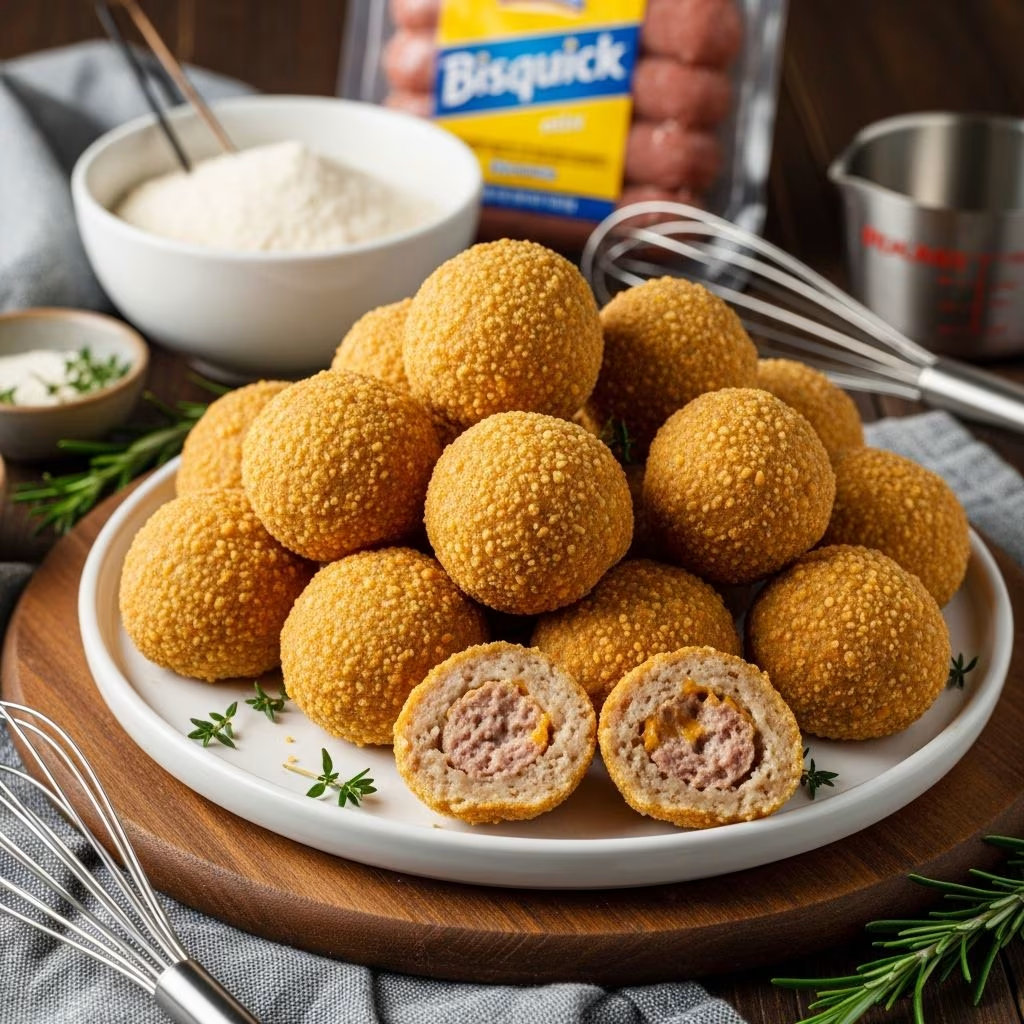
Sausage balls represent one of the most accessible and crowd-pleasing appetizers available for home cooks. These bite-sized morsels combine savory pork sausage, sharp cheddar cheese, and Bisquick baking mix to create a satisfying treat that disappears quickly at gatherings. Whether you’re preparing snacks for a casual family dinner or hosting a formal celebration, this recipe delivers impressive results with minimal effort and basic pantry ingredients.
The beauty of sausage balls lies in their simplicity and versatility. Unlike more complicated appetizers that demand precision and specialized equipment, sausage balls require only a mixing bowl, your hands, and a standard oven. The entire process—from combining ingredients to serving warm appetizers—takes approximately thirty minutes, making this an ideal choice for busy cooks who still want to impress their guests.
Understanding the Core Ingredients
Creating successful sausage balls begins with understanding each component’s role in the final product. The foundation rests on three essential ingredients that work together to produce the characteristic texture and flavor profile.
Ground Pork Sausage: The Flavor Foundation
Ground pork sausage serves as the primary ingredient, typically comprising about one pound per batch. This ingredient provides the savory base and moisture that holds the mixture together. Choose breakfast-style sausage for a milder flavor or Italian sausage for more pronounced seasonings. Room temperature sausage mixes more effectively and creates a softer dough consistency compared to cold meat straight from the refrigerator. Many cooks prefer Jimmy Dean brand, though any quality bulk pork sausage works equally well.
Sharp Cheddar Cheese: Adding Richness
Sharp cheddar cheese contributes essential richness and flavor complexity. Freshly grated cheese from a block produces better results than pre-shredded varieties, which contain anti-caking agents that can interfere with proper binding. Most recipes call for approximately sixteen ounces of grated cheese per pound of sausage. The sharpness of the cheese directly influences the final taste—extra sharp varieties create more intensely flavored balls for those preferring bold, pronounced cheese notes.
Bisquick Baking Mix: The Binding Agent
Bisquick baking mix acts as the crucial binding ingredient that transforms loose sausage and cheese into cohesive, moldable spheres. This combination of flour, leavening agents, and salt creates the characteristic texture when baked. Most recipes use two cups of Bisquick per batch. The baking mix also contributes to the golden-brown exterior that develops during cooking.
Detailed Preparation Instructions
Setting Up Your Workspace
Begin by preheating your oven to 350 degrees Fahrenheit. Line a baking sheet with parchment paper or aluminum foil to prevent sticking and simplify cleanup. Parchment paper offers the advantage of minimal residue and easier removal compared to foil alone.
Combining Ingredients Effectively
Place the ground sausage, freshly grated cheddar, and Bisquick mix into a large mixing bowl. Using your clean hands, gently combine the ingredients until evenly distributed. The mixture may initially appear somewhat dry—this is completely normal. Some recipes suggest adding milk (typically two to four tablespoons) if the mixture seems too crumbly to hold together. Add milk gradually, one tablespoon at a time, mixing gently until the dough reaches the desired consistency. Avoid overmixing, which can result in tough, dense balls rather than tender appetizers.
Forming Uniform Balls
Using a one-and-one-half-inch cookie scoop or a heaping tablespoon, portion the mixture into equal-sized pieces. A cookie scoop ensures consistency throughout the batch, promoting even cooking. Roll each portion between your palms to create smooth, round balls approximately the size of a golf ball. If the mixture becomes sticky while rolling, lightly dampen your hands with water to reduce adhesion.
Arranging on the Baking Sheet
Space the formed balls approximately one inch apart on the prepared baking sheet. This spacing allows hot air to circulate around each ball, promoting even browning and thorough cooking. Crowding the sheet can result in unevenly cooked sausage balls.
Baking Guidelines and Temperature Control
Bake the sausage balls at 350 degrees Fahrenheit for twenty to twenty-five minutes. The exact timing depends on your oven’s characteristics and the size of your balls. Finished sausage balls should display a light golden-brown color on the exterior and feel firm to the touch. To verify that the sausage has cooked completely, insert an instant-read thermometer into the center of the largest ball. The internal temperature should register 160 degrees Fahrenheit, confirming that harmful bacteria have been eliminated.
Some recipes recommend slightly higher temperatures (375 degrees Fahrenheit) for shorter baking times (fifteen to twenty minutes). Experiment with your specific oven to determine the ideal combination that produces golden exteriors while maintaining moist interiors.
Storage and Make-Ahead Strategies
Refrigerator Storage
Prepared but unbaked sausage balls can be refrigerated for up to twenty-four hours before baking. Cover the baking sheet with plastic wrap and store in the coldest section of your refrigerator. Cold sausage balls require slightly longer baking time compared to room-temperature balls, typically adding three to five minutes to the total cooking time.
Freezing Uncooked Sausage Balls
For extended storage, freeze uncooked sausage balls on a baking sheet until solid, then transfer to freezer-safe containers or bags. Frozen sausage balls remain viable for up to three months. Bake frozen balls directly from the freezer, adding five to ten minutes to the standard baking time to ensure the center reaches the proper temperature.
Storing Baked Sausage Balls
Cooked sausage balls can be refrigerated in an airtight container for up to four days. Reheat them at 350 degrees Fahrenheit for ten to fifteen minutes until heated through. Alternatively, reheat individual portions in the microwave for thirty seconds to one minute, depending on quantity.
Flavor Enhancement Variations
While the basic recipe of sausage, cheese, and Bisquick provides satisfying results, numerous variations allow creative cooks to customize this classic appetizer:
- Italian Seasoning Addition: Mix one and one-half teaspoons of Italian seasoning into the dough for Mediterranean-inspired flavor notes that complement the sausage and cheese.
- Fresh Herbs: Incorporate finely chopped green onions or fresh parsley for bright, herbaceous accents that lighten the rich mixture.
- Parmesan Cheese Blend: Replace half the cheddar with freshly grated Parmesan cheese for a more complex, slightly tangy flavor profile.
- Spice Level Control: Use hot Italian sausage for guests who prefer bold, spicy flavors, or select mild breakfast sausage for family-friendly servings.
- Garlic and Onion Powder: Add one-half teaspoon of garlic powder and one-quarter teaspoon of onion powder to enhance savory dimensions.
Serving Suggestions and Presentation
Sausage balls shine as part of appetizer spreads and casual entertaining. Serve them warm immediately after baking, as they taste superior to room-temperature versions. Arrange the finished balls on attractive platters and provide small plates or cocktail picks for convenient serving.
Complement sausage balls with dipping sauces such as ranch dressing, spicy mustard, or marinara sauce. These accompaniments add textural interest and flavor variety, encouraging guests to enjoy multiple servings. For holiday gatherings, present sausage balls alongside other classic appetizers like deviled eggs, cheese boards, and vegetable platters.
Frequently Asked Questions
Can I use pre-shredded cheese instead of freshly grated?
While pre-shredded cheese offers convenience, freshly grated cheese from a block produces superior results. Pre-shredded varieties contain anti-caking agents that can prevent proper binding and create a grainier texture in the finished product.
How many sausage balls does this recipe yield?
A standard batch using one pound of sausage, two cups of Bisquick, and sixteen ounces of cheese produces approximately twenty-four to twenty-eight sausage balls, depending on the size you prefer.
Is it necessary to cook the sausage before mixing?
No—use raw ground sausage directly from the package. The sausage cooks completely during the baking process while the exterior develops its characteristic golden-brown color.
What’s the difference between baking at 350 versus 375 degrees?
Higher temperatures (375 degrees) reduce baking time to approximately fifteen to twenty minutes but can result in darker exteriors before the interior reaches proper temperature. Lower temperatures (350 degrees) require twenty to twenty-five minutes but allow more even cooking and browning throughout the batch.
Can sausage balls be made dairy-free?
Traditional sausage balls depend on cheddar cheese for flavor and texture, making true dairy-free versions difficult. However, some specialty dairy-free cheddar products might work, though results may differ from the classic recipe.
How should I reheat leftover sausage balls?
Reheat cooked sausage balls at 350 degrees Fahrenheit for ten to fifteen minutes until heated throughout. Alternatively, microwave individual portions for thirty seconds to one minute. Oven reheating produces better texture than microwave reheating, which can make the exterior rubbery.
Troubleshooting Common Issues
Understanding common challenges helps ensure successful batches. If sausage balls refuse to hold their shape during rolling, the mixture contains insufficient moisture. Add milk one tablespoon at a time until the dough becomes cohesive without being sticky. Conversely, overly wet mixtures that slump on the baking sheet indicate excessive milk addition—reduce the amount in future batches.
Sausage balls that remain pale or white after baking likely require additional time in the oven or higher temperature. Ensure your oven reaches the proper temperature by using an oven thermometer, as many home ovens run cooler than displayed. If the exterior browns quickly but the interior remains undercooked, lower the temperature by twenty-five degrees and extend the baking time by five to ten minutes.
Conclusion: A Timeless Appetizer
Sausage balls crafted with Bisquick baking mix represent an ideal appetizer for busy home cooks seeking impressive results without excessive effort. The combination of readily available ingredients, straightforward preparation, and reliable outcomes makes this recipe a perennial favorite for entertaining occasions. Whether serving at casual family gatherings or formal celebrations, these savory bites consistently satisfy guests and prompt requests for the recipe.
References
- Proper Food Storage Guidelines — U.S. Department of Agriculture Food Safety and Inspection Service. Updated 2024. https://www.fsis.usda.gov/food-safety/safe-food-handling-and-preparation/food-safety-basics/safe-food-storage
- Food Safety: Internal Temperature Guide — Centers for Disease Control and Prevention. Updated 2024. https://www.cdc.gov/foodsafety/communication/index.html
- Meat and Poultry Food Product Safety Standards — U.S. Department of Agriculture. Updated 2024. https://www.usda.gov