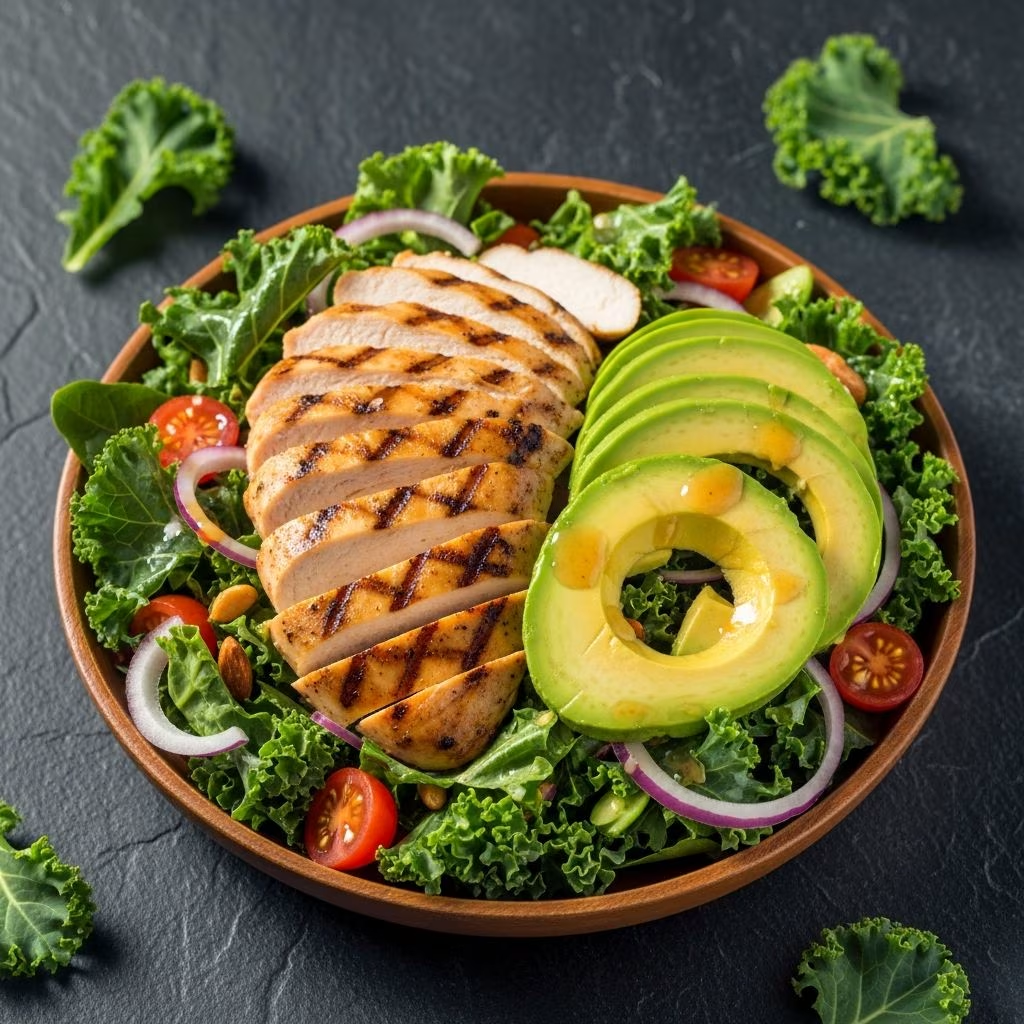
A well-executed salad transcends simple food preparation—it becomes a celebration of texture, flavor, and nutritional value. The smoky chicken avocado kale salad represents this culinary philosophy by combining robust smoked proteins with creamy healthy fats and nutrient-dense leafy greens. This dish has gained prominence in contemporary dining culture because it satisfies multiple dietary preferences while remaining entirely accessible to home cooks of varying skill levels.
The foundation of this salad rests upon three fundamental components: the protein element provided by smoked chicken, the creamy richness contributed by California avocado, and the earthy nutritional punch delivered by kale. Each ingredient serves a distinct purpose within the overall composition, creating a harmonious balance between flavors and textures that keeps diners returning for more.
Understanding the Protein Foundation
Smoked chicken serves as the protein backbone of this salad, introducing a distinctive flavor profile that distinguishes it from standard grilled or roasted poultry. The smoking process imparts a subtle depth that works beautifully alongside other ingredients without overpowering them. For those without dedicated smoking equipment, multiple cooking methods can achieve similar results.
Preparing chicken for smoking requires attention to temperature control and timing. When using a smoker, maintain a consistent temperature between 260 and 300 degrees Fahrenheit. Whole birds typically require approximately 45 minutes to reach the safe internal temperature of 165 degrees Fahrenheit. The smoking time allows wood smoke to permeate the meat, creating the characteristic flavor enhancement.
For those without access to traditional smoking equipment, alternative methods exist. Gas grills equipped with smoker boxes allow you to create a two-zone cooking environment by activating one burner to medium-high while leaving the adjacent burner off. This creates distinct hot and cool zones, with the smoker box positioned over the heat source and chicken placed on the cooler side. Charcoal grills follow a similar principle—arrange coals on one side, add soaked wood chips to the hot coals, and position chicken on the opposite side.
The convenience factor cannot be overlooked for busy individuals. Store-bought rotisserie chicken provides a time-saving alternative that maintains the salad’s integrity. While rotisserie chicken lacks the true smoky character, it still delivers quality protein and allows you to allocate your culinary efforts toward other components.
The Avocado Advantage
California avocados contribute multifaceted value to this salad composition. Beyond their obvious aesthetic appeal and creamy texture, avocados supply monounsaturated fats—healthy lipids that support cardiovascular health and nutrient absorption. The fruit’s subtle flavor provides a neutral canvas that accommodates both the smoky chicken and other supporting ingredients.
One of the most innovative techniques involves smoking the avocado alongside the chicken. This unconventional approach might seem unusual, but the results justify the experiment. A halved avocado, lightly oiled and exposed to wood smoke for 45 minutes, develops a sophisticated complexity that elevates the entire dish. The smoking process softens the flesh slightly while introducing nuanced flavors that permeate throughout the salad.
Creating a creamy avocado dressing maximizes the ingredient’s potential. A ripe smoked avocado blended with cilantro, lime juice, diced white onion, and whole milk produces a luxurious dressing that coats the kale while delivering concentrated flavor. This dressing can be prepared in advance and refrigerated, making it an excellent component for meal preparation activities.
Kale Selection and Preparation
Baby kale offers several advantages over mature varieties for salad applications. The tender leaves require minimal processing—simple tearing rather than extensive chopping—and their delicate structure absorbs dressing more effectively than tougher varieties. Between 10 and 12 ounces of baby kale typically provides adequate volume for a four-person salad.
Proper kale preparation involves removing the central stems, which contribute bitterness and toughness to the eating experience. Most home cooks find that gentle hand-tearing produces appropriately sized pieces without requiring specialized equipment. Once torn, kale should be combined with oil and acid—olive oil and lemon juice—and massaged gently for several minutes. This mechanical process softens the leaves while allowing the fat and acid to penetrate, creating a more pleasant eating experience than raw, undressed kale.
Supporting Ingredients and Flavor Enhancement
While kale, chicken, and avocado form the salad’s core, strategic supporting ingredients elevate the composition. Ruby red grapefruit segments introduce citrus brightness and natural acidity that complements the smoky elements. The acidic juice from grapefruit also helps preserve avocado color, preventing oxidative browning that occurs when avocado is exposed to air.
Sliced red onion contributes both color and a sharp bite that balances the salad’s richer components. Thinly slicing the onion ensures the flavors integrate smoothly rather than dominating individual bites. For those sensitive to raw onion’s intensity, brief pickling in lime juice softens its edge considerably.
Pistachios add crunchy texture and subtle earthiness. Unlike nuts with strong flavors, pistachios remain relatively neutral while providing structural contrast to the soft components. Fresh mint leaves introduce an herbaceous note that brightens the overall flavor profile, while cilantro—if using the cilantro-based dressing—should be chopped finely and distributed throughout.
Dressing Techniques and Flavor Profiles
The dressing represents a critical decision point that influences the entire salad’s character. A lime-based avocado dressing balances the smoky notes with bright acidity, while an oil and lemon approach provides a lighter, more traditional vinaigrette experience. The choice depends on personal preference and the meal’s context.
When preparing dressing in advance, ensure proper storage to prevent separation and flavor degradation. Most avocado-based dressings remain fresh for three to four days when refrigerated in airtight containers. Allowing dressing to reach room temperature before serving improves its texture and flavor expression.
Assembly and Serving Strategies
Rather than tossing all components together in advance, consider strategic assembly at serving time. This approach preserves textural contrasts and prevents the kale from becoming overly saturated before consumption. Begin by placing dressed kale as the base, layer the chopped smoked chicken across the greens, arrange avocado slices artfully, and finish with remaining ingredients. Pour dressing over the entire composition just before serving, allowing diners to toss components if desired.
For meal preparation purposes, store components separately until serving. Keep dressed kale in one container, shredded chicken in another, diced avocado in a third with lemon juice to prevent browning, and dressing in a separate vessel. This method maintains component integrity throughout the storage period while allowing quick assembly during lunch or dinner service.
Cooking Method Comparison
| Cooking Method | Temperature | Duration | Equipment Required |
|---|---|---|---|
| Dedicated Smoker | 260°F | 45 minutes | Smoker, wood chips |
| Gas Grill with Smoker Box | 300°F | 30-40 minutes | Gas grill, smoker box, wood chips |
| Charcoal Grill | 300°F | 30-40 minutes | Charcoal grill, wood chips |
| Rotisserie (Store-bought) | N/A | 0 minutes | None required |
Ingredient Variations for Dietary Flexibility
The beauty of this salad lies in its adaptability. Those preferring different greens can substitute romaine lettuce or a mixed green base while maintaining the overall composition. For vegetarian diets, seasoned tofu smoked using identical techniques provides comparable protein content and texture. Vegans can substitute plant-based milk for dairy in the dressing or use olive oil-based variations entirely.
Nut allergies necessitate alternative crunch sources—pumpkin seeds, sunflower seeds, or roasted chickpeas all provide satisfying textural contrast. Those avoiding citrus fruits can explore other acidic elements like balsamic vinegar or apple cider vinegar, adjusting quantities to achieve desired flavor balance.
Nutritional Considerations
This salad offers substantial nutritional benefits beyond its appealing taste. Kale delivers significant quantities of vitamins K, A, and C alongside minerals like potassium and manganese. The smoked chicken contributes lean protein essential for muscle maintenance and tissue repair. Avocado supplies healthy monounsaturated fats that support hormone production and nutrient absorption. The combination creates a nutrient-dense meal that sustains energy levels throughout the afternoon or evening.
For individuals tracking macronutrients, this salad typically contains approximately 400-500 calories per serving, depending on portion sizes and dressing quantity. Protein content ranges between 30-40 grams per serving, making it substantial enough to serve as a complete meal rather than a side dish.
Seasonal Adaptations
While the core recipe remains consistent year-round, seasonal variations enhance freshness and support local agriculture. Spring variations might incorporate tender asparagus or peas alongside traditional ingredients. Summer preparations can add stone fruits like peaches or fresh corn. Autumn adaptations could include roasted beets or candied nuts, while winter versions benefit from hearty root vegetables or pomegranate seeds.
Frequently Asked Questions
Can this salad be prepared in advance? Store components separately for optimal results. Assembled salad is best consumed within two hours of preparation to maintain textural integrity.
How long does homemade dressing last? Refrigerated avocado-based dressing maintains quality for three to four days in airtight containers.
What wood varieties work best for smoking? Mild woods like apple or cherry complement chicken without overwhelming it. Avoid strong hardwoods that can create bitter flavors.
Can frozen kale be substituted? While possible, thawed frozen kale releases excess moisture that compromises texture. Fresh kale delivers superior results.
How do I prevent avocado browning? Apply lemon juice or lime juice immediately after cutting, and store with the pit if storing cut halves.
References
- Smoked Chicken and Baby Kale with Creamy California Avocado Dressing — California Avocado Commission. https://californiaavocado.com/recipe/smoked-chicken-and-baby-kale-with-avocado-dressing/
- USDA FoodData Central: Kale, raw — U.S. Department of Agriculture. https://fdc.nal.usda.gov/
- Food Safety Guidelines for Poultry — Centers for Disease Control and Prevention. https://www.cdc.gov/foodsafety/chicken.html
- Kale Chicken Salad with Avocado Cilantro Dressing — Piper Cooks. https://www.pipercooks.com/kale-chicken-salad-with-avocado-cilantro-dressing/