Pork ribs combined with sauerkraut represents one of the most beloved preparations in European culinary tradition, particularly in Central and Eastern European cuisines. This one-pot meal transforms humble ingredients into something truly extraordinary through the magic of slow cooking. The extended cooking time allows the natural flavors to meld together, resulting in incredibly tender meat that practically falls off the bone and a rich, complex sauce that captures the essence of each component.
What makes this dish particularly appealing to modern home cooks is its straightforward approach. Despite its seemingly sophisticated flavor profile, the recipe requires minimal active preparation time and relies on basic kitchen techniques. Whether you’re planning a family dinner or preparing food for a gathering, this slow cooker preparation delivers restaurant-quality results without demanding constant attention or advanced culinary skills.
Understanding the Essential Components
Success with this dish begins with selecting quality ingredients and understanding their roles in the final product. Each element contributes something distinct to the overall experience, creating layers of flavor that develop gradually during the slow cooking process.
Choosing the Right Cut of Pork
The foundation of this recipe rests on selecting appropriate pork ribs. Country-style ribs and spareribs work exceptionally well, as they contain sufficient marbling to stay moist throughout the extended cooking period. These cuts benefit from the low, slow heat of a slow cooker, which allows the connective tissue to break down gradually, rendering the meat incredibly tender. When selecting ribs at your butcher or supermarket, look for pieces with good color and adequate fat distribution. The meat should look fresh and not have an off odor.
Most recipes call for ribs cut into manageable pieces, typically 5-inch sections, which allows them to fit properly in the slow cooker while still maintaining their structural integrity. If you purchase whole racks, ask your butcher to cut them into appropriate portions, or you can easily do this yourself at home with a sharp knife.
The Role of Sauerkraut
Sauerkraut—fermented cabbage—serves as more than just an accompaniment; it’s a primary component that influences the entire flavor profile of the dish. Traditional preparations use jarred sauerkraut that already contains caraway seeds, which add a distinctive, slightly sweet undertone. The fermentation process that creates sauerkraut develops complex flavors and beneficial probiotics while also providing natural acidity that brightens the rich pork.
When selecting sauerkraut, you have the option of standard varieties or Bavarian-style versions, which tend to be sweeter and already incorporate caraway seasoning. If you prefer a less tangy result, rinse the sauerkraut gently before adding it to reduce some of the acidity and salt content. Conversely, if you enjoy bold, pronounced flavors, use it directly from the jar without rinsing.
Complementary Vegetables and Aromatics
Building layers of flavor involves incorporating vegetables that enhance rather than overwhelm the main components. Onions and carrots provide natural sweetness and depth, while mushrooms contribute umami qualities that round out the overall taste. Garlic, when included, adds aromatic complexity without becoming overbearing in such a long cooking process.
The approach differs from traditional sautéing in that these vegetables can be added directly to the slow cooker without extensive pre-cooking, though some recipes benefit from briefly sautéing onions and mushrooms to develop their flavors before adding them to the cooker.
The Foundational Cooking Method
The most effective approach involves a combination of stovetop searing and slow cooker braising. This two-stage process develops the deep, complex flavors characteristic of outstanding preparations while maintaining the moisture that makes slow-cooked meat so appealing.
Searing the Meat
Before transferring ribs to the slow cooker, season them lightly with salt and pepper, then sear them in a large skillet over medium-high heat in a small amount of oil. This browning process, known as the Maillard reaction, creates a flavorful crust and develops complex tastes that would not exist if the meat went directly into the slow cooker. The goal is not to cook the ribs completely but simply to achieve an even golden-brown color on all surfaces.
One crucial consideration: some cooks recommend against pre-salting the meat before searing when working with sauerkraut, as the fermented cabbage already contains considerable sodium. You can add salt after searing or adjust seasoning near the end of cooking, ensuring you don’t over-salt the final dish.
Building the Liquid Base
After removing the seared ribs, use the same skillet to build a flavorful base by sautéing onions and mushrooms in butter until they achieve a golden color and slightly softened texture. This step, taking approximately five minutes, develops the vegetables’ natural sweetness. Add sliced carrots and continue cooking for another five minutes, then deglaze the pan with apple cider, scraping up the flavorful browned bits stuck to the bottom.
To this base, add brown sugar, allspice, and additional seasonings like caraway seeds. The combination of apple cider and brown sugar introduces fruity sweetness that complements the tartness of sauerkraut, while spices like allspice provide warmth and complexity. These elements transform the simple cooking liquid into a sophisticated sauce.
Assembling in the Slow Cooker
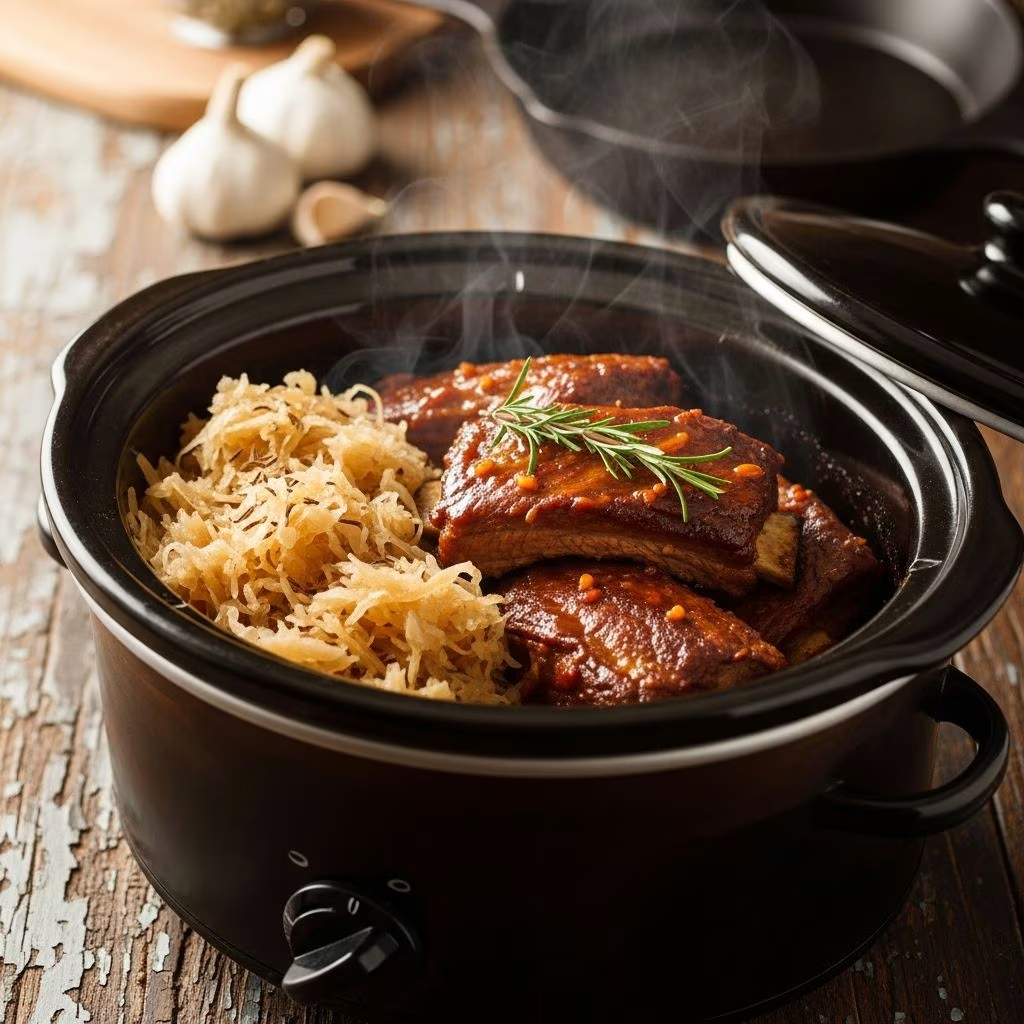
Transfer the seared ribs to an appropriately sized slow cooker—typically an 8-quart capacity works well for most home recipes. Pour the vegetable mixture and all liquid over the ribs, then add the sauerkraut, stirring gently to combine all elements. The sauerkraut’s natural juices add additional liquid and flavor to the braising environment.
Cover the slow cooker and set it to cook on low for six hours or on high for four hours. The extended cooking period allows the meat to become extraordinarily tender while all flavors meld into a cohesive whole.
Recipe Variations Across Traditions
Different cultures have developed their own interpretations of this classic combination, each with distinct characteristics worth exploring.
Simplified Three-Ingredient Approach
Some preparations strip the dish down to its essentials: pork ribs, sauerkraut, and brown sugar. This minimalist version, often prepared in a dutch oven rather than a slow cooker, layers the ingredients in alternating succession. After browning the ribs in a skillet and trimming excess fat, place a layer of sauerkraut at the bottom of a dutch oven, add ribs, then repeat with more sauerkraut and generous brown sugar sprinklings. Cover and braise in a 300-degree oven for approximately three to three and a half hours. This method produces equally satisfying results with considerably less active preparation.
Polish-Style Enrichment
Polish preparations often incorporate smoked bacon, increasing depth and richness. The bacon is diced and sautéed with onions and garlic, then flour is added to create a light roux that thickens the braising liquid. Chicken or vegetable stock replaces or supplements the sauerkraut’s natural juices, while thyme, bay leaves, allspice, and peppercorns create a more complex seasoning profile. This version demands slightly more active involvement but rewards the effort with sophisticated flavors.
Eastern European One-Dish Meal
Some regional variations incorporate potatoes directly into the cooking vessel, transforming the dish into a complete meal requiring no additional starch side. Potatoes cut into cubes are arranged over the sauerkraut layer before topping with ribs and additional seasonings including paprika and garlic powder. The long cooking period softens the potatoes while they absorb all the surrounding flavors, creating a truly integrated dish rather than separate components.
Essential Ingredients and Quantities
| Ingredient | Standard Amount | Purpose |
|---|---|---|
| Pork country ribs or spareribs | 2-6 pounds | Protein base, provides richness and body |
| Prepared sauerkraut (with caraway seeds) | 32 ounces to 3 pounds | Provides acidity, fermented complexity, and tangy flavor |
| Brown sugar | 1-2 cups or 2 tablespoons | Balances acidity, adds sweetness and depth |
| Apple cider or juice | 2 cups | Adds fruity sweetness, tenderizes meat |
| Onions | 1 large or 2 small | Provides aromatic base and sweetness when cooked |
| Carrots | 4 large | Adds sweetness and nutrition |
| Mushrooms | 6 ounces | Contributes umami and meaty texture |
| Allspice | 1.5 teaspoons | Provides warmth and spice complexity |
| Salt and pepper | To taste | Enhances natural flavors |
| Cooking oil | 2-3 tablespoons | Enables browning and sautéing |
Equipment Requirements
Successful preparation requires specific tools that facilitate each stage of cooking. A large, heavy-bottomed skillet accommodates the ribs for searing without crowding. A sharp chef’s knife or santoku knife makes cutting vegetables and portioning ribs significantly easier. A cutting board provides a safe surface for knife work, while measuring cups and spoons ensure accuracy with seasonings and liquids.
An appropriately sized slow cooker—typically six to eight quarts—prevents the dish from spilling over while allowing adequate space for ingredients to cook properly. A large slotted spoon facilitates transferring cooked components onto serving plates while leaving excess liquid in the cooker.
Timing Considerations
Total cooking time varies based on your chosen method and equipment:
- Slow cooker on low: Approximately six hours
- Slow cooker on high: Approximately four hours
- Dutch oven at 300 degrees: Three to three and a half hours
- Dutch oven at 350 degrees with additional ingredients: Approximately two hours
The meat is ready when it pulls easily from the bone and shows no resistance when pierced with a fork. If moisture levels appear too low during cooking, add additional stock or water to prevent scorching.
Frequently Asked Questions
Can I prepare this dish ahead of time?
Yes, you can prepare components the night before and refrigerate them separately. Combine everything in the slow cooker just before beginning the cooking process. Alternatively, the finished dish can be refrigerated for several days and gently reheated on low in the slow cooker or in a covered dutch oven in the oven.
What if I don’t have a slow cooker?
A dutch oven or large covered baking dish works equally well. Prepare the dish as described, then place it in a preheated 300-degree oven for the same duration as specified for slow cooker cooking. Check periodically to ensure adequate moisture remains.
Should I rinse the sauerkraut?
This depends on personal preference. Rinsing reduces saltiness and tanginess, producing a milder final flavor. Leaving it unrinsed preserves the full fermented intensity. Start with unrinsed for traditional flavor; rinse if you prefer something less pronounced.
Can I use fresh cabbage instead of sauerkraut?
While possible, fresh cabbage lacks the fermented complexity that sauerkraut provides. If substituting, salt and lightly cook the fresh cabbage before adding it to the slow cooker, and increase cooking time slightly as fresh cabbage requires longer to soften.
What side dishes pair well with this meal?
Mashed potatoes, egg noodles, crusty bread, or roasted root vegetables complement the rich, tangy main course beautifully. Applesauce provides additional fruity sweetness that balances the sauerkraut’s acidity.
Storage and Reheating
Store leftover portions in an airtight container in the refrigerator for up to four days. The flavors actually deepen and improve over subsequent days as ingredients continue melding. Reheat gently in a covered pot over low heat or in a slow cooker on low, adding a splash of liquid if the sauce has thickened excessively.
Freezing is also possible; allow the dish to cool completely before transferring to freezer-safe containers. It will keep frozen for up to three months. Thaw overnight in the refrigerator before reheating.
Nutritional Considerations
This dish provides substantial protein from the pork ribs while sauerkraut contributes probiotics from fermentation. The combination offers a satisfying, nutrient-dense meal, though the richness means appropriate portion sizes serve well as the main course with lighter side dishes. The extended cooking process makes the nutrients more bioavailable, and the fermented cabbage supports digestive health.
Conclusion
Pork ribs with sauerkraut transcends being merely a recipe; it represents a culinary bridge between tradition and modern convenience. The slow cooker method brings this European classic within reach of anyone, regardless of cooking experience. By understanding the roles of each ingredient and following the straightforward preparation steps, you can consistently produce impressive meals that satisfy both palate and appetite. Whether you stick to traditional preparations or explore creative variations, this versatile dish rewards experimentation while remaining fundamentally simple and deeply satisfying.
References
- German Pork Ribs and Sauerkraut Recipe — Kudos Kitchen by Renee. Accessed April 2026. https://www.kudoskitchenbyrenee.com/german-pork-ribs-sauerkraut/
- Braised Pork and Sauerkraut with Brown Sugar — The Hungry Bluebird. Accessed April 2026. https://thehungrybluebird.com/braised-pork-and-sauerkraut/
- Country Style Pork Spare Ribs and Sauerkraut — The Fed Up Foodie. Accessed April 2026. https://www.thefedupfoodie.com/country-style-pork-spare-ribs-sauerkraut/
- Polish Ribs with Sauerkraut {Żeberka w Kiszonej Kapuście} — Polish Your Kitchen. Accessed April 2026. https://www.polishyourkitchen.com/polish-ribs-with-sauerkraut-zeberka-w-kiszonej-kapuscie/
- Easy Baked Pork Ribs, Sauerkraut and Potatoes — ByLena.com. Accessed April 2026. https://www.bylena.com/recipe/1585/Easy-Baked-Pork-Ribs-Sauerkraut-and-Potatoes/