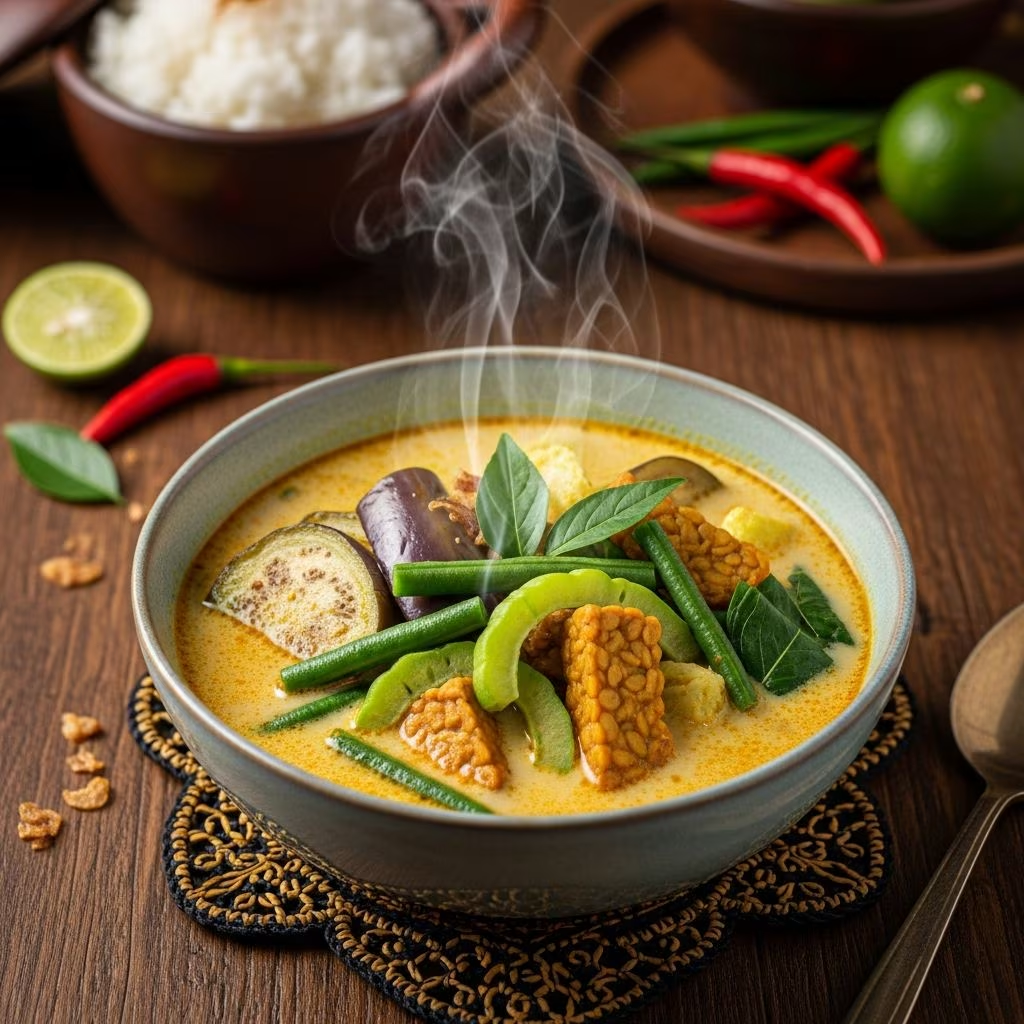
Sayur Lodeh stands as a cornerstone of Indonesian home cooking, particularly in Java, where its mild, creamy profile comforts families daily. This vegetable-packed soup simmers vegetables in a lush coconut milk broth infused with galangal, lemongrass, and subtle spices, offering a nutritious, adaptable dish that’s naturally vegan and gluten-free.
The Heart of Javanese Comfort Food
Rooted in Javanese traditions, Sayur Lodeh transcends everyday meals to hold ceremonial significance. During selamatan, a communal feast marking life events, each ingredient symbolizes protection against misfortune, blending practicality with spirituality. Its flexibility shines through—no rigid recipe exists, allowing cooks to use seasonal produce while maintaining the signature coconut milk base and aromatic spice paste.
Unlike spicier Indonesian fare, Sayur Lodeh emphasizes balance: the richness of coconut tempers earthy vegetables and zesty roots like galangal. Paired traditionally with steamed rice, sambal, or fried tempeh, it transforms simple ingredients into a satisfying meal.
Essential Ingredients for Authentic Flavor
Building Sayur Lodeh starts with a vibrant spice paste, or bumbu, pounded or blended from fresh aromatics. Core elements include:
- Coconut milk: Provides creaminess; use full-fat for richness or light for everyday.
- Galangal: Adds a peppery, citrusy punch—bruise it to release flavors.
- Lemongrass: Infuses citrus notes; use the tender inner stalk or smash whole.
- Shallots and garlic: Form the savory backbone, often with coriander and turmeric.
- Vegetables: Mix sturdy ones like carrots, potatoes, or chayote with tender greens like cabbage or long beans.
- Protein add-ins: Tofu, tempeh, or even shrimp for non-vegans.
Indonesian bay leaves (salam) and candlenuts deepen the profile, though ginger or bay leaves substitute well abroad. Sugar and salt balance the broth’s subtle sweetness.
Step-by-Step Guide to Cooking Sayur Lodeh
Preparation takes about 25-30 minutes, making it ideal for busy evenings. Here’s a foundational vegan recipe serving 4-6:
- Prepare the spice paste: Blend 6 shallots, 3 garlic cloves, 1 tsp coriander seeds, 3 candlenuts, and a thumb-sized galangal piece until smooth.
- Sauté aromatics: Heat 2-3 tbsp oil in a pot over medium heat. Fry paste with 2 salam leaves, 1 lemongrass stalk (smashed), and optional chilies for 3-4 minutes until fragrant.
- Add liquids: Pour in 400ml coconut milk and 800ml water or broth. Bring to a simmer.
- Cook sturdy veggies: Add diced carrots, potatoes, or chayote. Simmer 10 minutes until nearly tender.
- Incorporate tenders: Stir in green beans, eggplant, cabbage, and tofu. Cook 5 more minutes. Season with 1 tsp salt, 1 tsp sugar.
- Finish and rest: Turn off heat, add fresh chilies if desired. Let sit 5 minutes for flavors to meld.
Serve hot over rice. Total time: 30 minutes. Pro tip: Add day-old tempeh for umami depth.
Customizing Your Sayur Lodeh
Sayur Lodeh’s charm lies in its adaptability. Regional twists abound:
| Variation | Key Additions/Substitutions | Flavor Profile |
|---|---|---|
| Classic Javanese | Chayote, eggplant, melinjo leaves, salam leaf | Light, aromatic, mildly sweet |
| Cabbage-Focused | White cabbage, dried shrimp paste (ebi) | Crisp, savory |
| Protein-Packed | Tempeh, tofu, or prawns | Hearty, satisfying |
| Spicy Malaysian-Inspired | Shrimp paste (belacan), chili paste, turnip | Bold, fiery |
| Simple Weeknight | Potatoes, carrots, green beans | Quick, comforting |
Swap in broccoli, cauliflower, or pumpkin based on availability. For gluten-free, skip bouillon cubes.
Health Benefits of This Nourishing Soup
Sayur Lodeh packs nutrition: coconut milk offers healthy fats and MCTs for energy; vegetables provide fiber, vitamins A and C from carrots and greens. Low-calorie (around 400 kcal per serving), it’s vegan, supporting heart health and digestion. Anti-inflammatory spices like turmeric and galangal boost immunity. In Javanese culture, it’s valued for balancing hot and cold food energies.
Pairing Suggestions and Serving Ideas
Elevate Sayur Lodeh with:
- Rice: Jasmine or sticky for absorption.
- Sambal: Chili relish for heat.
- Fried extras: Tempeh, salted fish, or tofu crisps.
- Modern twists: Over quinoa or with naan for fusion.
For gatherings, scale up and serve family-style.
Common Mistakes and Pro Tips
- Avoid curdling: Simmer gently; don’t boil coconut milk vigorously.
- Layer veggies: Hard roots first, leaves last to prevent mush.
- Fresh is best: Use quality coconut milk without additives.
- Storage: Refrigerate 3 days; freezes well up to a month.
Frequently Asked Questions (FAQs)
What is Sayur Lodeh?
A mild Indonesian vegetable soup in coconut milk, originating from Java, known for its creamy texture and aromatic spices.
Is Sayur Lodeh vegan?
Yes, the core recipe is plant-based; add shrimp or fish for non-vegan versions.
Can I make Sayur Lodeh without coconut milk?
Substitute with almond or oat milk, but flavor shifts—coconut is traditional for authenticity.
How spicy is it?
Not spicy by default; add chilies or sambal to taste.
What’s the best vegetable combo?
Chayote, long beans, eggplant, and cabbage for balance, but use what’s fresh.
Nutritional Breakdown (Per Serving, Approx.)
| Nutrient | Amount | % Daily Value |
|---|---|---|
| Calories | 414 kcal | 21% |
| Fat | 32g | 41% |
| Carbs | 28g | 10% |
| Protein | 8g | 16% |
| Fiber | 6g | 21% |
Values vary by ingredients.
Exploring Sayur Lodeh in Indonesian Culture
Beyond kitchens, Sayur Lodeh embodies communal harmony. In villages, women gather to prepare it for festivities, sharing stories amid steaming pots. Its symbolism—vegetables for abundance, coconut for unity—reinforces social bonds. Urban adaptations keep it alive, with street vendors offering quick versions alongside nasi uduk.
Globally, diaspora communities adapt it: Malaysian styles amp spice with belacan, while vegan blogs hail its health perks. Home cooks worldwide appreciate its 25-minute prep for flavorful results.
Experiment with local twists—try pumpkin for autumn or kale for greens. Sayur Lodeh invites creativity while honoring tradition.
References
- Vegetable Soup (Indonesian Style) Gluten & Dairy Free: Sayur Lodeh — Condo Fire. 2010-05-11. https://condofire.com/2010/05/11/vegetable-soup-indonesian-style-gluten-dairy-free-sayur-lodeh/
- Sayur Lodeh: Mixed Vegetables in Coconut Milk Soup (Vegan) — Cook Me Indonesian. N/A. https://www.cookmeindonesian.com/sayur-lodeh-mixed-vegetables-in-coconut-milk-soup-vegan/
- Easy Sayur Lodeh (vegetables in coconut milk) – Vegan Punks — Vegan Punks. N/A. https://veganpunks.com/sayur-lodeh/
- Sayur Lodeh with Cabbage – Classic Indonesian dish — Pisang Susu. N/A. https://pisangsusu.com/111-sajoer-lodeh-with-cabbage/
- Sayur Lodeh/Malaysian-Indonesian Spicy Vegetable Soup — Monica’s Singapore Kitchen (YouTube). N/A. https://www.youtube.com/watch?v=xJGT3BCR5w4
- Sayur Lodeh – Indonesian Vegetable Stew in Coconut Milk — Daily Cooking Quest. N/A. https://dailycookingquest.com/lodeh-terong-dan-tahu-eggplant-and-tofu-in-coconut-milk.html