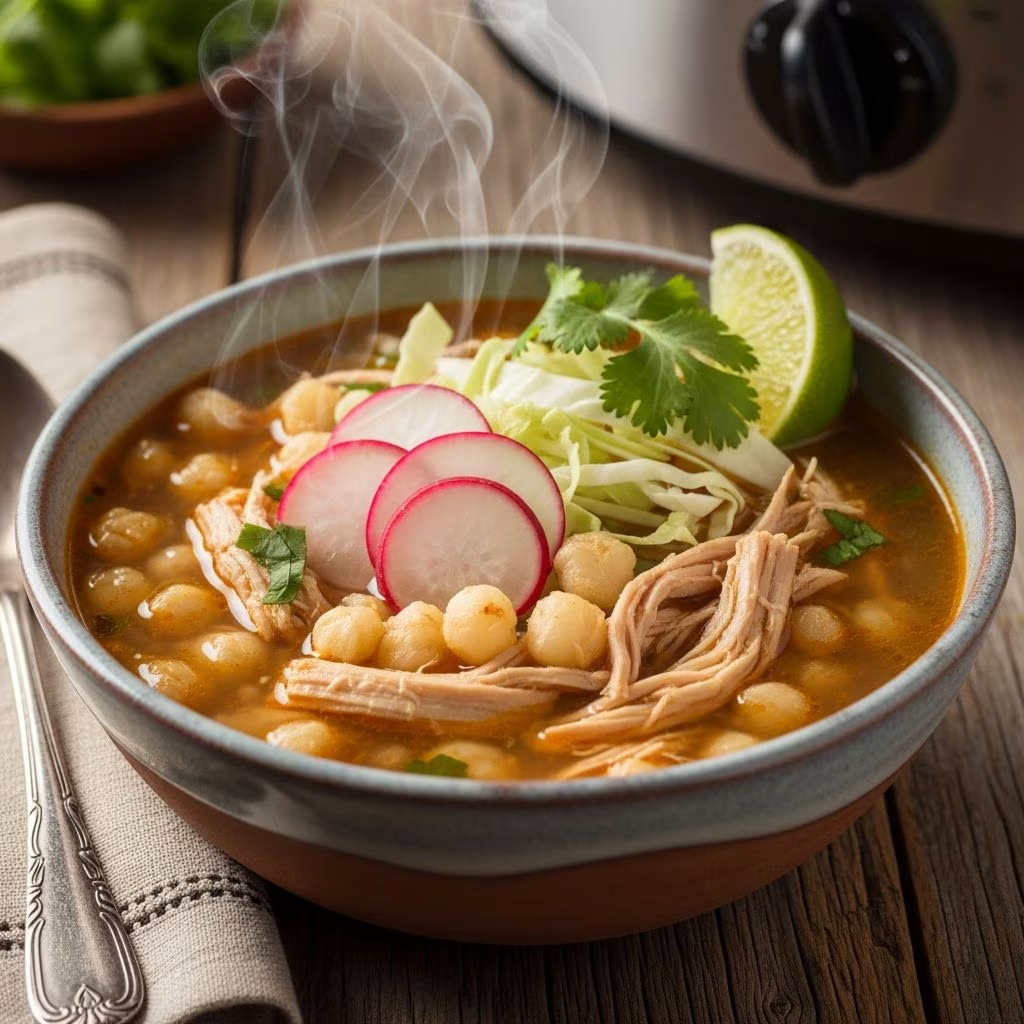
Chicken pozole blanco stands as a cornerstone of Mexican cuisine, offering a pure, flavorful broth that highlights simple, high-quality ingredients without the bold reds or greens of its variants. Prepared in a slow cooker, this dish transforms basic components like chicken, hominy, and herbs into a nourishing soup ideal for gatherings or weeknight dinners. Its appeal lies in the hands-off cooking method, allowing deep flavors to develop over hours while you attend to other tasks.
Origins and Cultural Significance of Pozole Blanco
Pozole, or posole, traces its roots to pre-Hispanic Mexico, where indigenous peoples crafted it from corn treated with lime—a process yielding the chewy hominy central to the dish. Blanco versions preserve the soup’s original pale hue and subtle taste, distinguishing them from chile-infused rojo or verde styles. Historically served at celebrations, it symbolizes abundance and community, with modern adaptations like slow cooker methods making it accessible worldwide.
In contemporary kitchens, pozole blanco evokes family traditions, often simmered for hours to meld savory notes from onions, garlic, and oregano. This slow cooker approach mirrors traditional long-cooking techniques but simplifies prep, yielding tender results with minimal effort.
Essential Ingredients for Authentic Flavor
Building a standout pozole blanco starts with fresh, straightforward ingredients. Core elements include:
- Chicken: Boneless breasts or bone-in thighs (about 2 pounds) provide lean protein that shreds effortlessly after cooking.
- Hominy: One or two 28-ounce cans of white hominy, drained, deliver the signature texture—plump and slightly chewy.
- Aromatics: Diced onion, minced garlic (4-6 cloves), and fresh or dried oregano form the flavor foundation.
- Broth Base: Chicken stock or water mixed with bouillon (2 quarts) ensures a light, clear broth.
- Seasonings: Cumin, salt, black pepper, bay leaves, and a squeeze of lime juice enhance depth without overpowering.
Optional additions like jalapeño or serrano for mild heat keep the blanco profile intact. Quality matters—opt for low-sodium broth to control seasoning.
Step-by-Step Slow Cooker Preparation
Assembling this dish takes under 20 minutes, with the slow cooker handling the rest. Follow these steps for success:
- Prep the Chicken: Cut 2 pounds of boneless chicken into chunks or leave whole. Season lightly with salt and pepper.
- Sauté Aromatics (Optional): In a skillet with a tablespoon of oil, soften diced onion, garlic, and minced chile for 3-5 minutes. This step boosts flavor but can be skipped for simplicity.
- Layer in Slow Cooker: Add chicken, hominy, broth or water, seasonings, bay leaf, and lime juice. Stir gently.
- Cook Low and Slow: Set to low for 6-8 hours or high for 3-4 hours, until chicken shreds easily.
- Shred and Finish: Remove chicken, shred with forks, and return to pot. Simmer 20-30 more minutes to integrate flavors.
Taste and adjust salt or lime before serving. This method yields 8-10 servings, perfect for meal prep.
Customizing Your Pozole with Toppings
The magic of pozole blanco shines through its toppings bar, allowing personalization. Set out these classics:
- Shredded cabbage or lettuce for crunch.
- Diced radishes and avocado for freshness.
- Chopped cilantro, onion, and lime wedges for brightness.
- Sliced jalapeños or oregano sprigs for spice and herb notes.
These garnishes contrast the warm broth, elevating each bowl. Encourage guests to build their own for interactive meals.
Nutritional Profile and Health Benefits
A serving (about 1.5 cups) offers roughly 250-350 calories, 25g protein, and 20g carbs from hominy, making it balanced and filling. Hominy provides fiber and resistant starch for gut health, while chicken delivers lean protein. The broth’s hydration and anti-inflammatory spices like oregano support immunity. Use bone-in chicken for added collagen benefits to joint health.
For dietary tweaks:
| Variation | Substitution | Benefit |
|---|---|---|
| Low-Sodium | Homemade broth | Controls salt intake |
| Gluten-Free | Certified GF hominy | Safe for allergies |
| Vegetarian | Mushrooms or tofu | Plant-based protein |
| Spicy | Add green chiles | Metabolism boost |
Storage, Freezing, and Reheating Tips
Pozole stores well, maintaining quality for 4-5 days in the fridge in airtight containers. For longer storage, freeze in portions up to 3 months—thaw overnight before reheating. Simmer gently on stovetop or microwave with added broth to loosen. Avoid boiling to preserve texture.
Leftovers shine as nacho topping, taco filling, or standalone soup, extending its versatility.
Common Mistakes and Pro Tips
Avoid these pitfalls for perfection:
- Overcooking Hominy: Add late if using canned to prevent mushiness.
- Skimping on Seasonings: Taste iteratively; oregano and lime are key.
- Ignoring Fat: Skim excess if using skin-on chicken for clearer broth.
Pro tips: Brown chicken first for richer flavor, or blend a portion of broth with aromatics for silkiness. Scale up for crowds by using a 6-7 quart cooker.
Pairing Suggestions and Serving Ideas
Serve pozole blanco with warm corn tortillas, bolillos, or rice to sop up broth. Pair with Mexican rice, elote, or a simple green salad. Beverages like horchata, agua fresca, or light beer complement its savoriness. For holidays, present in festive bowls with abundant toppings.
Variations Across Pozole Styles
While blanco emphasizes purity, explore:
- Pozole Rojo: Red chiles for smoky heat.
- Pozole Verde: Tomatillos and green chiles for tang.
- Pork Pozole: Traditional protein swap for heartier meat lovers.
Slow cooker adapts all seamlessly.
Frequently Asked Questions
What is the difference between pozole and posole?
They refer to the same dish; “pozole” is Spanish, “posole” an English adaptation from Nahuatl origins.
Can I use dried hominy?
Yes, soak and cook separately first, as it requires 2-3 hours extra time.
Is slow cooker pozole authentic?
It modernizes tradition, yielding comparable results to stovetop with convenience.
How spicy is pozole blanco?
Mild by default; control heat via toppings or added chiles.
Can I make this in an Instant Pot?
Absolutely—pressure cook on high for 20-25 minutes with quick release.
Embrace slow cooker chicken pozole blanco for its simplicity and soul-warming results, a dish that bridges generations and kitchens effortlessly.
References
- Easy Chicken Pozole — Isabel Eats. 2023-01-15. https://www.isabeleats.com/mexican-slow-cooker-chicken-posole/
- Slow Cooker Chicken Pozole Blanco Recipe — Mazola. 2024-05-20. https://mazola.com/recipe-detail/slow-cooker-chicken-pozole-blanco/
- Slow Cooker Chicken Posole — Damn Delicious. 2022-01-27. https://damndelicious.net/2022/01/27/slow-cooker-chicken-posole/
- Pozole Blanco (Chicken Pozole) — Mama Maggie’s Kitchen. 2023-11-10. https://inmamamaggieskitchen.com/pozole-blanco-chicken-pozole/
- Perfect Pozole Blanco — Dish ‘n’ the Kitchen. 2024-02-14. https://dishnthekitchen.com/perfect-pozole-blanco/