One-pan cooking has revolutionized how home cooks approach weeknight dinners, and sheet pan Mediterranean chicken represents one of the most versatile and satisfying expressions of this culinary trend. This approach combines the vibrant flavors of Mediterranean cuisine with the practical efficiency of sheet pan cooking, delivering restaurant-quality results with minimal cleanup. Whether you’re cooking for yourself, your family, or entertaining guests, this method provides a framework for creating a complete, balanced meal in under an hour.
Understanding Mediterranean Cooking Principles
Mediterranean cuisine draws its character from the countries surrounding the Mediterranean Sea, including Greece, Italy, Spain, and Turkey. This culinary tradition emphasizes quality ingredients, bold flavors, and cooking methods that preserve the natural taste of foods. The core philosophy centers on using olive oil as the primary fat, incorporating fresh herbs and citrus, and celebrating the natural properties of vegetables and proteins rather than masking them with heavy sauces.
When applied to sheet pan cooking, Mediterranean principles translate into a streamlined process where ingredients are arranged on a single surface, drizzled with seasoned olive oil, and roasted together until everything reaches perfect doneness simultaneously. This technique allows flavors to mingle and develop through the shared cooking environment while each ingredient maintains its individual character.
Essential Ingredients for Mediterranean Chicken
Building a successful sheet pan Mediterranean chicken dinner requires understanding the role each ingredient plays in creating the final dish’s flavor profile and texture. The following categories represent the foundation of this cooking approach:
Protein Selection and Preparation
Chicken thighs serve as the optimal choice for sheet pan cooking, offering superior flavor and juiciness compared to chicken breasts. The higher fat content in thighs prevents them from drying out during roasting, while their deeper flavor profile complements Mediterranean seasonings beautifully. Bone-in, skin-on thighs develop a golden, crispy exterior when roasted at appropriate temperatures, adding textural complexity to the dish.
For those preferring leaner options, boneless, skinless thighs or chicken breasts work acceptably, though cooking times may vary slightly. When using chicken breasts, monitor internal temperature carefully to avoid overcooking, as lean meat reaches the safe temperature of 165°F more quickly than thighs.
Vegetable Components
The vegetable selection should reflect seasonal availability while maintaining color, texture, and flavor diversity:
- Cherry tomatoes provide natural sweetness and acidity
- Bell peppers in various colors add crunch and visual appeal
- Zucchini contributes mild earthiness and moisture balance
- Red onions deliver sharp bite that mellows through roasting
- Potatoes or root vegetables offer substantial texture
Flavor-Building Elements
The Mediterranean character emerges through careful selection of seasonings and accents. Kalamata olives provide briny complexity, while crumbled feta cheese adds creamy tang. Fresh herbs including oregano, thyme, and parsley create the distinctive Mediterranean aromatic profile. Garlic and lemon juice serve as foundational flavor amplifiers, while a quality extra virgin olive oil carries and unifies all components.
Preparing Your Marinade
Creating an effective marinade requires balancing acid, fat, and aromatics in proportions that complement rather than overpower the main ingredients. The standard Mediterranean approach combines:
| Component | Purpose | Typical Ratio |
|---|---|---|
| Extra Virgin Olive Oil | Fat carrier and richness | ¼ to ½ cup |
| Acid (Lemon or Balsamic) | Flavor depth and tenderizing | 2-3 tablespoons |
| Garlic | Pungent aromatic base | 3-4 cloves, minced |
| Dried Herbs | Mediterranean character | 1-2 teaspoons combined |
| Salt and Pepper | Flavor enhancement | To taste |
Whisk these components together in a small bowl, creating an emulsified mixture that clings to ingredients rather than pooling at the pan’s bottom. Reserve approximately one-third of the marinade for coating vegetables, using the remaining portion to coat the chicken thighs thoroughly.
Step-by-Step Preparation Process
Initial Setup and Oven Preparation
Begin by preheating your oven to 425°F, allowing it to reach full temperature before adding ingredients. This ensures even cooking and promotes proper browning on both chicken skin and vegetables. Line your sheet pan with parchment paper or aluminum foil, reducing cleanup while preventing sticking.
Marinating the Chicken
Place chicken thighs in a large bowl and pour approximately two-thirds of your prepared marinade over them. Using your hands, toss the thighs until completely coated, ensuring the marinade reaches into crevices and between the skin and meat. Allow the chicken to marinate for a minimum of 10 minutes, though 15-30 minutes yields even better flavor development. For enhanced results, refrigerate the marinated chicken for up to 4 hours before cooking.
Vegetable Arrangement
While chicken marinates, prepare your vegetables by washing and cutting them into uniform pieces. Larger pieces prevent vegetables from becoming mushy, typically ranging from ¾ to 1 inch in size. Spread prepared vegetables across the sheet pan in a single layer, drizzle with the reserved marinade, and toss gently until evenly coated.
Assembling the Pan
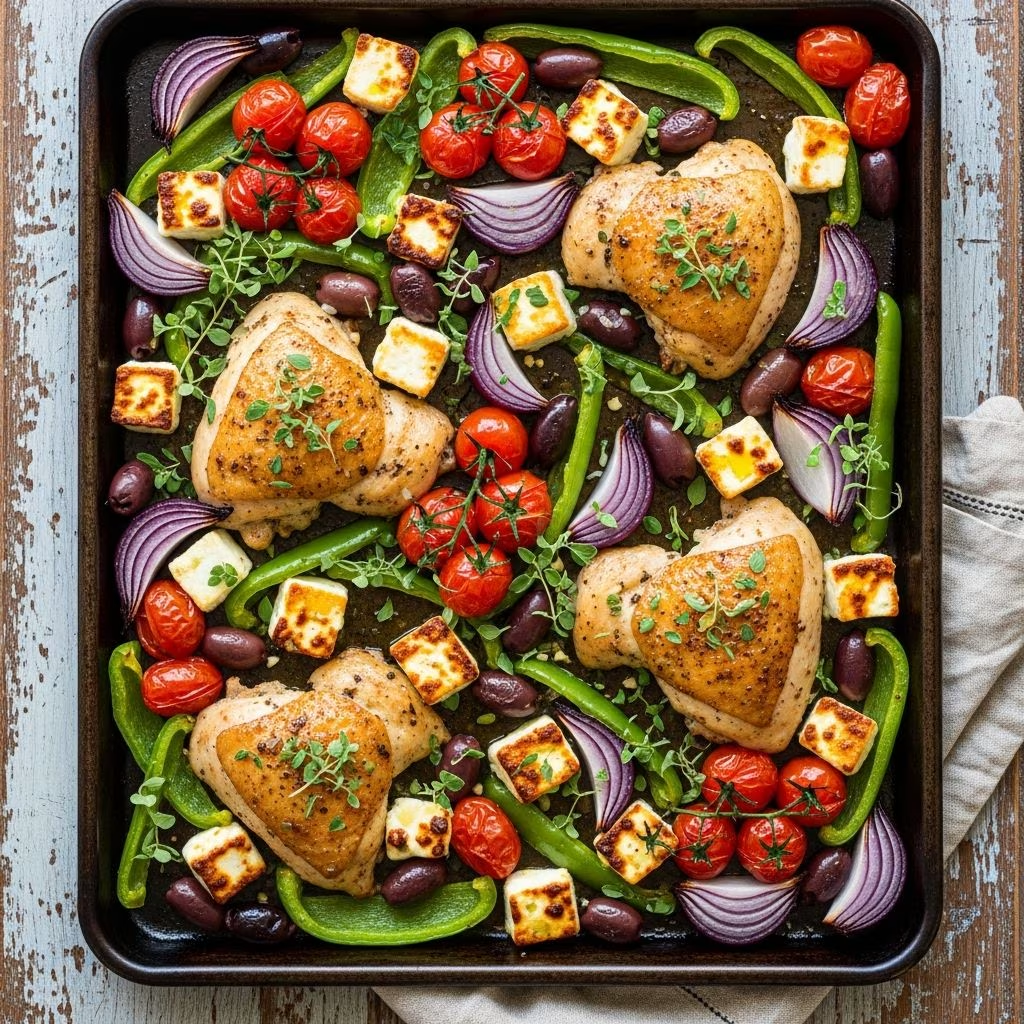
Nestle marinated chicken thighs among the vegetables, arranging them skin-side up to facilitate browning. Distribute chicken pieces across the pan rather than clustering them together, allowing heat circulation that promotes even cooking and prevents steaming.
Roasting Techniques and Temperature Management
Insert the prepared sheet pan into your preheated oven on the middle rack. Most Mediterranean sheet pan chicken preparations require 30-40 minutes of roasting time at 425°F, depending on chicken size and oven characteristics. Halfway through cooking, you may stir vegetables to ensure even exposure to heat, though this step isn’t strictly necessary.
Monitor chicken doneness by observing skin color progression. Initially, the chicken will appear pale. Gradually, the skin develops a golden tone, eventually reaching deep brown when the chicken approaches complete cooking. Use a meat thermometer inserted into the thickest part of the thigh to confirm doneness—165°F indicates safe consumption and proper cooking completion.
Final Additions and Finishing Touches
During the final 5-10 minutes of cooking, scatter Kalamata olives and feta cheese across the pan. These additions benefit from brief exposure to oven heat, which softens the cheese slightly and melds flavors without causing significant texture changes. Some cooks prefer adding olives and feta in the final 2-3 minutes to preserve the cheese’s texture contrast.
Upon removing the sheet pan from the oven, sprinkle fresh parsley or cilantro across the entire dish. This final herb addition provides fresh, bright notes that elevate the entire composition. A squeeze of fresh lemon juice from reserved lemon halves adds brightness and emphasizes the Mediterranean character.
Exploring Ingredient Variations
Protein Alternatives
Beyond chicken thighs, other proteins adapt well to this cooking method. Salmon fillets create a Mediterranean-inspired version with slightly different cooking times and flavor profiles. Turkey thighs provide a leaner alternative while maintaining the one-pan concept. Chickpeas offer a vegetarian adaptation that incorporates legume-based protein while maintaining authentic Mediterranean flavors.
Seasonal Vegetable Substitutions
Sheet pan Mediterranean cooking thrives on flexibility regarding vegetables. Summer preparations might feature eggplant, summer squash, and fresh green beans. Spring versions could incorporate asparagus and artichoke hearts. Winter variations work beautifully with root vegetables like carrots, parsnips, and Brussels sprouts. The key principle involves maintaining color variety and texture contrast regardless of seasonal availability.
Cheese and Dairy Variations
While feta cheese represents the traditional choice, other Mediterranean cheeses offer interesting alternatives. Halloumi adds higher melting resistance for those preferring cheese with more structure. Ricotta salata provides a crumbly texture contrast. Labneh, a Mediterranean yogurt cheese, introduces tangy creaminess.
Serving Suggestions and Accompaniments
Sheet pan Mediterranean chicken serves beautifully as a standalone meal, with the combination of protein, vegetables, and aromatics creating nutritional completeness. However, several accompaniments enhance the dining experience:
- Whole grain orzo mixed with olive oil and fresh herbs provides textural contrast
- Warm crusty bread captures the flavorful pan juices
- Simple green salad with lemon vinaigrette adds fresh, acidic balance
- Greek yogurt seasoned with herbs offers cooling contrast
- Roasted chickpeas provide additional protein and crunch
Storage and Make-Ahead Strategies
Assembled sheet pans can be prepared several hours in advance, covered, and refrigerated until cooking time. This approach proves invaluable for busy weeknights or entertaining situations. Simply remove from refrigeration 15 minutes before cooking to allow ingredients to approach room temperature, then proceed with roasting as directed.
Leftovers keep refrigerated for 3-4 days in airtight containers. Reheat gently in a 350°F oven for 10-15 minutes, avoiding high heat that might dry the chicken. Cold leftover chicken works wonderfully in grain bowls, salads, or as sandwich filling.
Troubleshooting Common Issues
| Problem | Likely Cause | Solution |
|---|---|---|
| Dry chicken | Overcooking or using breast meat | Use thighs, monitor temperature, reduce cooking time |
| Undercooked vegetables | Cut too large or oven too cool | Cut smaller pieces, verify oven temperature |
| Burnt feta cheese | Added too early or oven too hot | Add feta in final 5 minutes, lower temperature slightly |
| Soggy vegetables | Crowded pan or too much moisture | Use larger pan, arrange in single layer |
Frequently Asked Questions
How long does sheet pan Mediterranean chicken take to prepare?
Total time from start to table averages 50-60 minutes, including approximately 15 minutes for preparation and 35-40 minutes for cooking. Marinating time can be shortened to 10 minutes if needed, though longer marinating yields superior flavor.
Can this recipe be doubled for larger groups?
Yes, but use two sheet pans rather than crowding a single pan. Overcrowding prevents proper air circulation and creates steaming conditions rather than roasting, resulting in pale skin and unevenly cooked ingredients.
What is the nutritional profile of this dish?
A typical serving provides approximately 35-40 grams of protein, 15-20 grams of healthy fat, and 20-25 grams of carbohydrates, making it an excellently balanced meal supporting various dietary approaches.
How should oven temperature be adjusted at high altitude?
At elevations above 3,000 feet, increase oven temperature by 25°F and extend cooking time by 10-15 minutes, as water boils at lower temperatures in high-altitude environments.
Mastering Mediterranean Sheet Pan Cooking
Sheet pan Mediterranean chicken represents more than a convenient cooking method; it embodies a philosophy emphasizing simplicity, ingredient quality, and mindful preparation. By understanding the principles underlying Mediterranean cuisine and how sheet pan cooking amplifies these characteristics, home cooks can consistently create memorable meals that satisfy both palate and practical considerations. Whether preparing a weeknight family dinner or impressing guests with effortless elegance, this versatile approach proves its value repeatedly. The combination of healthful ingredients, bold flavors, and minimal cleanup makes sheet pan Mediterranean chicken an enduring favorite for contemporary cooking.
References
- Culinary Institute of America — The Professional Chef. 10th Edition. Wiley. 2024. https://www.ciachef.edu/
- United States Department of Agriculture Food Safety and Inspection Service — Safe Internal Temperature Charts. USDA FSIS. 2025. https://www.fsis.usda.gov/food-safety/safe-food-handling-and-preparation/food-safety-basics/safe-internal-temperature-chart
- Mediterranean Diet Foundation — Mediterranean Diet Guidelines and Principles. Mediterranean Diet Foundation. 2024. https://www.mediterraneandiet.org/