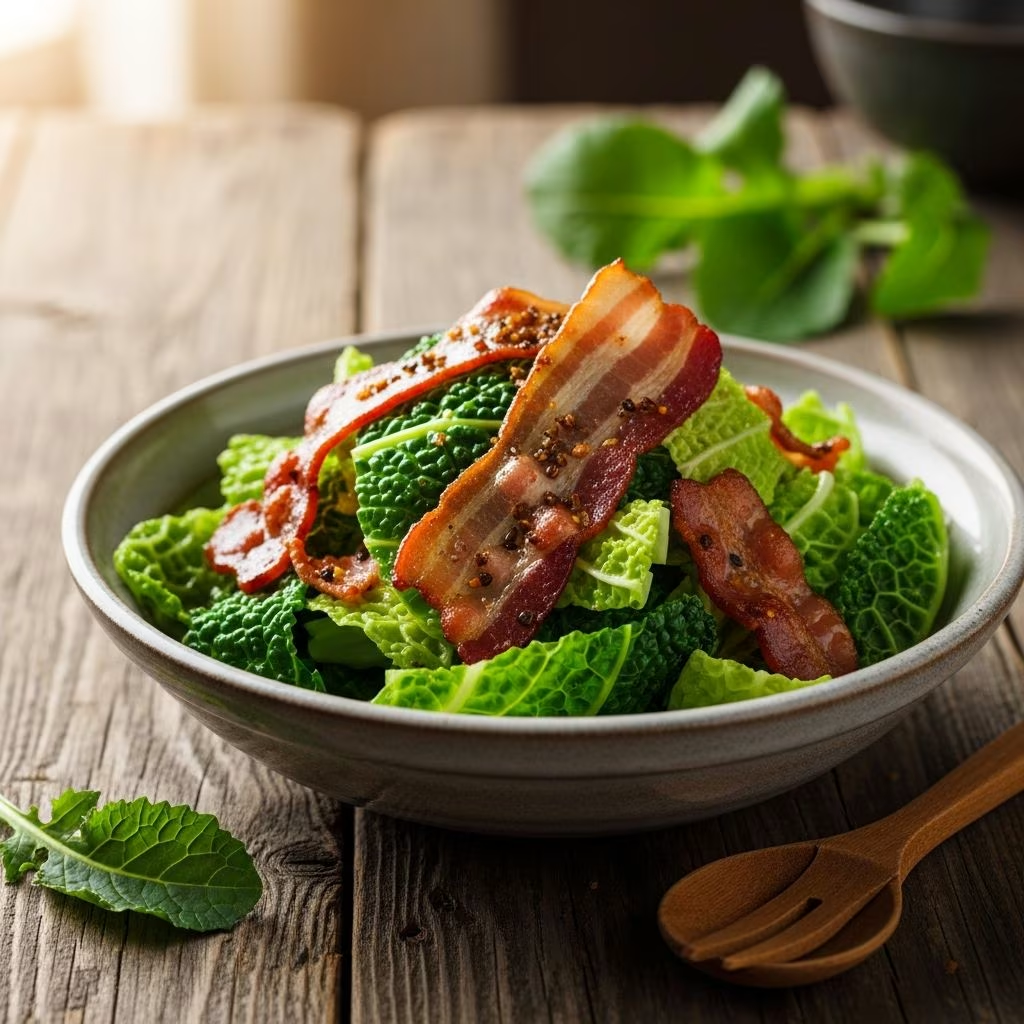
Vegetables don’t have to be complicated to be delicious. This classic preparation combines two nutritious leafy vegetables with the savory depth of bacon, creating a side dish that pairs beautifully with a wide range of main courses. Whether you’re preparing a weeknight dinner or hosting guests, this recipe demonstrates how straightforward techniques and quality ingredients can produce remarkable results.
Understanding the Key Ingredients
The foundation of this dish rests on three primary components: savoy cabbage, mustard greens, and bacon. Each brings distinct characteristics to the table.
Savoy Cabbage: The Tender Variety
Unlike dense green cabbage, savoy cabbage features delicate, crinkled leaves that soften quickly during cooking. This tender texture makes it ideal for steaming, as it reaches a crisp-tender consistency without becoming mushy. A single head typically weighs around two pounds and yields generous portions. The mild, slightly sweet flavor of savoy cabbage makes it a versatile vegetable that complements rather than overpowers other ingredients in the dish.
Mustard Greens: Bold and Nutritious
Mustard greens bring a peppery, slightly spicy note to the preparation. These leafy greens are nutrient-dense, packed with vitamins, minerals, and antioxidants. When steamed, they become tender while maintaining their characteristic flavor profile. Approximately two and a half pounds of fresh mustard greens provides substantial volume for eight servings, though the greens reduce considerably during the cooking process.
Bacon: The Savory Complement
Three-quarters of a pound of bacon renders its fat and transforms into crispy morsels that add textural contrast and rich, smoky flavor throughout the dish. The bacon fat, though drained during preparation, can be reserved for other culinary applications, making this recipe economical and waste-conscious.
Flavor Enhancement Through Aromatics and Fat
Six large garlic cloves, minced and gently heated in a mixture of unsalted butter and extra-virgin olive oil, create an aromatic base that ties the dish together. This combination serves multiple purposes: the butter provides richness and helps distribute flavors evenly, while the olive oil adds fruity notes and helps achieve the proper consistency for a drizzle over the cooked vegetables. The garlic becomes tender and slightly golden, mellowing into a sweet, mellow component rather than remaining harsh or raw.
The Preparation Process
Rendering the Bacon
Begin by cutting bacon into half-inch pieces and cooking them in a large heavy skillet over moderate heat. This initial step requires patience and attention; stirring occasionally ensures even cooking and prevents burning. Once the bacon reaches a golden, crisp state, transfer it to paper towels to drain excess fat. This step accomplishes two things: it removes the bacon from the cooking fat to prevent overcooking, and it allows the rendered fat to remain in the pan, which can be reserved for future use or discarded according to dietary preferences.
Steaming the Cabbage
While the bacon cooks, prepare the cabbage by thinly slicing it. Discard the coarse core and any damaged outer leaves. Place a steamer rack over a pot of boiling water and arrange the sliced cabbage in a single layer if possible. Cover the steamer and allow the cabbage to steam for approximately ten minutes. The goal is to achieve a crisp-tender texture—vegetables should be soft enough to bite through easily but retain some structural integrity. This timing prevents the common problem of overcooked cabbage becoming an unappealing mush.
Cooking the Mustard Greens
After removing the cabbage, discard the coarse stems from the mustard greens and place them in the steamer. Mustard greens require slightly longer cooking than cabbage, typically ten to fifteen minutes, depending on the tenderness of the leaves and the intensity of heat beneath the steamer. Once tender, transfer the cooked mustard greens to a bowl with the cabbage and cover to retain warmth.
Creating the Garlic-Butter Mixture
In a small saucepan, combine minced garlic, three tablespoons of unsalted butter, and three tablespoons of extra-virgin olive oil. Heat this mixture over low to medium heat just until the butter melts completely. Avoid browning the garlic or allowing the mixture to become too hot, as this would cause the garlic to become bitter and the oil to lose its delicate qualities. The resulting golden, fragrant liquid should be drizzled over the combined vegetables immediately after preparation.
Assembly and Finishing Touches
Transfer the warm steamed vegetables to a serving dish, then drizzle the garlic-butter mixture over them, tossing gently to distribute evenly. Season with salt and freshly ground black pepper to taste. Finally, sprinkle the reserved crispy bacon pieces over the top. The contrast between the tender vegetables, rich garlic-butter sauce, and crispy bacon creates a multidimensional eating experience.
Nutritional Profile and Dietary Considerations
This dish offers substantial nutritional benefits. Savoy cabbage contains vitamin C, vitamin K, and dietary fiber, supporting digestive health and immune function. Mustard greens provide additional vitamins, minerals, and phytonutrients with potential anti-inflammatory properties. Bacon, while calorie-dense, contributes protein and B vitamins. The combination of steaming and the addition of minimal fat makes this preparation relatively light compared to many traditional vegetable side dishes.
For those following low-carbohydrate diets, this dish fits well within dietary parameters, as both cabbage varieties are relatively low in carbohydrates. The protein from bacon and the healthy fats from olive oil and butter create a satisfying side dish that prevents blood sugar spikes.
Serving Suggestions and Pairings
This versatile side dish pairs excellently with robust main courses. Pork chops, roasted chicken, grilled steak, or baked fish all benefit from the bold flavors and tender texture of this preparation. The mild acidity and slight bitterness of the greens provide balance to rich meat dishes, while the bacon adds complementary savory notes. For vegetarian meals, this dish stands independently as a substantial, satisfying component.
The recipe yields eight servings, making it ideal for family dinners or entertaining guests. It can be prepared ahead of time up to the point of adding the garlic-butter mixture, then finished fresh just before serving to ensure optimal temperature and texture.
Variations and Adaptations
While the classic preparation is straightforward, several variations can personalize this dish. Some cooks prefer to sauté rather than steam the vegetables for deeper browning and more concentrated flavors. Others incorporate white wine or mustard into the cooking process, adding additional layers of complexity. Adjusting the ratio of savoy cabbage to mustard greens allows cooks to emphasize whichever flavor profile they prefer, from mild and sweet to more peppery and assertive.
Storage and Make-Ahead Strategies
Cooked vegetables can be refrigerated in an airtight container for up to three days. Reheat gently in a skillet over medium heat, adding a splash of water or additional butter if needed to restore moisture. The bacon can be prepared and stored separately, then added fresh at serving time to maintain its crispy texture. For best results, prepare the garlic-butter mixture fresh rather than preparing it in advance, as the delicate flavors dissipate with time and the mixture may separate.
Frequently Asked Questions
Can I use pre-cooked bacon to save time?
Yes, pre-cooked bacon products are convenient and acceptable substitutes. However, freshly cooked bacon provides superior texture and flavor. If using pre-cooked bacon, warm it briefly before adding to ensure it’s heated through and crispy.
What if I can’t find fresh mustard greens?
Collard greens, kale, or turnip greens serve as suitable replacements, though they may require slightly longer cooking times. The flavor profile will differ slightly but remain complementary to the savoy cabbage and bacon.
Is steaming necessary, or can I boil the vegetables?
Steaming preserves more nutrients and prevents the vegetables from absorbing excess water, which would dilute the final dish. However, boiling is acceptable if steaming equipment isn’t available; simply reduce the cooking time slightly since boiling is a more vigorous cooking method.
How can I reduce the fat content of this dish?
Use less bacon (reducing from three-quarters pound to one-quarter pound) or substitute with a bacon-flavored seasoning. Reduce the butter to one tablespoon and increase the olive oil to maintain adequate fat for flavor development.
Can this dish be made vegetarian?
Yes, omit the bacon and prepare a garlic-mushroom mixture as a replacement, sautéing mushrooms until they’re deeply browned to achieve similar umami depth and textural contrast.
Conclusion
This straightforward preparation exemplifies how quality ingredients and proper technique combine to create memorable food. The interplay between tender steamed vegetables, aromatic garlic-butter, and crispy bacon demonstrates that elaborate recipes aren’t necessary to achieve culinary satisfaction. Whether serving a family weeknight meal or impressing dinner guests, this dish delivers consistent, delicious results that showcase the natural qualities of fresh vegetables enhanced by thoughtful preparation and complementary flavors.
References
- Nutritional Value of Cruciferous Vegetables — United States Department of Agriculture (USDA). Nutrition Data Laboratory. https://fdc.nal.usda.gov/
- The Best of Gourmet 1999: Featuring the Flavors of Spain — Gourmet Magazine Editors. 1999. Condé Nast Publications.
- Food Safety Guidelines for Cooking Bacon — Centers for Disease Control and Prevention (CDC). https://www.cdc.gov/foodsafety/
- Steaming vs. Boiling: Nutrient Retention in Vegetables — Journal of the Science of Food and Agriculture. 2009. Published research on vegetable preparation methods.
- Phytonutrients in Mustard Greens and Cabbage — National Institutes of Health (NIH) Office of Dietary Supplements. https://ods.od.nih.gov/