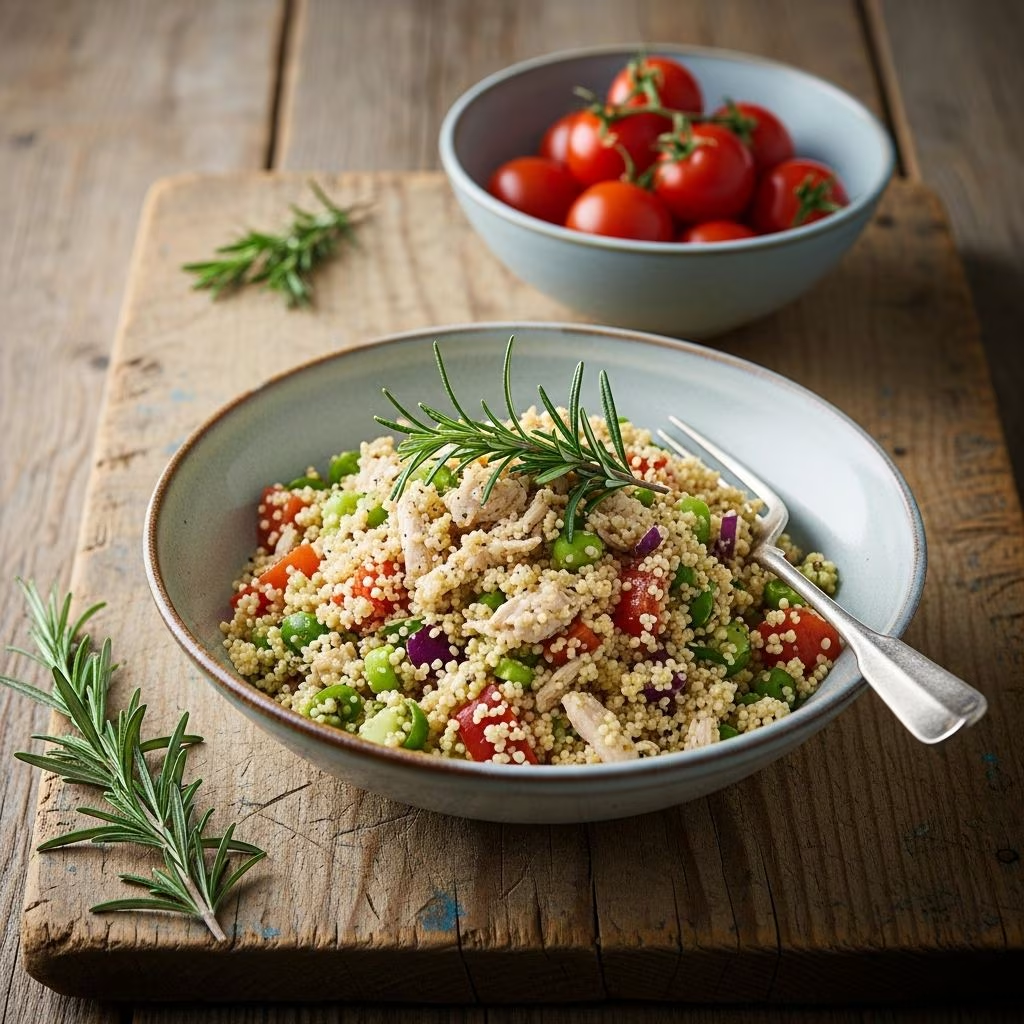
The beauty of contemporary home cooking lies in its ability to merge simplicity with sophistication. A rosemary chicken couscous salad exemplifies this philosophy perfectly—combining minimal preparation time with restaurant-quality presentation and flavor. This dish brings together the aromatic warmth of Mediterranean herbs, protein-rich poultry, and the light, versatile grain of couscous to create a meal that satisfies both weeknight convenience and culinary ambition.
Understanding the Foundation: Why This Combination Works
The synergy between rosemary, chicken, and couscous represents a timeless flavor partnership rooted in Mediterranean cuisine. Rosemary’s piney, slightly peppery notes complement the mild richness of chicken, while couscous serves as an ideal canvas for absorbing these complementary flavors. Unlike heavier grains that might overwhelm the dish, couscous maintains a delicate texture that allows each component to shine without competing for attention.
The nutritional profile of this salad makes it appealing to health-conscious cooks. Chicken provides lean protein essential for muscle maintenance and satiety, while couscous delivers complex carbohydrates and fiber. Fresh vegetables and olive oil contribute valuable micronutrients and heart-healthy fats, creating a balanced meal that nourishes without heaviness.
Key Ingredients That Define the Dish
Selecting Your Chicken
The quality of your poultry directly influences the final result. Boneless, skinless chicken breasts offer the leanest option and cook quickly, making them ideal for weeknight preparation. For added moisture and flavor, consider bone-in, skin-on thighs, which develop richer taste while remaining forgiving during cooking. Whether fresh or previously frozen and thawed, ensure your chicken reaches an internal temperature of 165°F (74°C) for food safety.
The Star Herb: Fresh Rosemary
Fresh rosemary dramatically outperforms its dried counterpart in this application. The needle-like leaves release volatile oils when bruised or heated, infusing the dish with authentic Mediterranean character. A tablespoon of fresh chopped rosemary proves sufficient to flavor the entire dish, though personal preference may guide your quantities. Some cooks prefer to create a marinade base using rosemary, allowing the herb to penetrate the chicken before cooking, while others incorporate it directly into the couscous preparation for a unified flavor profile.
Couscous Selection and Preparation
Standard couscous, also called pearl couscous or Israeli couscous, appears most frequently in this recipe. This tiny pasta granule requires minimal cooking—typically just rehydration with hot liquid—making it remarkably convenient. The ratio of liquid to couscous typically follows a 1.5:1 proportion, meaning one cup of couscous requires 1.5 cups of broth or water. Using chicken broth instead of water elevates the grain’s flavor considerably, while vegetable broth accommodates vegetarian variations.
Supporting Cast of Vegetables
While basic versions focus on the trio of chicken, rosemary, and couscous, complementary vegetables enhance both visual appeal and nutritional density. Common additions include cherry tomatoes for bright acidity, bell peppers for sweetness and crunch, red onions for sharpness, and cucumber for refreshing moisture. Some preparations incorporate roasted vegetables like zucchini or mushrooms, which contribute earthiness and textural contrast. The beauty of this salad format allows considerable customization based on seasonal availability and personal preference.
Preparation Techniques and Methods
Cooking the Chicken: Multiple Approaches
Several cooking methods yield excellent results depending on your kitchen setup and time availability. Pan-searing involves heating olive oil in a skillet over medium-high heat, cooking chicken breasts for 5-7 minutes per side until golden and cooked through. This method develops flavorful browning while keeping preparation time minimal. Alternatively, grilling imparts subtle smokiness and attractive char marks, though it requires access to outdoor cooking equipment. For those preferring hands-off cooking, baking chicken at 375°F (190°C) for 20-25 minutes produces evenly cooked results without active monitoring.
Incorporating rosemary during cooking maximizes herb infusion. Many cooks create a compound by crushing fresh rosemary with olive oil and salt, then rubbing this mixture directly onto chicken before cooking. Others prefer adding fresh sprigs to the cooking liquid or pan, which perfumes the entire preparation. Timing matters considerably—adding fresh rosemary too early can result in harsh, bitter flavors, so mid-way through cooking often proves optimal.
Couscous Preparation
The simplicity of couscous preparation hardly requires explanation, yet technique still influences outcome. Bringing your liquid to a boil before adding couscous ensures even rehydration. Pouring the hot liquid over couscous in a heat-safe bowl, then covering with plastic wrap or a tight-fitting lid, allows steam to distribute evenly. After standing for 5-10 minutes, fluffing with a fork separates the grains and creates an airy texture. Some cooks prefer toasting couscous briefly in a dry pan before hydration, claiming this step enhances nutty flavor and prevents clumping.
Assembly and Flavor Integration
Timing impacts whether you serve this salad warm or at room temperature. Combining warm couscous with freshly cooked chicken and raw vegetables creates a composed salad where distinct flavors remain individually recognizable. Alternatively, allowing all components to cool before combining creates a more unified flavor profile, as the herbs and dressing permeate throughout. For meal-prep scenarios, combining components hours or even a day in advance allows flavors to meld beautifully.
Dressing and Flavor Enhancement
While some versions serve this salad without additional dressing, a simple vinaigrette elevates the overall experience. A classic combination of extra-virgin olive oil, fresh lemon juice, and Dijon mustard creates brightness without overwhelming the delicate herb profile. The ratio of three parts oil to one part acid provides adequate emulsification while maintaining balance. Whisking in minced garlic and additional fresh rosemary creates a cohesive dressing that ties all components together.
For those preferring creamier preparations, Greek yogurt-based dressings offer richness while maintaining lightness. Combining Greek yogurt with lemon juice, minced fresh herbs, and a touch of honey creates a tangy, satisfying coating. Alternatively, a tahini vinaigrette adds nutty depth while remaining plant-based friendly.
Serving Suggestions and Presentation
The versatility of this salad accommodates numerous serving styles. Presented in individual bowls, it becomes an elegant first course at dinner parties. Piled onto crisp lettuce leaves, it transforms into a composed salad suitable for luncheon gatherings. Over greens or grains, it serves as a substantial main course. Some cooks layer it into mason jars for portable meal-prep containers that maintain component integrity until consumed.
Garnishing techniques add final polish. Whole fresh rosemary sprigs communicate the dish’s herb focus immediately. Lemon wedges provide diners with acidic adjustment options. Toasted nuts—whether pine nuts or almonds—contribute textural contrast. Crumbled feta cheese or shaved Parmesan introduce additional flavor dimensions and visual interest.
Practical Tips for Success
- Herb Freshness: Purchase rosemary no more than several days before preparation for maximum flavor intensity and visual appeal.
- Chicken Temperature: Use a meat thermometer to verify doneness rather than relying on appearance, preventing both undercooked and overcooked results.
- Broth Quality: Low-sodium broths allow better seasoning control throughout preparation.
- Advance Preparation: Cooking components separately hours ahead reduces last-minute pressure while allowing flavors to develop.
- Customization Options: Substitute proteins like turkey or tofu, vary vegetables seasonally, and adjust dressing ratios according to personal preference.
- Storage Considerations: Refrigerate completed salad in airtight containers for up to four days, though optimal flavor appears within the first two days.
Nutritional Considerations and Health Benefits
This salad delivers substantial nutritional value without excessive calories. A typical serving provides approximately 35-40 grams of protein from the chicken, supporting muscle maintenance and promoting satiety. Complex carbohydrates in couscous stabilize blood sugar and provide sustained energy. Vegetables contribute fiber for digestive health, while olive oil supplies monounsaturated fats linked to cardiovascular benefits. The overall composition creates a balanced plate suitable for various dietary approaches.
Adapting the Recipe for Different Seasons and Preferences
Spring versions might emphasize fresh peas, asparagus, and bright green herbs. Summer preparations can incorporate ripe tomatoes, cucumber, and increase fresh herb quantities. Autumn adaptations might include roasted butternut squash, dried cranberries, and pecans. Winter versions could feature roasted root vegetables, kale, and warming spices like cinnamon alongside the rosemary.
For those with dietary restrictions, this recipe adapts readily. Vegetarians substitute chickpeas or white beans for chicken while maintaining comparable protein content. Gluten-free cooks replace standard couscous with quinoa or another grain alternative. Dairy-free preparations omit cheese while remaining satisfying through other components.
Common Questions About This Dish
Can I prepare this salad in advance?
Yes, individual components keep well when stored separately for up to four days. Combine shortly before serving to maintain textural contrast, or combine hours ahead if you prefer well-integrated flavors.
What temperatures work best for serving?
This salad performs excellently at any temperature. Warm preparations highlight herb aromatics, while chilled versions provide refreshing summery appeal. Room temperature presentations offer compromise between these options.
How long does preparation typically require?
From start to finish, expect 30-40 minutes for fresh preparation, including approximately 15 minutes for chicken cooking and 10 minutes for couscous hydration.
What substitutes work for rosemary?
Thyme, oregano, or marjoram provide Mediterranean herbaceousness, though each imparts distinct character. Basil offers brighter, peppery notes while remaining seasonally appropriate.
Conclusion: Why This Recipe Deserves Regular Rotation
The rosemary chicken couscous salad represents the ideal modern weeknight dinner—requiring minimal specialized equipment, delivering restaurant-quality results, and accommodating countless personal variations. Its combination of protein, whole grains, and vegetables creates nutritional balance, while Mediterranean flavoring ensures satisfaction and interest. Whether prepared for everyday family meals or elegant entertaining, this versatile preparation consistently delivers quality results worthy of regular repetition.
References
- Dietary Guidelines for Americans 2020-2025 — U.S. Department of Agriculture and U.S. Department of Health and Human Services. 2020. https://www.dietaryguidelines.gov
- Mediterranean Diet and Cardiovascular Health — American Heart Association. 2024. https://www.heart.org/en/healthy-living/healthy-eating/eat-smart/heart/mediterranean-diet
- Safe Minimum Internal Temperature Chart — U.S. Department of Agriculture Food Safety and Inspection Service. 2024. https://www.fsis.usda.gov/food-safety/safe-food-handling-and-preparation/food-safety-basics/safe-minimum-internal-temperature-chart
- Herbs and Spices: Health Benefits and Culinary Uses — National Center for Complementary and Integrative Health. 2023. https://www.nccih.nih.gov
- Protein Requirements and Sources — Academy of Nutrition and Dietetics. 2024. https://www.eatright.org