Roasting tomatoes with garlic transforms ordinary produce into a sophisticated side dish that elevates countless meals. This straightforward cooking technique concentrates flavors, creating sweet caramelized exteriors and intense garlicky undertones that work beautifully in countless applications. Whether you’re preparing a weeknight dinner or hosting guests, understanding the fundamentals of this classic preparation opens endless culinary possibilities.
Why Roasting Brings Out Tomato Flavor
The roasting process applies dry heat that triggers the Maillard reaction, a chemical transformation that develops complex flavors and appealing browning. As moisture evaporates from the tomatoes, their natural sugars concentrate, intensifying sweetness while the exterior chars slightly, adding depth and subtle bitterness that balances the sweetness. Garlic cloves undergo their own transformation during roasting, losing their harsh bite and developing mellowed, almost sweet notes that complement the tomatoes beautifully.
This method differs significantly from raw tomatoes or those prepared through other cooking methods. The combination of time, temperature, and oil creates a synergistic effect where each component enhances the others, resulting in a dish greater than the sum of its parts.
Selecting Premium Ingredients
Success begins with ingredient selection. Cherry and grape tomatoes work exceptionally well because their smaller size allows even cooking and caramelization. Choose firm, ripe tomatoes with vibrant color—avoid wrinkled specimens or those that feel soft when gently squeezed. Heirloom varieties, farmers market selections, and CSA tomatoes typically offer superior flavor compared to mass-produced alternatives, though quality varies by season and region.
Fresh garlic cloves should be firm and fragrant, with papery skin intact. An entire head of garlic or 6-10 individual cloves provides sufficient quantity to infuse oil and create those precious caramelized pieces. Avoid pre-peeled or pre-minced garlic, as these products lose volatile aromatics quickly.
Extra virgin olive oil serves as more than a cooking medium—it’s a flavor carrier that absorbs garlic essence and tomato essence, creating an infused oil that becomes as valuable as the vegetables themselves. Select oil with fruity or peppery notes that complement your intended use.
Essential Equipment and Preparation
A rimmed baking sheet provides ideal surface area for even heat distribution and prevents oil from spilling into your oven. Some prefer silicone baking mats for easy cleanup and consistent heat transfer, though unlined sheets work perfectly well. Position your oven rack in the center or slightly higher to promote even roasting.
Prepare tomatoes by washing gently and patting dry—excess moisture interferes with proper browning and caramelization. Whole cherry tomatoes roast beautifully without cutting, though halving larger varieties increases surface area and hastens cooking time. Pat dry any cut surfaces with paper towels to remove released juices.
Temperature and Timing Considerations
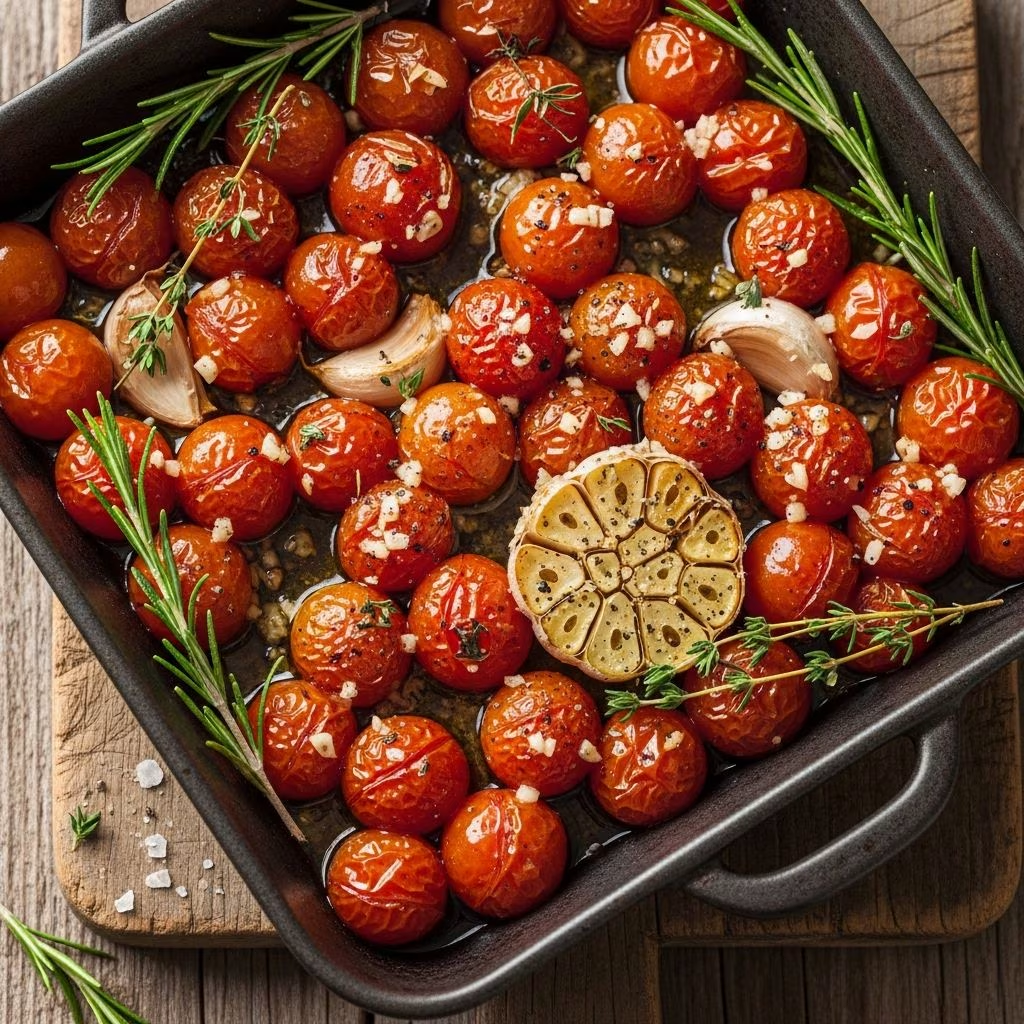
Roasting temperature dramatically affects the final product. Higher temperatures (425-450°F) produce quicker results in 25-35 minutes, creating charred, partially collapsed exteriors with concentrated interiors. This approach suits weeknight cooking and situations where you need results quickly. Lower temperatures (350-375°F) take approximately 45-60 minutes, yielding more gently caramelized tomatoes with less charring and deeper garlic mellowing.
Your specific oven characteristics influence exact timing. Check for doneness by observing whether tomato skins have begun splitting, exteriors show light browning or charring, and garlic cloves appear golden and fragrant. Stir occasionally during longer cooking times to promote even development.
Flavor Enhancement Through Complementary Ingredients
While tomatoes and garlic form the foundation, thoughtful additions create sophisticated variations. Fresh herbs including oregano, rosemary, and thyme integrate beautifully, whether added at the start or nestled into the oil midway through roasting. Dried Italian seasoning or individual dried herbs work when fresh varieties aren’t available.
Balsamic vinegar adds complexity and slight sweetness that enhances caramelization. Red pepper flakes introduce gentle heat that doesn’t overwhelm delicate tomato flavor. Sea salt and freshly ground black pepper should be adjusted to taste—remember that roasting concentrates flavors, so seasoning appears more pronounced in the final dish.
Step-by-Step Roasting Method
Preparation Phase: Preheat your oven to your chosen temperature (425°F for faster results, 350-375°F for gentler caramelization). Arrange whole tomatoes in a single layer on your prepared baking sheet, distributing garlic cloves throughout. This arrangement ensures every tomato benefits from surrounding heat and direct contact with the hot sheet.
Coating and Seasoning: Drizzle olive oil generously over tomatoes and garlic—approximately 3-4 tablespoons for a standard batch. Use your hands or a spatula to gently toss everything, ensuring each tomato and clove receives thorough coating. Sprinkle salt and pepper, then toss again. This hands-on approach guarantees even distribution better than mere drizzling.
Roasting Process: Place the baking sheet in your preheated oven. At the midpoint, give everything a gentle shake or stir to promote even cooking and prevent sticking. Watch for visual cues—you’re aiming for slightly charred, collapsed tomatoes with fragrant, golden garlic.
Cooling and Serving: Remove from the oven and allow the sheet to cool for 5 minutes before transferring to serving dishes. This resting period allows residual heat to continue gentle cooking while temperatures become manageable for serving.
Storage and Make-Ahead Strategies
Roasted tomatoes store beautifully in the refrigerator for up to five days, making them ideal for meal preparation. Transfer cooled tomatoes and accumulated oil to airtight containers. The oil infused with garlic and tomato essence becomes increasingly flavorful over time.
For longer storage, freeze roasted tomatoes in ice cube trays for convenient portioning, then transfer to freezer bags. This approach preserves flavor and texture while providing grab-and-go servings for quick meals.
Culinary Applications and Serving Ideas
Toss warm roasted tomatoes with freshly cooked pasta, allowing the oil to coat each strand and flavors to meld. Spread over toasted bread with fresh mozzarella for sophisticated bruschetta. Layer onto salads to transform ordinary greens into substantial side dishes or light mains.
Serve as a vegetable side alongside roasted chicken, fish, or grilled meats. Top grain bowls, pizza, or flatbreads with roasted tomatoes for texture and flavor. Even snacking directly from the serving dish proves satisfying—the sweet, garlicky bites disappear quickly.
Troubleshooting Common Issues
| Problem | Solution |
|---|---|
| Tomatoes remain firm and don’t collapse | Increase oven temperature or extend cooking time; ensure you’re using ripe tomatoes, not underripe specimens |
| Garlic burns or turns black | Use lower temperature; ensure garlic nestles under or among tomatoes rather than sitting exposed; reduce cooking time |
| Watery texture instead of concentrated flavors | Drain halved tomatoes before roasting; use higher temperature; ensure proper air circulation in oven |
| Oil separates or burns | Use lower oven temperature; ensure your olive oil quality supports high-heat cooking; don’t exceed recommended oil amounts |
Frequently Asked Questions
Can I use canned tomatoes instead of fresh? Fresh tomatoes provide superior results because roasting concentrates their natural sugars and develops surface browning. Canned tomatoes, already cooked and containing excess liquid, don’t caramelize effectively through this method.
What if I only have garlic powder instead of fresh garlic? Fresh garlic transforms during roasting, developing mellowed sweetness impossible to replicate with powder. Fresh garlic is worth seeking out; if absolutely necessary, sprinkle powder after roasting, though the result will taste noticeably different.
How does roasting time vary by tomato size? Smaller cherry tomatoes roast in 25-35 minutes; halved varieties or slightly larger tomatoes may need 35-45 minutes; whole medium tomatoes can require 50-60 minutes. Adjust based on your tomatoes’ size and your oven characteristics.
Should I peel tomatoes before roasting? Leaving skins intact creates appealing charred exteriors and concentrates interior flavors. Peeling is unnecessary and removes protective skin that helps tomatoes maintain structure during cooking.
Can roasted tomatoes be frozen? Yes, freeze cooled roasted tomatoes with their oil in freezer-safe containers for up to three months. Thaw in the refrigerator before using; they work wonderfully in cooked applications like pasta sauces and soups.
Variations to Explore
Create Mediterranean-inspired versions by incorporating olives, capers, and anchovies. Try Asian-influenced variations using sesame oil and ginger. Add balsamic glaze during the final minutes for sweetness. Mix in cream or cheese for richer applications. Layer with mozzarella and basil for Caprese-style presentations. The basic technique accommodates countless flavor profiles.
Conclusion
Mastering roasted tomatoes with garlic provides a foundation for countless meals. This simple technique transforms humble produce through the Maillard reaction and moisture concentration, creating intensely flavorful results that enhance countless dishes. Whether you’re a novice cook exploring basic techniques or an experienced kitchen professional seeking reliable preparations, this method rewards attention to ingredient quality and cooking fundamentals with consistently impressive results.
References
- The Science of Cooking: Understanding Flavor Development Through Heat — Institute of Culinary Education. 2024. https://www.culinaryschools.org/
- Roasted Tomatoes with Garlic and Herbs — The Domestic Dietitian. 2024. https://thedomesticdietitian.com/roasted-tomatoes-with-garlic-and-herbs/
- Garlic Herb Roasted Tomatoes — The Café Sucre Farine. 2024. https://thecafesucrefarine.com/garlic-herb-roasted-tomatoes/
- Slow Roasted Grape Tomatoes — Craving Something Healthy. 2024. https://cravingsomethinghealthy.com/roasted-tomatoes-with-garlic-and-herbs/
- Quick and Easy Garlic Roasted Tomatoes — Roots and Radishes. 2024. https://www.rootsandradishes.com/garlic-roasted-tomatoes/
- Quick Oven-Roasted Tomatoes Recipe with Thyme and Feta — The Mediterranean Dish. 2024. https://www.themediterraneandish.com/quick-oven-roasted-tomato-recipe-with-thyme-and-feta/
- Roasted Cherry Tomatoes — Host The Toast. 2024. https://hostthetoast.com/roasted-cherry-tomatoes/