Sardines often occupy an underappreciated corner of the seafood world, yet they represent one of the most sustainable and nutritionally dense proteins available to home cooks. When combined with the sweetness of roasted tomatoes, the delicate licorice notes of fennel, and the warmth of toasted nuts, these small fish transform into something remarkably sophisticated. This approach to preparing sardines moves beyond the traditional straight-from-the-tin experience, offering instead a composed dish that celebrates the interplay between briny seafood and complementary vegetables.
Understanding Sardines as a Culinary Foundation
Sardines occupy a unique position in both nutrition and sustainability conversations. These small oily fish are rich in omega-3 fatty acids, which support cardiovascular and cognitive health. Unlike larger predatory fish, sardines reproduce quickly and maintain stable populations, making them an environmentally responsible choice for conscious consumers. Their compact size and efficient reproduction mean they accumulate fewer heavy metals than species higher on the food chain.
The flavor profile of sardines varies depending on their preparation and packaging. Those preserved in extra virgin olive oil offer subtle richness that can be incorporated directly into dishes, while versions packed in brine deliver a more assertive marine quality. Understanding these nuances allows cooks to make informed choices based on the specific dish they’re creating.
The Role of Roasting in Tomato Preparation
Roasting cherry tomatoes concentrates their natural sugars and develops deeper, more complex flavors than raw applications. When tomatoes are halved and exposed to dry heat, their water content evaporates while their pectin breaks down, creating a sweeter, more intense product. This transformation occurs through the Maillard reaction, a chemical process that develops new flavor compounds when foods are heated to specific temperatures.
The extended cooking time—typically 25 to 30 minutes at moderate temperatures—allows the tomatoes to soften completely while their edges develop light caramelization. This technique works particularly well with cherry tomatoes because their small size ensures even cooking throughout. The result is a component that bridges the gap between fresh and cooked preparations, offering brightness alongside depth.
Fennel as an Aromatic Anchor
Fennel brings a subtle anise character that might seem unconventional in seafood preparations but creates surprising harmony with briny sardines. The bulb itself, when sliced thinly and allowed to soften through gentle cooking, becomes almost sweet and mellow. Its texture transforms from firm to yielding, while its natural sugars develop without requiring additional caramelization.
Beyond the bulb, fennel fronds offer a delicate herbal element that provides visual appeal and a whisper of the vegetable’s characteristic flavor without overwhelming other components. These tender fronds work best added at the end of cooking or used as garnish, preserving their bright, fresh quality. The stalks can be reserved for stock-making or discarded, depending on your culinary waste philosophy.
Fennel seeds, when toasted separately, develop a warmer, more pronounced anise flavor that can either complement or substitute for fresh fennel, depending on desired intensity. Many Mediterranean cuisines leverage this spice in sardine preparations because its warmth bridges the gap between cold and hot components, creating cohesion on the plate.
Building Flavor Through Textural Variety
A successful sardine preparation balances soft, delicate, and crispy elements. Roasted tomatoes provide immediate sweetness and tenderness. Cooked fennel contributes mild flavor and smooth texture. But without textural contrast, the dish risks becoming monotonous. This is where toasted nuts enter the equation.
Pine nuts and almonds, when gently toasted, develop nutty, slightly buttery notes while maintaining satisfying crunch. Pine nuts contribute Mediterranean authenticity and their subtle flavor complements sardine’s brininess without competing. Almonds offer similar benefits with a slightly earthier profile and broader availability. The toasting process is crucial—nuts that are barely warmed remain pale and taste raw, while those heated too aggressively become bitter. Gentle, constant movement in a dry pan for 3 to 4 minutes typically yields optimal results.
Textural variety also prevents the palate from fatiguing. The combination of flaked fish, soft vegetables, and crispy nuts ensures that each bite offers something different, maintaining interest across an entire dish.
Saffron’s Supporting Role
While saffron might seem like a luxury ingredient, even small amounts deliver significant impact. This spice imparts a subtle earthy warmth alongside hints of honey and floral notes. In sardine preparations, saffron acts as a bridge between disparate flavors rather than asserting dominance.
Saffron works most effectively when briefly steeped in warm liquid before incorporation into dishes. This extraction process releases its color and flavor compounds more completely than dry applications. A generous pinch—approximately 8 to 12 threads or a small crumble of powdered saffron—suffices for four servings. Over-application results in medicinal flavors that overwhelm other ingredients.
Ingredient Preparation and Organization
Successful cooking relies on mise en place—the practice of preparing and organizing all ingredients before cooking begins. For a sardine dish with roasted tomatoes and fennel, this means:
- Halving approximately 400 grams of cherry tomatoes and arranging them on a baking sheet
- Trimming fennel bulbs, slicing them into half-inch wedges, and reserving fronds separately
- Measuring out pine nuts and almonds, keeping them separate until toasting
- Opening sardine cans and reserving any high-quality oil for cooking
- Grinding black pepper fresh and measuring salt according to taste preferences
The Cooking Process: Step by Step
Begin by roasting tomatoes. Arrange halved cherry tomatoes on a baking sheet, cut-side up. Drizzle lightly with extra virgin olive oil, season with salt and ground black pepper, and place in a 375-degree Fahrenheit oven for approximately 30 minutes. The tomatoes should shrink noticeably and develop caramelized edges.
While tomatoes roast, prepare the fennel. In a wide saucepan or skillet, warm 3 tablespoons of extra virgin olive oil over medium-low heat. Add thinly sliced fennel wedges along with a pinch of salt. Cook gently for 10 to 12 minutes, stirring occasionally, until the fennel softens completely and develops light golden color. The slow cooking prevents browning while allowing natural sugars to emerge.
Toward the end of fennel cooking, toast the nuts. In a separate, dry skillet over medium heat, add pine nuts and sliced almonds. Stir constantly for 3 to 4 minutes until they become fragrant and develop light color. Immediately transfer to a plate to prevent continued cooking from residual heat.
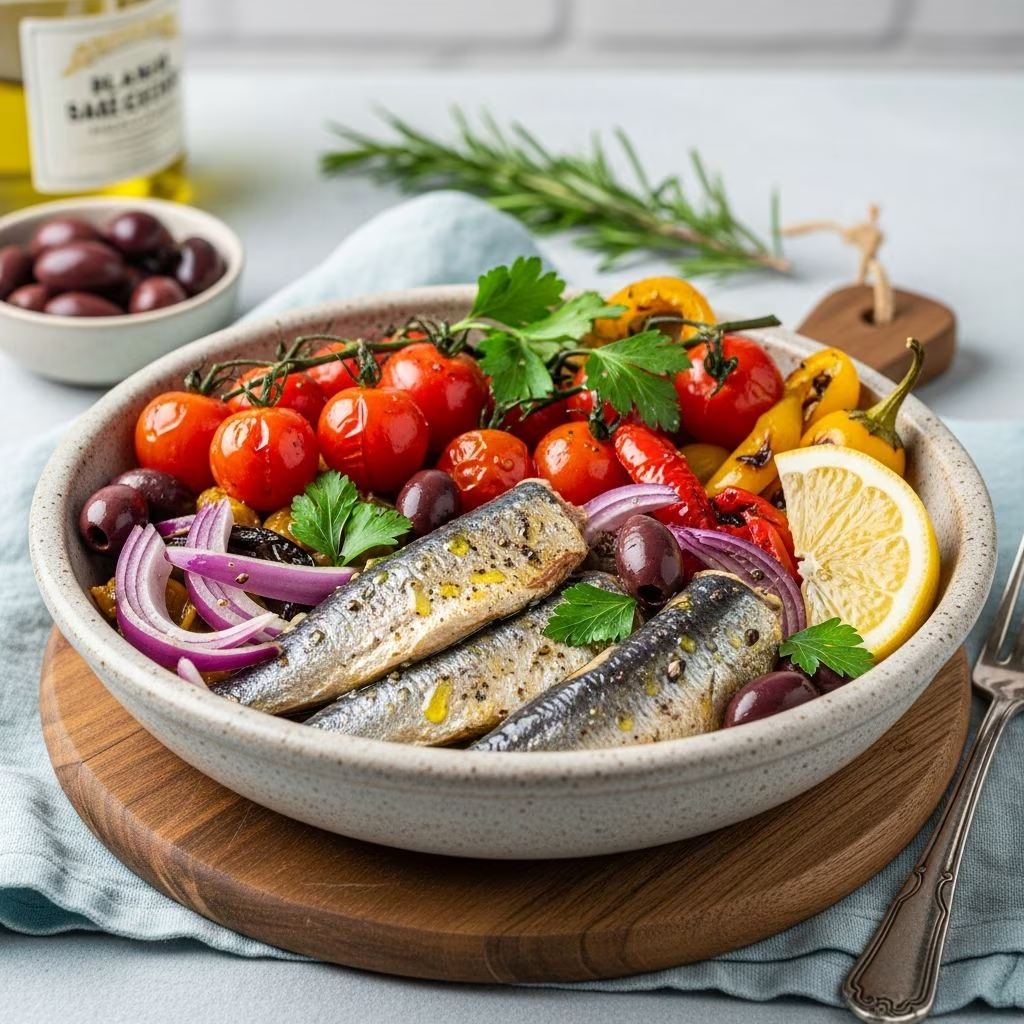
Once the tomatoes finish roasting and fennel reaches desired tenderness, combine components in a large serving bowl. Add the roasted tomatoes along with any pan juices. Break sardines into manageable chunks and distribute throughout. Sprinkle toasted nuts over the top. Crumble a small amount of saffron directly over the dish or steep it briefly in a tablespoon of warm water first for more even distribution.
Finish with reserved fennel fronds for color and delicate flavor, a final drizzle of excellent quality olive oil, and additional ground black pepper according to taste.
Serving Suggestions and Presentation
This sardine preparation works beautifully as a composed salad served at room temperature or slightly warm. Offer crusty bread on the side for those who wish to soak up the accumulated pan juices and oil. A crisp white wine with good acidity—such as a Vermentino or Picpoul de Pinet—complements the dish’s briny and sweet elements without overwhelming delicate flavors.
The dish serves four as a light main course or six as part of a larger Mediterranean menu. Individual bowls allow each diner to appreciate the careful arrangement of components. Alternatively, present the entire preparation family-style in a wide, shallow serving vessel, encouraging diners to create their own balanced bites.
Nutritional Benefits and Dietary Considerations
This sardine-based dish offers substantial nutritional value. Sardines provide high-quality protein, omega-3 fatty acids, and bioavailable forms of vitamins D and B12. The tomatoes contribute lycopene, a carotenoid that may support heart health. Fennel offers dietary fiber and compounds with potential anti-inflammatory properties. Nuts add additional protein, healthy fats, and minerals including magnesium and zinc.
The preparation is naturally gluten-free when served without bread accompaniments and accommodates most dietary patterns. The sodium content from canned sardines is relatively high, so additional salt should be added cautiously. Those concerned about mercury or other contaminants can embrace sardines with confidence, as their small size and short lifespan result in minimal bioaccumulation of heavy metals.
Variations and Adaptations
While the classic preparation holds considerable merit, thoughtful modifications allow customization according to preference and availability. Saffron, though relatively affordable in small quantities, can be omitted entirely without compromising the dish’s integrity. A small pinch of ground turmeric offers similar color and warm spice notes at minimal cost.
Fennel may be replaced with thinly sliced celery for a milder flavor profile or supplemented with fresh herbs such as dill or tarragon. Some Mediterranean traditions incorporate capers for additional brininess or small green olives for complexity. Others add a squeeze of fresh lemon juice to brighten the overall flavor balance.
Fresh sardines, when available from reputable fishmongers, can substitute for canned versions. They require gutting, scaling, and a brief cooking period—typically 3 to 4 minutes per side in a hot skillet with minimal oil. The result offers textural benefits and allows complete control over seasoning.
Storage and Make-Ahead Considerations
Individual components can be prepared in advance and assembled shortly before serving. Roasted tomatoes maintain quality in the refrigerator for up to three days when stored in an airtight container. Cooked fennel similarly stores well for several days. Toasted nuts should remain at room temperature in a sealed container to preserve crispness. Sardines are best added immediately before serving to prevent them from becoming too soft.
The complete assembled dish is best consumed within a few hours of preparation, as the contrast between soft and crispy elements diminishes as time passes. For meal planning purposes, this is ideal as a same-day preparation rather than an advance make-ahead dish.
Exploring Related Mediterranean Preparations
This sardine approach represents one iteration within a broader Mediterranean culinary tradition. Sicilian pasta with sardine, wild fennel, and saffron offers a heartier alternative, incorporating pasta alongside similar ingredients in a unified dish. Sardine ragùs that combine tomatoes, fennel, and herbs create a sauce suitable for serving over grains or vegetables. Understanding these variations helps home cooks develop personal interpretations while respecting traditional flavor combinations.
The principles underlying this preparation—combining sustainable seafood with complementary vegetables, balancing textures through varied cooking methods, and using restrained seasoning to allow individual ingredients to shine—extend far beyond sardines. These foundations apply equally to preparations featuring mackerel, anchovies, fresh tuna, or other seafood proteins.
Frequently Asked Questions
- Can I use fresh sardines instead of canned?
- Yes. Fresh sardines require gutting, scaling, and cooking for 3 to 4 minutes per side in a hot skillet with oil. They offer superior texture but require access to a quality fishmonger and immediate use. Canned sardines offer convenience and consistent quality.
- What if I cannot find saffron or it is too expensive?
- Saffron is entirely optional. A small pinch of turmeric provides similar color and warm spice notes. Alternatively, omit it entirely—the dish remains delicious without it.
- How can I reduce the saltiness from canned sardines?
- Rinse canned sardines briefly under cool water if they are packed in brine. Those in oil require no rinsing. Taste the complete dish before adding additional salt from other sources.
- Is this dish suitable for meal preparation?
- Prepare components separately and assemble shortly before serving. The dish is best consumed fresh, as the contrast between textures diminishes over time.
- What wines pair well with this preparation?
- Crisp white wines with good acidity work best. Consider Vermentino, Picpoul de Pinet, Albariño, or similar Mediterranean varieties. Avoid heavily oaked wines that might overpower delicate flavors.
References
- Omega-3 Polyunsaturated Fatty Acids and Cardiovascular Health — American Heart Association. 2024. https://www.heart.org/en/healthy-living/healthy-eating/eat-smart/omega-3
- Lycopene and Cardiovascular Health: A Review of Evidence — National Institutes of Health. 2023. https://pubmed.ncbi.nlm.nih.gov