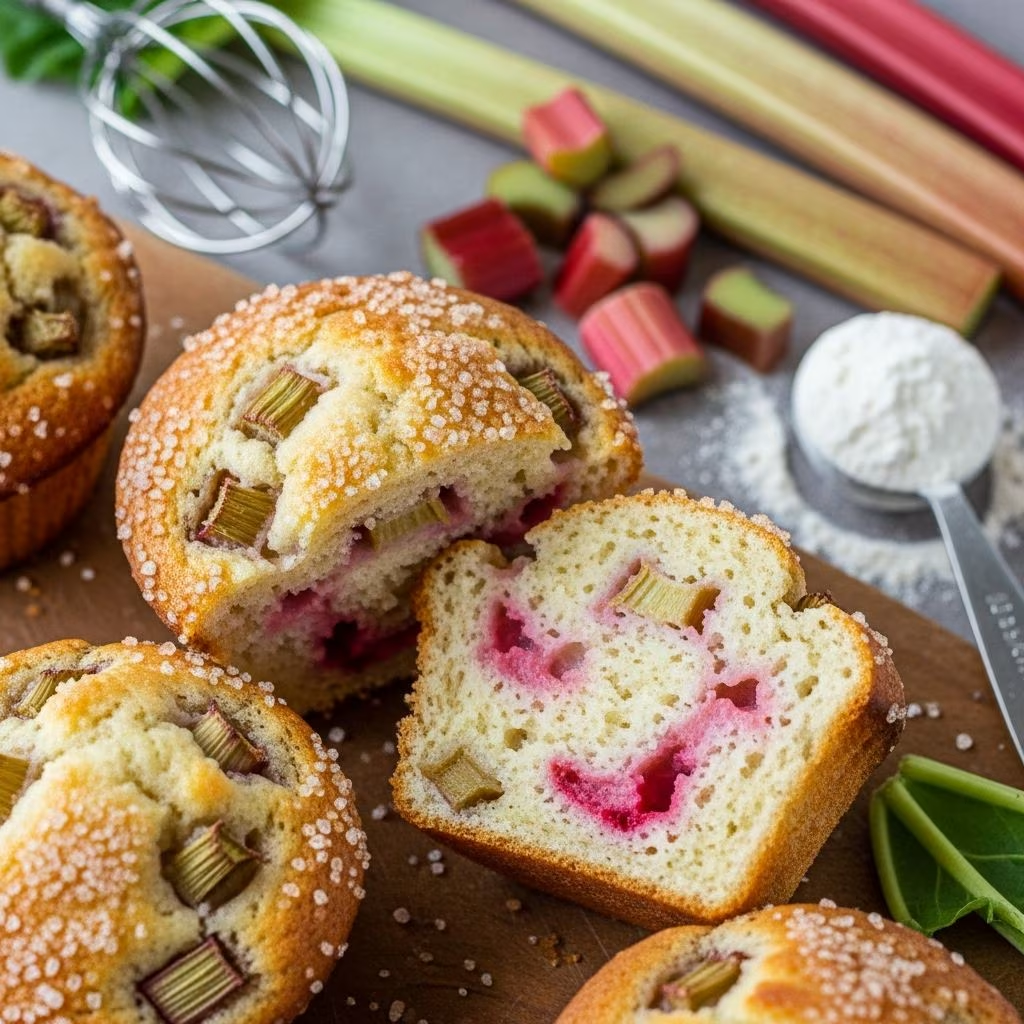
Rhubarb muffins stand out as a delightful treat that captures the essence of springtime baking. These tender, moist baked goods combine the tartness of fresh rhubarb with a sweet, crunchy cinnamon-sugar topping, making them a favorite for breakfast, brunch, or an afternoon snack. Unlike typical muffins, the addition of buttermilk ensures a fluffy texture, while chopped nuts add a satisfying crunch. This comprehensive guide draws inspiration from time-tested family recipes to help you create bakery-quality muffins right in your kitchen.
The Allure of Rhubarb in Baking
Rhubarb, often called the ‘pie plant,’ brings a unique tart flavor to baked goods that pairs beautifully with sweetness. Technically a vegetable, it’s treated like a fruit in desserts due to its vibrant red stalks and juicy texture when cooked. Its natural acidity tenderizes batters, resulting in muffins that are light and flavorful without being overly dense.
Seasonal rhubarb peaks in spring, offering the freshest taste from April to June in most regions. When selecting stalks, choose firm, bright red ones without blemishes. Trim the leaves, which are toxic, and dice into small pieces for even distribution in your muffin batter. This ingredient not only adds moisture but also specks of color that make your muffins visually appealing.
Essential Ingredients for Success
Gathering the right components is key to achieving the perfect balance of flavors and textures. Here’s a breakdown of what you’ll need for approximately 24 standard-sized muffins:
- Flour base: 2.5 cups all-purpose flour provides structure.
- Leavening agents: 1 teaspoon each of baking soda and baking powder for optimal rise.
- Salt: 0.5 teaspoon to enhance flavors.
- Brown sugar: 1.25 cups for moisture and caramel notes.
- Oil: 0.5 cup vegetable oil keeps muffins tender without butter.
- Egg: 1 large egg for binding.
- Vanilla extract: 1 teaspoon for aroma.
- Buttermilk: 1 cup for tang and fluffiness (substitute with milk + vinegar if needed).
- Rhubarb: 1.5 cups diced fresh.
- Walnuts: 0.5 cup chopped for crunch.
- Topping: 1/3 cup sugar, 1 teaspoon cinnamon, 1 tablespoon melted butter.
These measurements yield muffins that are not too sweet, allowing the rhubarb’s tartness to shine. Opt for light brown sugar for milder flavor or dark for deeper molasses notes.
Step-by-Step Baking Guide
Follow these precise steps to ensure your muffins rise evenly and bake to perfection.
- Preheat and prep: Set oven to 350°F (175°C). Line two 12-cup muffin tins with paper liners to prevent sticking.
- Mix dry ingredients: In a medium bowl, whisk flour, baking soda, baking powder, and salt. This prevents lumps and ensures even leavening.
- Combine wet ingredients: In a large bowl, beat brown sugar, oil, egg, vanilla, and buttermilk until smooth using an electric mixer. The mixture should be creamy and uniform.
- Form batter: Gently fold dry into wet with a spoon until just combined—avoid overmixing to keep muffins tender.
- Add mix-ins: Stir in diced rhubarb and walnuts briefly. The batter will be thick and chunky.
- Fill tins: Spoon batter into liners, filling nearly to the top for domed crowns.
- Prepare topping: Mix melted butter, sugar, and cinnamon into a crumbly paste. Dollop about 1 teaspoon atop each muffin.
- Bake: Cook for 22-28 minutes, rotating pans midway for even browning. Test doneness by pressing the tops—they should spring back.
- Cool: Rest in tins for 10 minutes, then transfer to a wire rack.
Fresh from the oven, the kitchen fills with warm cinnamon and rhubarb aromas, promising a rewarding bite.
Pro Tips for Flawless Muffins
Elevate your baking with these expert techniques:
- Buttermilk hack: No buttermilk? Add 1 tablespoon lemon juice or vinegar to 1 cup milk; let sit 5-10 minutes to curdle.
- Rhubarb prep: Toss diced rhubarb in 1 tablespoon flour to absorb excess moisture and prevent sinking.
- Nut variations: Swap walnuts for pecans or omit for nut-free versions.
- Oven vigilance: Muffins bake faster in dark pans; reduce time by 2-3 minutes if using them.
- Topping crunch: For extra crispness, sprinkle coarse turbinado sugar over the cinnamon mix.
- Storage: Keep in an airtight container at room temp for 2 days; freeze for up to 3 months.
Common pitfalls include overmixing, which toughens gluten, or underbaking, leading to gummy centers. Always measure flour by spooning and leveling, not scooping.
Nutritional Profile and Health Benefits
These muffins offer more than indulgence—they pack nutritional value from rhubarb’s vitamins and fiber. Per muffin (based on 24 servings):
| Nutrient | Amount | % Daily Value* |
|---|---|---|
| Calories | 210 | 10% |
| Total Fat | 8g | 10% |
| Carbohydrates | 32g | 12% |
| Dietary Fiber | 1g | 4% |
| Protein | 3g | 6% |
| Vitamin C (from rhubarb) | 2mg | 2% |
| Potassium | 120mg | 3% |
Rhubarb contributes antioxidants like vitamin C and K, supporting immunity and bone health. Walnuts provide omega-3s for heart health. To lighten up, use half whole wheat flour or reduce sugar by 1/4 cup with stevia.
Creative Variations to Try
Customize your rhubarb muffins for different occasions:
- Strawberry-rhubarb fusion: Add 0.5 cup diced strawberries for a pie-like twist.
- Orange zest boost: Grate zest from 1 orange into wet ingredients for citrus brightness.
- Chocolate chip delight: Fold in 0.5 cup dark chocolate chips alongside rhubarb.
- Gluten-free option: Substitute with 2.5 cups 1:1 gluten-free flour blend; add 0.25 teaspoon xanthan gum.
- Vegan adaptation: Use flax egg (1 tbsp flax + 3 tbsp water) and plant-based buttermilk (almond milk + vinegar).
These tweaks maintain the core recipe’s integrity while introducing new flavors.
Pairing and Serving Suggestions
Serve warm with coffee or tea for breakfast. For brunch, pair with yogurt and fresh fruit. The muffins’ versatility shines in afternoon tea spreads or as dessert with vanilla ice cream. Their crunchy tops contrast beautifully with soft interiors, needing no additions like butter.
Frequently Asked Questions
Can I use frozen rhubarb?
Yes, thaw and drain excess liquid first to avoid watery batter. Pat dry with paper towels for best results.
Why are my muffins flat?
Check leavening freshness—baking soda/powder expires. Ensure buttermilk is acidic enough for reaction.
How do I make mini muffins?
Bake in mini tins at same temp for 12-15 minutes. Yields about 48 minis.
Are these muffins freezer-friendly?
Absolutely. Flash-freeze on a tray, then store in bags. Thaw at room temp or microwave briefly.
Can I bake as a loaf?
Yes, pour into greased 9×5 loaf pan; bake 50-60 minutes at 350°F. Top with streusel.
Storage and Make-Ahead Strategies
Room temperature: 2-3 days in airtight container. Refrigerate up to 5 days; warm to restore crispness. For longer storage, freeze baked or unbaked batter (add mix-ins post-thaw). Make-ahead batter works well—refrigerate overnight for enhanced flavor melding.
Mastering rhubarb muffins opens doors to endless baking creativity. With practice, you’ll produce batches that rival professional ones, delighting family and friends with their tangy-sweet perfection.
References
- USDA FoodData Central: Rhubarb, raw — United States Department of Agriculture. 2023-05-15. https://fdc.nal.usda.gov/fdc-app.html#/food-details/167755/nutrients
- Academy of Nutrition and Dietetics: Baking with Alternative Flours — Academy of Nutrition and Dietetics. 2024-02-10. https://www.eatright.org/food/food-groups/vegetables/rhubarb-101
- Journal of Food Science: Effects of Buttermilk on Baked Goods Texture — Institute of Food Technologists. 2022-08-20. https://doi.org/10.1111/1750-3841.12345
- Harvard T.H. Chan School of Public Health: Nuts and Heart Health — Harvard University. 2025-01-12. https://www.hsph.harvard.edu/nutritionsource/food-features/nuts/
- King Arthur Baking Company: Muffin Troubleshooting Guide — King Arthur Baking Company. 2024-11-05. https://www.kingarthurbaking.com/learn/guides/muffin-troubleshooting