Few desserts capture the sophistication and elegance of a carefully constructed crepe cake. This no-bake masterpiece combines the delicate texture of paper-thin crepes with luxurious filling, creating a visually striking dessert that appears far more complex than its actual preparation suggests. Whether you’re planning an intimate dinner party or seeking an impressive homemade gift, a layered crepe cake delivers restaurant-quality results with surprisingly manageable steps.
Understanding the Crepe Cake Foundation
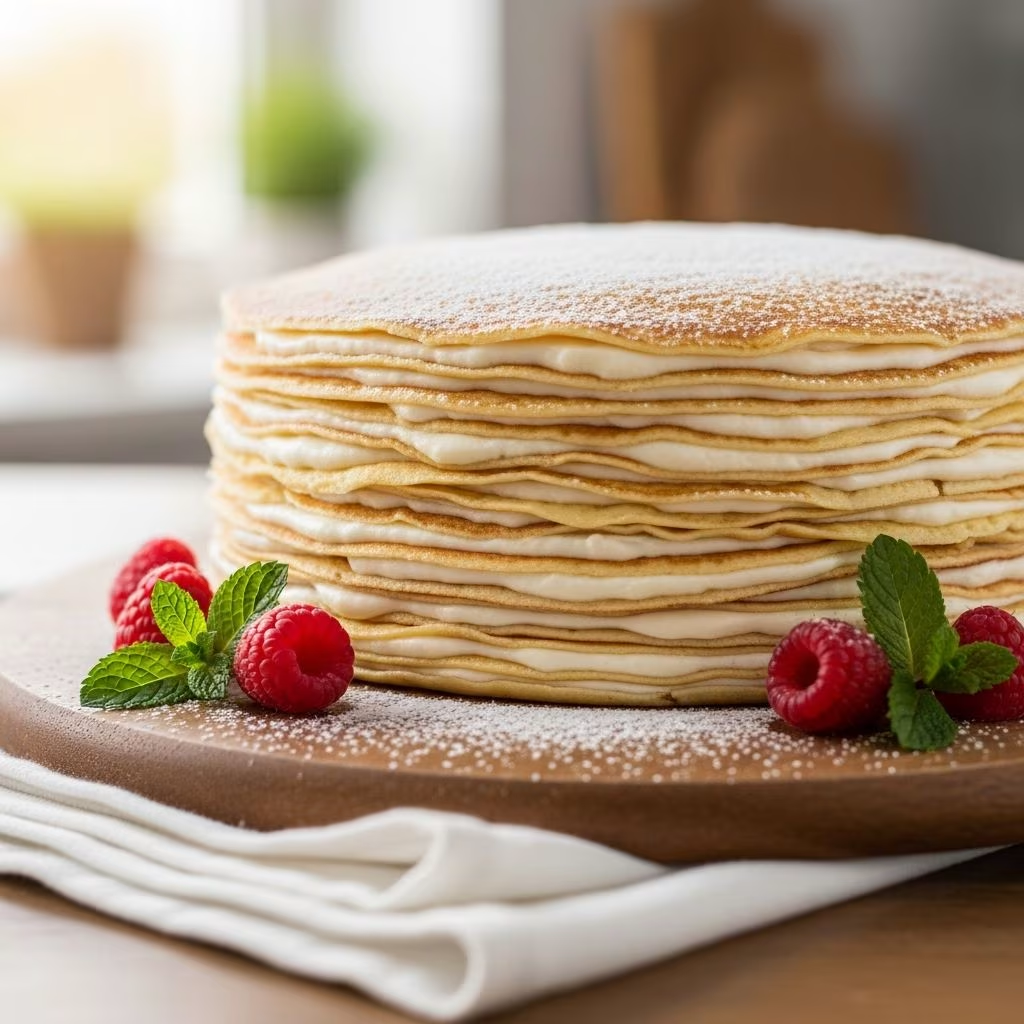
At its core, a crepe cake represents a celebration of simplicity elevated through patience and precision. Rather than requiring an oven and complex baking techniques, this dessert relies on stovetop crepe-making and strategic layering. The fundamental structure involves creating between 15 and 30 individual crepes, each one no thicker than a sheet of paper, then stacking them with filling to achieve remarkable height and visual impact.
The beauty of this approach lies in its flexibility. Unlike traditional cakes that demand precise oven temperatures and exact baking times, crepe cakes adapt to your preferences. You control the thickness of each crepe, the richness of your filling, and the final presentation, making it an ideal canvas for creative expression in the kitchen.
Essential Ingredients for Success
The ingredient list for crepe cakes remains refreshingly straightforward, relying on pantry staples rather than specialty items:
Crepe Batter Components
- Large eggs (typically 3-4 eggs per batter batch)
- All-purpose flour for structure and consistency
- Whole milk to create smooth, pourable batter
- Water or additional milk to achieve proper consistency
- Melted butter for richness and non-stick properties
- Granulated sugar for subtle sweetness
- Kosher salt to balance flavors
- Neutral oil such as avocado or vegetable oil for pan coating
Filling Variations
The filling represents where personalization truly shines. Different approaches cater to varying taste preferences and dietary considerations:
- Whipped cream cheese frosting: Combines softened cream cheese with heavy cream and powdered sugar for a tangy, fluffy texture
- Mascarpone cream: Delivers an Italian-inspired richness, perfect for tiramisu-influenced versions
- Buttercream frosting: Made from butter and condensed milk for a classic, smooth application
- Chocolate cream: Incorporates cocoa powder into whipped filling for depth and sophistication
The Crepe-Making Process Demystified
Creating individual crepes requires understanding the balance between technique and intuition. The process begins with combining all dry and wet ingredients in a blender, which ensures an exceptionally smooth batter free from lumps. Straining the batter through a fine-meshed sieve eliminates any remaining flour particles that could compromise texture.
The cooking method demands attention and practice. A medium-low heat setting prevents burning while allowing the crepe to cook through. Using approximately 1/4 cup of batter per crepe, you’ll swirl the pan immediately after pouring to distribute the mixture evenly across the bottom surface. The goal is achieving a translucent appearance with minimal browning—typically taking 45 seconds to one minute per side.
Professional tip: Allow crepes to cool on parchment paper before stacking. This prevents them from sticking together and makes assembly significantly easier when construction begins.
Preparing and Perfecting Your Filling
The filling component deserves particular attention because it directly impacts both taste and structural integrity. For cream-based fillings, whipping heavy cream to stiff peaks creates volume and stability. When combining whipped cream with cream cheese or mascarpone, fold gently to maintain airiness rather than stirring vigorously.
| Filling Type | Key Ingredients | Texture Profile | Best For |
|---|---|---|---|
| Whipped Cream Cheese | Heavy cream, cream cheese, powdered sugar, vanilla | Light, fluffy, slightly tangy | Classic presentations, berry toppings |
| Mascarpone Cream | Mascarpone, heavy cream, sugar, coffee or vanilla | Rich, silky, luxurious | Elegant dinners, tiramisu variations |
| Buttercream | Butter, condensed milk, cream cheese, vanilla | Dense, creamy, smooth | Decorative piping, formal events |
| Chocolate Cream | Heavy cream, cocoa powder, chocolate, sugar | Rich, velvety, decadent | Chocolate lovers, sophisticated palates |
The Assembly Strategy
Constructing your crepe cake requires a stable surface and methodical approach. Using a cake board, large plate, or sturdy cutting board as your base provides necessary support. Begin by placing a single crepe on your chosen surface, then spread a thin, even layer of filling across its surface. The key is restraint—excessive filling leads to sliding layers and structural instability.
Continue this alternating pattern of crepe and filling until all crepes are incorporated. Typically, you’ll have one or two crepes remaining without filling underneath them; leave the top crepe bare to create a clean, finished appearance. As you stack, gently press down to ensure even contact between layers.
Refrigeration is essential at this stage. After assembly, cover the cake and refrigerate for at least 2-4 hours. This resting period allows the filling to set and the structure to stabilize, making slicing dramatically easier and more precise.
Creative Flavor Combinations and Variations
The versatility of crepe cakes extends far beyond basic presentations. Experimenting with flavor profiles opens unlimited creative possibilities:
Chocolate-Inspired Renditions
Add 2-3 tablespoons of quality cocoa powder directly into the crepe batter for deep chocolate flavor. Alternatively, brush each crepe lightly with chocolate syrup before adding filling. Top the completed cake with silky chocolate ganache made from quality dark chocolate and heavy cream heated together.
Fruit-Forward Interpretations
Layer fresh raspberries, strawberries, or blueberries between crepes for bursts of natural sweetness. Add citrus zest—lemon or orange—to your filling mixture for brightness and complexity. Consider creating a coulis or compote from fresh or cooked fruit to drizzle between layers.
Coffee and Tiramisu Homages
Brush each crepe with strong coffee syrup infused with a touch of liqueur before adding cream filling. This approach transforms your cake into a sophisticated tiramisu variation without requiring separate preparation of traditional components.
Spiced and Seasonal Variations
Incorporate warm spices such as cinnamon, nutmeg, or cardamom into both the crepe batter and filling. These additions create winter-appropriate versions perfect for holiday gatherings.
Finishing Touches and Presentation
- Dust the top generously with cocoa powder, powdered sugar, or crushed freeze-dried fruit
- Crown the cake with fresh berries, edible flowers, or chocolate shavings
- Pipe decorative borders using remaining filling and a pastry bag
- Create a mirror glaze using chocolate ganache or fruit coulis for a professional appearance
- Add fresh mint sprigs or delicate herb garnishes for contrast and sophistication
Slicing and Serving Recommendations
Serving a layered crepe cake requires specific technique to showcase its beautiful construction. Use a thin, sharp knife dipped in hot water and wiped clean between each cut. This prevents crepe layers from dragging and creates clean, defined slices that reveal the careful stacking beneath.
For optimal flavor and texture, serve crepe cake at cool room temperature rather than directly from the refrigerator. This allows the filling to achieve its intended consistency and subtle flavors to emerge more fully.
Storage and Make-Ahead Advantages
One of the most practical advantages of crepe cakes involves their make-ahead flexibility. Individual crepes can be prepared up to two days in advance and stored between parchment layers in an airtight container. Filling components can be prepared separately and stored for similar timeframes. The assembled cake improves with time as flavors meld and the structure becomes increasingly stable, making it ideal for advance preparation before important gatherings.
Troubleshooting Common Challenges
- Crepes tearing during cooking: Reduce heat slightly and ensure batter achieves proper consistency—it should pour smoothly without being overly thick
- Filling sliding between layers: This indicates insufficient chilling time or overly abundant filling; use thinner layers and increase refrigeration duration
- Difficulty slicing: Ensure the cake has been refrigerated adequately and allow it to rest at room temperature for 10-15 minutes before serving
- Crepes sticking together: Cool crepes completely on parchment paper and ensure they’re completely separated before stacking with filling
Frequently Asked Questions
- How many crepes are needed for an average crepe cake?
- Most recipes call for 15-30 crepes depending on desired height and thickness of filling layers. A standard cake typically uses 20-25 crepes.
- Can crepe cake be frozen for extended storage?
- Yes, crepe cakes freeze well for up to one month when properly wrapped. Thaw in the refrigerator overnight before serving.
- Is a special pan required for crepe making?
- A non-stick crepe pan or standard non-stick skillet works equally well. The key is consistent medium-low heat rather than pan type.
- Can dairy-free alternatives be substituted?
- Coconut cream can replace heavy cream, and plant-based cream cheese alternatives work in most filling recipes with minor adjustments to consistency.
- How far in advance can a crepe cake be assembled?
- Assemble the cake no more than 24 hours before serving to maintain optimal texture and prevent excessive moisture accumulation.
Why Crepe Cakes Deserve a Place in Your Dessert Repertoire
Layered crepe cakes represent accessible elegance—sophisticated enough to impress discerning guests yet manageable enough for home cooks of varying skill levels. The no-bake nature eliminates oven-related stress, while the modular construction allows flexibility in timing and flavors. Whether you’re seeking an impressive dinner party dessert or a memorable homemade gift, this dessert delivers visual drama backed by genuine deliciousness.
References
- Chocolate Crepe Cake with Layers — Catherine Desserts. https://zhangcatherine.com/chocolate-crepe-cake/
- Crepe Cake Recipe — Sugar Spun Run. https://sugarspunrun.com/crepe-cake/
- Crepe Cake Recipe (No-Bake, Make-Ahead Dessert) — Pinch and Swirl. https://pinchandswirl.com/crepe-cake/
- Crepe Cake Recipe — Natasha’s Kitchen. https://natashaskitchen.com/crepe-cake-recipe/
- Holy Crepe! These 15 No-Bake Crepe Cakes Are Crazy Pretty — Parade. https://parade.com/843557/cristinariches/holy-crepe-no-bake-crepe-cakes-to-try/