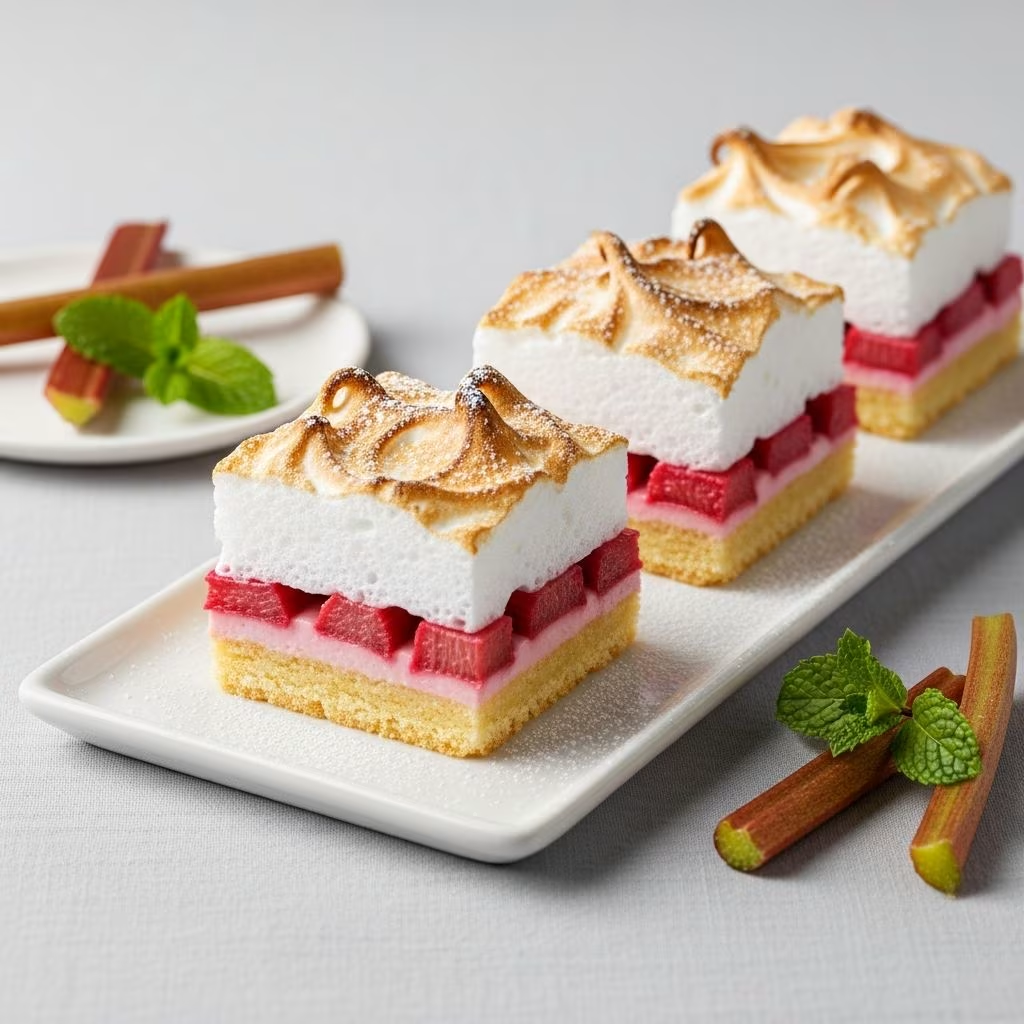
Rhubarb meringue squares represent one of the most elegant and rewarding desserts to emerge from home baking traditions. These sophisticated treats combine three distinct textural and flavor components into a single, harmonious creation: a sturdy foundation of buttery crust, a vibrant middle layer of tart fruit custard, and a billowing crown of delicate, toasted meringue. The combination of crisp, creamy, and airy elements creates a complex sensory experience that appeals to both traditional bakers and those seeking to explore classic dessert-making techniques.
Understanding the Three-Layer Structure
The fundamental appeal of rhubarb meringue squares lies in their architectural composition. Each layer serves a distinct purpose within the finished dessert, contributing both structural support and flavor complexity. The interplay between these three components creates a dessert that is far greater than the sum of its parts.
The foundation layer, typically composed of flour, butter, and sugar, provides the structural integrity that allows the entire creation to hold together during baking and slicing. This base must be robust enough to support the weight of the filling and meringue above it, yet tender enough to provide a pleasant textural contrast to the other components.
The middle layer, derived from rhubarb and enriched with eggs and cream, develops a custard-like consistency during baking. This layer captures the distinctive sharp, slightly acidic profile that makes rhubarb such a compelling ingredient. The egg yolks contribute richness and help the filling set to the proper consistency, while the liquid component prevents the layer from becoming dry or rubbery.
The meringue topping serves both functional and aesthetic purposes. Beyond its visual appeal, the meringue acts as an insulating barrier during baking, helping to regulate the temperature of the layers beneath it. The combination of beaten egg whites and sugar creates a foam structure that becomes crispy on the exterior while maintaining a softer interior when properly baked.
Foundation Variations and Techniques
While many traditional recipes employ simple shortbread-style bases, contemporary variations demonstrate significant flexibility in this layer. The choice of base influences both the texture and flavor profile of the finished squares.
Butter-Based Crusts: The most common approach involves combining softened butter with flour and a modest amount of sugar. This mixture is pressed directly into the baking pan and pre-baked for approximately 10-20 minutes before the filling is added. Pre-baking, sometimes called blind baking, ensures the crust remains crispy rather than absorbing moisture from the filling and becoming soggy.
Enhanced Crust Options: Some bakers incorporate additional ingredients to create more complex flavor dimensions. Ground nuts such as pecans or almonds add both textural interest and subtle flavoring. Graham cracker crumbs provide a slightly sweet, textured alternative to traditional flour-based crusts. A small quantity of custard powder or cornstarch can contribute additional structure and a subtle vanilla undertone.
Preparation Methods: Food processors rapidly combine butter and dry ingredients into uniform crumb-like particles, expediting the mixing process. The traditional method of cutting cold butter into flour using a pastry blender or fingertips produces similar results but allows for greater tactile control over the final texture.
Rhubarb Filling Composition and Preparation
The filling layer determines much of the dessert’s distinctive character. Rhubarb, scientifically classified as a vegetable despite its culinary use as a fruit, contributes a tart profile that provides essential balance to the sweet components surrounding it.
Ingredient Components: A properly constructed filling layer typically contains egg yolks, which contribute both color and richness, along with granulated sugar to sweeten the tart rhubarb. Flour or cornstarch acts as a thickening agent, transforming what would otherwise be a runny mixture into a set custard. Half-and-half or heavy cream adds richness and helps prevent the custard from becoming excessively firm or rubbery.
Rhubarb Preparation: Fresh rhubarb stalks should be trimmed of their leafy tops, which contain compounds toxic to humans. The stalks are sliced into uniform half-inch pieces to ensure even cooking throughout the filling. Some recipes incorporate a small amount of rhubarb pre-cooking with sugar and water to soften the stalks before they encounter the hotter baking environment, though this step remains optional.
Mixing and Layering: Egg yolks are whisked with sugar, flour, and salt to create a uniform mixture. Cream is added gradually while stirring to prevent lumps from forming. The prepared rhubarb pieces are either folded into this mixture or scattered directly over the pre-baked crust, with the custard mixture poured over top.
Meringue Topping: Theory and Application
Meringue represents one of the most fascinating aspects of dessert construction, transforming simple egg whites and sugar into a light, airy foam through mechanical aeration and heat. Understanding the science behind meringue formation enables bakers to troubleshoot problems and achieve consistently excellent results.
Egg White Preparation: Room-temperature egg whites incorporate air more readily than cold whites. Complete separation of whites from yolks is essential, as even small amounts of egg yolk fat can prevent proper foam formation. The bowl and all utensils must be scrupulously clean and free of any grease residue.
Foam Development Stages: As an electric mixer operates at high speed, egg whites progress through distinct phases. Initially, the whites become foamy and opaque. Continued beating creates soft peaks that curl over when the beaters are lifted. Stiff peaks, which stand upright without curling, represent the ideal endpoint for most applications. Overbeating beyond this stage produces grainy, broken meringue.
Sugar Integration Methods: Granulated sugar is gradually introduced during the beating process, typically one tablespoon at a time. This gradual addition allows each portion of sugar to dissolve completely before additional sugar is introduced, resulting in a smooth, glossy final product. Some recipes employ Italian meringue techniques, in which hot sugar syrup is slowly drizzled into beating egg whites, creating a thermally stable product less prone to weeping.
Topping Application: Once meringue reaches the proper consistency, it should be spread over the hot filling without delay. Some bakers peak the meringue with a spatula to increase surface area, which promotes browning during baking.
Baking Process and Temperature Control
The sequence and timing of baking operations significantly influence the finished product. Most recipes employ a multi-stage baking approach, with each component requiring different temperatures and durations.
Crust Baking: The foundation layer typically bakes at 350°F for 10-20 minutes. This initial baking removes excess moisture and begins the browning process, which develops both structure and flavor through the Maillard reaction.
Filling Baking: After the crust has pre-baked, the filling is added and baked for an additional 45-60 minutes. The exact duration depends on pan size and individual oven characteristics. The filling is properly set when it has turned light brown around the edges and exhibits slight firmness when gently touched at the center.
Meringue Baking: The meringue layer bakes for approximately 10-15 minutes at the same temperature. The goal is to achieve light browning on the peaks while maintaining a soft interior. Close observation during this final stage prevents overbaking and excessive browning.
Cooling and Serving Considerations
Proper cooling procedures ensure the finished squares maintain their structural integrity and develop optimal texture. After removal from the oven, the entire pan should cool at room temperature for at least 30 minutes before being moved. This allows the layers to set without the mechanical stress of handling.
Refrigeration for several hours or overnight further solidifies the layers and makes slicing cleaner and more precise. A sharp knife, preferably moistened or wiped between cuts, produces neat portions. Squares typically measure approximately 2-3 inches on each side.
Common Challenges and Solutions
| Challenge | Potential Cause | Solution |
|---|---|---|
| Soggy crust | Filling moisture absorbed; insufficient pre-baking | Extend pre-baking time; use thickening agents in filling |
| Weeping meringue | Overbeating; sugar insufficiently dissolved; inadequate baking | Avoid overbeating; use Italian meringue; ensure complete baking |
| Tough, rubbery filling | Overbaking; excessive eggs | Reduce baking time; verify egg measurements |
| Meringue shrinkage | Inadequate coverage; spreading on cold filling | Spread meringue to edges; apply to hot filling |
Ingredient Quality and Selection
The quality of individual ingredients directly impacts the final result. Fresh rhubarb in season provides superior flavor and texture compared to frozen alternatives, though frozen rhubarb can substitute satisfactorily if fresh is unavailable. Organic eggs produce more robust meringue foam when the whites are properly separated and handled.
Butter, whether salted or unsalted, should be of good quality. Unsalted butter provides more control over salt content, though either option works satisfactorily. All-purpose flour performs reliably in these recipes, while specialty flours like cake flour may require minor adjustments to ratios.
Flavor Enhancement Possibilities
While traditional recipes maintain focus on the tart rhubarb flavor, numerous variations expand the flavor profile. Vanilla extract added to the meringue provides aromatic depth. Coconut flakes, either unsweetened or lightly toasted, add textural interest and subtle coconut flavor to the meringue topping. Some bakers incorporate strawberries alongside rhubarb, which softens the fruit’s acidity and adds natural sweetness.
Ground spices such as cinnamon or ginger can be incorporated into either the crust or filling for additional warmth and complexity. Almond extract, used sparingly, provides an aromatic quality that complements rhubarb well.
Storage and Make-Ahead Options
Properly stored rhubarb meringue squares maintain quality for 2-3 days at room temperature in an airtight container. Refrigeration extends shelf life to 4-5 days, though meringue may soften slightly over time. Squares do not freeze successfully, as the meringue texture degrades significantly during the freezing process.
Most component preparation can occur in advance. The crust may be pre-baked one day ahead and stored in an airtight container. The filling can be prepared several hours in advance without the meringue topping. Meringue should always be prepared shortly before application to the filling, as beaten egg whites gradually collapse over time.
Nutritional Perspective
These squares represent an indulgent dessert rather than a nutritionally dense food. A typical 3-inch square contains approximately 250-350 calories, with significant contributions from butter and sugar. The filling provides some protein from eggs, while rhubarb contributes minimal calories but offers beneficial fiber and vitamin C. The meringue topping, composed primarily of egg whites and sugar, remains relatively low in calories compared to other frosting options.
Frequently Asked Questions
Can I substitute the rhubarb with other fruits? Yes, though the character of the dessert changes. Strawberries create a sweeter, less tart version. Raspberries or blackberries can replace some rhubarb for a different flavor profile. The filling layer structure remains the same regardless of fruit choice.
What causes meringue to shrink away from the edges? Meringue shrinkage typically results from the topping not making complete contact with the filling around the pan edges. Spreading meringue to the crust edge prevents this issue. Additionally, application to hot filling rather than cooled filling promotes better adhesion.
How do I prevent the crust from browning too much? Placing the baking pan on a larger baking sheet acts as a heat diffuser, reducing bottom crust browning. Tenting loosely with aluminum foil during extended baking protects the surface.
Can I make a vegan version? Vegan-friendly versions require egg substitutes for both the filling and meringue. Aquafaba (the liquid from canned chickpeas) can replace egg whites in meringue creation. Silken tofu or commercial egg replacer can stand in for egg yolks in the filling, though the texture and richness will differ from traditional versions.
Conclusion
Rhubarb meringue squares exemplify how understanding fundamental baking principles enables the creation of truly exceptional desserts. The successful combination of textural components—crisp crust, smooth filling, and airy meringue—creates a dish worthy of special occasions and cherished family traditions. Whether following traditional methodology or exploring creative variations, these squares reward careful attention to detail with results that are both beautiful and delicious.
References
- USDA FoodData Central: Rhubarb, raw — U.S. Department of Agriculture. https://fdc.nal.usda.gov/