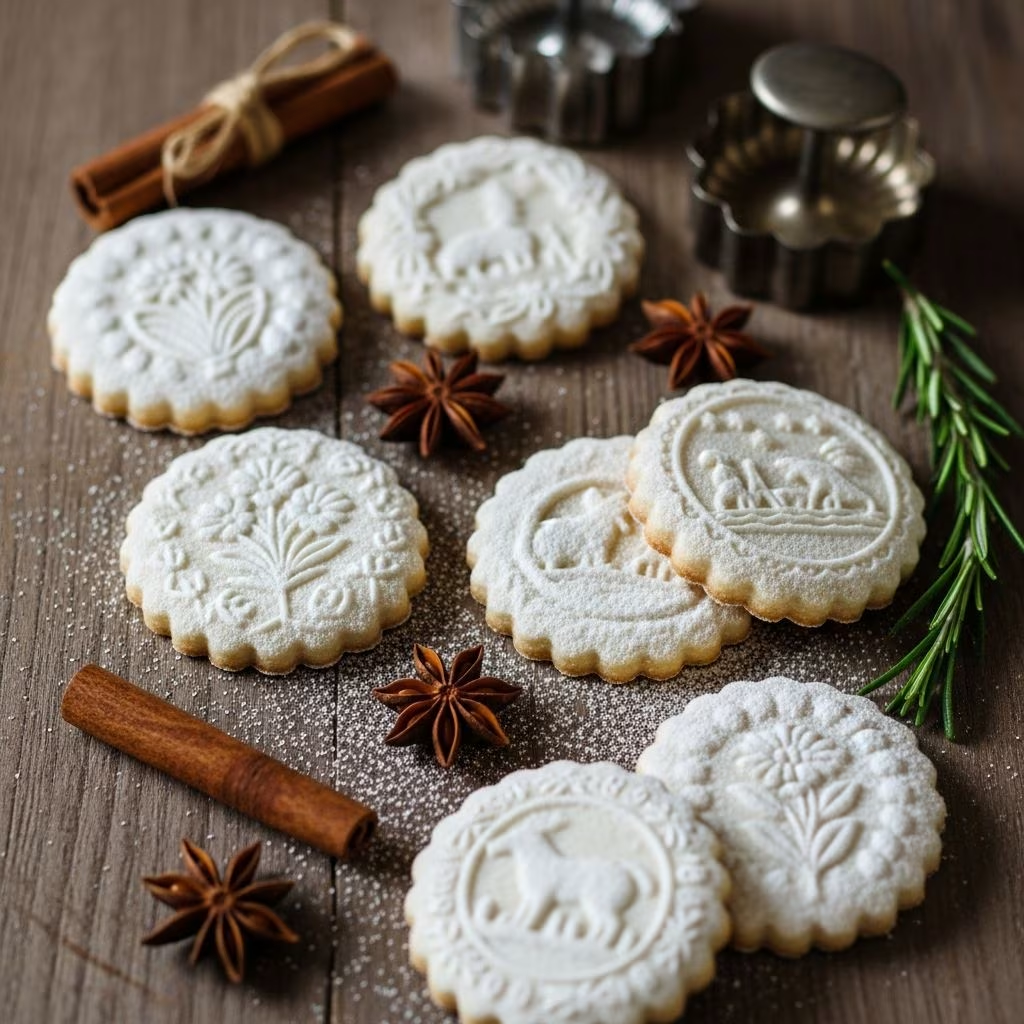
Traditional Springerle cookies represent a cherished German baking heritage, known for their intricate molded designs and subtle anise flavor. These pale, crisp cookies require patience and precision, making them a rewarding project for holiday seasons.
The Legacy of Springerle in German Culture
Springerle cookies trace their origins to medieval Germany, where they symbolized religious and festive themes through carved wooden molds. Bakers pressed designs like saints, hearts, and animals into dough, creating edible art for Christmas markets and family celebrations. Today, they remain a staple in Swabian and Bavarian traditions, evoking nostalgia with their unique texture—crisp exterior yielding to a soft, spiced interior.
Historians note that these cookies evolved from early anise-flavored biscuits, with molds passed down through generations. Their name, meaning ‘little jumper,’ refers to the leaping horse motif common in designs, though varieties abound.
Essential Ingredients for True Springerle
Authentic recipes prioritize simple, high-quality components to highlight the dough’s structure and flavor. Key elements include:
- Eggs: Large, room-temperature eggs provide lift and richness. Typically 2-6 per batch, depending on yield.
- Sugar: Powdered or confectioner’s sugar (up to 4 cups) ensures smoothness without graininess.
- Flour: Cake or all-purpose flour (2.5-4 cups), sifted for tenderness.
- Leavening: Baker’s ammonia (hartshorn or ammonium carbonate, 1/4-1/2 tsp) for crispness—dissolve in milk if needed.
- Flavorings: Pure anise oil or extract (1/4-2 tsp), toasted anise seeds, optional lemon zest.
- Butter: Small amounts (up to 1/2 cup softened) in some variations for tenderness.
Variations exist: some use vanilla extract or alternative spices like almond or pumpkin, but anise defines the classic profile.
Step-by-Step Dough Preparation
Crafting Springerle dough demands extended mixing for aeration, crucial for detail retention.
- Whip Eggs: In a stand mixer with whisk attachment, beat room-temperature eggs until foamy and pale (4-20 minutes).
- Incorporate Sugar: Gradually add powdered sugar, beating 10-15 minutes until thick and ribbon-like, resembling buttercream.
- Add Flavorings: Mix in anise oil/extract, vanilla, and leavening (pre-dissolved if using hartshorn). Include zest for brightness.
- Integrate Flour: Switch to paddle; add half the sifted flour, beat 15 minutes, then remaining flour for 5 minutes. Dough should be soft, sticky, not wet.
- Rest Dough: Wrap and chill 1-24 hours to relax gluten.
This intensive beating (up to 30-40 minutes total) develops structure, preventing spread during baking.
Mastering the Molding Technique
Springerle’s hallmark is its relief designs, achieved with wooden or ceramic molds.
| Mold Type | Material | Care Tips |
|---|---|---|
| Traditional | Wood (carved pear/linden) | Dust with flour/cornstarch; avoid soaking. |
| Modern | Clay/resin | Easy release; store dry. |
| DIY | 3D-printed | Precise replicas; food-safe coating. |
Process:
- Roll dough to 1/4-3/8 inch on powdered sugar/cornstarch-dusted surface.
- Press mold firmly, ensuring full imprint.
- Cut around shapes with fluted pastry wheel for edges.
- Place on parchment-lined sheet dusted with anise seeds.
Common pitfalls: insufficient pressure blurs details; excess flour toughens dough.
The Vital Drying Phase
Drying unbaked cookies for 12-48 hours at room temperature hardens the surface, preserving molds during baking. Ideal conditions: 65-70°F, low humidity. In humid areas, use fans or dehumidifiers.
- Spread anise seeds on sheet for flavor infusion.
- Arrange cookies without touching.
- Check readiness: bottoms slightly moist, tops dry and firm.
This step, often overlooked, prevents puffing and ensures pale color.
Baking to Perfection
Preheat oven to 300°F (middle rack). Bake 20-30 minutes until set but pale—no browning. Cool completely on sheets; they firm further.
Yield: 4-6 dozen, depending on mold size. Store airtight; flavors deepen over 2-3 weeks.
Flavor Profiles and Creative Twists
While anise dominates, experiment responsibly:
- Classic Anise: Toasted seeds + oil for licorice depth.
- Citrus Boost: Lemon/orange zest balances spice.
- Modern: Almond extract, vanilla, or pumpkin spice.
- Seed Swap: Caraway for earthiness.
Toast seeds dry to release oils, enhancing aroma.
Troubleshooting Common Issues
| Problem | Cause | Solution |
|---|---|---|
| Flat designs | Insufficient drying/mixing | Extend beat/dry times; check leavening. |
| Dark cookies | High heat | Lower temp; monitor closely. |
| Sticky dough | Too much moisture | Add flour sparingly; chill longer. |
| Faint imprints | Soft dough/mold pressure | Chill dough; press harder. |
Baker’s ammonia smell dissipates post-baking, yielding crisp results.
Storage and Gifting Strategies
Layer in tins with parchment; keep cool/dry for months. Flavor peaks after 2 weeks. Gift in decorative boxes with recipe cards for tradition-sharing.
Scaling Recipes for Crowds
Double ingredients proportionally, but mix in batches to avoid mixer strain. Test small batch first for mold compatibility.
Frequently Asked Questions (FAQs)
What if I can’t find baker’s ammonia?
Substitute baking powder (1/4 tsp per 1/2 tsp hartshorn), though texture may soften slightly.
Can I freeze Springerle dough?
Yes, wrap tightly; thaw overnight before rolling. Unbaked cookies freeze post-drying.
Are wooden molds reusable?
Absolutely; season with oil yearly. Clean with brush, air dry.
How do I source quality anise oil?
Seek 100% pure from specialty shops; avoid extracts for potency.
Gluten-free possible?
Adapt with gluten-free flour blends, but test for mold retention.
Nutrition Snapshot (Per Cookie, Approx.)
| Nutrient | Amount |
|---|---|
| Calories | 50-70 |
| Carbs | 12g |
| Protein | 1g |
| Fat | 0.5g |
Low-fat, egg-based treat suits most diets.
References
- Authentic German Springerle Cookies — The Daring Gourmet. 2023. https://www.daringgourmet.com/authentic-springerle-recipe/
- Traditional Springerle Cookies — Pastries Like a Pro. 2023. https://pastrieslikeapro.com/traditional-springerle-cookies/
- How to Bake Perfection Springerle Cookies — House on the Hill. 2023. https://www.houseonthehill.net/perfectionrecipe
- How To Make Springerle Cookies — Molly J Wilk. 2023. https://www.mollyjwilk.com/how-to-make-springerle-cookies/
- German New Year’s Cookies (Springerle) — History in the Making. 2021-12-12. https://history-in-the-making.com/2021/12/12/german-new-years-cookies-springerle/