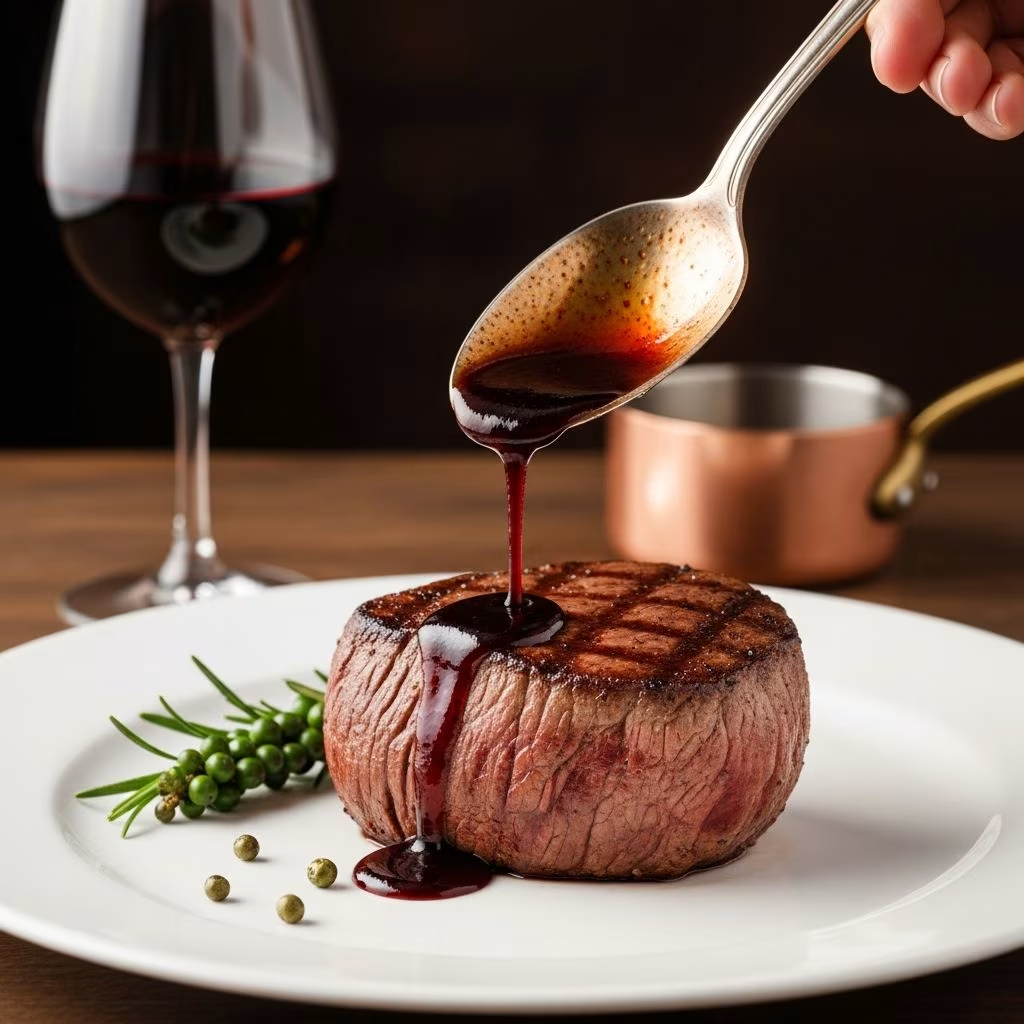
Red wine reduction sauce stands as a cornerstone of fine dining, delivering deep, concentrated flavors that cling beautifully to grilled steaks, roasted meats, and even poultry. This versatile condiment emerges from simmering wine with aromatics and stock until it thickens into a glossy glaze, balancing acidity, sweetness, and umami in every spoonful. Home cooks appreciate its simplicity—requiring just minutes of active time—while yielding results rivaling professional kitchens.
Why Red Wine Reduction Sauce Elevates Your Meals
The magic lies in reduction: evaporating wine’s water content intensifies its tannins, fruit notes, and alcohol-derived depth, creating a sauce that coats proteins without overpowering them. Unlike thick gravies, this sauce remains light yet luxurious, enhancing natural meat flavors rather than masking them. It’s a staple in French cuisine, often called sauce au vin rouge, and pairs seamlessly with beef due to complementary richness.
Versatility extends beyond steak; drizzle over lamb chops, venison, or pork tenderloin. Vegetarians adapt it for mushroom dishes or roasted vegetables, swapping beef stock for vegetable broth. Its adaptability makes it indispensable for weeknight dinners or holiday feasts.
Essential Ingredients for Authentic Flavor
Core components form the foundation. Start with a dry red wine like Cabernet Sauvignon, Merlot, or Pinot Noir—avoid sweet varieties to prevent cloying results. Shallots and garlic provide aromatic base notes, while unsalted butter ensures silkiness without excess saltiness.
- Dry red wine (1 cup): Forms the backbone; choose full-bodied for beef, lighter for poultry.
- Shallots (½ cup minced): Sweeter and milder than onions, they sauté to golden perfection.
- Garlic (1-2 cloves minced): Adds pungent warmth; mince finely to integrate smoothly.
- Beef stock (1-2 cups): Builds savory depth; low-sodium homemade or quality store-bought preferred.
- Unsalted butter (2-3 tbsp): Swirled in at the end for emulsification and sheen.
- Fresh herbs (thyme, rosemary sprigs): Infuse subtle earthiness; bay leaf optional for complexity.
- Sugar or balsamic (½ tsp or 1-2 tbsp): Balances acidity; use sparingly.
- Salt and pepper: To taste, added late to control seasoning.
Proportions scale easily: for four servings, 1 cup wine yields about ½ cup sauce. Fresh ingredients maximize vibrancy; substitute dried herbs at half strength if needed.
Step-by-Step Guide to Perfection
Preparation takes under 30 minutes. Use a medium saucepan for even heat distribution.
Prepare aromatics: Finely mince shallots and garlic. Pat dry if using pan drippings from seared meat for extra flavor.
Sauté base: Melt 1 tbsp butter over medium heat. Add shallots; cook 3-5 minutes until translucent and soft, not browned. Stir in garlic for 20-30 seconds until fragrant.
Deglaze with wine: Pour in red wine, scraping any fond (browned bits). Add herbs and a pinch of sugar. Raise heat to boil, then simmer gently 8-12 minutes until reduced by half—wine will darken and thicken slightly.
Incorporate stock: Add beef stock. Simmer 10-15 minutes more, reducing by half again. Sauce should coat a spoon’s back (nappé stage).
Strain and finish: Remove from heat. Strain through a fine-mesh sieve, pressing solids for flavor. Off heat, whisk in remaining cold butter in pats until melted and glossy. Season with salt, pepper.
Taste iteratively: if too tart, add a balsamic splash; too thin, simmer longer. Total yield: ½-¾ cup.
Pro Techniques for Restaurant-Quality Results
Success hinges on heat control—gentle simmer prevents scorching. Use room-temperature butter for mounting to avoid separation. For deeper flavor, flambé wine briefly post-deglaze to burn off alcohol sharply.
Strain religiously for velvety texture; skip for rustic style. Reduce in stages: wine first, then stock, to layer complexities. Cold butter emulsifies better, creating stable foam.
| Common Issue | Solution |
|---|---|
| Too thin | Simmer longer or add cornstarch slurry (1 tsp cornstarch + 1 tsp water). |
| Broken emulsion | Whisk vigorously off heat or blend briefly. |
| Too bitter | Use riper shallots, less tannic wine, or balance with sugar. |
| Oversalted | Dilute with stock splash, reduce less. |
Ingredient Variations and Substitutions
Customize endlessly. For mushroom version: sauté 1 cup sliced cremini with aromatics, add to stock stage. Herb swaps: rosemary for thyme in lamb pairings.
- Vegetarian: Mushroom or vegetable stock; pair with portobello steaks.
- Sweet twist: 2 tbsp balsamic vinegar post-reduction for tang.
- Spicy kick: Pinch cayenne or Dijon mustard (1 tsp).
- White wine alt: Dry white + lemon for poultry.
- Gluten-free: Ensure stock is certified; all else naturally so.
Scale up for holidays: double ingredients, freeze in ice cube trays for portions.
Perfect Pairings: Meats, Sides, and Wines
Best with seared ribeye, filet mignon, or roast beef—spoon over resting meat to mingle juices. Complement with garlic mashed potatoes, asparagus gratin, or truffled fries.
Wine match: same varietal used in sauce, like Cabernet for robustness. Non-alcoholic: pomegranate juice reduction mimics depth.
Storage, Make-Ahead, and Freezing Tips
Cools to room temperature, then refrigerate in airtight jar up to 5 days. Reheat gently in saucepan, whisking constantly to restore gloss—avoid microwave to prevent breaking.
Freeze up to 3 months in silicone molds or bags; thaw overnight, reheat slowly. Make-ahead shines: flavors deepen overnight.
Nutrition Snapshot and Dietary Notes
Per 2-tbsp serving (approximate): 120 calories, 10g fat (6g saturated), 5g carbs, 1g protein. Low-carb, keto-friendly sans sugar. Alcohol cooks off mostly, leaving trace.
Frequently Asked Questions
What wine is best for reduction sauce?
Any dry red: Cabernet for bold, Pinot Noir for lighter. Drinkable table wine suffices—no need for expensive bottles.
Can I make it without butter?
Yes; substitute olive oil or arrowroot for thickness, though butter imparts unmatched silkiness.
How do I know when it’s reduced enough?
Sauce coats spoon back without running off immediately. Aim for 50-75% volume loss.
Is it safe for kids/alcohol-free?
95%+ alcohol evaporates in 20+ minutes simmering; negligible remainder.
Can I use chicken stock?
Absolutely—for poultry or lighter meats; beef stock preferred for steak.
Advanced Twists from Chef Insights
Gordon Ramsay-inspired: add balsamic for caramel notes, rosemary for piney lift. Reduce aggressively to glaze consistency for plating drama. Experiment with demi-glace base for ultra-luxury.
Incorporate pan juices post-sear for meat-specific essence. For holidays, infuse with dried porcini for earthiness.
References
- Easy Red Wine Reduction Sauce — Belly Full. 2023-05-15. https://bellyfull.net/red-wine-reduction-sauce/
- Red Wine Reduction Sauce — Baked Bree. 2022-11-20. https://bakedbree.com/red-wine-reduction-sauce
- Red Wine Sauce — Sauce Fanatic. 2024-02-10. https://www.saucefanatic.com/red-wine-sauce/
- Basic Red Wine Reduction Sauce — The Cooking Studio Fort Collins. 2023-08-05. https://the-cooking-studio.com/basic-red-wine-reduction-sauce/
- Gordon Ramsay’s SECRET to a Great Red Wine Reduction — YouTube (Aspiring Elephant). 2023-01-12. https://www.youtube.com/watch?v=b47BFAJiGVc